Edgen AI operates independently of, and is not controlled by Aspen Digital Financial Limited.
Gorilla Technology wins Taiwan AI contract worth tens of millions
 Edgen Stock·Sep 22 2026, 14:11
Share to
Share to
Copy link

[1] Gorilla Technology Wins Major National AI Intelligence Infrastructure Expansion in Taiwan (https://www.newsfilecorp.com/release/315404/G ...)[2] United States (https://www.aljazeera.com/where/united-states ...)[3] One of Asia-Pacific’s largest crime bureaus expands its AI system with Gorilla - Stock Titan (https://www.stocktitan.net/news/GRRR/gorilla- ...)
Related News

Sep 22 2026, 14:28
SoFi jumps 5% to $17.75 as 32% slide tests rebound
SoFi Technologies shares climbed about 5% to $17.75 in Tuesday morning trading, a rare green session for a stock that has fallen 32% this year and sits in the lower half of a 52-week range running from $14.88 to $32.73. The move ran against the company's own benchmark. The ARK Blockchain & Fintech Innovation ETF traded at $46.94, down 1%, while the SPDR S&P 500 ETF Trust was at $774.27, up 0.1%. Robinhood Markets, the fintech peer that frames SoFi's underperformance, was at $122.52, down 0.6% on the session but up 8% year to date. Traders pointed to three candidate explanations, none of them a company announcement: an oversold bounce after the year-long drawdown, retail attention that pushed the ticker onto social-media trending lists, and short-term positioning in a name with a beta of 2.208. No news release, filing, or analyst action accompanied the gain. The stakes are the gap between SoFi's operating results and its share price. Q2 revenue was $1.22 billion, up 7.9% year over year, and GAAP net income of $156.59 million rose 61% on record loan originations of $14.80 billion. Members grew 35% year over year and the company added a record 2.2 million products, while SoFi Plus passed 200,000 paid subscribers in its first quarter after relaunch. Management raised full-year 2026 adjusted net revenue guidance to $4.75 billion to $4.85 billion, implying 32% to 35% growth, with an adjusted EPS target of $0.60. ## A 23% Drop in Tech Platform Splits the Bull Case The bear case is not about growth. It is about the multiple. SoFi has to convince a skeptical market to re-rate the stock, not simply keep delivering results, and one segment is working against that. The Technology Platform unit fell 23% year over year in Q2 after a large client departure, a hole that the lending and financial-services segments have to cover. That divergence is why the doubling question is not clean. Affirm Holdings, whose buy-now-pay-later franchise and SoFi's personal-loan engine tap overlapping consumer credit demand, sits alongside SoFi in the ARK Fintech ETF's holdings. A fintech peer trading higher on the year while SoFi is sharply lower points to a company-specific derating rather than an industry-wide selloff. On the July call, CEO Anthony Noto called 2026 "a defining year" and pointed to "a clear inflection point" for SoFi. The share price has not confirmed that read. ## What Would Confirm the Bounce The first test is whether SoFi holds Tuesday's gain into the close. A fade would reinforce the reading that the session was a technical bounce rather than a repair in the story. The next scheduled test is the Q3 2026 report, with consensus at $0.1672 in EPS on revenue averaging $1.26 billion. Wall Street's average target of $20.34 sits above the current price, though that target has not kept the shares from sliding all year. For traders sizing new positions, the beta of 2.208 and the depth of the year-to-date drawdown argue for scaling in rather than chasing, letting the stock prove follow-through before adding exposure. Failure to hold $17 keeps the downtrend intact; a close above the session high with volume would be the first evidence that the derating has stopped. This article is for informational purposes only and does not constitute investment advice.

Sep 22 2026, 14:26
Top Ships jumps on unusual trading as company denies any catalyst
TOP Ships Inc. told investors it cannot account for a sharp move in its shares, filing a NYSE American disclosure after the tanker operator's stock traded abnormally outside regular hours on Sept. 21 and again before the Sept. 22 open. The Athens-based company said it "has made inquiries and does not believe any conditions requiring corrective action exist at this time," and that there has been "no material development in its business and affairs not previously disclosed." The statement was filed under Section 401(d) of the NYSE American Company Guide, the exchange rule that obliges a listed issuer to publicly address unusual market activity. TOP Ships, which trades under the ticker TOPS, owns and operates fuel-efficient "ECO" tanker vessels. The company did not disclose the size or direction of the price move, the trading volume involved, or the identity of any counterparties. It also did not say whether it had been contacted by NYSE American or the Securities and Exchange Commission about the activity. The disclosure leaves the move without a fundamental cause. Section 401(d) filings are typically triggered when a stock's price or volume diverges from its recent pattern without a corresponding news release, and they are most common among micro-cap and small-cap issuers where thin float and wide spreads amplify order-flow imbalances. When a company rules out an undisclosed development, attention shifts to market-structure explanations: retail or momentum buying, short-seller positioning, or algorithmic flows reacting to a technical level. That pattern has become familiar across small-cap shipping equities, a sector where share counts are often large, free float is limited, and daily dollar volume can be small enough that a single large order moves the tape. Peer dry bulk and tanker names have seen similar unexplained spikes over the past year, generally without a company-specific announcement to explain them. The absence of a stated cause is itself the operative fact for holders. A Section 401(d) response does not halt trading, does not impose a cooling-off period, and does not require the company to identify who bought or sold. It establishes only that management knows of no undisclosed event. Until a follow-up filing, an exchange inquiry, or a Schedule 13D/13G disclosing a new large holder explains the move, the stock's price will continue to reflect positioning rather than fundamentals. TOP Ships' next scheduled disclosure will be its quarterly results, and any subsequent 8-K or exchange correspondence would be the first place a cause surfaces. Investors holding TOPS should treat the current price as unanchored to reported business performance until one of those documents appears. This article is for informational purposes only and does not constitute investment advice.
Sep 22 2026, 14:23
XPeng signs robot parts deals as 3 suppliers start line scheduling
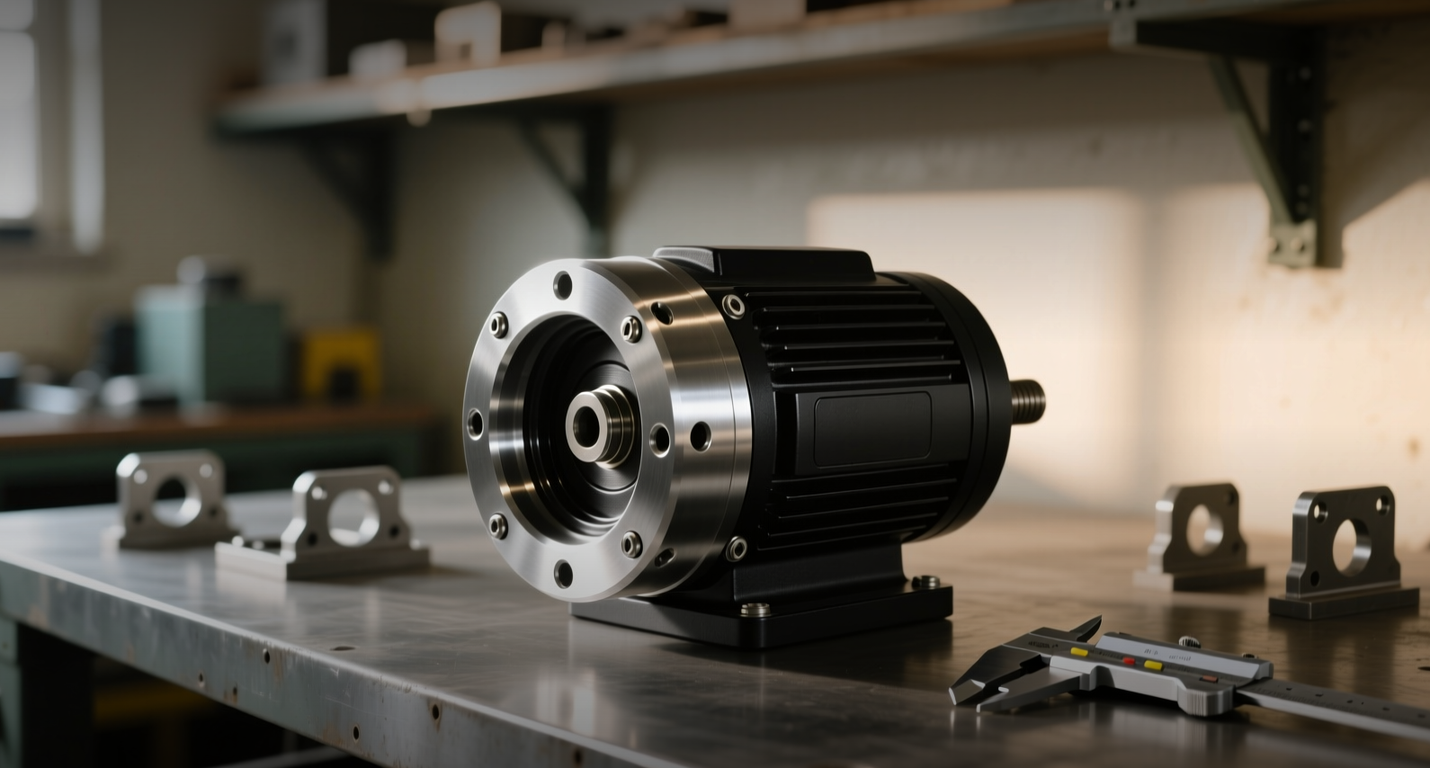
XPeng has completed nomination agreements with suppliers of robot joint modules, actuators and precision structural parts and is now scheduling production lines, the clearest signal yet that the Guangzhou automaker intends to build humanoid robots at manufacturing scale rather than in a lab. The company disclosed the status at its first robot supply-chain partner conference, where component makers from those three categories gathered in one room for the first time. "Nomination is the point where a program stops being a prototype and starts consuming capital," said a person familiar with the program, who asked not to be identified because the agreements are private. "Scheduling lines means tooling orders are being placed." XPeng did not disclose production volumes, unit pricing, delivery dates or the identity of the nominated suppliers. Those figures are not yet disclosed, and the absence of them caps the near-term earnings impact: a nomination agreement commits a supplier to capacity, but revenue only appears when parts ship against a purchase order. The program's public reference point is XPeng's Iron robot, which the company has said runs the same autonomous-driving perception stack and in-cabin AI as its vehicles, giving it 720-degree visual coverage and voice interaction. That reuse is the core of the investment case. XPeng already pays for LiDAR, cameras, inertial measurement units, neural processing units and high-torque electric motors at automotive volumes, and a humanoid platform amortizes that engineering spend across a second product line. The scale of the prize is what makes the timeline worth tracking. China's humanoid robotics market reached nearly 2.8 billion yuan ($380 million) in 2024 and is projected to grow into a 100 billion yuan market by 2030, according to the China Academy of Information and Communications Technology. Total financing in the country's embodied-intelligence sector exceeded 10 billion yuan ($1.4 billion) in the first half of 2025 alone, CCTV reported. XPeng is not alone in making the jump. BYD self-produces about 80 percent of core robot components including harmonic reducers and torque sensors, a vertical integration that has cut costs 30 to 40 percent, and plans to deploy 2,000 robots on its own production lines this year. GAC's GoMate robot uses a force-control system adapted from its EV drive platform, which the company says improved single-leg balance response time by 50 percent and pulled force-control development nine months ahead of the industry average. NIO and Geely have opened factories to Unitree and other robotics developers as testbeds. The difference for XPeng is that it is buying rather than building the joint modules and actuators, which puts the near-term revenue in the hands of its suppliers and leaves XPeng's own margin story dependent on software and systems integration. That is a faster path to a production line and a thinner one to gross profit per unit. For investors, the trade splits in two directions. XPEV carries the optionality: the stock is valued primarily on vehicle deliveries and gross margin, and a robot program that reaches volume would add a second multiple to the story without a second factory. The parts makers carry the nearer-term earnings leverage, because a nomination converts into tooling and pre-production orders before it converts into robot revenue. Both legs of that trade depend on the same undisclosed variable — how many units XPeng intends to build, and when. The next checkpoint is the production schedule itself. XPeng has not given a date for first line output, and until it does, the supplier conference remains a signal about intent rather than a number about volume. This article is for informational purposes only and does not constitute investment advice.