Edgen AI operates independently of, and is not controlled by Aspen Digital Financial Limited.
Better Home faces securities suit after 75% loss widening
 Edgen Stock·Sep 23 2026, 21:28
Share to
Share to
Copy link


[1] Better Home & Finance (NASDAQ: BETR) Faces Securities Class Action Amid 75% Sequential Increase in Net Loss, Dimmed Loan Volume Prospects -- HBSS (https://www.globenewswire.com/news-release/20 ...)[2] BETR Investors Have Opportunity to Lead Better Home & Finance Holding Company Securities Fraud Lawsuit with SBS Law (https://www.morningstar.com/news/business-wir ...)[3] Better Home & Finance Holding Company Sued for Securities Law Violations - Contact the DJS Law Group to Discuss Your Rights - BETR (https://www.tmcnet.com/usubmit/2026/09/23/104 ...)[4] Deadline Soon: Better Home & Finance Holding Company (BETR) Shareholders Who Lost Money Urged To Contact The Law Offices of Frank R. Cruz About Securities Fraud Lawsuit (https://www.financialcontent.com/article/bizw ...)
Related News
Sep 23 2026, 21:59
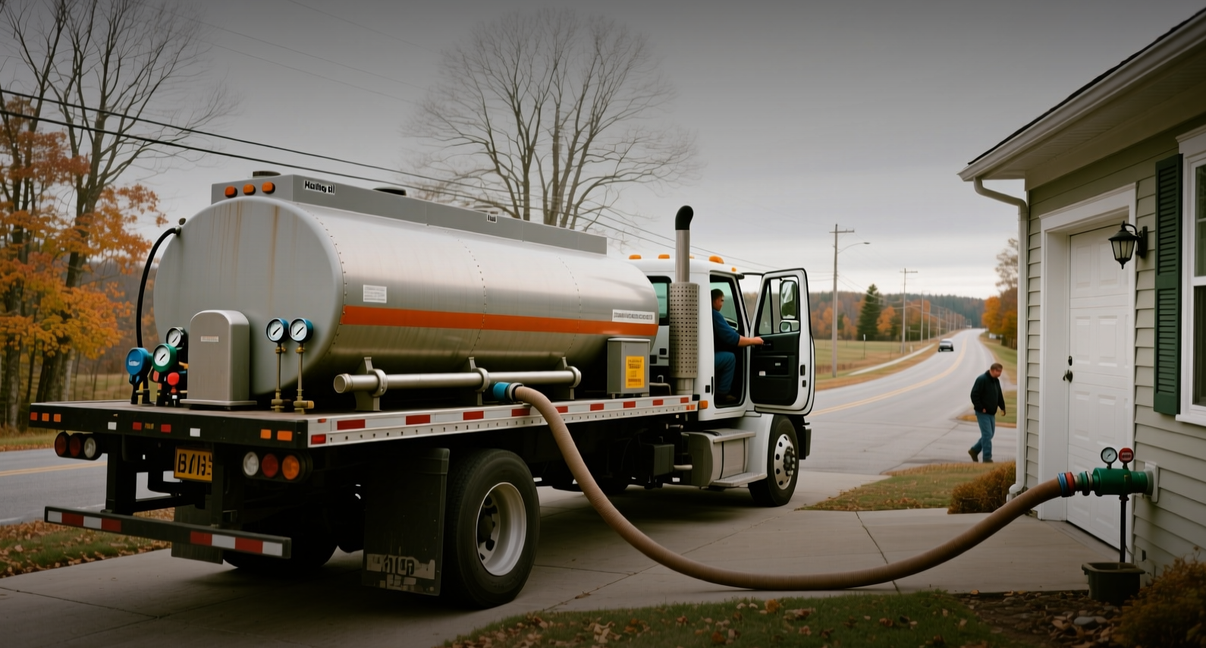
Maine senators press Trump to tap 1 million barrel heating oil reserve
Diesel's climb past $6.50 a gallon has turned a regional fuel reserve into the center of a national price fight, with Maine's two senators asking President Donald Trump to release emergency heating oil before winter demand peaks. "We write to request that you release home heating oil from the Northeast Home Heating Oil Reserve to protect Mainers from the very high prices that are imposing a difficult financial burden," Senators Susan Collins, a Republican, and Angus King, an independent who caucuses with Democrats, wrote in a letter to Trump dated Tuesday. Collins, who is in a tight race for her seat in the November 3 midterm elections, said the cost of energy is a "huge issue in my state" and that tapping the reserve "would help put downward pressure on prices." The national average diesel price hit a record $6.53 a gallon this week, up more than 75 percent from a year earlier, according to the streamlinefeed report on the administration's deliberations. Maine households are paying about $675 more to fill a heating oil tank than they did last year, the senators said, citing a Maine Department of Energy Resources survey. The Northeast reserve holds 1 million barrels of diesel across four sites stretching from Maine to New Jersey — roughly 10 days of heating oil for the region. It was created in 2000 by former President Bill Clinton and has not been tapped since 2012, when it supplied fuel to emergency responders after Hurricane Sandy. Trump's budget last year proposed shutting the reserve, which is expensive to maintain. The White House did not immediately respond to a query about the letter. Collins separately joined Senator Jack Reed, a Democrat of Rhode Island, in asking the administration to release home heating program money for low-income households. ## Two policy levers, one price problem The reserve request lands alongside a more aggressive option the president has already endorsed. Trump said Sept. 22 at the United Nations General Assembly that he supports a temporary ban on diesel exports, echoing Louisiana Governor Jeff Landry, who began calling for the measure last week. "Right now a record amount of diesel is going to Europe and Americans are subsidizing Europe's problems," Landry said Sept. 21 on CNBC. The administration is studying whether a full or partial export ban would lower domestic pump prices without disrupting the refining system, Treasury Secretary Scott Bessent said alongside Trump before a bilateral meeting with Ukrainian President Volodymyr Zelensky. The White House on Wednesday denied a news report that it was preparing a 90-day diesel export ban. Industry groups argue the ban would backfire. "Restricting U.S. energy exports would only compound the problem — exacerbating refining challenges and ultimately hurting consumers," American Petroleum Institute President Mike Sommers said in a statement. Tommy Faucheux, president of the Louisiana Mid-Continent Oil and Gas Association, said pipelines for domestic diesel transport are "already at max capacity," so halting exports would force refineries to cut runs and reduce gasoline output as well. Energy Secretary Chris Wright made the same argument in an interview with The Daily Caller last week. The supply shock behind the price is global, not domestic. U.S. refineries already produce more diesel than the country consumes. Targeted strikes on Russian refining infrastructure, rerouted tanker traffic around the Red Sea, and years of underinvestment in global refining capacity have removed volumes from the world market. A unilateral U.S. withdrawal would leave Europe short as its own heating season begins. ## What a reserve release would actually move The Northeast reserve is small relative to the problem it is being asked to solve. At 1 million barrels, it covers about 10 days of regional heating oil demand — enough to blunt a spike, not to reset a market priced off global crude and refining margins. The last release, after Sandy in 2012, was a logistics intervention for emergency responders rather than a price intervention. The transmission into household budgets is more direct. Diesel sets the cost of freight, harvest equipment, and long-haul transport, so a sustained price at these levels filters into supermarket and industrial costs. Maine's $675-per-tank increase is the retail edge of that chain, and it arrives as early voting begins in pivotal swing states. Republican candidates in competitive districts, including Senator Dan Sullivan of Alaska and Representatives Ashley Hinson of Iowa and Mike Rogers of Michigan, have publicly pushed for an export pause, with the autumn harvest season putting diesel costs directly against farm margins. For distillate markets, the two levers cut in opposite directions. A reserve release would pressure heating oil and diesel futures and near-term refining margins while easing consumer cost pressure; an export ban would tighten global supply and, on the industry's reading, raise domestic prices by forcing run cuts. A refusal to act leaves the price path to winter weather and the wars that created the deficit. The Louisiana Farm Bureau's Richard Fontenot backed the export ban, saying diesel supply to agriculture "hasn't yet become critical, but we have to make sure it doesn't become critical." An executive decision is expected within weeks as early voting expands, leaving distillate futures, distillate-heavy U.S. refiners, and fuel-cost-sensitive transport and utility outlooks exposed to whichever lever the White House pulls. This article is for informational purposes only and does not constitute investment advice.
Sep 23 2026, 21:55
10-year Treasury yield tops 5.1% in biggest jump in a year
Benchmark borrowing costs for the U.S. government repriced violently Wednesday, with the 10-year note settling past 5.1% in its sharpest one-day advance since April 2025, as traders absorbed a firmer inflation print, a poorly received five-year auction and mounting conviction that the Federal Reserve hikes again in October. "The consumer's the most important part of the economy, and they're going from little tiny yields on savings to ever slightly bigger tiny yields on savings," said Dan North, senior economist at Allianz Trade North America. "So I don't think that really yet helps the consumer that much. But it sure does crush housing, and it impacts all those personal consumer loans, the credit cards and so forth." The benchmark note, which anchors pricing for mortgages and long-dated corporate debt, touched 5.125%, a level last seen before the global financial crisis. The two-year note, the maturity most sensitive to Fed expectations, climbed more than 13 basis points past 4.9% as traders priced a strong probability that the central bank follows last week's hike with another in October. One basis point equals 0.01 percentage point, and yields move opposite prices. The move lands on a consumer carrying roughly $19 trillion in total debt and responsible for nearly 70% of U.S. economic activity. The average 30-year fixed mortgage now sits at 7.26%, up more than a quarter point in two weeks and nearly a full point over the past year, according to Mortgage News Daily. The prime rate, the baseline for most adjustable-rate credit, stands at 7% after rising a quarter point off last week's Fed move, while the interest rate on a plain-vanilla savings account is about 0.37% and has drifted lower since the Fed's three quarter-point cuts late in 2025, per FDIC data. The selloff was not a single-cause event. A fresh report showing firmer inflation pressures, surging expectations for an October Fed hike and an auction of five-year notes that drew weak demand all hit the curve at once. Competition from hyperscaler debt issuance added to the pressure. Liquidity efforts pushed by Treasury Secretary Scott Bessent have had no visible effect so far, with rates climbing despite intensified buybacks of longer-dated debt. The transmission runs through the whole curve. "You raise the fed funds rate, rates in the short term and effectively all along the curve go up," North said. "If it makes it harder for somebody to buy a car, then there's less demand for cars and there's less demand for auto workers, and the economy slows down. That's sort of basic economics, but that's how it works." Higher yields are not uniformly negative. Banks can benefit from a wider spread between what they charge borrowers and what they pay depositors, and from better returns on their own cash. Savers get incrementally more on deposits. Yet bank stocks were mostly lower Wednesday, because sharply higher yields threaten loan demand and the broader expansion. The Atlanta Fed is tracking third-quarter GDP growth of 5.1%, a reading that itself feeds the case for higher yields. The last time the 10-year broke above 5% was in April 2025, when President Donald Trump first announced so-called reciprocal tariffs against U.S. trading partners. Yields jumped then on the same mix of inflation fear and fiscal doubt, and the episode faded only after trade rhetoric cooled. This time the driver is monetary policy rather than trade, which makes the level stickier: the Fed's own guidance, not a negotiable policy announcement, sets the floor. Smaller and medium-sized enterprises face the sharpest squeeze. "Smaller and medium enterprises are going to be suffering the worst because they have less ability to borrow," North said. "Less availability of credit makes it more difficult." What happens next hinges on whether 5.1% holds. A sustained break above 5% raises the discount rate applied to every asset class, pressuring rate-sensitive growth and technology equities, lifting corporate refinancing costs and typically strengthening the dollar while weighing on gold. If the October Fed meeting delivers another hike, the 10-year has room to test the 5.25% area last touched in 2007. If inflation data cools before then, the move reverses as quickly as it arrived. This article is for informational purposes only and does not constitute investment advice.

Sep 23 2026, 21:37
Securitize jumps 12% to record as SEC tokenization exemption lifts SECZ
A record close of $14.57 on Wednesday capped a 170% climb from August's $5.39 low for Securitize, the tokenized-securities firm whose shares gained as much as 12% in the session after the SEC's five-year Innovation Exemption opened a path for tokenized U.S. equities to trade on qualifying onchain venues. "The exemption does not approve every tokenized-stock platform, but it does give issuers and venues a defined runway for the first time," said Ayesha Kiani, chief operating officer at Monarq Asset Management. "That doesn't replace the durability of legislation, but it does give the market greater confidence that the regulatory environment is continuing to move forward rather than reverting to uncertainty." The regulatory framework, introduced September 17, permits limited trading of tokenized National Market System stocks under conditions: token holders must receive the same rights as conventional shareholders, contracts must be public, and trading halts must be coordinated. Synthetic products that only track prices are excluded. Securitize's broker-dealer arm has separately won expanded FINRA approval to custody tokenized securities and join underwriting and selling groups, widening its reach from issuance through settlement. Cantor Fitzgerald initiated coverage with an Overweight rating and a $21.20 price target, roughly 63% above Tuesday's $13 close. The two firms announced a partnership in July to help public companies run IPOs and follow-on offerings on blockchain infrastructure. A fresh catalyst landed Wednesday when the New York Stock Exchange and Blockchain.com signed a memorandum of understanding covering tokenized U.S. stocks and ETFs, connecting Blockchain.com users to the NYSE's planned digital trading platform. NYSE had already struck an agreement with Securitize earlier this year. The move is not isolated. Tokens tied to trading and tokenization infrastructure have rallied since the exemption, with Hyperliquid's HYPE reaching a record $96 and a market value above $20 billion, Uniswap's UNI up roughly 40% over the past week, Avalanche's AVAX up about 47%, Ethena's ENA up about 50% and Ondo's ONDO up roughly 26%, according to Bloomberg. Bitcoin climbed to an eight-month high above $86,000. The gains followed the September 15 failure of the Clarity Act's procedural vote in the Senate, which left the SEC and CFTC to advance crypto policy through existing authority rather than new statute. Tokenized real-world assets tracked on public blockchains, excluding stablecoins, reached about $38.5 billion as of September 19, with roughly 4.49 million holders, according to RWA.xyz. Tokenized Treasury products lead the category: Circle's USYC at about $2.5 billion, BlackRock's BUIDL at roughly $2.3 billion and Ondo's USDY at about $2.2 billion. The macro backdrop is less supportive than the equity move implies. The Federal Reserve raised its target range by 25 basis points to 3.75%-4% on September 16 in a unanimous 12-0 vote, its first hike since 2023. Higher policy rates raise the discount rate applied to long-duration growth equities, and SECZ trades at a valuation that already assumes years of adoption. That gap between expectation and revenue is the central risk. Tokenization remains an early-stage business, and Securitize continues to report losses, cash burn and financing needs. A stock that has nearly tripled in seven weeks has little room for a slower adoption curve, and the same flow that carried it to $14.57 can reverse quickly if the crypto rally stalls or the SEC's posture shifts. The exemption is temporary by design and conditional in practice, which makes the comment process the next real test. Investors will watch whether the SEC moves to make the framework permanent, and whether Securitize converts its expanded FINRA permissions into disclosed underwriting and custody revenue. Until those numbers appear, SECZ trades on the regulatory calendar rather than on its income statement. This article is for informational purposes only and does not constitute investment advice.