Edgen AI operates independently of, and is not controlled by Aspen Digital Financial Limited.
Maine senators press Trump to tap 1 million barrel heating oil reserve
 Edgen Stock·Sep 23 2026, 21:59
Share to
Share to
Copy link

[1] Senators from both parties ask Trump to release emergency heating oil as prices surge (https://www.reuters.com/legal/government/sena ...)[2] Senators From Both Parties Ask Trump to Release Emergency Heating Oil as Prices Surge (https://www.usnews.com/news/politics/articles ...)[3] United States (https://www.aljazeera.com/where/united-states ...)[4] Trump backs Louisiana Governor Jeff Landry's call for diesel export ban - Shreveport Times (https://www.shreveporttimes.com/story/news/20 ...)[5] Trump Administration Weighs Diesel Export Ban Amid Soaring Fuel Prices Ahead of Midterms - streamlinefeed.co.ke (https://streamlinefeed.co.ke/news/trump-admin ...)
Related News
Sep 23 2026, 22:36
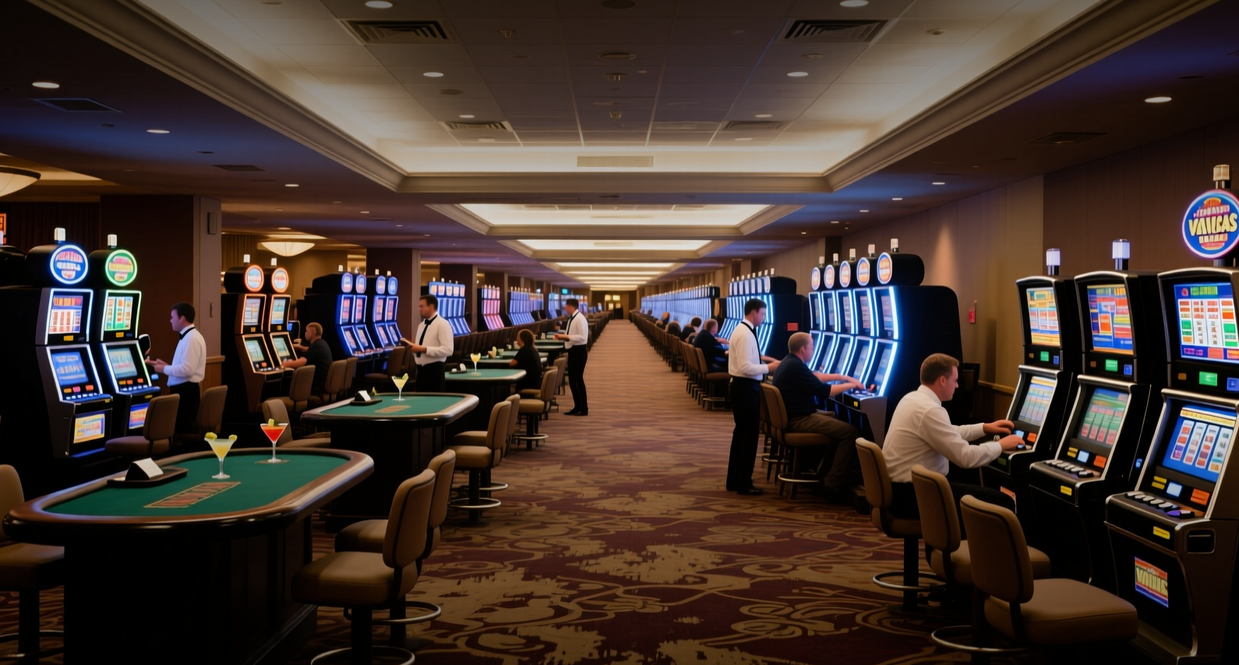
MGM Resorts loses buyout bid as People Incorporated walks away
A takeover bid that never carried a disclosed price is gone, and MGM Resorts International is left to trade on its own cash flow. People Incorporated said in a Sept. 23 statement that it had pulled its offer for all public shares of the casino operator, ending the transaction that had put a control premium into MGM's stock and removing the largest single reason to hold it. "The withdrawal takes the deal spread out of the tape and leaves MGM trading on its own cash flow again," said Tom Brennan, an M&A analyst who tracks deal flow, adding that the market must now re-underwrite the standalone business. MGM Resorts trades on the New York Stock Exchange under the ticker MGM, while People Incorporated is listed on Nasdaq as PPLI. Neither company disclosed the proposed price per share, the total deal value, the premium to MGM's undisturbed price, or the financing structure in the withdrawal announcement, and no expected closing timeline or regulatory approval schedule was ever made public. That absence of terms is itself the problem for holders: a bid that never carried a disclosed price cannot be marked against a spread, so the premium embedded in MGM's shares was priced on speculation rather than on a signed agreement. The withdrawal matters because MGM's equity story had been trading on two tracks — the standalone Las Vegas and Macau resort business, and the possibility of a control transaction. Removing the second track forces the market to value the first on its own. MGM's portfolio spans the Bellagio, MGM Grand, and Aria on the Las Vegas Strip, plus a majority stake in MGM China Holdings, which trades in Hong Kong under 2282.HK. Peers that had been bid up on consolidation logic — Caesars Entertainment, Las Vegas Sands, and Wynn Resorts — now face the same question without a live transaction to anchor it. For People Incorporated, the retreat removes a large financing and integration overhang from its own balance sheet. That can be read as discipline, but it also raises a credibility question: a company that publicly proposes buying all public shares of a target and then withdraws without a disclosed price or a stated reason gives the market no basis to underwrite its next approach. Deal flow in the gaming sector has been thin, and a failed approach of this size makes the next board less likely to engage early. The next hard data point for MGM holders is the company's quarterly results, where management will have to defend standalone guidance without the benefit of a bid in the background. Until then, the shares carry no deal floor. This article is for informational purposes only and does not constitute investment advice.

Sep 23 2026, 22:29
East Palestine testing contractor faces 1 whistleblower claim it hid data
The environmental testing firm that handled sampling after the 2023 East Palestine, Ohio, train derailment is contesting an account from a former employee who says supervisors told her to log non-detect readings for contamination and to leave animal fatalities out of her field reports. The worker's account, reported by The Wall Street Journal, describes pressure to record "zeros" for soil and water samples taken near the derailment site. The company named in the account rejected the characterization, saying its results were accurate and that it stands behind its work at the site. The dispute lands on top of a remediation bill that has already run into the hundreds of millions of dollars. Norfolk Southern agreed in 2024 to a $600 million class-action settlement covering residents within 20 miles of the Feb. 3, 2023, derailment of 38 cars, 11 of them carrying hazardous materials, and the railroad has separately booked more than $1.1 billion in related charges. The Environmental Protection Agency has said its own sampling found no levels of concern for long-term health, a conclusion the whistleblower's account now puts under renewed scrutiny. For the contractors that perform the sampling, the exposure is not the cleanup cost — it is the certification. Environmental testing firms sign off on data that regulators, courts, and insurers rely on, and a credible claim of falsified results can void that reliance, expose the firm to False Claims Act liability, and disqualify it from federal contracts. The EPA's Office of Inspector General has previously reviewed aspects of the East Palestine response, and any referral from the new allegations would move the question from a news cycle into an enforcement docket. Norfolk Southern shares have traded in a narrow band since the settlement, and no listed pure-play remediation contractor is named in the account, which is why the market read-through has been muted. The more durable risk sits with the unlisted engineering and laboratory firms that dominate site work: their pricing power rests on the assumption that their numbers hold up in court. The next markers are procedural rather than financial. If the worker files a formal complaint with the EPA's inspector general or the Occupational Safety and Health Administration, the contractor's internal records — chain-of-custody logs, lab bench sheets, and field notes — become discoverable, and the cost of that discovery lands on the firm regardless of the outcome. If no complaint follows, the allegation remains a reputational overhang on a sector that prices contracts on the assumption that its data is unimpeachable. This article is for informational purposes only and does not constitute investment advice.

Sep 23 2026, 22:25
Knife River falls 7% as Starboard urges sale exploration
Starboard Value publicly pressed Knife River to explore a sale on Wednesday, sending the construction-materials producer's shares down more than 7% as the activist laid out its case in an investor presentation. The campaign puts a company that has traded as a standalone builder of aggregates and ready-mix concrete operations under explicit pressure to test buyer interest, a step Knife River's board has not committed to taking. "Knife River owns scarce aggregate reserves that a strategic buyer would pay a premium for, and the market has not reflected that," Starboard said in materials accompanying the presentation. The New York-based fund, which has run campaigns at companies including Salesforce and Autodesk, did not disclose the size of its stake in the materials producer. The 7% decline exceeded the 5% single-stock volatility threshold that typically draws index and options attention, and it came on a day when the broader construction-materials group showed no comparable move. Knife River, spun off from MDU Resources in 2023, trades on the New York Stock Exchange under the ticker KNF. Starboard's argument rests on the gap between what Knife River's operating assets would fetch in a private transaction and what public shareholders currently assign them. Aggregates businesses are valued on reserve life and permit scarcity, and peers including Vulcan Materials and Martin Marietta Materials have historically commanded higher multiples than the standalone Knife River has sustained. The presentation did not include a formal slate of director nominees or a stated deadline, leaving the immediate path forward a matter of whether the board engages privately or the fund escalates toward a proxy contest. Knife River has not issued a public response to the presentation. For holders, the drop is a repricing of standalone execution risk rather than a verdict on the assets themselves: activist pressure of this kind historically raises the probability of a strategic review, but it also introduces a period of uncertainty in which the stock trades on campaign headlines rather than quarterly volumes and pricing. The next checkpoint is Knife River's quarterly results, where management's commentary on the sale question — or its absence — will set the tone for how the campaign develops. This article is for informational purposes only and does not constitute investment advice.