Edgen AI operates independently of, and is not controlled by Aspen Digital Financial Limited.
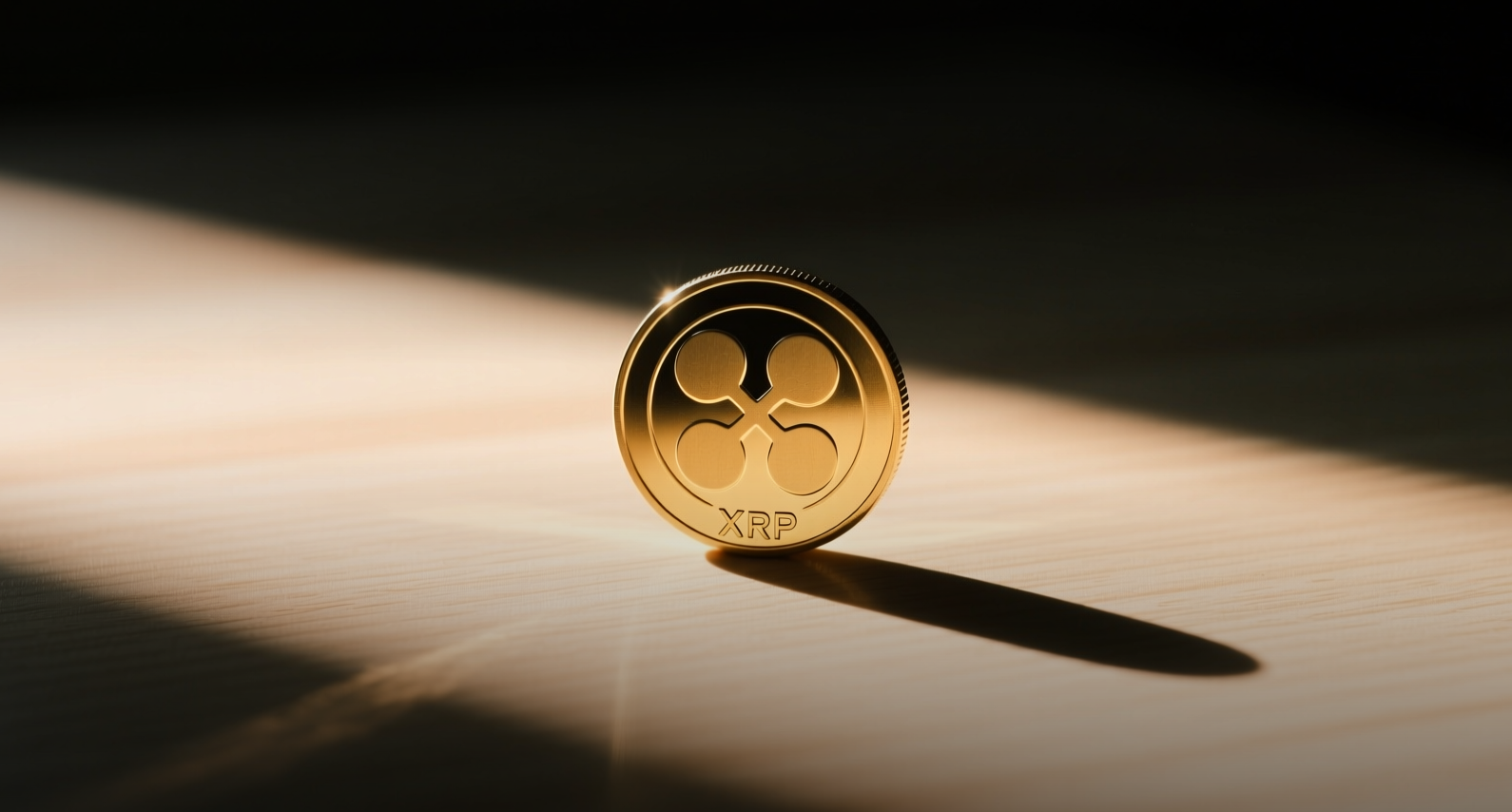
XRP Ledger nears 10 million agentic payments after x402 Foundation entry
 Edgen Crypto·Jul 21 2026, 19:07
Share to
Share to
Copy link
[1] RippleX sees XRP Ledger agentic transactions hitting 10-million mark soon (https://www.theblock.co/post/408987/ripplex-s ...)[2] Ripple Joins x402 Foundation to Advance XRP and RLUSD AI Payments (https://finance.yahoo.com/markets/crypto/arti ...)[3] Ripple Is Now a Premier Member of the x402 Foundation, Alongside Visa and Mastercard - AOL.com (https://www.aol.com/articles/ripple-now-premi ...)
Related News
Jul 21 2026, 19:39
Ethereum dominance tops 10% as altcoin demand strengthens across crypto markets
**Ethereum's share of the crypto market climbed back above 10% on July 21, signaling a rotation toward altcoins as regulatory progress and improving sentiment lift the sector.** Ethereum's market dominance rose above 10% on July 21, the highest level in weeks, as the token gained 1.3% to $1,920.73 and outperformed most major cryptocurrencies, according to CoinMarketCap data. "The market appears increasingly balanced, with long-term conviction providing support while speculative participation remains contained," Glassnode said in a note. The on-chain analytics firm pointed to stabilizing holder behavior as a constructive signal for digital assets. The move coincided with reports that President Donald Trump agreed to a crucial ethics provision for the US Clarity Act, clearing a hurdle for the crypto market structure bill's progress through Congress. Asian semiconductor stocks also rebounded, fueling a broad risk rally that lifted bitcoin above $66,000 for the first time since June 17. Spot bitcoin ETFs attracted more than $700 million in investor money over five trading days, the longest streak of inflows since May, according to SoSoValue data. Ethereum's dominance crossing back above 10% carries significance because the threshold has historically acted as a technical level that attracts momentum traders. With ETH's market capitalization at $234.5 billion and bitcoin dominance near 59%, a sustained move above 10% could compress BTC's share further and drive capital into altcoins and DeFi tokens. The CoinDesk DeFi Select Index surged 9% on July 21, reflecting broad-based demand for Ethereum ecosystem tokens. Solana's tokenized asset volume reached a record $5.8 billion in the second quarter, marking a 114% quarter-over-quarter increase and a six-quarter growth streak driven by tokenized equities, according to network data. The broader tokenized real-world asset market, excluding stablecoins, has grown to more than $33 billion, nearly tripling from roughly $12 billion a year prior. Open interest in ether futures rose alongside the price move, with call options dominating 24-hour trading volumes on Deribit, signaling growing demand for upside exposure. Futures open interest also increased in tokens such as ADA, XLM and LINK, pointing to broad-based capital inflows across the altcoin market. The shift in market structure comes as traders watch for Ethereum to hold above the 10% dominance level in the coming sessions. A sustained break could trigger further capital rotation from bitcoin into altcoins, with the DeFi sector positioned as a primary beneficiary given Ethereum's role as the leading smart contract platform. This article is for informational purposes only and does not constitute investment advice.
Jul 21 2026, 19:29
Pakistan launches crypto crime unit as 3rd-largest adoption market
**Pakistan's Federal Investigation Agency established a dedicated cryptocurrency investigation unit to police money laundering and terrorism financing conducted through digital assets.** Pakistan's Federal Investigation Agency set up a dedicated cryptocurrency investigation unit inside its new National Command and Control Centre, targeting money laundering and terrorism financing routed through virtual currencies. "The unit will investigate the criminal use of crypto while PVARA remains responsible for regulating digital assets," Dr Muhammad Athar Waheed, director of the FIA's Counter-Terrorism Wing, told Dawn. He urged the National Cyber Crime Investigation Agency and the Anti-Narcotics Force to build similar units to counter crypto's use in cybercrime and the drug trade. The NC3 centre consolidates the FIA's financial-crime tools on one platform, including anti-money laundering and virtual-currency investigation desks, an Interpol coordination point, and units for open-source intelligence, cyber patrolling and dark web investigation. New rules are being drafted to wrap up inquiries within fixed timeframes, Waheed said. The enforcement push gives Islamabad a policing arm to match its regulatory ambitions — even as the country's religious scholars debate whether crypto is permissible under Islamic law. PVARA chairman Bilal bin Saqib has asked the Jamia Darul Uloom Karachi seminary to distinguish between speculative tokens and asset-backed instruments such as fully reserved stablecoins and blockchain-recorded sukuk, telling Reuters that Pakistan could "lead the world in Shariah-compliant digital finance." **Regulatory push meets religious uncertainty** Pakistan ranked third in the Chainalysis 2025 Global Crypto Adoption Index, and the government has moved aggressively to formalize the sector. Islamabad lifted an eight-year crypto banking ban, created the Pakistan Virtual Assets Regulatory Authority in July 2025, began advancing licenses for exchanges including Binance and HTX, and explored tokenizing state assets. The country has also woven crypto into its diplomacy with Washington, striking a deal with an affiliate of World Liberty Financial — the Trump family's crypto venture — to explore using its USD1 stablecoin for cross-border payments. That embrace hit a snag in June, when the influential Jamia Darul Uloom Karachi seminary ruled that cryptocurrency is not "wealth" under Islamic law and therefore not a valid means of payment. The fatwa cast doubt on the government's plans, though Saqib has argued that asset-backed tokens such as fully reserved stablecoins should be treated differently from purely speculative instruments. **Dual-track enforcement model** The FIA unit gives Pakistan an enforcement framework alongside its licensing regime — a dual-track approach that mirrors strategies in jurisdictions such as Singapore and the UAE, where regulators have built both promotional and policing functions in parallel. With the unit now operational and PVARA issuing exchange licenses, Pakistan is building out both sides of its crypto regulatory architecture even as the question of whether digital assets are permissible under Islamic law remains unresolved. This article is for informational purposes only and does not constitute investment advice.
Jul 21 2026, 18:59
Telegram plans Gram wallet for 1 billion users after Toncoin rebrand
Telegram will roll out a native non-custodial Gram wallet to its more than 1 billion monthly active users this summer, founder Pavel Durov said on Tuesday, calling it the "largest rollout of a non-custodial crypto wallet in human history." "This summer will see the largest rollout of a non-custodial crypto wallet in human history. Instant zero-fee crypto transactions for over a billion users are about to become reality," Durov wrote on his official Telegram channel. The wallet will be native to GRAM, the token formerly known as Toncoin that was rebranded on June 15 with 81.22% community approval. GRAM traded at $1.53 as of Tuesday, up 8.4% in 24 hours with a $4.17 billion market capitalization, according to CoinGecko. The token ranks 25th among all cryptocurrencies but remains down more than 54% over the past year. The price move followed Durov's post, which marks his most aggressive step yet toward making Gram the default currency inside the messaging app. The announcement revives a promise Durov first made in November 2022, when he said Telegram would build non-custodial wallets and a decentralized exchange after FTX's collapse — a version that never shipped at scale. What changed is control: Telegram replaced the TON Foundation as the network's primary steward in May, became its largest validator, and cut transaction fees roughly sixfold. The structural shift means Telegram now owns the validator set, the token brand and the distribution channel, removing the dependency on third parties that stalled earlier efforts. **What the wallet rollout means for GRAM** The new wallet is separate from Wallet in Telegram, the custodial multi-chain product built by The Open Platform that has more than 150 million registered users. Andrew Rogozov, founder of TOP, said the two products will coexist for different audiences. "Telegram Wallet serves as a simple gateway into crypto, whereas Wallet in Telegram is built for users seeking advanced trading, investment, and asset management capabilities," Rogozov told BeInCrypto. Converting even 1% of Telegram's user base into active wallet holders would produce roughly 10 million participants, a figure comparable to the active user counts of several top-10 blockchain networks. The technical foundation for the zero-fee claim rests on TON's Catchain 2.0 consensus upgrade, which went live on April 9 and cut block times from roughly 2.5 seconds to about 400 milliseconds, reducing settlement to approximately one second. Skeptics remain. Blockstream CEO Adam Back recently questioned GRAM's inflation mechanics after Durov compared the token favorably with Bitcoin. Projected annual inflation rose from roughly 0.6% to about 3.6% following the network changes. Self-custody at Telegram's scale is also untested — whether a billion users activate the wallet rather than simply receiving it will determine the rollout's real impact. The wallet rollout is plausibly step five of a publicly stated seven-step roadmap that began with the Toncoin-to-GRAM rebrand. Durov has now promised this product twice. The difference is that he finally owns every piece required to deliver it. This article is for informational purposes only and does not constitute investment advice.