Edgen AI operates independently of, and is not controlled by Aspen Digital Financial Limited.
Pakistan launches crypto crime unit as 3rd-largest adoption market
 Edgen Crypto·Jul 21 2026, 19:29
Share to
Share to
Copy link

[1] Pakistan Steps up Crypto Enforcement with Dedicated Federal Unit (https://cointelegraph.com/news/pakistan-crypt ...)[2] Pakistan Launches Crypto Investigation Unit to Fight Money Laundering (https://finance.yahoo.com/markets/crypto/arti ...)[3] Islamabad High Court Stops FIA From Announcing Recruitment Test Results (https://propakistani.pk/2026/07/21/islamabad- ...)[4] Russia’s State Duma Passes First Comprehensive Crypto Law (https://coinlaw.io/russia-crypto-market-law/ ...)
Related News

Jul 21 2026, 20:38
Satsuma shareholders vote 90% to liquidate bitcoin treasury and delist
**Satsuma Technology's bitcoin treasury strategy lasted less than a year.** Shareholders voted Monday to sell the company's remaining 668 BTC, return capital to investors and cancel its London Stock Exchange listing, marking one of the fastest reversals of a corporate bitcoin accumulation plan. Bitcoin traded at $64,785, flat on the day, as the market absorbed the news without visible disruption. The 668 BTC — worth about $43.5 million at current prices — represents a fraction of bitcoin's daily spot volume of $1.29 billion. The vote passed with more than 90% support on both resolutions, according to a company filing. Four of Satsuma's six directors opposed the plan, arguing investors would be better served keeping the company listed as a bitcoin treasury vehicle. The other two directors backed the liquidation and capital return. "The board was split, but the shareholder vote was decisive," a person familiar with the matter said. Pantera Capital, which held a significant position and pushed for the vote, declined to comment. Satsuma raised £163.6 million ($218 million) in an oversubscribed convertible note round less than a year ago, backed by ParaFi Capital, Pantera Capital, Digital Currency Group and Kraken. Investors contributed 1,097 BTC instead of nearly $97 million in cash during that raise. In December, after bitcoin fell from its $126,000 all-time high, Satsuma sold 579 BTC — about half its holdings — for £40 million to repay noteholders who chose not to convert their debt into shares. By April, Satsuma shares (ticker SATS) had fallen more than 99% from their June 2025 peak. Pantera and other investors began pushing the company to liquidate its remaining bitcoin and return capital. **The premium that made the model work** The entire bitcoin treasury company model rests on a single mechanism: a company that holds bitcoin trades at a premium to the net asset value of those coins. That premium lets it issue new equity above NAV, use the cash to buy more bitcoin, and end up with more bitcoin per share. When the premium compresses or flips to a discount, the flywheel stops. Satsuma's collapse mirrors a broader stress test of the corporate bitcoin treasury model. Nakamoto Inc. sold 600 BTC for about $48 million this month to repay a $45 million creditor obligation, then authorized a $25 million share buyback — a signal management still sees value in its equity, not a loss of conviction in bitcoin. Bitcoin Japan, holding zero bitcoin, lined up a $60 million raise through EVO Fund on July 18 specifically to establish a first position. The pattern is consistent: companies selling because they have to, not because they want to. Debt obligations, shareholder pressure and governance fights — not conviction loss — are driving the disposals. **What happens next** The expected timetable for the capital return is set. The record time for entitlement to B shares is 6 p.m. on Aug. 3. A UK High Court hearing for directions is scheduled for Aug. 13, with a confirmation hearing on Sept. 8. Cancellation of Satsuma's listing is expected on Sept. 14, with payments and CREST transfers by Sept. 28. For the broader market, the question is whether this remains an idiosyncratic event or becomes a pattern. If more treasury companies disclose sales in coming filings, the persistent bid from corporate buyers — a price-insensitive source of demand throughout this cycle — could weaken. If premiums recover across the sector, the flywheel restarts. With BTC flat at $64,785, none of this is priced as a crisis yet. The companies that built themselves entirely on the premium are the ones to watch. This article is for informational purposes only and does not constitute investment advice.

Jul 21 2026, 20:30
Bitcoin rally nears $68,000 test as summer slumber grips crypto
Bitcoin rose above $66,600 on Tuesday, its highest in more than a month, extending a 15% rebound from the July 7 low near $58,000. "The first retest of this resistance zone is expected to catalyze a sharp response," Bitfinex analysts wrote in a market report published Monday. The $68,000 level also coincides with bitcoin's mid-June high, where the previous rally attempt rolled over and tumbled to fresh cycle lows. The level sits near the average purchase price of investors who bought over the prior five months, according to Glassnode data cited by Bitfinex. Traders sitting on unrealized losses may see a return to breakeven as an exit opportunity. Bitcoin traded at $66,394 as of 14:30 UTC, up 1.6% in 24 hours, with 24-hour volume of roughly $33 billion, CoinGecko data shows. A break above $68,000 could open the door to further gains, while a rejection risks retesting the $58,000 area. The Federal Reserve's July 28-29 meeting is the next macro catalyst, with CME FedWatch data showing an 87.7% probability of a rate hold. **Institutional flows stabilize, but conviction lags** U.S. spot bitcoin ETFs have drawn inflows for five straight sessions totaling more than $600 million, the most sustained institutional buying since mid-July and a reversal of the eight-week outflow streak that ran through late June. Still, demand has yet to fully recover, with flows remaining well below levels seen earlier this year, Bitfinex said. K33 Research described the backdrop as a "promising, and typical, summer slumber." Head of research Vetle Lunde noted that CME bitcoin futures open interest has fallen to its lowest level since 2023, while 30-day spot trading volume is running at just 62% of its annual average. Average daily volume of roughly $2.3 billion is hovering near yearly lows even as prices recovered. "Only about one-third of trading days have recorded net outflows this month, compared with roughly 90% in June," Lunde wrote, "suggesting selling pressure is easing, but buyers have yet to return in force." Bitcoin's dominance has risen to nearly 67% of spot crypto trading volume, up from roughly 50% a year ago, according to Bitfinex. The shift suggests investors continue to favor bitcoin over smaller tokens, a sign that traders remain defensive rather than embracing broad risk-taking. The rally has drawn support from a softer inflation backdrop. U.S. PPI fell 0.3% in June, the first monthly decline since August 2025, pushing Fed rate hike odds down to 12.3% from 31% a week earlier. Progress on the CLARITY Act has added a regulatory tailwind, with the White House agreeing to the ethics package that had stalled the bill. Still, risks remain. Oil has pushed above $85 after President Donald Trump announced a Strait of Hormuz blockade, and a hotter energy print could stall the disinflation story. Higher oil and Treasury yields could keep the Fed hawkish and cap risk assets. *This article is for informational purposes only and does not constitute investment advice.*
Jul 21 2026, 20:10
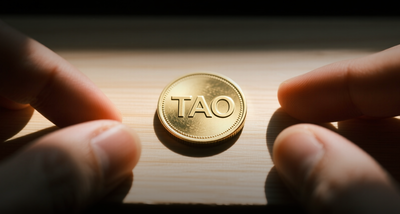
MEXC opens TAO staking to 40 million users through Yuma deal
MEXC opened Bittensor's TAO staking to its 40 million users Tuesday through validator Yuma, adding exchange-based access to rewards from one of the largest decentralized AI networks. "Introducing millions of users to Bittensor takes broad distribution and high-quality infrastructure," Evan Malanga, chief revenue officer at Yuma, said. "Our proprietary research enables Yuma to commit stake to rewarding the most productive and valuable subnets, enhancing the health of the Bittensor ecosystem." Under the integration, Yuma operates the validator infrastructure behind the service while MEXC provides the customer-facing staking product. Yuma evaluates network performance firsthand and submits its own weights — a form of performance grading to achieve network consensus — so TAO staked via MEXC earns rewards by supporting the strongest Bittensor contributors. Bittensor's ecosystem currently contains 128 subnets, according to the company, with projects focused on AI inference, coding assistants, financial modeling and model training. The deal removes several steps normally required to stake directly on Bittensor, which involves transferring TAO to a supported wallet, selecting a validator and completing the delegation on the network. TAO traded near $199 at the time of the announcement, giving Bittensor a market capitalization of about $1.91 billion, according to CoinMarketCap data. MEXC reports serving more than 40 million users in over 170 countries and regions. The exchange lists more than 3,000 cryptocurrencies across spot and derivatives markets and offers industry-leading 0-fee trading, according to its website. Yuma, a subsidiary of Digital Currency Group, focuses exclusively on Bittensor. The firm invests, validates, mines, researches and builds across the network through staking infrastructure, subnet acceleration and institutional asset management. The partnership follows Yuma's public criticism of Root Reborn, a proposed Bittensor governance overhaul that would change how validators allocate capital. Yuma argued the proposal could turn validators from neutral network operators into active capital managers, potentially encouraging collusion and preferential treatment. TAO fell nearly 20% from its June 15 peak of about $283 to roughly $225 on June 19 as governance concerns weighed on the market, according to Crypto.news data. MEXC will support the launch with limited-time promotions to encourage network participation, the companies said. This article is for informational purposes only and does not constitute investment advice.