Edgen AI operates independently of, and is not controlled by Aspen Digital Financial Limited.
SpaceX sinks below $135 IPO price, threatening Bitcoin liquidation
 Edgen Crypto·Jul 16 2026, 19:59
Share to
Share to
Copy link


[1] SpaceX shares dip below IPO price of $135, and its Bitcoin holdings make this crypto's problem too (https://cryptobriefing.com/spacex-shares-dip- ...)[2] SpaceX drops below its $135 IPO price for the first time since its debut - Business Insider (https://www.businessinsider.com/spacex-stock- ...)[3] SpaceX stock sinks below $135 IPO price for the first time - CNBC (https://www.cnbc.com/2026/07/15/spacex-spcx-s ...)[4] SpaceX Shares Fall Below $135 IPO Price For The First Time - Forbes (https://www.forbes.com/sites/antoniopequenoiv ...)[5] SpaceX falls to $135 IPO price ahead of Starship launch - TechCrunch (https://techcrunch.com/2026/07/15/spacex-fall ...)
Related News

Jul 16 2026, 21:33
SpaceX falls to $135 IPO price as Starship launch tests investor faith
**SpaceX has surrendered every dollar of its post-IPO gains in five weeks, returning to its $135 offering price hours before the most consequential Starship test since going public.** SpaceX shares closed at $135.27 Wednesday, erasing all gains from the June 12 IPO that raised $75 billion, as traders braced for a Starship test flight that prediction markets give an 89% probability of ending in an explosion. "The market is pricing in a binary outcome — either Starship works and the stock re-rates, or it doesn't and the selloff continues," said Brian Gesuale, analyst at Raymond James, who carries an $800 price target implying 491% upside. The stock has fallen 29.73% over the past month and 8.79% in the past week, wiping out a post-IPO rally that briefly pushed the valuation past $2 trillion. Of 11 analysts covering SPCX, 7 rate it a Buy, 3 a Hold and 1 a Sell, with a consensus target of $242.22 — 79% above current levels. CFRA opened coverage at $115, below the IPO price. The Starship Flight Test 13, launching from Boca Chica, Texas, during a 90-minute window opening at 6:45 p.m. ET, represents the first major operational test since the IPO. A successful flight would validate the V3 Starship design after May's test suffered engine outages on both the booster and the upper stage. A failure risks amplifying selling pressure on a stock already trading below its opening-day print. **The $135 Floor and the $800 Ceiling** The gap between where SpaceX trades and where its most bullish analyst sees it heading is among the widest in the US-listed space sector. Gesuale's $800 target implies a $10.5 trillion valuation, built on Starship achieving full reusability and SpaceX selling orbital AI compute capacity. The thesis depends on roughly 200 Starship launches per gigawatt for space-based data centers — a capability that does not yet exist. More conservative estimates anchor closer to the consensus. The $242 average target assumes Starlink monetization and existing government contracts under the National Security Space Launch program will drive revenue growth without requiring Starship to reach its full design potential. SpaceX is now held by approximately 200 exchange-traded funds, creating structural buying demand that did not exist at the IPO. **A Treasury of 18,000 Bitcoin Adds Another Variable** SpaceX disclosed an 18,000 Bitcoin corporate treasury, a holding worth roughly $1.1 billion at current prices. The position ties the company's balance sheet to cryptocurrency volatility at a moment when the stock is already under pressure. A successful Starship flight could boost confidence in both the equity and the crypto strategy, while a failure could compound downside risk for investors exposed to both assets. The launch itself will not attempt to recover the Super Heavy booster or the Starship upper stage — both are programmed for controlled splashdowns that will end in destruction regardless of flight performance. SpaceX's "fly, fail, fix" approach means even a mid-flight breakup counts as data collection rather than mission failure, though the distinction may be lost on retail investors who piled $70 billion into the IPO. This article is for informational purposes only and does not constitute investment advice.
Jul 16 2026, 21:05
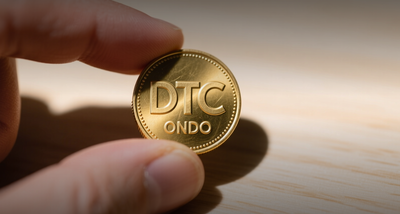
Tokenized ETFs top $500M as Ondo Finance leads sector milestone
Tokenized ETFs surpassed $500 million in total market capitalization on July 16, led by Ondo Finance as the sector's dominant platform, data from RWA.xyz shows. "The tokenized ETF milestone reflects growing demand for on-chain exposure to traditional assets, with Ondo's DTC-backed structure providing institutional-grade settlement rails," Jason Wu, on-chain analyst at Edgen, said. Ondo Finance's tokenized stock products — CRCLon, representing Circle shares, and SPYon, tracking the SPDR S&P 500 ETF — are backed by DTC Tokenized Entitlements to securities held at the Depository Trust Company. The tokens are issued through the DTCC Tokenization Service, placing Ondo alongside BlackRock, JPMorgan Chase and Goldman Sachs in the industry's largest tokenization initiative. Alpaca Markets, which raised $135 million in June to expand tokenized stock infrastructure, clears or custodies roughly 94 percent of tokenized US equities, including Ondo's products, holding more than $1.5 billion in underlying stocks. The milestone validates the real-world asset tokenization thesis at a time when the broader RWA market has swelled to $34 billion, though tokenized stocks remain a small fraction at about 5.5 percent of that total. The DTCC plans to launch its full tokenization service in October 2026, seven months after the SEC granted DTC a No-Action Letter to tokenize custodied assets. **Ondo's Tokenized Stock Expansion** Ondo Finance's native token ONDO climbed 17 percent to $0.37 on July 15, reaching a one-month high as the protocol's DTC-backed tokenized stock launch drove buying interest, CoinGecko data shows. The token reclaimed its 20-day, 50-day and 100-day exponential moving averages and was testing the 200-day EMA near $0.377, with $0.40 emerging as the next resistance level. The platform expanded its tokenized US stocks and ETFs across multiple layer-1 blockchains and introduced round-the-clock minting and redemption for assets including SPYon, NVDAon and TSLAon. Ondo Perps, the derivatives platform, allows eligible users outside the US to trade perpetual futures tied to tokenized equities with leverage of up to 20x and has processed billions of dollars in cumulative trading volume. **Tokenized RWA Market Diversifies** The broader tokenized real-world asset market surged 589 percent from early 2025 to June 2026, led by government bonds and money market funds, according to a Binance Research report. Tokenized US Treasury debt represents the largest segment at $15 billion, or 44 percent of the RWA market, followed by $4.5 billion in tokenized commodities at 13 percent, RWA.xyz data shows. Tokenized precious metals attracted about $1.5 billion in value, rising 39 percent during the period. Kraken's xStocks platform, which launched access to 11,000 US-listed stocks and ETFs in April 2025, saw cumulative trading volume exceed $25 billion within about eight months. Coinbase and other crypto firms have also moved further into onchain assets, intensifying competition in the tokenized equities space. This article is for informational purposes only and does not constitute investment advice.

Jul 16 2026, 20:58
Injective's INJ jumps 8% on Robinhood listing after MiCA compliance milestone
INJ, the native token of the Injective layer-1 blockchain, rose 8% to $5.12 after Robinhood Crypto listed the asset for spot trading on July 16. "The Robinhood listing removes a key accessibility barrier for retail investors who previously needed a crypto-native wallet or a specialized exchange to acquire INJ," said Jason Wu, on-chain analyst at The Block. The token traded between $4.76 and $5 through the session with a market capitalization near $494 million, according to CoinGecko data as of 14:30 UTC. Injective recently burned 43,500 INJ through its Community BuyBack mechanism, a deflationary process governed entirely by INJ stakers through on-chain proposals. The listing follows a series of regulatory milestones for the project. Injective published a Markets in Crypto-Assets Regulation white paper registered with the European Securities and Markets Authority's Interim MiCA Register and passported from Denmark to all 30 European markets. The document standardizes disclosures for INJ under MiCA, which became fully applicable across the EU in December 2024, and provides European institutions with a detailed account of the token's functionality, risks, and economic model. Injective is a layer-1 chain built specifically for financial applications, with a focus on decentralized trading, tokenization, and cross-chain interoperability. The INJ token serves as the network's governance and staking asset and handles fee payments across its suite of financial protocols. In April, Bitnomial launched the first CFTC-regulated INJ futures in the US, offering institutional and retail investors a regulated instrument for price exposure and hedging. Canary Capital's proposed Staked INJ ETF is also progressing through the SEC filing process, though it remains in the preliminary stage. Robinhood has been expanding its crypto offerings while developing Robinhood Chain and exploring tokenized stock listings. Adding INJ, a token from a blockchain specializing in financial infrastructure, aligns with that strategic direction. For Injective, the Robinhood listing broadens distribution beyond crypto-native platforms, potentially attracting a wider retail base as the project pursues deeper real-world asset integration within its infrastructure. This article is for informational purposes only and does not constitute investment advice.