Edgen AI operates independently of, and is not controlled by Aspen Digital Financial Limited.
SpaceX falls to $135 IPO price as Starship launch tests investor faith
 Edgen Crypto·Jul 16 2026, 21:33
Share to
Share to
Copy link


[1] SpaceX conducts first Starship launch since its record-shattering IPO, and its 18,000 BTC treasury is watching too (https://cryptobriefing.com/spacex-starship-la ...)[2] SpaceX aims to launch its next Starship test flight as NASA deadlines loom | CNN (https://www.cnn.com/2026/07/16/science/live-n ...)[3] SpaceX at $135: Why You Should Buy SpaceX Ahead of the Planned Starship “Explosi... (https://247wallst.com/investing/2026/07/16/sp ...)[4] SpaceX Falls Back to $135 IPO Price But Raymond James Thinks The Stock Is Going... (https://finance.yahoo.com/markets/stocks/arti ...)[5] SpaceX falls to $135 IPO price ahead of Starship launch (https://finance.yahoo.com/markets/stocks/arti ...)
Related News
Jul 16 2026, 21:35
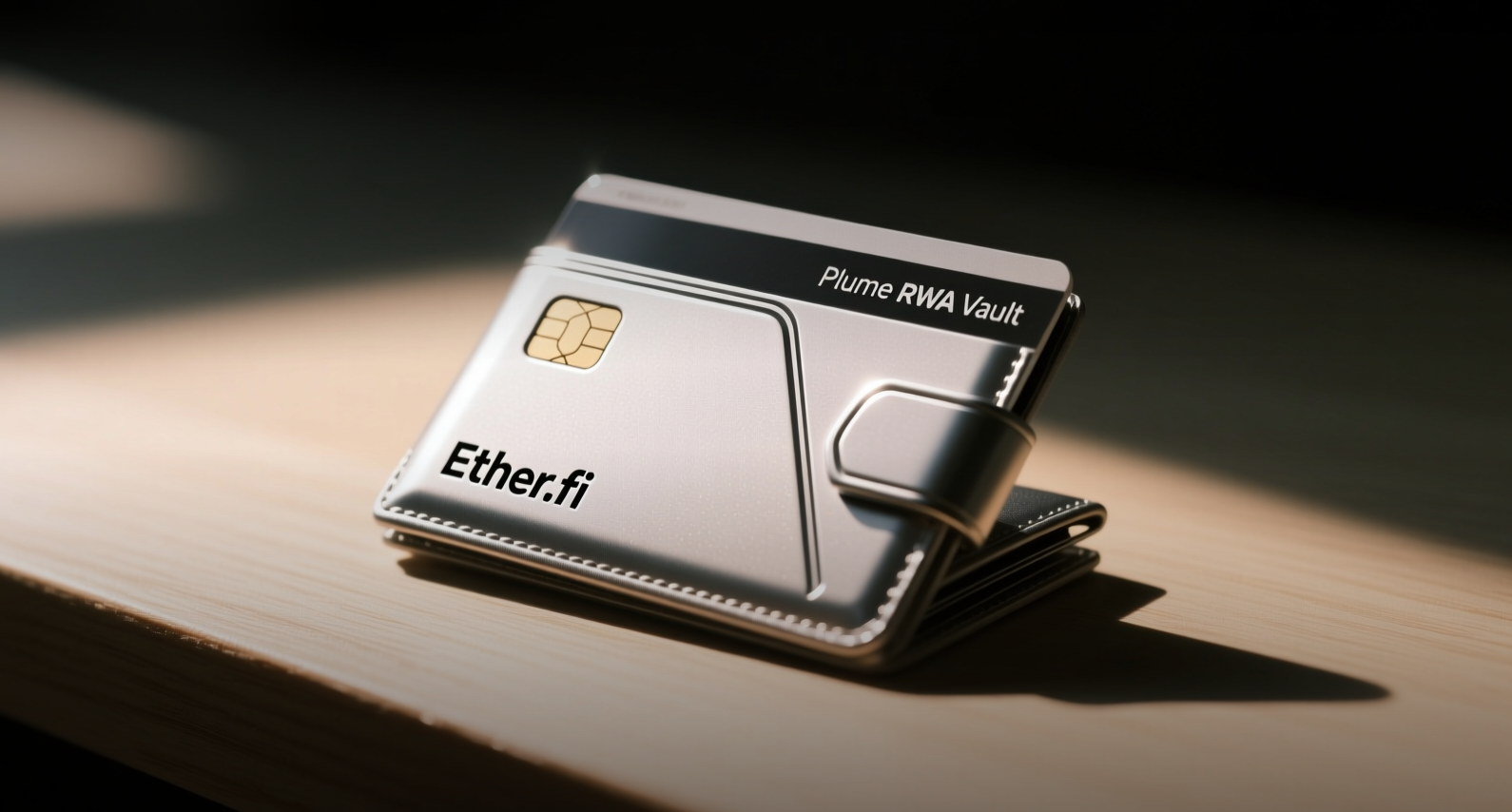
Ether.fi jumps 11% as $100M RWA vault bet targets $0.50
**Ether.fi's $100 million bet on tokenized real-world assets is reshaping the token's trajectory, pushing ETHFI past key technical levels as derivatives traders pile in.** Ether.fi's ETHFI rose 11.3% to $0.43 on Wednesday, the largest single-day gain in three weeks, after the liquid staking protocol allocated $100 million into a Plume Network vault offering institutional-grade real-world asset yields. "The Plume RWA Vault gives ETHFI holders exposure to a yield stream that is uncorrelated to crypto volatility, which is exactly what institutional allocators have been asking for," Jason Wu, an on-chain analyst at Edgen, said. Derivatives open interest climbed 19% to $74.5 million while trading volume surged 93% to $110 million, Coinglass data show. Spot netflow turned negative for two consecutive days — a signal that buyers are accumulating rather than distributing — with the metric improving to -$82,000 from -$264,000. The token's momentum shift indicator stabilized at 0.025, and the MACD has been on a rising trajectory for two weeks. The RWA vault, launched two weeks ago on Plume Network and later integrated with Binance Wallet, has expanded Ether.fi's addressable market beyond liquid staking into the $30 trillion real-world asset tokenization sector. If demand holds, ETHFI could close above $0.45 and target $0.50, though a failure to hold $0.44 risks a pullback to $0.40 or lower. The move comes as the broader crypto market shows signs of recovery. Bitcoin held above $64,000 on Thursday, testing its 50-day EMA near $65,136, while ether outperformed large-cap peers with an 11% weekly gain. U.S. spot ether ETFs took in $96 million over the first three days of the week, concentrated in BlackRock's low-fee products. Ether.fi's pivot into RWA tokenization differentiates it from other liquid staking protocols at a time when the sector faces margin compression. The Plume vault provides non-custodial access to institutional-grade yields, a product structure that has attracted $100 million in committed capital. The Binance Wallet integration that followed expanded distribution to the exchange's user base. The token's technical setup supports the bullish case. ETHFI reclaimed its 50-day EMA at $0.38 and is testing a downward trendline near $0.44. The RSI at 62 suggests room to run before hitting overbought territory, while rising on-balance volume confirms accumulation. The 200-day EMA at $0.51 represents the next major resistance if the trendline breakout holds. This article is for informational purposes only and does not constitute investment advice.
Jul 16 2026, 21:05
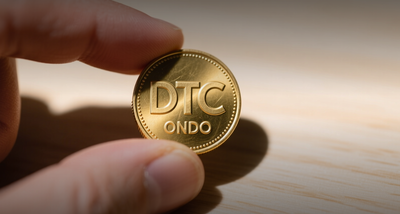
Tokenized ETFs top $500M as Ondo Finance leads sector milestone
Tokenized ETFs surpassed $500 million in total market capitalization on July 16, led by Ondo Finance as the sector's dominant platform, data from RWA.xyz shows. "The tokenized ETF milestone reflects growing demand for on-chain exposure to traditional assets, with Ondo's DTC-backed structure providing institutional-grade settlement rails," Jason Wu, on-chain analyst at Edgen, said. Ondo Finance's tokenized stock products — CRCLon, representing Circle shares, and SPYon, tracking the SPDR S&P 500 ETF — are backed by DTC Tokenized Entitlements to securities held at the Depository Trust Company. The tokens are issued through the DTCC Tokenization Service, placing Ondo alongside BlackRock, JPMorgan Chase and Goldman Sachs in the industry's largest tokenization initiative. Alpaca Markets, which raised $135 million in June to expand tokenized stock infrastructure, clears or custodies roughly 94 percent of tokenized US equities, including Ondo's products, holding more than $1.5 billion in underlying stocks. The milestone validates the real-world asset tokenization thesis at a time when the broader RWA market has swelled to $34 billion, though tokenized stocks remain a small fraction at about 5.5 percent of that total. The DTCC plans to launch its full tokenization service in October 2026, seven months after the SEC granted DTC a No-Action Letter to tokenize custodied assets. **Ondo's Tokenized Stock Expansion** Ondo Finance's native token ONDO climbed 17 percent to $0.37 on July 15, reaching a one-month high as the protocol's DTC-backed tokenized stock launch drove buying interest, CoinGecko data shows. The token reclaimed its 20-day, 50-day and 100-day exponential moving averages and was testing the 200-day EMA near $0.377, with $0.40 emerging as the next resistance level. The platform expanded its tokenized US stocks and ETFs across multiple layer-1 blockchains and introduced round-the-clock minting and redemption for assets including SPYon, NVDAon and TSLAon. Ondo Perps, the derivatives platform, allows eligible users outside the US to trade perpetual futures tied to tokenized equities with leverage of up to 20x and has processed billions of dollars in cumulative trading volume. **Tokenized RWA Market Diversifies** The broader tokenized real-world asset market surged 589 percent from early 2025 to June 2026, led by government bonds and money market funds, according to a Binance Research report. Tokenized US Treasury debt represents the largest segment at $15 billion, or 44 percent of the RWA market, followed by $4.5 billion in tokenized commodities at 13 percent, RWA.xyz data shows. Tokenized precious metals attracted about $1.5 billion in value, rising 39 percent during the period. Kraken's xStocks platform, which launched access to 11,000 US-listed stocks and ETFs in April 2025, saw cumulative trading volume exceed $25 billion within about eight months. Coinbase and other crypto firms have also moved further into onchain assets, intensifying competition in the tokenized equities space. This article is for informational purposes only and does not constitute investment advice.

Jul 16 2026, 20:58
Injective's INJ jumps 8% on Robinhood listing after MiCA compliance milestone
INJ, the native token of the Injective layer-1 blockchain, rose 8% to $5.12 after Robinhood Crypto listed the asset for spot trading on July 16. "The Robinhood listing removes a key accessibility barrier for retail investors who previously needed a crypto-native wallet or a specialized exchange to acquire INJ," said Jason Wu, on-chain analyst at The Block. The token traded between $4.76 and $5 through the session with a market capitalization near $494 million, according to CoinGecko data as of 14:30 UTC. Injective recently burned 43,500 INJ through its Community BuyBack mechanism, a deflationary process governed entirely by INJ stakers through on-chain proposals. The listing follows a series of regulatory milestones for the project. Injective published a Markets in Crypto-Assets Regulation white paper registered with the European Securities and Markets Authority's Interim MiCA Register and passported from Denmark to all 30 European markets. The document standardizes disclosures for INJ under MiCA, which became fully applicable across the EU in December 2024, and provides European institutions with a detailed account of the token's functionality, risks, and economic model. Injective is a layer-1 chain built specifically for financial applications, with a focus on decentralized trading, tokenization, and cross-chain interoperability. The INJ token serves as the network's governance and staking asset and handles fee payments across its suite of financial protocols. In April, Bitnomial launched the first CFTC-regulated INJ futures in the US, offering institutional and retail investors a regulated instrument for price exposure and hedging. Canary Capital's proposed Staked INJ ETF is also progressing through the SEC filing process, though it remains in the preliminary stage. Robinhood has been expanding its crypto offerings while developing Robinhood Chain and exploring tokenized stock listings. Adding INJ, a token from a blockchain specializing in financial infrastructure, aligns with that strategic direction. For Injective, the Robinhood listing broadens distribution beyond crypto-native platforms, potentially attracting a wider retail base as the project pursues deeper real-world asset integration within its infrastructure. This article is for informational purposes only and does not constitute investment advice.