Edgen AI operates independently of, and is not controlled by Aspen Digital Financial Limited.
Bitcoin faces $82K or $76K test as Fed decides rate path
 Edgen Crypto·Sep 14 2026, 22:43
Share to
Share to
Copy link


[1] Bitcoin Could Test $82K or $76K After Fed Decision, Bitfinex Warns (https://crypto-economy.com/bitcoin-could-test ...)[2] Fed's table is set for a rate hike, a first under Warsh (https://www.msn.com/en-us/news/other/feds-tab ...)
Related News
Sep 14 2026, 22:54
KULR dumps final 764 Bitcoin for $58.6M to end treasury bet
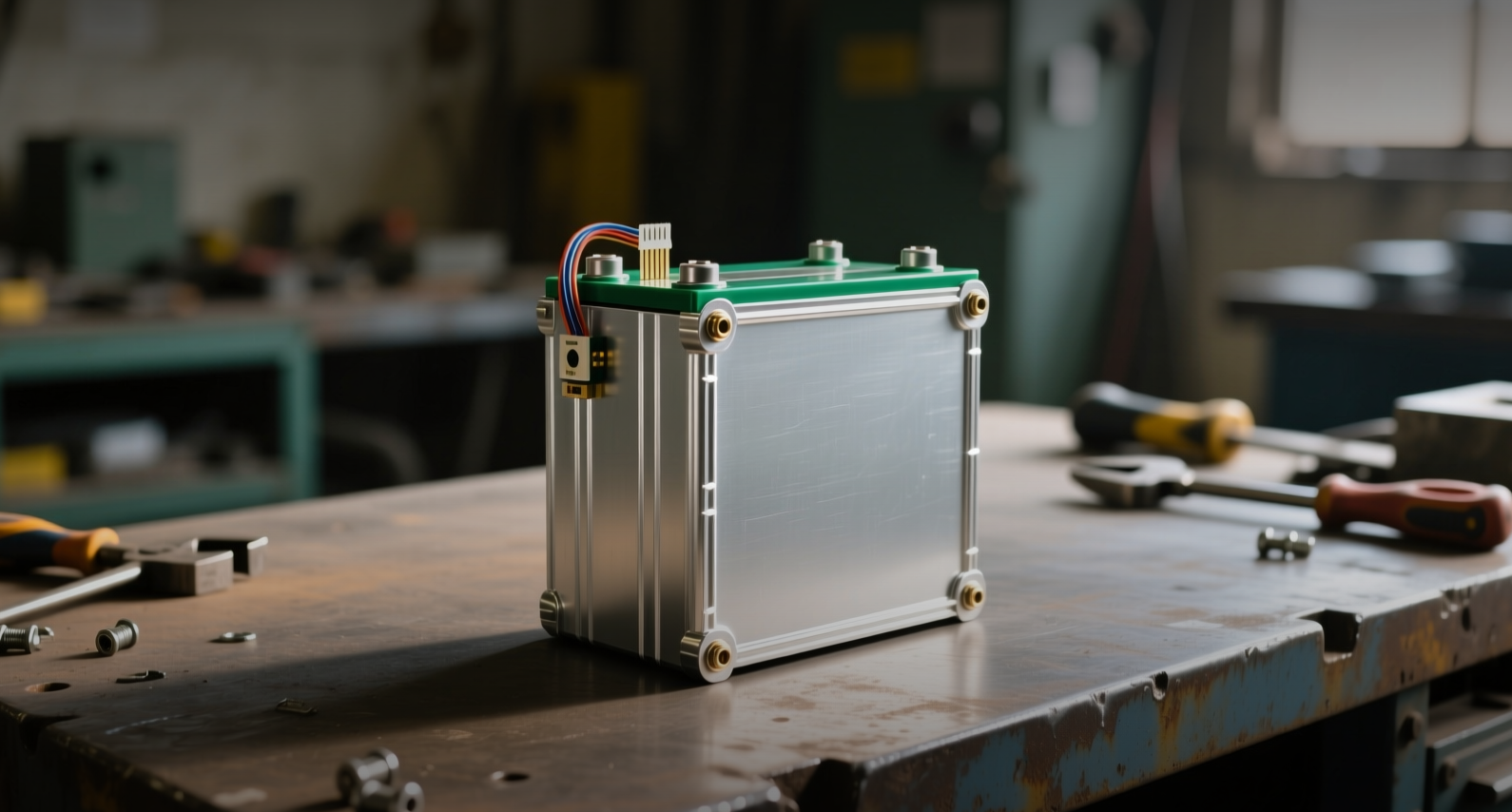
KULR Technology Group sold its last 764 Bitcoin for about $58.6 million, closing a two-year corporate treasury experiment and returning the battery maker to a balance sheet with no direct exposure to the cryptocurrency. The Webster, Texas-based company sold the coins in open-market transactions to unrelated buyers between Aug. 20 and Sept. 11 at a weighted average price of about $76,633 per Bitcoin, according to an 8-K filed with the Securities and Exchange Commission. The sales represented all of KULR's remaining holdings, and the company said it no longer holds BTC as of the filing date. The exit completes an unwind that began in July, when KULR sold roughly 333 Bitcoin for about $21.5 million at an average of $64,538 per coin. About $20 million of those proceeds went to repay a credit facility with Coinbase that had been collateralized against the company's Bitcoin. Combined, the two tranches generated about $80.1 million in gross proceeds from approximately 1,097 BTC. The second batch cleared at a price roughly 19% higher than the first. "The filing does not disclose the coins' cost basis or whether the final disposal produced a realized gain or loss," KULR said in the 8-K, which recorded the sale under Item 2.01, Completion of Acquisition or Disposition of Assets. The company described the sales as part of its ongoing treasury management operations and did not rule out rebuilding a position later. The proceeds arrive as KULR's core business is under strain. The company posted an adjusted loss of $0.47 per share in the second quarter of 2026, far wider than the $0.08 loss analysts expected, on revenue of $2.08 million against a forecast of $9 million, according to Investing.com. KULR shares traded at $2.38 on the filing date, down 47% over the prior year, with negative free cash flow of $46 million over the trailing twelve months. ## A 1,097 BTC unwind, in two tranches KULR began accumulating Bitcoin in late 2024, joining a wave of small-cap public companies that copied MicroStrategy's playbook of converting treasury cash into the cryptocurrency. It pushed holdings past 1,000 BTC through direct purchases and mining operations, layering a crypto revenue line onto its thermal management and battery safety business, which serves aerospace, defense and electric vehicle customers. The reversal became visible in August, when KULR disclosed it had sold roughly 333 Bitcoin after June 30. The company also shut down its Bitcoin mining operation as management redirected capital toward the energy platform. The Sept. 11 sale removed the remaining direct link between KULR's treasury and Bitcoin's price. For a company of KULR's size, the swings cut both ways. Bitcoin traded near $78,626 as of Sept. 14, up 2.45% over 24 hours and 24.63% over 30 days, according to CryptoSlate data — a rebound that came after KULR had already committed to selling. The company captured $76,633 on average across the final tranche, below the current spot level. The read-across matters more than the dollar figure. At roughly $58.6 million, the sale is a rounding error against Bitcoin's daily trading volume, but it is a data point in a broader reassessment by public companies that built crypto-heavy balance sheets during easier financing conditions. Several listed firms have revisited those positions as equity-market premiums to net asset value compressed and debt collateralized by Bitcoin came under pressure. ## What the cash buys, and what it does not KULR has not disclosed how it will deploy the proceeds. The filing leaves open whether management channels the funds into operations, debt reduction, acquisitions or other balance-sheet priorities — a gap that keeps the focus on whether the energy business can convert the liquidity into operating returns. Alongside the Bitcoin disclosure, KULR's compensation committee approved a grant of 200,000 time-based restricted stock units to Chief Financial Officer Michael Kimel under the 2025 Equity Incentive Plan, effective Sept. 10. Each unit represents a contingent right to one share of common stock, vesting in eight equal semi-annual installments over four years beginning Dec. 6, subject to continued service. The structural question for the corporate treasury cohort is whether KULR is an outlier or an early mover. Companies that funded Bitcoin purchases with debt face the same arithmetic KULR did: collateral values that move against the loan, equity premiums that can vanish, and core businesses that need capital. KULR's answer was to sell into strength on the second tranche and retire the liability on the first. Bitcoin's next test sits near $81,000, a level Coinbase CEO Brian Armstrong has flagged as the threshold before a move toward $400,000, according to CryptoSlate. Whether corporate supply stays a trickle or becomes a trend will show up in the 8-K filings of the next treasury holder that blinks. This article is for informational purposes only and does not constitute investment advice.
Sep 14 2026, 22:41
Aptos caps APT supply at 2.1B as staking rewards halve
Aptos approved a tokenomics overhaul that caps APT at 2.1 billion tokens and cuts annual staking rewards to 2.6% from 5.19%, ending four years of uncapped issuance on the Layer-1 network. The change came through proposal AIP-140, which passed community governance and took effect with the network's circulating supply at roughly 1.196 billion APT, according to the Aptos Foundation. That leaves about 904 million APT of headroom before the ceiling binds, and lifting the cap would require a fresh governance vote — giving holders an effective veto over future dilution. "Burning every transaction fee while simultaneously capping supply is a structurally different bet than most L1s have made," said Jason Wu, an on-chain analyst who tracks validator economics across proof-of-stake networks. "The question is whether fee revenue scales fast enough to offset what validators lose on the reward cut." The reward reduction is the sharper edge for network participants. Annual staking rewards fell to 2.6% from 5.19%, roughly halving the yield paid to validators and their delegators. For an operator running infrastructure at a fixed cost, that is a direct hit to gross margin, and it lands at the same time as the network's second lever: gas fees rose tenfold, with 100% of collected fees permanently burned rather than routed to validators. The burn is the mechanism that ties the two halves together. Aptos had destroyed about 1.8 million APT cumulatively since mainnet launch in October 2022, as of mid-September 2026. The 10x fee increase is designed to accelerate that figure, and if usage holds, the network could reach the point where tokens destroyed through fees outpace tokens created through staking rewards — a net-deflationary state that Ethereum approached with EIP-1559 but never fully reached, because Ethereum still pays validators through block rewards and priority tips. Aptos burns the entire gas take. The Foundation added its own signal by permanently locking and staking 210 million APT, about 18% of circulating supply at the time, removing those tokens from liquid float indefinitely. The governance math is where the story turns forward. With 904 million APT of mintable headroom under the cap, any proposal to expand supply beyond 2.1 billion now needs explicit community approval — a structural change from the prior regime, where issuance was a protocol parameter rather than a holder decision. That shifts the bargaining position of large delegators, who lose yield under the new schedule but gain a blocking stake over dilution. For APT holders, the trade is straightforward on paper: less new supply competing with existing coins, plus a burn that removes supply outright. The offsetting risk sits on the demand side. Tenfold higher transaction costs raise the bar for on-chain activity, and if usage falls faster than the fee increase lifts per-transaction burns, the deflationary math weakens. Comparable L1s including Solana and Sui have kept fee schedules low to compete for activity, which makes Aptos' pricing power the variable to watch over the coming quarters. This article is for informational purposes only and does not constitute investment advice.

Sep 14 2026, 22:34
Aave V4 plan puts 33 ETH of DAO funds first in line for losses
TokenLogic wants Aave's treasury to eat the first 33 ETH of bad debt on Core WETH, plus 15,000 USDC and 15,000 USDT on the two stablecoin reserves, before any outside capital is touched. The Sept. 11 ARFC, titled "Umbrella on Aave V4: Coverage Framework and Initial Market Parametrization," sets those figures as "deficit offsets" — the layer the Aave DAO absorbs ahead of volunteer underwriters. TokenLogic is an active Aave DAO service provider and authored the framework. The offsets sit beneath coverage targets of 800 ETH for Core WETH and 400,000 each for Core USDC and Core USDT. TokenLogic sized those targets for six to eight weeks of expected loan growth. They are configuration goals, not balances already committed to protecting lenders — a distinction that matters because the DAO layer is the only part of the stack that is funded by definition. Underwriters would supply the rest. Their capital keeps earning supply yield until it is needed, at which point coverage is executed by burning supplied Hub shares. Additional rewards compensate them for accepting that loss risk. Bad debt itself arises when liquidation exhausts a borrower's collateral but leaves debt unpaid. ## The boundary is the reserve, not the token Coverage attaches to a specific Hub asset, not to a token symbol. USDC supplied to the Core Hub would be protected; the same USDC supplied to another Hub would not be, and capital allocated to one Hub asset cannot clear another reserve's deficit. Eligibility also runs wider than the protected reserve's own borrowers. It includes all borrowing from each covered reserve, including loans originated through Spokes — the components where debt is created — whose collateral sits in other Hubs. Those credit lines still expose the Core reserve that supplies the borrowed asset. TokenLogic declined to recommend initial general-purpose coverage for USDG or frxUSD. It cited uncertainty over incentive-sensitive lending activity and doubt that it could attract underwriters willing to transfer risk away from existing suppliers. For frxUSD it flagged a concentrated, issuer-linked supplier base. Other Hubs' reserves were left out for reasons including limited incremental protection and narrow supplier bases. None of the exclusions imply the loans lack collateral or that losses are imminent. The exit terms carry their own risk. Each proposed market specifies a 20-day cooldown followed by a two-day withdrawal window. Aave's withdrawal guidance says participants who miss the window must start another cooldown and wait a further 20 days. Aave's Umbrella documentation states that staked assets remain exposed to slashing during cooldown while continuing to earn rewards — so the extra yield buys both potential capital loss and restricted access to funds. ## What the DAO is actually putting on its balance sheet The headline exposure is small in dollar terms. At WETH's $3,588.42 print, 33 ETH is roughly $118,000, and the two stablecoin offsets total $30,000 — about $148,000 of first-loss capital across three markets. AAVE traded at $130.26, up 2.71% over 24 hours, with $217.69 million in volume, up 42.34%, according to CryptoSlate market data. The precedent is the larger item. Aave's DAO would become the standing first-loss absorber for its three deepest Core lending markets, and the framework is designed to be extended: TokenLogic proposes monitoring conditions after activation and reassessing after three months, with excluded markets reconsidered as lending activity matures and supplier bases diversify. That reassessment window is where the design gets tested. Aave's own Monad deployment shows how quickly a reserve's cash position can move — the USDT0 pool there held $55.9 million supplied against $51.5 million borrowed as of a Sept. 12 Aavescan snapshot, leaving roughly $4.4 million unborrowed, or 7.9% of supply, while displaying a 6.10% total APR. TokenLogic's Sept. 11 report on that market recorded USDT0 supply peaking at $167.3 million on Aug. 15 and falling to about $57.2 million over roughly three weeks, with debt holding between $53 million and $62 million. A deficit offset sized at 15,000 USDC is a rounding error against a reserve that can shed $110 million of supply in three weeks. The proposal's real bet is that a visible DAO backstop changes depositor behavior enough that the layer never gets used — and that volunteer underwriters show up to price the risk the DAO has agreed to take first. This article is for informational purposes only and does not constitute investment advice.