Edgen AI operates independently of, and is not controlled by Aspen Digital Financial Limited.
Alpaca raises $135M to expand tokenized brokerage and AI agent infrastructure
 Edgen Crypto·Jul 16 2026, 14:00
Share to
Share to
Copy link

[1] Alpaca raises $135M to fund tokenized agent-first infrastructure (https://cointelegraph.com/news/alpaca-raises- ...)[2] Alpaca Raises $135 Million to Scale Agent-First Brokerage Infrastructure for Tokenized Markets and AI-Native Financial Services (https://www.aol.com/articles/alpaca-raises-13 ...)[3] Alpaca Raises $135 Million To Scale Agent-First Brokerage Infrastructure - Pulse 2.0 (https://pulse2.com/alpaca-raises-135-million- ...)
Related News
Jul 16 2026, 14:42
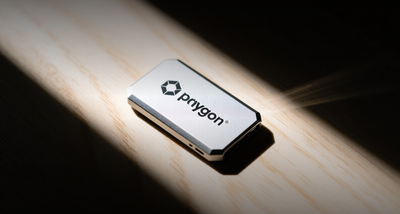
Polygon Labs cuts staff again as $250M Coinme deal nears close
Polygon Labs Chief Executive Officer Marc Boiron announced a second round of layoffs in 2026 on Thursday as the blockchain development firm moves to finalize its $250 million acquisition of crypto payments company Coinme. "We are in the final stages of completing the Coinme acquisition, which will involve integrating that team into Polygon Labs, a move that will grow our organization as part of a broader merger exercise to position Polygon Labs to be profitable in 2027," Boiron wrote on X. "A blockchain foundation and a blockchain-enabled payments company do not operate the same way." The restructuring comes as Polygon Labs transitions from operating as a blockchain foundation into a blockchain-enabled payments company centered on its Open Money Stack, a vertically integrated infrastructure platform for global stablecoin payments. The company acquired Coinme and wallet infrastructure firm Sequence in January for a combined $250 million, with Boiron saying the acquisitions could unlock more than $100 million in annual revenue. Polygon Labs has now conducted four rounds of workforce reductions since February 2023, including a 20% cut affecting about 100 employees that year, a 19% reduction impacting 60 in 2024, and 60 more layoffs in January tied to the Coinme and Sequence acquisition plans. The company's strategic pivot comes amid intensifying competition in the stablecoin payments space. Stripe, which processes stablecoin settlements through Polygon's infrastructure at a fixed 1.5% fee, joined with Advent International this month to submit a $53 billion acquisition proposal for PayPal — a deal that would combine Stripe's merchant reach and cryptocurrency expertise with PayPal's PYUSD stablecoin and hundreds of millions of active users. Polygon's stablecoin supply stands at $3.37 billion, making it the eighth-largest stablecoin ecosystem across all blockchains, while monthly volume hit a record $9.12 billion in June, according to a Polygon Labs spokesperson. This article is for informational purposes only and does not constitute investment advice.

Jul 16 2026, 14:38
Tether AI open-sources brain-to-text engine, QVAC runs 100% on-device
Tether AI open-sourced its brain-to-text neural interface under the QuantumVerse Automatic Computer ecosystem, enabling AI inference entirely on user devices and bypassing the cloud-dependent data collection model that dominates the industry. The QVAC platform is an open-source, cross-platform ecosystem for building local-first, peer-to-peer AI applications, according to Tether. The brain-to-text engine converts neural signals into text without transmitting raw data to external servers, a design that directly addresses the privacy risks inherent in cloud-based AI services. QVAC supports running large language models and other AI tasks locally on consumer hardware, eliminating the need for API calls to centralized inference providers. This architecture contrasts with cloud-based AI services from OpenAI, Google, and Anthropic, where user prompts are processed on remote server clusters. Tether said the platform works across Windows, macOS, Linux, and mobile operating systems. The move positions Tether — best known as the issuer of the USDT stablecoin — as a contender in decentralized AI infrastructure. The brain-to-text category has drawn interest from Neuralink, Synchron, and other brain-computer interface developers, though most remain focused on medical applications. Tether's approach targets general-purpose use, allowing users to generate text from neural signals using locally hosted models. Tether's decision to open-source the engine follows a broader industry push toward on-device AI. Apple has integrated on-device models into its latest iPhones, and Qualcomm's Snapdragon X Elite chips are designed for local inference. But Tether's brain-to-text focus adds a privacy dimension that consumer hardware makers have not directly addressed, particularly for use cases in healthcare, legal, and defense where transmitting neural data to third-party servers is prohibitive. Tether's expansion into AI infrastructure diversifies its business beyond stablecoin reserves. The company has not disclosed QVAC's development cost or revenue targets. For investors, the key question is whether local-first AI can achieve inference quality comparable to cloud-based models — a gap that Apple's on-device benchmarks suggest is narrowing but not yet closed. Tether shares no public stock ticker, but the move signals the company's ambition to compete in the AI infrastructure layer alongside cloud providers and chipmakers. This article is for informational purposes only and does not constitute investment advice.

Jul 16 2026, 14:29
Bitcoin capitulation cools as $69,000 resistance looms for BTC
**Long-term Bitcoin holders are selling at the slowest pace in weeks, but the $69,000 level stands as the next test for any sustained recovery.** Bitcoin edged up 0.3% to $64,720 as on-chain data showed long-term holders reducing their loss realization, though the $69,000 resistance level — the aggregate cost basis of short-term holders — remains the key hurdle for a sustained breakout. "When the 30-day moving average of realized losses by one-to-two-year holders cools and rolls over, it has often been among the clearest early signals that the heaviest distribution phase is behind the market," Cryptovizart, lead research analyst at Glassnode, said. Glassnode's Entity-Adjusted Long-Term Holder Realized Loss metric peaked two weeks ago and has since declined, indicating that investors who bought near the $107,000 cycle top are capitulating at a slower pace. At the same time, short-term holders who accumulated near recent lows are realizing profits at more than $4 million per day, creating overhead supply that has capped the recovery. Bitcoin briefly pushed above $65,000 after softer-than-expected CPI and PPI data before slipping back, with the probability of a July rate hike falling to 10.2% from 24.6% a week earlier, according to CME FedWatch data. The $69,000 level represents the aggregate cost basis for short-term holders, according to Glassnode, and coincides with Bitcoin's old all-time highs from the 2021 cycle. "The first meeting with that level will likely draw a strong reaction, because the people most inclined to sell are the ones about to be made whole," Glassnode said in its latest newsletter. A convincing reclaim would open the door to a move toward $70,000 to $75,000, while a rejection would keep Bitcoin range-bound. The cooling of long-term holder selling marks a shift from earlier this year, when LTH realized losses dominated on-chain flows. Glassnode's Relative Long/Short-Term Holder Realized Profit and Loss metric shows the LTH share of total realized losses has stopped growing, meaning the supply that met every rally is no longer expanding. The macro backdrop has also improved. June's CPI fell 0.4% month over month, the steepest decline since April 2020, bringing the annual rate to 3.5%. The PPI rose 5.5% year over year, below the 6.2% consensus. Traders responded by scaling back rate-hike expectations, with fed funds futures now pricing a 10.2% chance of a July increase, down from 24.6% a week ago. Still, some analysts caution that the inflation data may be backward-looking. "The 3.5% CPI number was driven by a 10% drop in gasoline through June, and that move had already reversed before the report was published," Ryan Lee, chief analyst at crypto exchange Bitget, said. Jasper De Maere, OTC trader at Wintermute, noted that the Fear & Greed Index at 25 remains in "Extreme Fear" territory despite the rally. On-chain flows show mixed signals. Wrapped Bitcoin saw 326 WBTC exit exchanges in a single day, the largest net outflow since June, suggesting investors are moving coins into DeFi protocols rather than selling. Meanwhile, CEX spot trading volumes rose 15.3% to $1.11 trillion in June, the first increase in five months, according to The Block. The path forward hinges on whether Bitcoin can break above $69,000. A move above that level would target the $70,000 to $75,000 range, while failure to hold could lead to a retest of the $61,500 low from earlier this month. This article is for informational purposes only and does not constitute investment advice.