Edgen AI operates independently of, and is not controlled by Aspen Digital Financial Limited.
Polygon Labs cuts staff again as $250M Coinme deal nears close
 Edgen Crypto·Jul 16 2026, 14:42
Share to
Share to
Copy link


[1] Polygon Labs announces second round of layoffs in 2026 as firm looks to finalize Coinme acquisition (https://www.theblock.co/post/408625/polygon-l ...)[2] Stripe’s $53 Billion PayPal Acquisition Bid Could Reshape Crypto Payments (https://blockonomi.com/stripes-53-billion-pay ...)[3] PayPal boosts its stablecoin as banks prepare to launch a shared one (https://finance.yahoo.com/markets/crypto/arti ...)[4] Polygon Labs CEO announces layoffs amid Coinme acquisition - Crypto Briefing (https://cryptobriefing.com/polygon-labs-layof ...)
Related News

Jul 16 2026, 16:02
Gacha spending hits record $324M as Bitcoin sinks to 21-month low
Onchain users spent a record $324 million on gacha draws in June, data shows, even as Bitcoin fell to a 21-month low. The spending surge signals a shift toward genuine collector behavior rather than speculative trading tied to Bitcoin's price cycles, according to on-chain data compiled by blockchain analytics platforms. The $324 million in June gacha spending — digital collectible draws on platforms including Lighter (LIT) — marked an all-time monthly high. It came as Bitcoin traded near its lowest since late 2024, with total crypto market capitalization slipping to about $2.20 trillion on July 16 amid rising US-Iran tensions, per CoinGecko data. If the decoupling holds, platforms relying on gacha mechanics could sustain revenue independent of Bitcoin's macro trajectory, potentially stabilizing a segment of the crypto ecosystem that has historically moved in lockstep with BTC. The record spending comes as broader macro pressures weigh on crypto. Tether froze about $131 million in USDT held in four Tron wallets linked to Iran's central bank on July 14, part of nearly $475 million frozen over three months, adding to geopolitical uncertainty that has kept risk buyers cautious. Brent crude rose about 7% in five days near $81, keeping risk-on flows at bay. Bitcoin's 21-month low reflects those headwinds. June producer prices rose 5.5% against a 6.2% forecast, the first monthly drop since August 2025, but the relief was already priced in after Tuesday's softer CPI print, limiting any fresh buying. The total crypto market cap needs a daily close above $2.23 trillion to reach $2.29 trillion and gain clean upward direction, with $2.16 trillion as the first floor to hold. The gacha spending resilience suggests a growing bifurcation in crypto markets. While speculative volumes remain sensitive to Bitcoin's price direction, onchain collectibles platforms are building independent demand through gamified mechanics and community incentives. Lighter (LIT), a platform that hosts gacha-style NFT draws alongside perpetual trading, has gained 41% over the past 30 days despite an 8% pullback on July 16 to near $2.42, per CoinGecko. Its chart shows a double-top pattern near $2.75, with $2.24 as the key level to watch. If the trend continues, the decoupling could reshape how digital collectible platforms value their user bases — less dependent on Bitcoin's halving cycle and more on engagement metrics and collector retention. This article is for informational purposes only and does not constitute investment advice.

Jul 16 2026, 15:57
SEC poised to join CFTC as prediction market regulator amid 2-agency debate
**A jurisdictional battle between the SEC and CFTC over prediction markets could reshape a $1 billion-plus industry with no clear winner yet.** The Commodity Futures Trading Commission has served as the primary regulator for event contract exchanges since a 1992 ruling on the Iowa Electronic Markets, the first recognized prediction market. But as trading volumes surge — Kalshi took in over $1 billion on Super Bowl contracts alone this year — legal experts increasingly expect the U.S. Securities and Exchange Commission to claim a role in overseeing this novel asset class. "The CFTC has come out saying that they have jurisdiction over the event contracts, but there's also some that seem like they're more in the SEC's realm," said Joe Zales, a partner at King and Spalding. The jurisdictional question is not hypothetical. Last month, the SEC and CFTC issued a joint request for public comment on updating definitions related to swaps — the derivative classification that event contracts fall under — along with the treatment of "novel or emerging products." A spokesperson for Polymarket confirmed to CNBC that the platform has engaged with both agencies on definitional frameworks. Rival platform Kalshi declined to comment on whether it has done the same. At stake is which agency writes the rules for an industry that processed billions in trading volume this year. The answer depends on how regulators classify contracts tied to publicly traded companies — and whether those contracts constitute securities-based swaps under the 2010 Dodd-Frank law. **The SEC's legal foothold** Dodd-Frank grants the SEC jurisdiction over securities-based swaps — financial contracts tied to a single security. A contract asking whether Nvidia stock will end the month up more than 5% has a direct link to a publicly traded stock, making it a candidate for SEC oversight. But the law also defines securities-based swaps as contracts that "directly affect" a company's financial condition, a phrase legal experts say remains ambiguous. "The problem is that what 'directly affects' means has really been an open question," said Sarah Razaq Sallis, a partner at Husch Blackwell. "That ambiguity is exactly what's being tested now in real time." A contract on when Apple will release its next iPhone model is not directly tied to the company's share price, but a product launch could move the stock. Whether that counts as a securities-based swap will determine how large a role the SEC plays. Some companies are already testing the SEC's jurisdiction. CBOE filed a proposal to operate binary options contracts on key performance indicators for major companies under the SEC's regulatory framework, according to a filing with the agency. **A history of rivalry, a moment of cooperation** The SEC and CFTC have clashed over jurisdictional boundaries before, most recently over cryptocurrency oversight. The SEC is larger and older; the CFTC is smaller and operates with a different regulatory philosophy. "The two agencies, while similar structurally, have very different approaches to regulation," said Jeff Le Riche, a partner at Husch Blackwell and a former chief trial attorney at the CFTC. "The way the rules are written at the CFTC and the way the rules are written at the SEC are fundamentally different approaches." In March, the two agencies signed a memorandum of understanding to establish clearer regulatory boundaries, coordinate oversight, and increase data sharing. The timing is politically convenient: the SEC has three of five commissioner seats filled, all Republican, while CFTC Chairman Michael Selig — a Republican who previously served as chief counsel for the SEC's Crypto Task Force — is the only sitting member of the typically five-member board. "I think this is the easiest time for these two agencies to get on the same page," said Aaron Klein, a senior fellow at the Brookings Institution. **What clarity would mean for the industry** Legal experts broadly expect the SEC to take a supportive role while the CFTC retains primary authority. For platforms that previously dealt with only one federal agency, clear definitions would reduce compliance uncertainty. Troy Dixon, co-head of global markets at TradeWeb Markets — which has a partnership with Kalshi — said clarification from both agencies is critical for institutional adoption, a key priority for prediction market platforms. "To the extent that the SEC actually chimes in, and there's some sort of broad co-working between the two agencies… it expedites it pretty substantially," Dixon said. Zales expects SEC involvement could bring tighter trader protections, including more cumbersome account-opening processes. But Peter Chan, a partner at Baker McKenzie and former SEC employee, cautioned against rushing. "I think what is required is not necessarily real time rule making, but it requires real-time learning," he said. The CFTC's proposed rulemaking last month argued that prediction markets serve a price-discovery function that justifies federal oversight, even for sports-based contracts. A federal court in New York ruled last week that state gambling regulations apply to Kalshi event contracts, a decision likely headed to the Supreme Court. The outcome of that case, combined with the SEC-CFTC harmonization effort, will determine whether prediction markets operate under one regulator, two, or a patchwork of state and federal rules. *Disclosure: CNBC and Kalshi have a commercial relationship that includes customer acquisition and a minority investment.* This article is for informational purposes only and does not constitute investment advice.
Jul 16 2026, 15:45
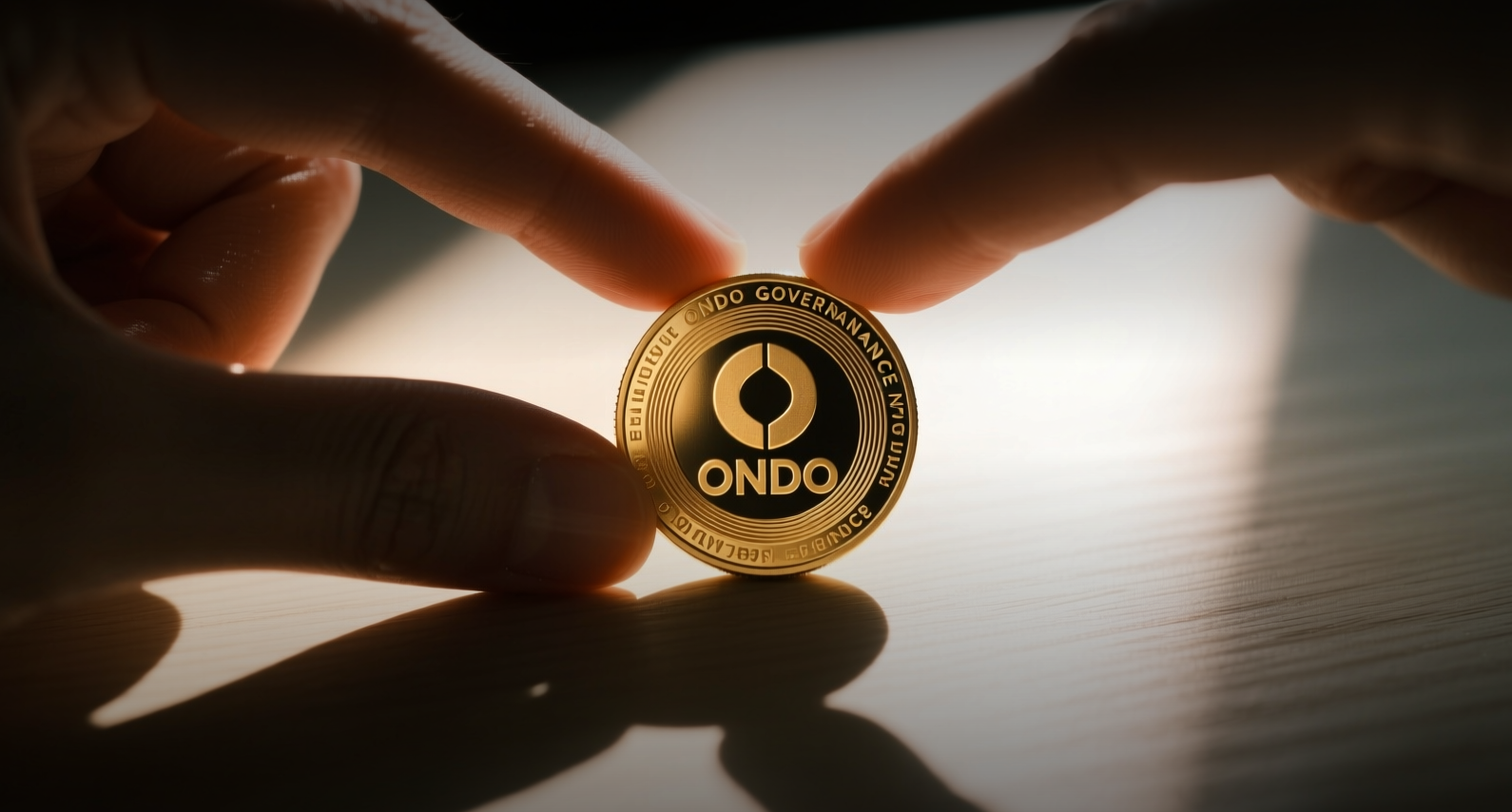
Ondo Finance, with 60% market share, partners SBI to tokenize Japanese stocks
SBI Group, the Japanese financial conglomerate with more than $238 billion in total assets, has partnered with Ondo Finance to tokenize Japanese equities and settle transactions using the group's JPYSC yen stablecoin, the companies said Thursday. "Japan is one of the most sophisticated capital markets in the world, and SBI sits at the center of it," Ian De Bode, chief executive officer of Ondo Finance, said in the announcement. "This collaboration creates a path to bring Japanese assets onchain and to connect Japan with the global tokenized economy." Under the agreement, Ondo Global Markets (BVI) Limited will issue tokenized financial products linked to Japan, with distribution across SBI's ecosystem spanning securities, asset management, banking and insurance. SBI's JPYSC stablecoin, the first trust bank-backed yen stablecoin launched on June 24, will serve as the settlement and collateral layer for the products. Ondo Finance controls nearly 60% of the global tokenized equity market, according to industry data. The partnership connects one of Asia's largest financial markets to blockchain infrastructure through a yen-denominated settlement layer, removing foreign-exchange friction for Japanese investors. The companies did not disclose a launch date or the first assets planned for tokenization. **How the partnership works** SBI isn't a crypto-native startup experimenting with tokenization. It's a financial services empire with more than $238 billion in total assets, operating one of Japan's largest online brokerages, SBI Securities, giving it direct access to millions of retail investors. Stablecoins are digital tokens designed to maintain a fixed value against a reference asset — in this case, the Japanese yen — and are typically backed by reserves held by a regulated issuer. Most tokenized asset experiments globally have relied on US dollar stablecoins like USDC or USDT. Building this infrastructure on a yen-denominated stablecoin backed by a trust bank removes the FX friction for Japanese investors. Yoshitaka Kitao, SBI Holdings' representative director, chairman, president and CEO, described Ondo as a long-term partner for the group's digital asset ambitions. "Ondo Finance has established itself as a global leader in the tokenization of real-world assets and is at the forefront of the tokenized equities market," Kitao said. "We believe Ondo will be a key strategic partner as SBI Group forms a global corridor for digital assets." **A growing onchain equities pipeline** The Ondo partnership follows SBI Global Asset Management's launch of a tokenized Japanese equity fund on Solana with DigiFT, a regulated real-world asset exchange, on July 15. The SBI Japan High Dividend Equity Strategy Token, known as the JX token, gives accredited and institutional investors blockchain-based access to a high-dividend Japanese equity strategy managed by SBI Asset Management Co. While the JX token focuses on a managed equity strategy for qualified investors, the Ondo agreement covers tokenized financial products, distribution through SBI's ecosystem and JPYSC integration. Together, the two initiatives show SBI is testing separate routes for bringing Japanese securities and yen-based settlement onto public blockchain networks. ONDO, the governance token of Ondo Finance, traded at about $0.39, up roughly 17% over 24 hours and 23% over the prior seven days, with a circulating market cap near $1.89 billion, according to CoinGecko data as of 14:31 UTC. Bitcoin was not moving comparably over the same window, indicating the gain was asset-specific. This article is for informational purposes only and does not constitute investment advice.