Edgen AI operates independently of, and is not controlled by Aspen Digital Financial Limited.
Zuckerberg outlines 3 principles for open AI in WSJ op-ed
 Edgen Stock·Jul 29 2026, 06:01
Share to
Share to
Copy link


[1] The AI Future Is for Everyone - WSJ (https://www.wsj.com/opinion/the-ai-future-is- ...)[2] Mark Zuckerberg wrote an op-ed about AI for the WSJ. (https://www.theverge.com/tech/972068/mark-zuc ...)[3] Zuckerberg frames AI superintelligence as the great democratizer (https://www.msn.com/en-us/news/technology/zuc ...)[4] The 3 biggest takeaways from Mark Zuckerberg's media blitz (https://www.businessinsider.com/takeaways-fro ...)[5] Meta's Zuckerberg warns against curbs on Chinese AI models, FT reports (https://www.msn.com/en-us/news/technology/met ...)
Related News

Jul 29 2026, 06:54
Hub Group faces fraud lawsuit after 31% stock decline on erroneous financials
Kahn Swick & Foti filed a securities fraud class action against Hub Group after erroneous financial statements triggered a 31% stock decline. "Hub Group issued materially false financial statements that misled investors about the company's financial health," Charles C. Foti, Jr., partner at Kahn Swick & Foti and former Attorney General of Louisiana, said. The lawsuit covers investors who purchased Hub Group securities between April 28, 2023, and May 11, 2026. Shareholders have until August 28, 2026, to file lead plaintiff applications. Hub Group trades on the Nasdaq under the ticker HUBG. The 31% decline erased hundreds of millions in market value, leaving investors with substantial losses. The case centers on the company's restatement of prior financial results, which undermined confidence in its reported earnings and operational metrics. KSF, which has a track record of securities litigation, is seeking to recover losses for affected shareholders. The class period spans more than three years, suggesting the accounting issues may have persisted across multiple reporting cycles. The lawsuit puts Hub Group under heightened regulatory scrutiny as the Securities and Exchange Commission may open its own investigation. Investors will watch for the company's response to the complaint and any further restatements in upcoming quarterly filings. This article is for informational purposes only and does not constitute investment advice.

Jul 29 2026, 06:48
Goldman, JPMorgan issue margin calls as AI stocks plunge 10%
Goldman Sachs and JPMorgan Chase issued margin calls to hedge funds this week as the Nasdaq 100 fell 10% from its June record high into correction territory, according to people familiar with the matter. "Hedge fund gross leverage increased by the largest cumulative amount on record in the first five months of 2026," Goldman Sachs said in a client report, citing data going back to 2016 when the bank began tracking the metric. The Philadelphia Semiconductor Index has lost more than a quarter of its value since late June, with SanDisk and Intel down 53% and 39% from their respective peaks. The VanEck Semiconductor ETF fell another 3% in premarket trading Wednesday, while Micron Technology and Western Digital each slid about 5%. The selloff extended to Asia, where South Korea's Kospi sank 6.5% after recovering from a 13% intraday plunge, with SK Hynix dropping 10% despite reporting a 557% jump in quarterly profit. The margin calls threaten to amplify the downturn as forced deleveraging could trigger further selling in AI and semiconductor stocks. About 16% of Goldman's prime brokerage exposure was tied to AI memory chip stocks as of June 30, the bank disclosed, while the S&P 500's top 10 constituents now account for roughly 40% of the index's market capitalization — exceeding the concentration seen during the dot-com bubble. The Federal Reserve's policy decision later Wednesday and earnings from Microsoft, Meta, Amazon and Apple this week will test whether the AI trade can stabilize. **Leverage Built Over Five Months Unravels in Two Weeks** The margin call wave reflects a rapid reversal of the leverage that hedge funds accumulated during the AI rally's first half. When the semiconductor selloff began in late June, those leveraged positions magnified losses, triggering automatic collateral demands from prime brokers. Long-short equity funds fell 1.3% on Tuesday while multi-strategy funds dropped 1.7%, according to people familiar with the matter. **Cross-Asset Contagion Spreads to Asia** The selling pressure cascaded across global markets overnight. South Korea's Kospi fell as much as 13% before paring losses to close 6.5% lower, with Samsung Electronics sliding 6.6% ahead of its Thursday earnings report. Japan's Nikkei 225 dropped 2.2%. Brent crude climbed 3.5% to above $87 a barrel after the U.S. intercepted an Iranian attack on its troops, reviving inflation concerns ahead of the Fed's decision. The U.S. 10-year Treasury yield held at 4.61% as traders priced in a steady Fed, while the dollar index edged 0.1% lower. This article is for informational purposes only and does not constitute investment advice.
Jul 29 2026, 06:44
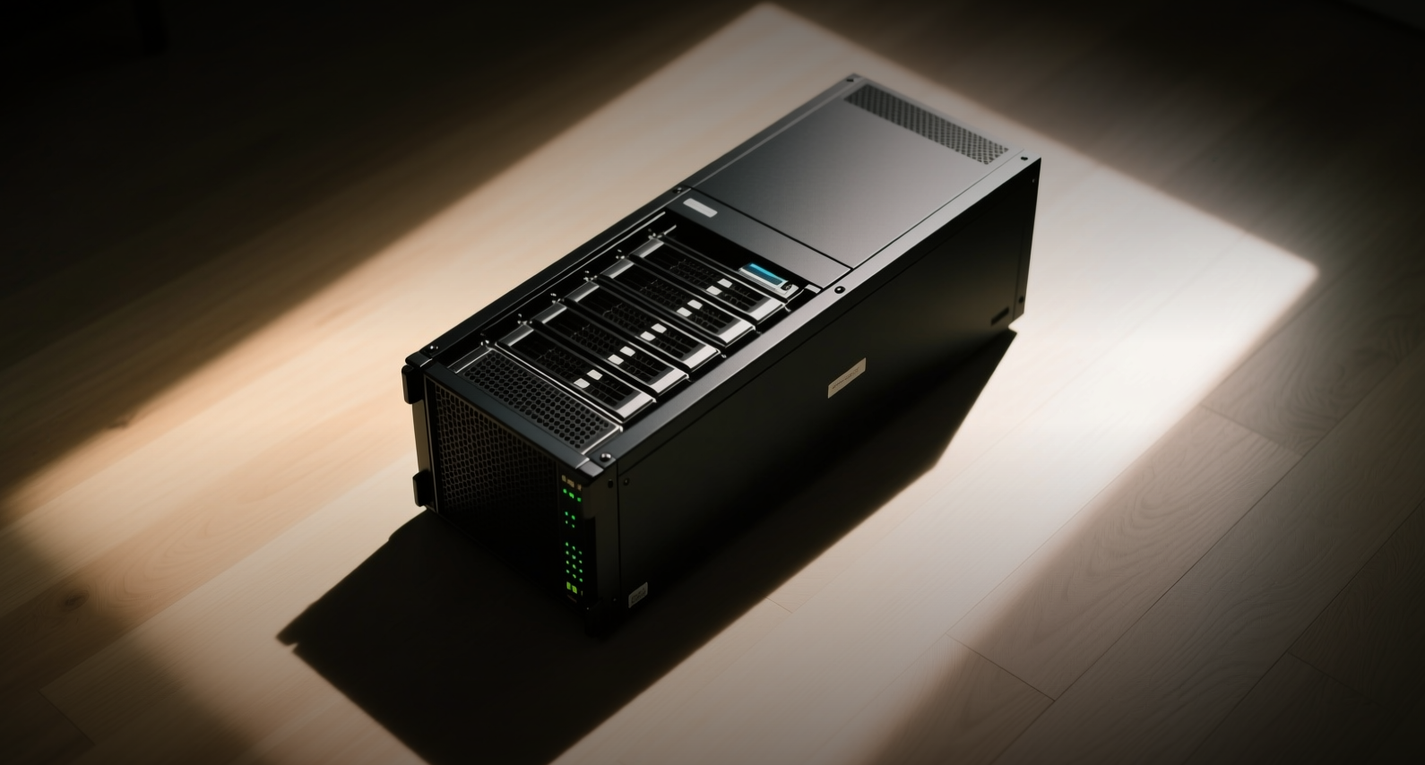
OceanBase seeks $443M for AI database expansion push
Jack Ma-backed OceanBase is seeking as much as 3 billion yuan ($443 million) in Series A funding to bankroll its expansion into AI database services and operate more independently from Ant Group, according to people familiar with the matter. Beijing OceanBase Technology Co. is in discussions with investors to raise 2 billion to 3 billion yuan in its first external funding round, the people said, asking not to be named because the matter is private. The company had more than $200 million in annualized revenue in 2026, up 70% from the prior year, they said. "Database managers are becoming a critical layer of infrastructure that connects enterprise data with AI models and agents," one of the people said. OceanBase is bolstering its ability to handle semi-structured and unstructured data like videos, beyond traditional structured data, and is looking at San Francisco-based Databricks Inc. as a benchmark. Databricks said in February it was on track to generate $5.4 billion in annual revenue, including $1.4 billion from its AI products. The company is seeking capital at an $188 billion valuation. OceanBase's AI push builds on Lakebase, a product that supports vector search alongside documents, images and video — positioning it to compete in the market for AI-ready data infrastructure. Originally built in 2010 to support Ant Group's internal database management, OceanBase underpins Ant's ability to process 500,000 transactions per second during Singles' Day. The company held the largest market share in China for distributed databases in 2025, according to an IDC report, competing against Huawei Technologies Co. and Tencent Holdings Ltd. Its thousands of clients are predominantly Chinese, including Industrial & Commercial Bank of China Ltd. and China Mobile Ltd. OceanBase has started expanding to Southeast Asia, Japan, India and Latin America. Globally, tech firms including International Business Machines Corp., Snowflake Inc. and Amazon Web Services Inc. have been building out database management systems that integrate with AI workloads. The funding round follows a shareholder restructuring that left OceanBase no longer wholly owned by Ant Group. Ant said OceanBase would have its own board and employee share option plan as part of the separation, giving the database company more strategic flexibility to pursue AI opportunities and international growth. This article is for informational purposes only and does not constitute investment advice.