Edgen AI operates independently of, and is not controlled by Aspen Digital Financial Limited.
US consumer spending rises in June, capping strong Q2 as savings fall
 Edgen Stock·Jul 30 2026, 15:18
Share to
Share to
Copy link

[1] Americans are spending plenty — but they're saving much less (https://www.marketwatch.com/story/americans-a ...)[2] Meta cash flow craters as Zuckerberg doubles down on AI spending (https://www.msn.com/en-ae/money/news/meta-cas ...)[3] Europe’s fastest-growing economies in Q2 2026: Who led and who lagged? (https://www.msn.com/en-us/money/markets/europ ...)[4] Fed's favored inflation gauge showed prices pulled back in June (https://www.msn.com/en-us/money/markets/feds- ...)[5] The State Of U.S. Sector Investing In Mid-2026 (https://seekingalpha.com/article/4927447-stat ...)
Related News
Jul 30 2026, 16:24
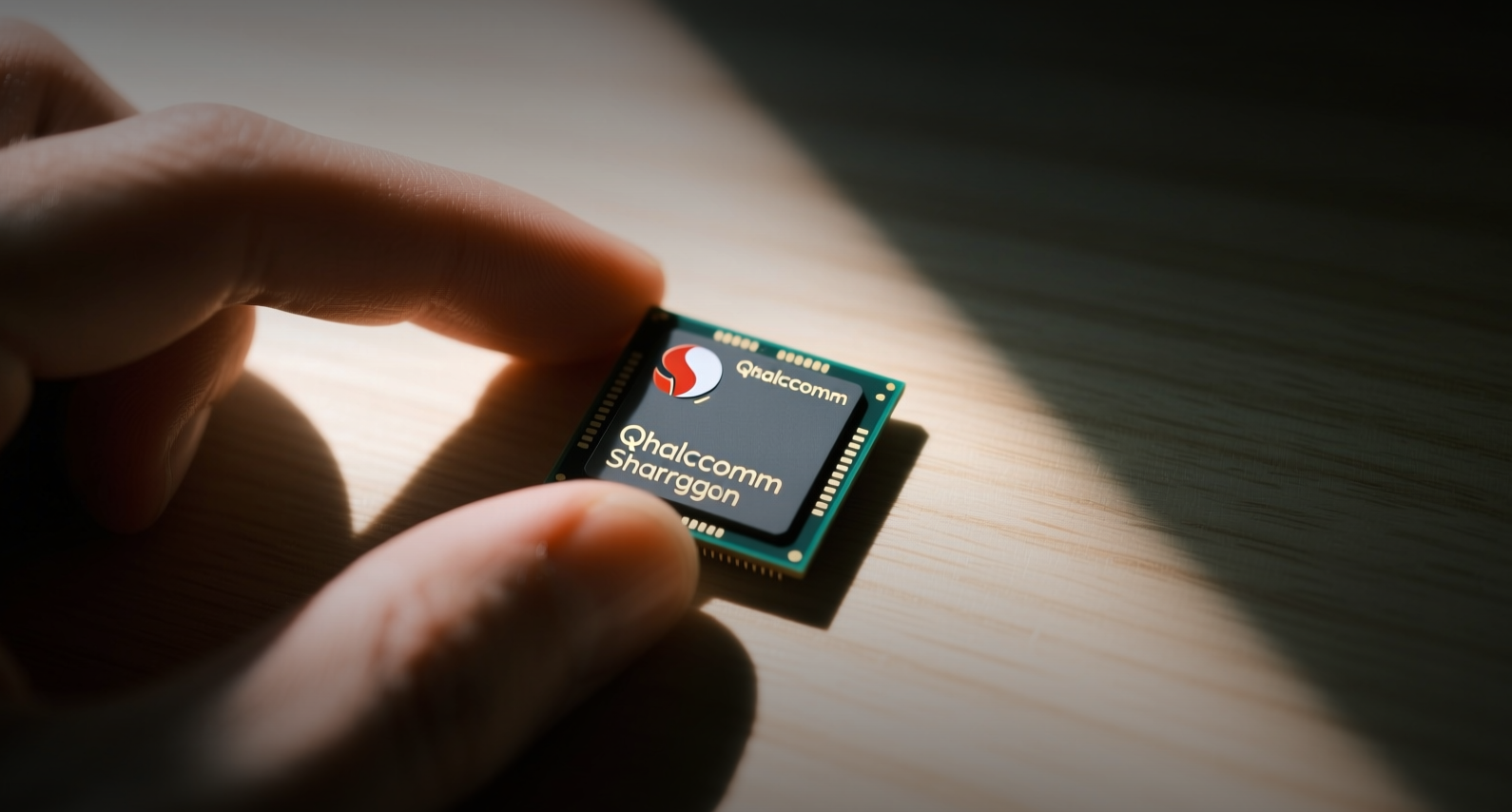
Qualcomm raises chip prices 10% as memory crunch reshapes smartphone market
Qualcomm Inc. will raise processor prices by a double-digit percentage starting Sept. 1, Chief Executive Officer Cristiano Amon confirmed, as a structural memory chip shortage drives component costs higher and pushes smartphone buyers toward cheaper or older devices. "Cost went up, prices are going to go up," Amon told CNBC on Wednesday, after the company reported its lowest quarterly handset revenue since 2021. The price increases apply across Qualcomm's entire processor lineup and follow what the CEO described as "very significant" memory chip price increases that are now changing consumer behavior. Qualcomm's handset revenue fell 20 percent year over year to $5.1 billion in the fiscal third quarter, a decline the company attributed to "unprecedented increases in memory pricing and supply constraints." The memory shortage — driven by Samsung, SK Hynix, and Micron shifting fabrication capacity to high-bandwidth memory for AI accelerators — has pushed the per-gigabyte cost of LPDDR5X mobile RAM from $2.80 in 2025 to $12 in 2026, according to Morgan Stanley analyst Shawn Kim's data cited by Google's hardware chief. Conventional DRAM contract prices rose 90 to 95 percent quarter over quarter in the first three months of 2026 alone, per TrendForce. The price hikes mark a structural shift for an industry already under pressure. IDC projects the average smartphone will sell for a record $523 in 2026, a 14 percent year-over-year jump, while global shipments are forecast to fall 12.9 percent to approximately 1.12 billion units — the weakest year in more than a decade. Amon said the smartphone market will remain "subdued," with buyers in the premium segment increasingly choosing prior-generation flagships or cheaper models to avoid higher prices. Some phone makers are already using older Qualcomm chips in new devices to manage component costs, Chief Financial Officer Akash Palkhiwala said on the earnings call. **How the memory shortage is squeezing Qualcomm's margins** The mechanism squeezing Qualcomm is straightforward: the company buys DRAM and NAND from memory manufacturers and packages them with its processors into modules sold to phone makers. When memory prices triple, Qualcomm either absorbs the cost — compressing its margins — or passes it to customers. Amon chose the latter, calling the margin hit a temporary problem the company is fixing with price increases. The three companies that supply more than 95 percent of the world's DRAM — Samsung, SK Hynix, and Micron — have systematically shifted production lines to HBM (high-bandwidth memory), the vertically stacked chips used in Nvidia Corp.'s AI accelerators. A single HBM3E module sells for $60 to $100, compared with $5 to $10 for an equivalent amount of conventional DRAM, creating a revenue-per-wafer gap that makes the reallocation economically permanent. Producing HBM consumes three to four times more wafer area per gigabyte of usable memory than conventional DRAM, meaning every line converted to HBM removes the equivalent of three to four LPDDR5X lines from the consumer market. SK Group Chairman Chey Tae-won said in March the shortage is likely to persist until 2030. Industry consensus from TrendForce and IDC puts meaningful new supply capacity coming online no earlier than late 2027 or 2028. **Qualcomm pivots to automotive and data centers as phone revenue shrinks** Qualcomm's response to the smartphone slowdown is a strategic pivot that has been underway for years but is now accelerating. Non-handset sales — including chips for cars, data centers, and smart glasses — are on pace to make up 60 percent of Qualcomm's revenue next year, Amon said. The company recently signed a deal to supply BMW AG with digital cockpit chips as part of its push toward $10 billion in automotive revenue by 2029, and it remains on track to hit $5 billion in data center revenue next year. The shift is partly forced. Qualcomm's Apple Inc. modem business is shrinking faster than planned, with Amon saying supply constraints will push its share of the modem inside the next iPhone well below its earlier estimate of 20 percent. By 2029, the company expects only one-third of its revenue to come from phones, down from roughly half today. For investors, the question is whether Qualcomm's automotive and data center businesses can grow fast enough to offset the handset decline. The company trades at roughly 15 times forward earnings, a discount to Broadcom Inc. at 28 times and Nvidia at 35 times, reflecting the market's skepticism about the pace of the pivot. Amon's price increases may protect margins in the near term, but they also risk accelerating the shift in consumer behavior he described — pushing more buyers to cheaper phones, older chips, or extended replacement cycles that shrink the total addressable market. This article is for informational purposes only and does not constitute investment advice.
Jul 30 2026, 16:23
Leonardo DRS revenue rises 10% as defense demand lifts Q2 results
Leonardo DRS Inc. reported second-quarter revenue of $913 million, up 10% from a year earlier, as demand across tactical radar, naval propulsion and infrared sensing programs drove double-digit growth and a record funded backlog. "The results reflect disciplined execution and sustained demand for DRS's differentiated technologies," Chief Executive Officer John Baylouny said. The company captured over $1 billion in bookings during the quarter, producing a book-to-bill ratio of 1.2 times and pushing funded backlog to a record $5.1 billion, he said. Adjusted EBITDA rose 33% to $128 million, with margin expanding 240 basis points to 14%. Adjusted diluted earnings per share climbed 52% to $0.35, beating the company's internal expectations. The Integrated Mission Systems segment posted 15% revenue growth, while the Advanced Sensing and Computing segment grew 8%. Net earnings increased 59% to $86 million, or $0.32 per diluted share. Leonardo DRS raised its full-year adjusted EBITDA guidance to $525 million to $540 million from a prior range of $515 million to $530 million, and lifted adjusted diluted EPS guidance to $1.34 to $1.39 from $1.26 to $1.30. The company maintained its revenue outlook of $3.9 billion to $3.975 billion, representing organic growth of 7% to 9%. It also announced an agreement to acquire mission software provider Raft for $450 million in cash, a deal expected to close in the fourth quarter and become accretive to adjusted EPS in its first full year. The guidance raise signals management expects demand to remain elevated as the U.S. and allies prioritize layered air defense, counter-unmanned aircraft systems and naval modernization. Investors will watch the third-quarter earnings call for updates on the Raft integration and production capacity expansion at the company's Charleston facility. This article is for informational purposes only and does not constitute investment advice.

Jul 30 2026, 16:17
Mortgage rates hit 6.66%, highest in a year, pressuring housing market
The average 30-year fixed mortgage rate climbed to 6.66% this week, the highest in a year, as the Federal Reserve's decision to hold rates steady and three dissenting votes for a hike pushed bond yields to multi-decade highs. "Since mortgage rates tend to track the 10-year Treasury, that repricing points to upward pressure in the days ahead," Anthony Smith, senior economist at Realtor.com, said. The 10-year Treasury yield jumped more than 4 basis points to 4.67% on Thursday, while the 30-year Treasury yield hit its highest level in nearly two decades. The 6.66% reading marks the fourth straight weekly increase, according to Freddie Mac data, and the highest since late July 2025. Zillow's lender marketplace showed the 30-year fixed rate at 6.65% on Thursday, with the 15-year fixed at 6.07% and the 5/1 ARM at 6.58%. The surge compounds affordability pressures on prospective homebuyers already facing elevated home prices and limited inventory. With the Fed signaling no near-term relief — three of 12 voting members supported a rate hike at this week's meeting — mortgage rates are likely to remain elevated through year-end. The Mortgage Bankers Association forecasts the 30-year rate averaging between 6.4% and 6.5% through 2026, while Fannie Mae projects 6.4%. **Bond Market Repricing Reshapes Mortgage Outlook** The transmission from Fed policy to mortgage rates has been unusually direct this week. Government bond yields surged after the Federal Open Market Committee held the fed funds rate at 5.25% to 5.5%, with three members dissenting in favor of a hike — the most hawkish vote split since the tightening cycle began. The 30-year Treasury yield, a benchmark for long-term borrowing costs, rose to levels not seen in two decades, reflecting investor concern that the Fed's commitment to taming inflation may waver. The last time the 30-year fixed mortgage rate approached current levels was in July 2025, when it briefly touched 6.7% before retreating. That retreat proved temporary: rates have now risen for four consecutive weeks, erasing any relief buyers may have felt earlier this year. **Affordability Crunch Deepens for Homebuyers** At 6.66%, the monthly payment on a $400,000 mortgage is roughly $2,570, excluding taxes and insurance — more than double the $1,610 payment at the pandemic-era low of 2.65% in January 2021. That gap has priced out a significant portion of first-time buyers and pushed existing homeowners to delay moves that would require taking on a new, higher-rate mortgage. The housing market has shown little sign of recovery. Existing-home sales have remained depressed through 2026, with annualized sales well below pre-pandemic averages. Homebuilders have pulled back on new construction starts, and builder confidence surveys have reflected persistent pessimism about the demand outlook. For investors, the implications extend beyond housing. Higher mortgage rates reduce consumer spending power, particularly in interest-rate-sensitive sectors such as home improvement, furniture, and appliances. Regional banks with large mortgage portfolios face continued pressure on net interest margins as funding costs rise faster than asset yields. This article is for informational purposes only and does not constitute investment advice.