Edgen AI operates independently of, and is not controlled by Aspen Digital Financial Limited.
Trump's new forced-labor tariffs hit 60 nations at 10% to 12.5%
 Edgen Stock·Jul 24 2026, 04:59
Share to
Share to
Copy link

[1] Trump's new global tariff draws rebukes from trade partners over forced-labor justification (https://www.cnbc.com/2026/07/24/trump-global- ...)[2] US announces tariffs on 60 countries over forced labour concerns (https://www.yahoo.com/news/politics/articles/ ...)[3] Trump to impose 'forced labor' duties on Friday as temporary 10% US tariffs expire (https://www.msn.com/en-us/money/markets/trump ...)[4] Trump hits countries accused of forced labor with tariffs up to 12.5% (https://www.azcentral.com/story/news/politics ...)[5] What to know about Trump’s new tariffs on more than 80 countries (https://www.theguardian.com/us-news/2026/jul/ ...)
Related News
Jul 24 2026, 06:03
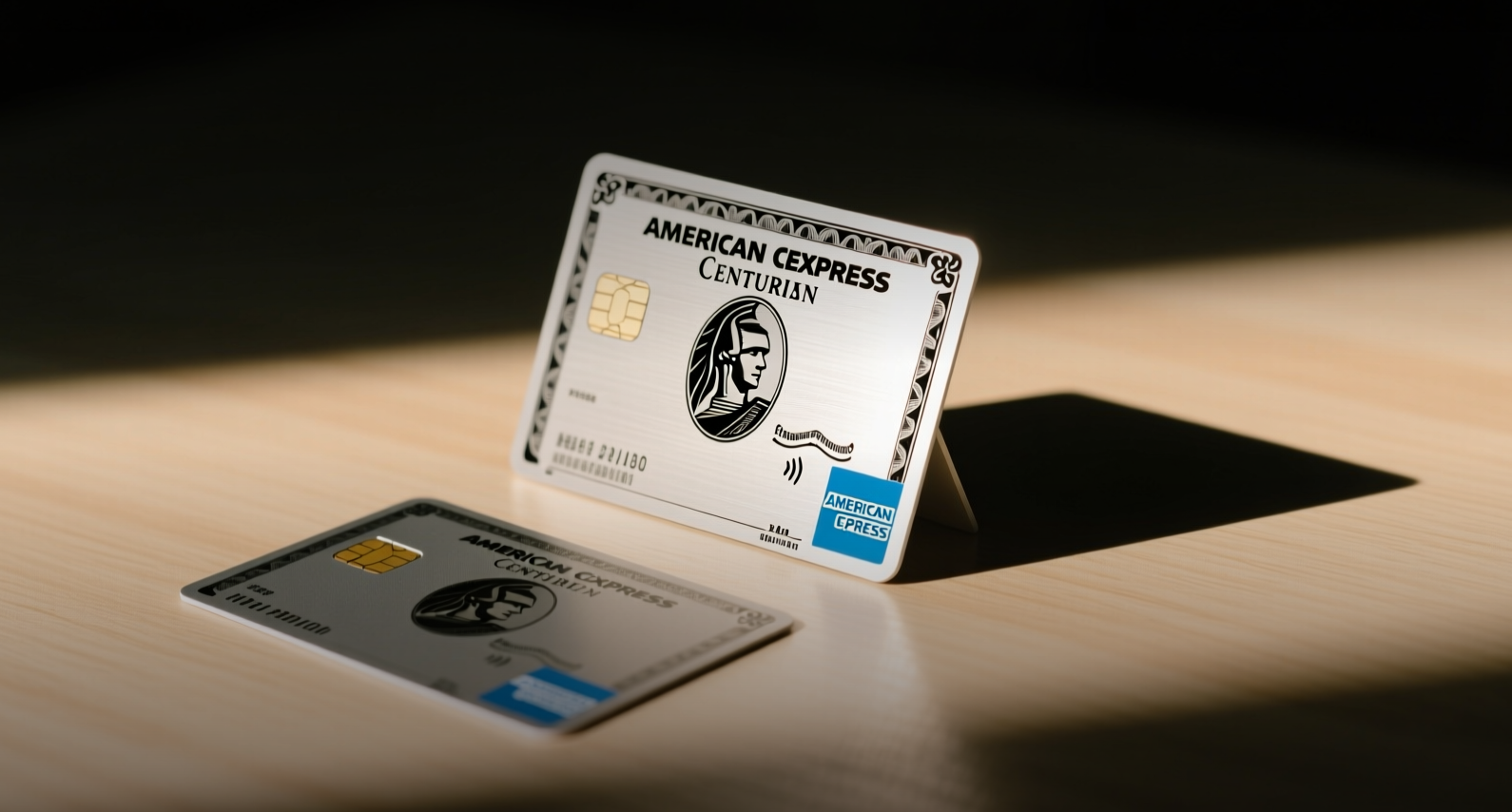
American Express options price $12 swing ahead of Q2 earnings
Options traders are bracing for an almost $12 swing in American Express Co. shares when the credit-card company reports second-quarter results Friday. The implied move, derived from near-term at-the-money straddle pricing, reflects unusually balanced positioning between bullish and bearish bets, according to options market data. The positioning shows roughly equal call and put open interest at near-term strike prices, signaling no consensus on direction. The split mirrors an even balance between fear of disappointment and hope for upside. A stronger-than-expected report could drive American Express shares sharply higher, lifting a key consumer finance bellwether. A miss risks a steep decline that would drag down other credit-card and consumer finance stocks. American Express enters the report as investors assess the trajectory of cardholder spending and credit quality. The company's affluent customer base has provided a buffer against rising delinquencies affecting mass-market lenders. Analysts will scrutinize spending volumes, loan growth, and provisions for credit losses in the quarter. The options market's balanced positioning stands apart from recent earnings in the financial sector, where implied moves have skewed more bearish. American Express shares have benefited from resilient consumer spending, though rising costs have pressured margins across the industry. For holders, the $12 implied range makes Friday's report a defining moment for the stock's near-term direction. Investors will focus on any revision to full-year guidance, which would indicate management's outlook for consumer health heading into the second half. This article is for informational purposes only and does not constitute investment advice.
Jul 24 2026, 06:00
Trump revives global tariffs at 12.5% after court strikes down levies
President Donald Trump imposed tariffs of as much as 12.5% on goods from 60 trading partners Friday, reviving his trade war under a new legal authority hours after the Supreme Court struck down his original levies. "This is the most sweeping international labor rights action the United States has ever taken, that any country has ever taken," a senior administration official told reporters Thursday. The duties, issued under Section 301 of the Trade Act of 1974, affect roughly 99% of U.S. trade, according to U.S. Trade Representative Jamieson Greer. Most countries face 12.5% tariffs, including China and Vietnam, while 17 nations including the United Kingdom, Canada and Mexico face a lower 10% rate. The European Union faces additional levies to bring its total most-favored-nation rate to either 10% or 12.5%. Goods that comply with the USMCA trade deal, along with oil, gas and steel already covered by sector-specific tariffs, are exempt. The new system replaces the 10% global levies imposed under Section 122 of the 1974 Trade Act, which expired at 12:01 a.m. Friday. Unlike those time-limited duties, Section 301 tariffs can last indefinitely — and trade experts say they are far more likely to survive legal challenges. The question now is whether they will achieve Trump's goal of reviving U.S. manufacturing or simply raise costs for consumers, as two-thirds of voters already say tariffs have done. **A Legal Workaround Built for Durability** The Supreme Court's Feb. 20 ruling struck down Trump's original tariff regime under the International Emergency Economic Powers Act, finding the 1977 law did not authorize the president to impose sweeping duties on foreign goods. The decision eliminated the majority of U.S. tariff revenue collected last year and forced the administration to scramble for alternative legal footing. Trump responded within hours, ordering 10% tariffs under Section 122 — a provision that allows the president to address balance-of-payment issues but expires after 150 days. That deadline arrived Friday. The new Section 301 tariffs, by contrast, follow a formal investigation by Greer's office and carry no automatic expiration date. "The expectation is continuity," said Blake Harden, managing director at Washington Council Ernst & Young. "We're really seeing a re-creation of that global tariff, and 301 being used as a way to lock that in." The administration argues the tariffs target forced labor practices that give foreign producers an unfair cost advantage. Countries that already have forced-labor import bans — including the EU, whose own prohibition takes effect late next year — were still hit with duties because they have "failed to effectively enforce" their rules, the administration said. **Beyond the 301 Regime: Canada and Brazil** The forced-labor tariffs are not the only new trade action. On Monday, Trump signed proclamations imposing 50% duties on nearly $20 billion of Canadian goods under Section 338 of the 1930 Tariff Act, a rarely used authority. Those levies, effective Aug. 19, target Canadian wine, beer, hockey sticks, cement and dog leashes in retaliation for Ottawa's retaliatory tariffs on U.S. steel, aluminum, liquor, dairy and autos. Canadian Prime Minister Mark Carney said the 50% tariffs violate the USMCA and that he and Trump agreed Tuesday to intensify trade negotiations. The USMCA, which governs nearly $1.6 trillion in annual trade, was not extended this month and now faces yearly reviews. Separately, a 25% tariff on Brazilian goods took effect Wednesday, covering thousands of products including ethanol and affecting roughly $10 billion in trade — about one-fifth of Brazil's total exports to the U.S. That action also used Section 301 authority. The administration is conducting additional Section 301 investigations into whether more than a dozen countries have built up excess manufacturing capacity, a probe that could trigger further tariffs. One such investigation already led to the 25% levy on Brazil announced this week. "The president is not going to allow his trade policy and overall objectives to be undermined simply because one tool may be limited by a court," the senior administration official said Thursday. "We are going to get at these trade policies and practices." The last time the U.S. imposed tariffs at this scale — Trump's original IEEPA-based regime in 2025 — the S&P 500 fell as much as 8% in the weeks following "liberation day" before the administration paused and repeatedly adjusted the levies. The new Section 301 tariffs, with their stronger legal foundation and forced-labor rationale, may prove harder to reverse. Tiffany Smith, vice president of global trade policy at the National Foreign Trade Council, said it would be "much harder" for a future administration to roll back tariffs framed as a human rights measure. This article is for informational purposes only and does not constitute investment advice.

Jul 24 2026, 05:42
Gold in Bangalore falls to ₹1,42,959 as 3-month trend turns bearish
Gold in Bangalore held at ₹14,295.90 per gram for 24K purity on July 23, unchanged from the prior session after a volatile fortnight that saw prices swing between ₹14,085.50 and ₹14,568.20. "The current consolidation follows a sharp correction from the January peak of ₹1,79,140 per 10 grams, with prices now trading 20% below that level," Kaynat Chainwala, AVP Commodity Research at Kotak Securities, said. The 22K variant stood at ₹13,095.04 per gram, while 18K gold was at ₹10,721.93. Over the past 90 days, the average 24K rate was ₹1,49,965.44, compared with a 180-day average of ₹1,51,884.48 and a one-year average of ₹1,36,704.79, according to exchange data. The July trend shows a 1.03% decline, extending June's 7.75% drop, after prices rallied 4.42% in May. The Gold-to-Silver Ratio at 65.04 places the market in neutral territory, while the Nifty 50-to-Gold ratio of 1.67 suggests equities are deeply undervalued relative to bullion, historically a signal for capital rotation into stocks. ## January Peak to July Correction Bangalore gold hit its all-time high of ₹1,79,140 per 10 grams on Jan. 29, driven by a 25.38% monthly surge as geopolitical tensions over Greenland escalated and the US dollar weakened. Since then, prices have corrected 20.2%, with the sharpest monthly decline of 9.03% in March as the dollar strengthened and rate-cut expectations faded. The June low of ₹1,41,504 per 10 grams on June 23 marked a 21% peak-to-trough decline, the deepest correction since the August 2024 rally began. July's range of ₹1,40,399 to ₹1,47,369 shows prices attempting to stabilize near the one-year average of ₹1,36,704.79. ## Investment Signals and Forward Outlook The Nifty 50-to-Gold ratio at 1.67 — below the 2.0 threshold — indicates equities are deeply undervalued relative to gold, historically a setup that precedes capital rotation out of bullion into stocks. The Gold-to-Silver Ratio at 65.04 remains in neutral territory, suggesting neither metal offers a relative bargain. Traders now await the Federal Reserve's July 29-30 policy meeting, where markets price in an 81% chance of a rate hike in September, according to the CME FedWatch Tool. Elevated crude oil above $100 per barrel, after Brent surged 7% on July 23 following US threats of military action against Iran, is stoking inflation concerns and reinforcing the case for higher-for-longer interest rates — a headwind for non-yielding bullion. Analysts see support for gold at ₹1,48,000 per 10 grams, while ₹1,55,000 remains a strong resistance zone, Jateen Trivedi, VP Research Analyst at LKP Securities, said. Prices are expected to stay under pressure with a volatile bias, reacting to crude oil, the dollar, and geopolitical developments. This article is for informational purposes only and does not constitute investment advice.