Edgen AI operates independently of, and is not controlled by Aspen Digital Financial Limited.
Tencent plunges 7% as gaming fears, fund rotation hit HK tech
 Edgen Stock·Jul 23 2026, 02:52
Share to
Share to
Copy link


[1] <Research>Citi: TENCENT Share Price Drop Yesterday May Be Due to Rotation Into AI Hardware, Panic Over Game Revenue Decline and Misinterpretation (https://www.aastocks.com/en/stocks/news/aafn- ...)[2] Tencent Slides Most in Over a Year, Leading China Gaming Selloff (https://www.bloomberg.com/news/articles/2026- ...)[3] Tesla misses on earnings, as free cash flow turns negative and margins slide (https://www.cnbc.com/2026/07/22/tesla-tsla-q2 ...)[4] Citi: Tencent's sharp decline is driven by 'fears and misinterpretations regarding slowing gaming revenue.' - Moomoo (https://www.moomoo.com/news/post/73390131/cit ...)[5] Tencent Tumbles 7% on Heavy Volume as Gaming Revenue Concerns and Fund Sell-Off Rattle Market - finance.biggo.com (https://finance.biggo.com/news/5f008699-1070- ...)
Related News

Jul 23 2026, 04:36
Tencent shares rise 2% as Miora design agent goes live
**Tencent's entry into AI-powered design pits its multi-agent platform against Adobe, Canva and a wave of generative AI startups in a market worth an estimated $15 billion.** Tencent Holdings Ltd. on July 22 opened Miora, its first full-stack AI design agent, to all users after a two-month beta, entering a crowded market where incumbents Adobe Inc. and Canva Inc. are racing to embed generative AI into creative workflows. "Miora is an AI creative agent with memory, capable of understanding requirements and orchestrating multi-agent collaboration," Tencent said in its official announcement, describing the platform as purpose-built for brand design, film and television creativity, e-commerce advertising, interactive games and web applications. The platform, built by the same team behind Tencent's enterprise agent WorkBuddy, offers two model tiers — a base agent with three depth levels (Standard, Pro and Max) and a separate multimodal generation panel supporting models including GPT-image-2, Seedance 2.0, Kling and Vidu Q3. New users receive 1,000 credits upon registration. Miora's skill system abstracts common design workflows into executable templates, covering brand visual full-case creation, brand IP character generation and logo design. The launch places Tencent in direct competition with Adobe's Firefly suite, Canva's Magic Studio and emerging AI-native tools like Midjourney and Runway, all vying for a slice of the creative software market that Gartner estimates at $15 billion globally. Tencent shares rose 1.997% on the news. Citi analysts said a prior day's decline was driven by sector rotation into AI hardware rather than company-specific concerns. **How Miora Differs From Standalone AI Tools** Unlike single-purpose image or video generators, Miora operates as a multi-agent studio. Starting from a requirements document, the platform autonomously understands creative objectives, plans execution workflows and dispatches different agents to complete images, video, 3D models and UI design on a single canvas, delivering a stylistically unified asset set. The agent memory system learns user creative habits and aesthetic preferences over time, reducing repetitive inputs. The platform currently handles raster image formats but lacks support for vector formats including SVG, PSD and AI files, meaning AI-generated brand designs still require manual vectorization and professional refinement using tools like Adobe Illustrator before production use. Tencent's WorkBuddy team said future updates will support directly invoking Miora within WorkBuddy, bridging office productivity and creative scenarios. **Competitive Landscape and Investment Angle** Tencent enters the design agent space with advantages: the WorkBuddy infrastructure and existing user base, an extensive model ecosystem spanning its HY foundation models and partnerships with leading multimodal generation providers, and deep product design heritage. The company's cloud business, Tencent Cloud, separately announced a major upgrade to its Agent Development Platform at the World Artificial Intelligence Conference in Shanghai on July 21, evolving it into an enterprise-grade AgentOps platform. For investors, Miora represents Tencent's bet that multi-agent collaboration — rather than isolated generation capabilities — will define the next phase of AI-powered creativity. The platform targets users across skill levels from design novices to brand designers and marketing practitioners, seeking to bridge professional design and mass-market creation. Tencent trades at roughly 18 times forward earnings, and while Miora's direct revenue contribution remains early, the product strengthens the company's AI narrative as it competes with Baidu Inc. and Alibaba Group Holding Ltd. in China's enterprise AI market. This article is for informational purposes only and does not constitute investment advice.

Jul 23 2026, 04:10
EUR/CHF tops 0.9278 as oil surge points to hawkish ECB hold
**EUR/CHF's break above 0.9278 this week signals currency markets are pricing a hawkish hold from the European Central Bank, as surging oil costs complicate the inflation outlook.** The European Central Bank is expected to hold rates at its July 23 meeting, but EUR/CHF's rally above 0.9278 suggests investors anticipate hawkish forward guidance as oil prices reignite inflation concerns across the euro area. The cross broke decisively above resistance this week, extending a recent rally that has gathered momentum as energy costs climbed. The move reflects growing expectations that the ECB will signal a cautious approach to future rate cuts, even as it leaves borrowing costs unchanged. Surging oil prices have revived inflation risks that policymakers had hoped were receding, giving hawks within the Governing Council fresh reason to argue against premature easing. The shift in currency market positioning represents one of the clearest pre-meeting signals in recent months, with the break above 0.9278 coming on above-average volume. A hawkish hold would strengthen the euro across the board, potentially pushing EUR/CHF higher while weighing on European bond prices. The currency pair's break above 0.9278 — a level that had capped gains in recent sessions — suggests the market is already positioning for that outcome. The next key level to watch is the pair's multi-month high, with further upside possible if the ECB delivers a more aggressive tone than expected. A dovish surprise, by contrast, could trigger a sharp reversal back below 0.9278. **What a Hawkish Hold Means for Markets** The stakes extend beyond the euro. A hawkish ECB would widen rate differentials with central banks that are closer to cutting rates, potentially pushing EUR/USD higher and adding to pressure on the dollar index. For bond markets, the message would be that the ECB sees inflation risks as still tilted to the upside, keeping euro-area yields elevated. Higher borrowing costs would in turn tighten financial conditions, potentially weighing on European equities. The currency market's reaction — EUR/CHF breaking above a key resistance level — suggests traders are already adjusting portfolios for this scenario. A stronger euro would also pressure European export sectors, adding a layer of complexity for the ECB's growth outlook. The impact would ripple through emerging markets as well. A stronger euro and higher European yields could draw capital away from emerging-market debt, particularly in central and eastern Europe, where many economies are closely tied to the euro area through trade and financial linkages. The Swiss franc, traditionally a safe-haven currency, has been on the weaker side of the EUR/CHF trade, reflecting the market's focus on euro-area rate dynamics rather than risk aversion. **The Oil Factor** The surge in oil prices has been a primary catalyst reshaping the inflation outlook. Europe, which imports the majority of its energy, is particularly exposed to oil-driven price pressures. The ECB's own assessment of the inflation trajectory may need to account for energy costs that are running higher than previously expected. If oil stays elevated, the central bank may need to revise its inflation forecasts higher, delaying the first rate cut further. Markets will watch the ECB's updated economic projections at the September meeting for any revision to the inflation outlook. The combination of sticky inflation and resilient energy costs creates a dilemma for policymakers who had been preparing to ease policy in the coming quarters. The oil-inflation link is particularly challenging for the ECB because energy costs feed directly into headline inflation and indirectly into core prices through transportation and production costs. Unlike demand-driven inflation, which the ECB can address through rate policy, supply-driven energy shocks are harder to control with monetary tools alone. **Forward Outlook** The EUR/CHF breakout suggests the currency market has already made its call. Whether the ECB delivers the hawkish tone that traders are expecting will determine if the pair can extend its gains or if a sell-the-fact reaction sets in. The decision and accompanying statement are due Thursday, with President Lagarde's press conference offering the clearest signal on the policy path ahead. For now, the message from the currency market is unambiguous: the ECB's inflation fight is not over, and oil is making sure of it. The next 48 hours will determine whether the market's positioning was prescient or premature. This article is for informational purposes only and does not constitute investment advice.
Jul 23 2026, 04:07
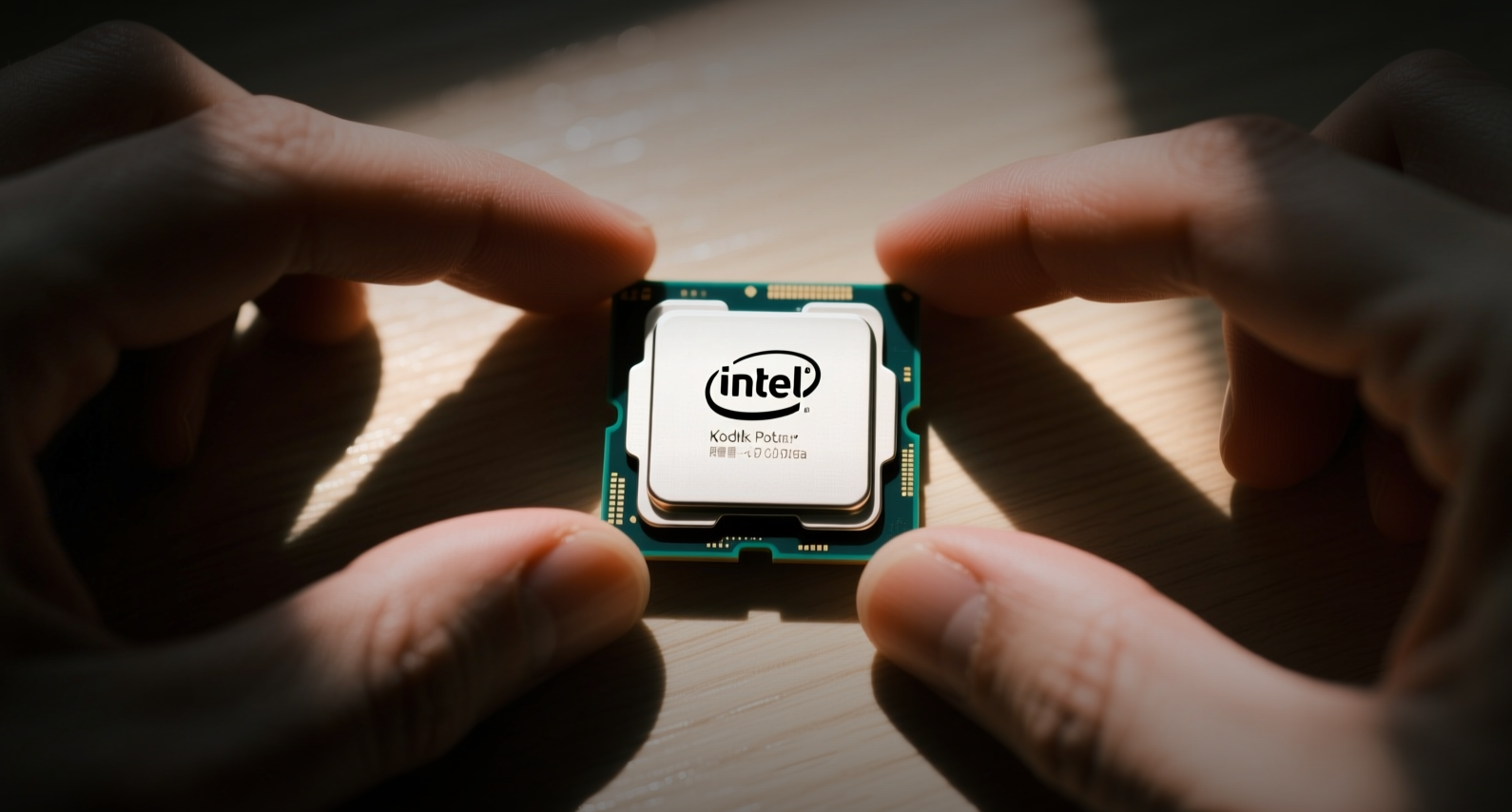
Intel, AMD sign long-term China server CPU deals as prices surge 40%
**The AI boom has pushed server CPU supply chains past their breaking point, forcing Intel and AMD to lock Chinese data-center clients into multi-year purchase commitments.** Intel and Advanced Micro Devices are signing longer-term purchase commitments with Chinese server customers for data-center processors as prices surge, with some products up more than 40% this year, two people familiar with the talks said. "Demand continues to run ahead of supply," Intel Chief Executive Officer Lip-Bu Tan told analysts in April, citing Xeon server CPUs as a particular pressure point. Tan also highlighted a multi-year deal with Google as one of several long-term contracts Intel signed in the first quarter. The agreements under discussion typically lock in purchase volumes but not prices, the people said. Most cover about a year of supply, though Intel and AMD have discussed commitments of two years or longer from some customers. Month-on-month price increases have topped 10% for certain server CPU models in China, one of the people said. Intel's lead times for some Xeon processors have stretched to as long as six months. The shift marks a departure for server CPUs, which have historically been easier to obtain than AI accelerators or memory chips. Tighter supply could raise costs and slow data-center deployment for Chinese cloud providers and internet companies racing to expand AI services. China is one of the world's largest server markets, fueled by rapid construction of data-center racks, AI computing clusters and national computing infrastructure — even as Chinese buyers face separate U.S. restrictions on access to the most advanced AI GPUs. ## AI Demand Spreads Beyond GPUs AI data centers require not only Nvidia-style graphics processors but also large numbers of central processing units to support servers, storage, networking and inference workloads. The CPU shortage echoes trends in the memory-chip market, where AI-driven scarcity has pushed buyers toward longer-term supply commitments. The dynamic gives Intel and AMD greater leverage to negotiate extended contracts — a reversal from the pre-AI era when server CPUs were widely available on shorter purchasing cycles. ## A $120 Billion Market by 2030 AMD, due to report earnings in early August, has raised its server CPU market forecast to more than $120 billion by 2030, citing strong demand related to agentic AI workloads. Intel reports quarterly results on Thursday, where the CPU shortage is expected to be a key topic. The longer-term contracts provide both companies with greater revenue visibility and pricing power in a market that has historically operated on shorter purchasing cycles. For investors, the shift signals that the AI infrastructure buildout is deepening beyond the GPU layer. Intel shares have been under pressure as the company navigates its turnaround under Tan, while AMD has gained ground in the server CPU market. The multi-year commitments from Chinese clients provide a buffer against demand volatility and underscore the structural nature of the AI-driven compute cycle. Intel and AMD declined to comment on the reported negotiations. This article is for informational purposes only and does not constitute investment advice.