Edgen AI operates independently of, and is not controlled by Aspen Digital Financial Limited.
Sterlington advises Avanos management on $1.27B AIP buyout
 Edgen Stock·Jul 29 2026, 20:15
Share to
Share to
Copy link


[1] Sterlington Advises Avanos Medical Management Team on $1.27 Billion Acquisition (https://www.businesswire.com/news/home/202607 ...)[2] Avanos stock surged on $1.27 billion AIP buyout deal at 72% premium (https://www.msn.com/en-us/money/topstocks/ava ...)[3] Sterlington Advises Avanos Medical Management Team on $1.27 Billion Acquisition - Business Wire (https://www.businesswire.com/news/home/202607 ...)
Related News

Jul 29 2026, 21:10
Fiverr plunges as AI disruption cuts revenue 10%, buyers 22%
Fiverr International Ltd. reported Q2 revenue of $97.8 million, down 10% from a year earlier, as AI adoption erodes demand for low-value freelance work on its marketplace. "What we're seeing right now is an accelerated evolution of the freelance economy," Chief Executive Officer Micha Kaufman said. "While AI absorbs high-volume, low-value, transactional tasks, it is also unlocking the need for longer duration projects where AI tools enhance human expertise." Annual active buyers fell to 2.68 million from 3.43 million, a 22% decline. Annual spend per buyer rose 16% to $368, partially offsetting the volume loss. Marketplace revenue dropped to $63.1 million from $74.7 million, while services revenue edged up to $34.6 million from $34 million. Adjusted EBITDA fell to $17.5 million from $21.4 million, with margin contracting to 17.9% from 19.7%. GAAP net income was $4.5 million, or 12 cents a share, compared with $3.2 million, or 9 cents, a year earlier. The company guided Q3 revenue of $80 million to $88 million, representing a decline of 18% to 26% from a year earlier. For the full year, Fiverr expects revenue of $356 million to $372 million, down 14% to 17%. Shares fell sharply on the news, extending a year-to-date decline as the freelance marketplace confronts structural disruption from generative AI. The results signal that AI tools are directly cannibalizing the transactional, low-value work that formed the core of Fiverr's marketplace. Competitors including Upwork Inc. face similar pressures as businesses turn to AI for tasks once outsourced to freelancers. Fiverr's shift toward higher-value, longer-duration projects represents a multi-quarter transformation, Kaufman said, with no near-term event expected to drive a revenue recovery. This article is for informational purposes only and does not constitute investment advice.

Jul 29 2026, 21:05
Dyne Therapeutics wins FDA priority review for DMD drug, PDUFA Jan 2027
Dyne Therapeutics said the Food and Drug Administration accepted its Biologics License Application for z-rostudirsen in Duchenne muscular dystrophy amenable to exon 51 skipping, granting Priority Review with a Jan. 21, 2027, PDUFA date. "The FDA's acceptance of our BLA for z-rostudirsen marks an important milestone for individuals living with DMD amenable to exon 51 skipping and a defining step in Dyne's evolution toward becoming a commercial-stage company," John Cox, president and chief executive officer of Dyne, said. The company reported a second-quarter net loss of $178.6 million, or $1.08 a share, compared with a net loss of $110.9 million, or 97 cents a share, a year earlier. Research and development expenses rose to $152.2 million from $99.2 million, driven by increased manufacturing and clinical costs for z-rostudirsen and z-basivarsen. General and administrative expenses climbed to $29.5 million from $16.6 million as the company invested in pre-commercial capabilities. Dyne held $898.5 million in cash, cash equivalents and marketable securities as of June 30. In July, the company completed an underwritten public offering of 21 million shares at $20.50 each, raising estimated net proceeds of about $405 million. Combined, the company expects cash to fund operations into the second quarter of 2028. **Pipeline Progress Across Three Programs** Beyond the BLA filing, Dyne completed enrollment of 71 participants in the registrational expansion cohort of the Phase 1/2 ACHIEVE trial evaluating z-basivarsen (DYNE-101) in myotonic dystrophy type 1, with topline data expected in the first quarter of 2027. The company also initiated the global confirmatory Phase 3 HARMONIA trial for z-basivarsen. The FDA cleared Dyne's investigational new drug application for DYNE-302, an siRNA candidate for facioscapulohumeral muscular dystrophy, allowing the company to begin Phase 1 studies. Dyne is also advancing preclinical programs in Pompe disease and multiple additional DMD mutations. Z-rostudirsen (zeleciment rostudirsen, also known as DYNE-251) is an antibody-oligonucleotide conjugate designed to deliver an exon 51-skipping antisense oligonucleotide to muscle cells using the company's FORCE platform. If approved, it would compete with Sarepta Therapeutics' Amondys 45 and other exon-skipping therapies in the DMD market, which affects about one in every 3,500 male births worldwide. The Priority Review designation shortens the FDA's standard 10-month review to six months, reflecting the agency's view that the drug could offer a significant improvement over available therapy. The Jan. 21 PDUFA date positions Dyne for a potential commercial launch in early 2027, assuming approval. Investors will watch for the FDA's advisory committee meeting, typically scheduled two to three months before the PDUFA date, for an early signal on the agency's thinking. *This article is for informational purposes only and does not constitute investment advice.*
Jul 29 2026, 21:03
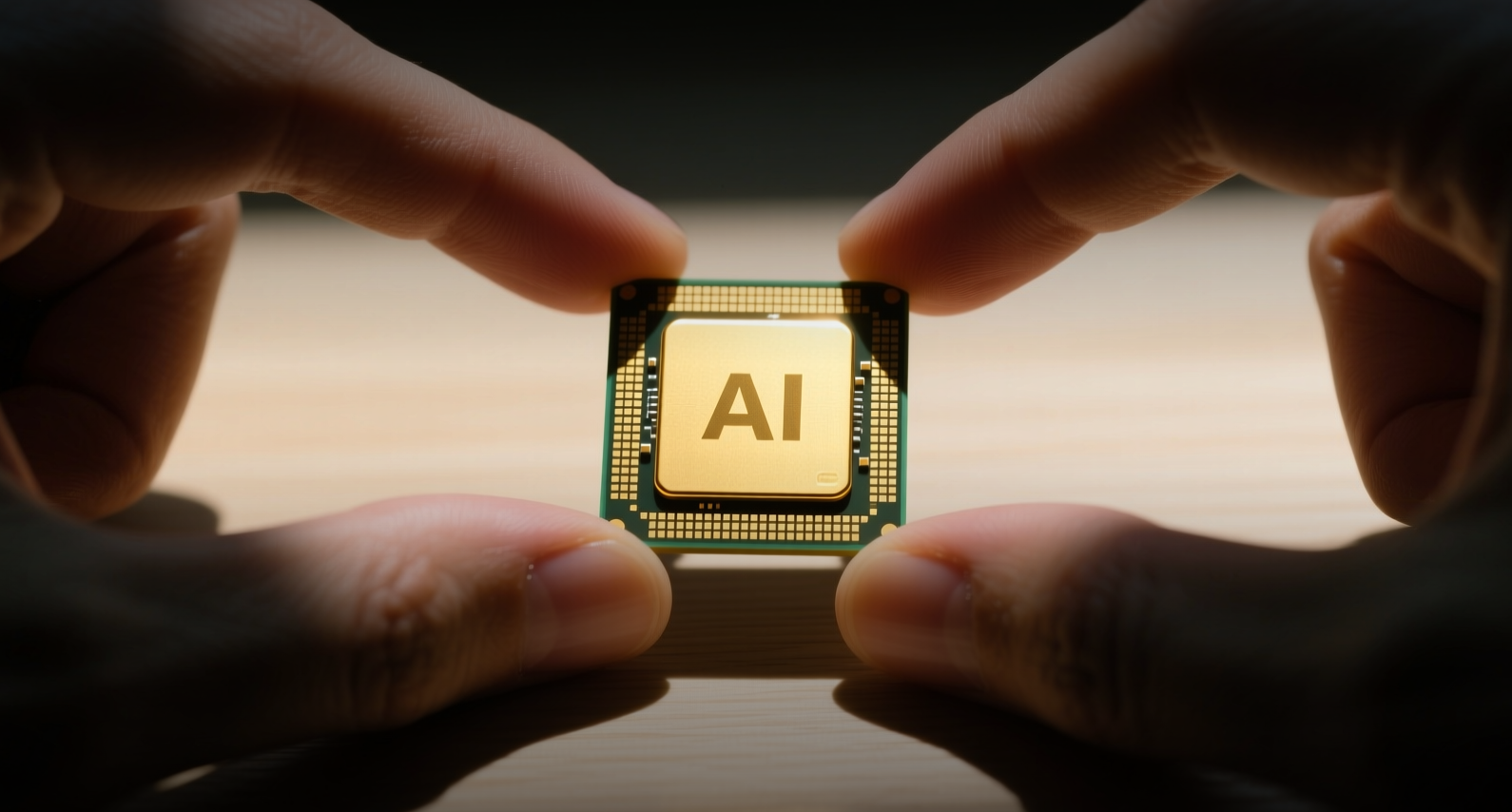
China AI supply chain overlooked as 3 sectors benefit, KraneShares says
China's AI supply-chain companies offer investors overlooked exposure to the $1.25 trillion data center buildout expected next year, as the market shifts focus from US chip leaders to infrastructure enablers. "Investors are not really thinking about China's role as the world's factory or its position in the AI supply chain," Brendan Ahern, chief investment officer at KraneShares, said. Chinese semiconductor manufacturers, data center equipment suppliers and cooling-system producers stand to benefit as hyperscalers accelerate capital spending. The AI infrastructure investment cycle is projected to reach $1.25 trillion in 2027, according to industry estimates. Nvidia's talks to provide roughly $250 billion in financing guarantees for an OpenAI data center project in Ohio underscore the scale of the buildout, Bloomberg Intelligence analyst Anurag Rana said. The shift challenges the prevailing US-centric AI investment narrative and could redirect capital toward Chinese tech stocks trading at a fraction of their US peers' valuations. The KraneShares CSI China Internet ETF offers one proxy for exposure, while individual names in semiconductor manufacturing, networking and thermal management present more targeted plays. **Three Segments Poised for Growth** Chinese companies supplying AI infrastructure fall into three categories. Semiconductor fabricators and memory makers serve as the foundation, with firms such as Semiconductor Manufacturing International Corp. producing chips for domestic AI workloads. Networking equipment providers supply the high-speed switches and optical interconnects that eliminate bandwidth bottlenecks in dense computing clusters. Cooling-system manufacturers address the thermal demands of next-generation data centers, where liquid cooling is becoming a standard requirement. The opportunity mirrors the "picks and shovels" thesis that drove gains for US suppliers such as Amphenol and Broadcom, which controls about 70 percent of the market for application-specific integrated circuits. Chinese counterparts trade at lower valuations while serving a domestic AI market that is expanding rapidly, aided by government support for semiconductor self-sufficiency. **Capital Rotation Underway** Institutional investors are already rotating from high-momentum US chip stocks into infrastructure plays with more compelling risk-reward profiles, according to InvestingHaven research. Semiconductor equities experienced sharp sell-offs across Asian trading hubs in recent weeks, with Nvidia pulling back significantly as the broader AI supply chain came under pressure. The rotation favors businesses with durable earnings and realistic valuations over high-momentum plays, a dynamic that benefits Chinese suppliers trading at lower multiples than US peers. Ahern's comments suggest the market is underestimating the revenue potential for Chinese companies embedded in the global AI supply chain. For investors, the question is whether the China AI supply chain thesis can deliver returns comparable to the US infrastructure trade. Nvidia shares trade at about 35 times forward earnings, while Chinese semiconductor stocks command lower multiples, reflecting a geopolitical risk premium. If the AI infrastructure buildout reaches the projected $1.25 trillion, even a fraction of that spending flowing through Chinese suppliers would represent a material revenue opportunity. The KraneShares CSI China Internet ETF and individual positions in Chinese semiconductor and infrastructure names offer two paths to play the theme. This article is for informational purposes only and does not constitute investment advice.