Edgen AI operates independently of, and is not controlled by Aspen Digital Financial Limited.
SPX Technologies jumps 10% as AI data center demand lifts guidance
 Edgen Stock·Aug 01 2026, 17:17
Share to
Share to
Copy link

[1] Why SPX Technologies Stock Surged on Friday (https://www.fool.com/investing/2026/08/01/why ...)[2] SPXC Stock Jumps As Raised 2026 Guidance Fuels AI Data Center Story - StocksToTrade (https://stockstotrade.com/news/spx-technologi ...)[3] Why SPX Technologies Stock Surged on Friday - AOL (https://www.aol.com/articles/why-spx-technolo ...)[4] SPX Technologies raises FY26 guidance after strong Q2 beat (https://scanx.trade/stock-market-news/compani ...)[5] SPX Technologies Raises FY26 Adj EPS and Sales Guidance (https://scanx.trade/stock-market-news/compani ...)
Related News

Aug 01 2026, 18:20
Oxford Square Capital misses Q2 EPS estimates with $0.05 a share
Oxford Square Capital reported Q2 EPS of $0.05, missing the $0.0612 consensus estimate by 18 percent. The business development company posted the figures in its quarterly earnings release for the period ended June 30, without providing segment commentary. Revenue totaled $9.4 million for the quarter. The company did not disclose a revenue consensus estimate or prior-year comparison. Oxford Square Capital, which invests primarily in debt securities of middle-market companies, also did not provide guidance for the current quarter. The miss narrows the cushion between the BDC's earnings and its distribution. Oxford Square Capital, which trades on the Nasdaq under the ticker OXSQ, has historically paid a regular quarterly distribution funded by net investment income. A shortfall in earnings relative to the distribution level can force a BDC to draw on undistributed net investment income or reduce the payout. The shortfall signals weaker investment income from the portfolio during the quarter. Investors will watch the company's next earnings call for updates on net investment income and portfolio credit quality, with the Q3 release expected in late October. This article is for informational purposes only and does not constitute investment advice.

Aug 01 2026, 18:13
TransAlta beats Q2 EPS estimates as revenue reaches $493 million
TransAlta reported Q2 EPS of $0.1823, beating the $0.1777 consensus estimate, on revenue of $493.3 million. The EPS beat of $0.0046, or 2.6 percent above consensus, came as the Calgary-based power generator reported revenue of $493.3 million for the quarter ended June 30, according to the earnings release. The company did not disclose a revenue consensus estimate or prior-year comparison. TransAlta, which trades on the New York Stock Exchange and the Toronto Stock Exchange, operates hydro, wind, solar, and natural gas generation assets across Canada, the United States, and Australia. The EPS beat points to operational strength for the power producer as electricity demand rises across North America. Investors will watch the company's earnings call for updated full-year guidance and segment-level performance across its generation portfolio. TransAlta's earnings per share of $0.1823 compares with the $0.1777 consensus compiled from analyst estimates. The 2.6 percent beat reflects the company's performance against Wall Street expectations for the quarter, marking a modest upside surprise for the power producer. The company's revenue of $493.3 million for the three months ended June 30 reflects its diversified generation portfolio spanning hydro, wind, solar, and natural gas assets. TransAlta's operations extend across Canada, the United States, and Australia, giving it access to multiple regional power markets. The company's Alberta-based assets serve one of North America's most active electricity markets, while its U.S. and Australian operations provide geographic diversification. The power sector has seen elevated demand as data center buildout and electrification drive electricity consumption across North America. Peer generators including Capital Power and Brookfield Renewable operate in overlapping markets, and the broader sector has benefited from rising power prices and tightening supply-demand fundamentals. TransAlta's mix of renewable and thermal generation gives it flexibility to respond to changing market conditions. TransAlta did not provide forward guidance in the release. The company's earnings call will offer investors clarity on full-year expectations and capital allocation plans. The EPS beat, while modest, adds to a growing picture of resilience for Canadian power generators navigating rising input costs and evolving regulatory frameworks. For holders, the beat offers a modest positive read on operational execution. The next event to watch is the company's earnings call, where management is expected to address full-year guidance and the outlook for its generation fleet. This article is for informational purposes only and does not constitute investment advice.
Aug 01 2026, 17:48
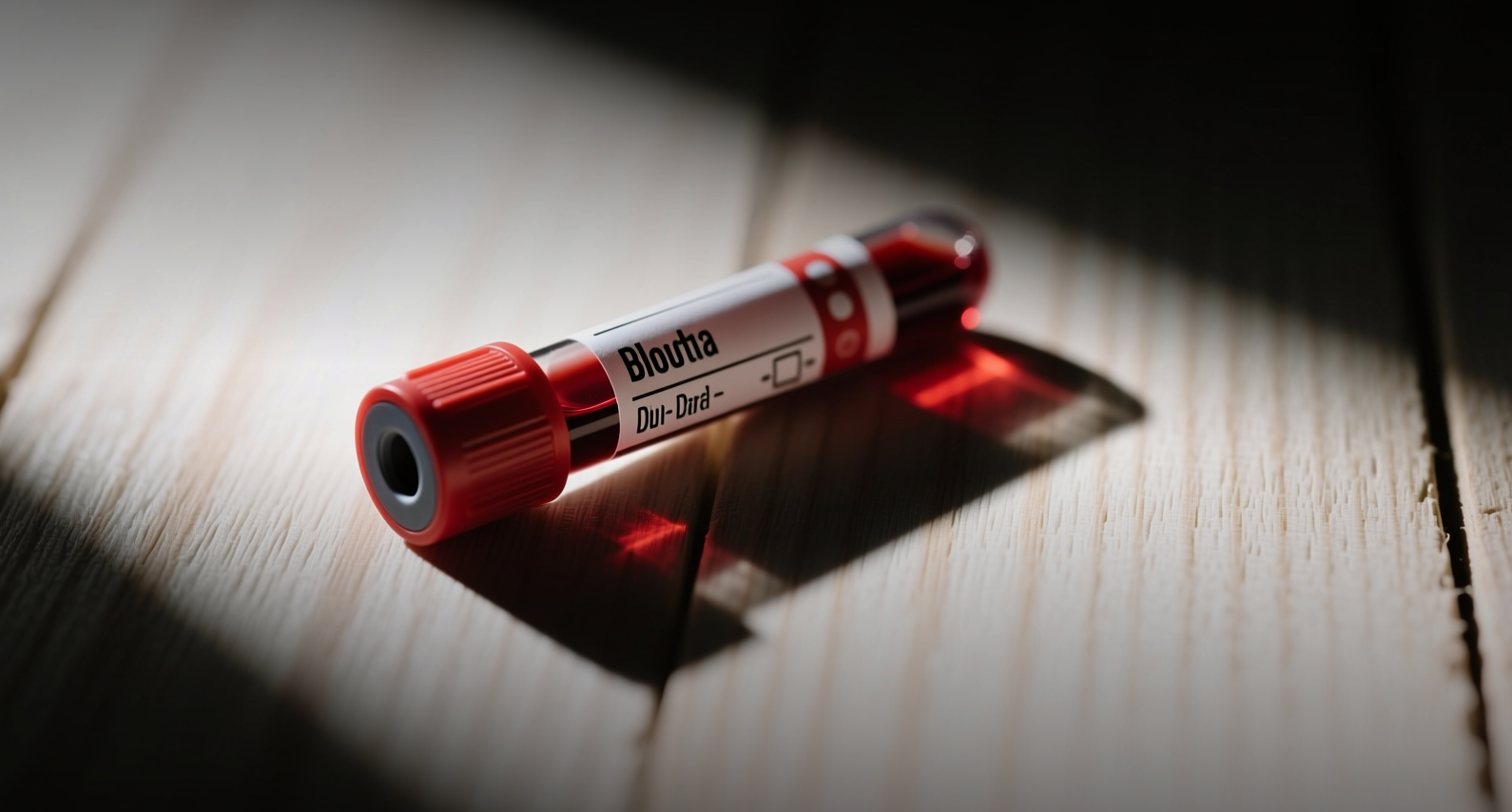
Grail trades near $70 after Galleri trial failure erases $2.2B
**Grail's Galleri blood test missed its primary endpoint in the NHS England trial, yet the company still generates revenue without FDA approval.** Grail's stock trades near $70, down 50 percent from its January record of $116.06, after the Galleri trial failed its primary endpoint, erasing $2.2 billion in market value. "We're focused on when GRAIL and its management knew that the need for a longer follow-up period diverged from the touted three-year duration," Reed Kathrein, partner at Hagens Berman Sobol Shapiro, said. The trial aimed to demonstrate a statistically significant reduction in late-stage (Stage III and IV) cancer diagnoses. On Feb. 19, Grail announced the trial did not meet its primary endpoint, admitting it "probably should have allowed for a longer follow-up period." Shares collapsed 50.55 percent the next day, from $101.53 to $50.21 per share. The trial was considered a crucial stepping stone toward FDA approval in the U.S., which would clear the way for private insurance and Medicare coverage. Without it, Grail sells Galleri on a cash-only basis for $749 to $949 per test, with analysts projecting revenue growth from $147 million in 2025 to $281 million in 2028. **Trial Failure Triggers Class Action, $2.2B Wipeout** The Feb. 19 disclosure triggered a securities fraud class action, with the lead plaintiff deadline set for Aug. 4. The lawsuit, Robbins v. Grail, Inc., No. 26-cv-05428, is pending in the U.S. District Court for the Northern District of California. It alleges Grail and senior executives misrepresented the clinical design and progress of the NHS-Galleri trial, claiming the three-year follow-up period was sufficient when internal data from the first screening round suggested otherwise. The complaint cites a timeline of alleged misrepresentations: May 13, 2025, when Grail announced positive top-line results but withheld detailed positive predictive value numbers; Aug. 12, when the company confirmed statistical powering was sufficient; and Nov. 12, when the Q3 earnings call repeated high-PPV messaging without updated risk disclosures. Multiple firms are soliciting investors, including Rosen Law Firm, Pomerantz LLP, Berger Montague PC, Bleichmar Fonti & Auld LLP, and Robbins Geller Rudman & Dowd LLP. Hagens Berman's investigation focuses on when management first recognized the three-year follow-up was insufficient. **Cash-Only Model Buys Time, But FDA Approval Remains the Prize** Despite the trial setback, Grail continues to sell Galleri directly to consumers, employers, hospital pilots, and telehealth programs. The NHS England trial wasn't a complete failure: Galleri users had fewer Stage IV cancers detected and achieved earlier detection of the deadliest cancers. Mizuho raised its price target on Grail to $65 with a Neutral rating on July 16, while the company's Q2 2026 results are due Aug. 5. Grail also expanded access to Galleri through a partnership with Priority Health for employers announced July 16. The company trades at 17 times this year's sales, a premium that reflects the potential of the multi-cancer early detection market. Illumina, which spun off Grail in 2024, retains a significant stake. Exact Sciences and Guardant Health are among the competitors in the liquid biopsy space, though Galleri's multi-cancer approach differs from their single-cancer or minimal residual disease tests. Grail's cash position and revenue trajectory will be key watch items when it reports Q2 results. The company's ability to sustain its cash-only model while pursuing FDA approval will determine whether the stock can recover from the trial failure. This article is for informational purposes only and does not constitute investment advice.