Edgen AI operates independently of, and is not controlled by Aspen Digital Financial Limited.
SpaceX targets Starship Flight 13 as stock trades below $135 IPO price
 Edgen Stock·Jul 23 2026, 13:00
Share to
Share to
Copy link

[1] SpaceX Has Another Go at Launching Starship Today and Lifting the Stock With It (https://www.barrons.com/articles/spacex-stars ...)[2] India will build 65,000 houses in Sri Lanka... Another phase of this special project has begun, find out who will benefit (https://www.msn.com/en-in/urban-infrastructur ...)[3] SpaceX’s Latest Growth Opportunity Isn’t About Starship. And It Isn’t Helping the Stock. (https://www.msn.com/en-us/news/technology/spa ...)[4] SpaceX Delayed Its Starship Launch and the Stock Fell Below Its IPO Price. One... (https://finance.yahoo.com/markets/stocks/arti ...)[5] SpaceX Plans Starship Launch For Tomorrow. Here's What Investors Need To Know (https://finance.yahoo.com/markets/stocks/arti ...)
Related News

Jul 23 2026, 14:06
Infosys trims FY27 revenue forecast as Q1 profit climbs 12%
Infosys reported Q1 revenue of $5.1B, up 2.4% YoY, as AI revenue reached 8.2% of total and large deal wins hit $3.6B. "The strong deal wins reflect client confidence in our AI-first strategy and execution capabilities," Chief Executive Officer Salil Parekh said. Operating margin expanded 0.2 percentage points sequentially to 21.1%, at the midpoint of the company's 20%-22% target range. On a constant currency basis, revenue grew 1% from the prior quarter. Free cash flow totaled $0.96 billion, giving the company flexibility for share buybacks and strategic investments. Net profit rose 12% YoY to Rs 7,769 crore, or Rs 18.70 per share, driven by higher utilization rates and cost optimization measures. The company did not disclose consensus estimates for the quarter. The company trimmed its FY27 revenue growth forecast to 1.5%-3.0% in constant currency, narrowing from the prior upper end, while retaining operating margin guidance of 20%-22%. Infosys ADRs fell more than 4% in US trading after the release, as the guidance cut overshadowed the profit beat. The stock has gained about 8% year to date, broadly in line with the S&P 500 information technology sector. Large deal wins of $3.6 billion included 61% from net new clients, indicating sustained demand for digital transformation services. The total contract value represents one of the strongest quarters for Infosys in recent years, driven by large-scale cloud migration and AI implementation projects across financial services, retail and manufacturing. The company's deal pipeline remains healthy, with clients increasingly seeking end-to-end AI integration services rather than discrete project work. AI-related revenue, disclosed for the first time at 8.2% of total, highlights the company's push into generative AI consulting and implementation. The Bengaluru-based firm competes with Tata Consultancy Services, Wipro and HCLTech for enterprise IT contracts. The AI revenue disclosure marks a shift for Infosys, which joins a growing list of IT services firms quantifying their exposure to generative AI. TCS, India's largest IT services exporter, has similarly highlighted AI-driven deal wins in recent quarters. Infosys has been investing heavily in AI training for its workforce and building proprietary AI platforms for client use cases, including its Infosys Topaz AI suite. The Indian IT services sector has been navigating a period of cautious client spending, with enterprises delaying large discretionary projects while accelerating AI-related investments. Infosys's strong deal wins suggest it is capturing a disproportionate share of this AI-driven demand. However, the guidance cut indicates that converting the pipeline into revenue may take longer than expected, as clients move from pilot programs to full-scale deployment. The conservative revenue guidance suggests management is factoring in macroeconomic uncertainty in key markets including the US and Europe. Rival IT services firms are expected to report similar trends in the coming weeks, with the sector navigating a mixed demand environment as clients prioritize AI projects over traditional outsourcing. For Infosys, the next catalyst will be the Q2 earnings call, where investors will look for signs of deal conversion and AI revenue acceleration. This article is for informational purposes only and does not constitute investment advice.

Jul 23 2026, 14:02
Critical Metals advances to final Kenya rare earth tender as 1 of 3
Critical Metals consortium advanced to final Kenya rare earth tender round, one of three American finalists from seven bidders. "Being shortlisted for the final stage of this process is a defining moment for Critical Metals and our Consortium," Tony Sage, Chairman of Critical Metals Corp, said. The consortium, which includes ASX-listed European Lithium Ltd — holder of an approximate 31% interest in Critical Metals — carries a combined market capitalization of about $1.5 billion and cash reserves exceeding $400 million, according to the company. That financial position means the group is fully funded through project development and Phase 1 construction. Mrima Hill is one of the most significant undeveloped rare earth and niobium deposits globally, located on Kenya's southern coast with direct access to the Port of Mombasa. China controls roughly 90% of global rare earth supply, while demand for rare earth magnets used in EVs, wind turbines and defense systems is projected to grow four to six times by 2040, per the company. **Technical Team With Proven Track Record** The consortium's technical team has helped build some of the industry's most notable rare earth projects, including Molycorp's Mountain Pass in California — now owned by MP Materials — Pensana's Longonjo project in Angola, NioCorp's $1 billion Elk Creek project in Nebraska, and Peak Resources' Ngualla project in Tanzania. The group plans an accelerated development approach combining parallel engineering, permitting and procurement to deliver earlier first production and cash flow than a conventional timeline would allow. The consortium's ambition extends across the full rare earth value chain, from concentrate production through to separated rare earth oxides and ultimately NdPr magnets — the single most valuable product in the supply chain and one currently dominated entirely by China. The long-term vision positions Mrima Hill as a regional rare earth processing hub for East and Southern Africa, with alignment to IFC Performance Standards, the Equator Principles and the UN Global Compact. **Strategic Fit With Existing Portfolio** Mrima Hill sits alongside Critical Metals' flagship Tanbreez rare earth project in Greenland, one of the world's largest rare earth deposits with year-round deep-water shipping access to the North Atlantic. The company also owns the Wolfsberg Lithium Project in Austria, the first fully permitted mine in Europe. Together, the three assets consolidate Critical Metals' Western-aligned critical minerals strategy at a time when the US and its allies are seeking alternatives to Chinese-dominated supply chains. The consortium will now proceed to the final stage of the Kenyan government's evaluation process, with further updates expected in due course. This article is for informational purposes only and does not constitute investment advice.
Jul 23 2026, 13:59
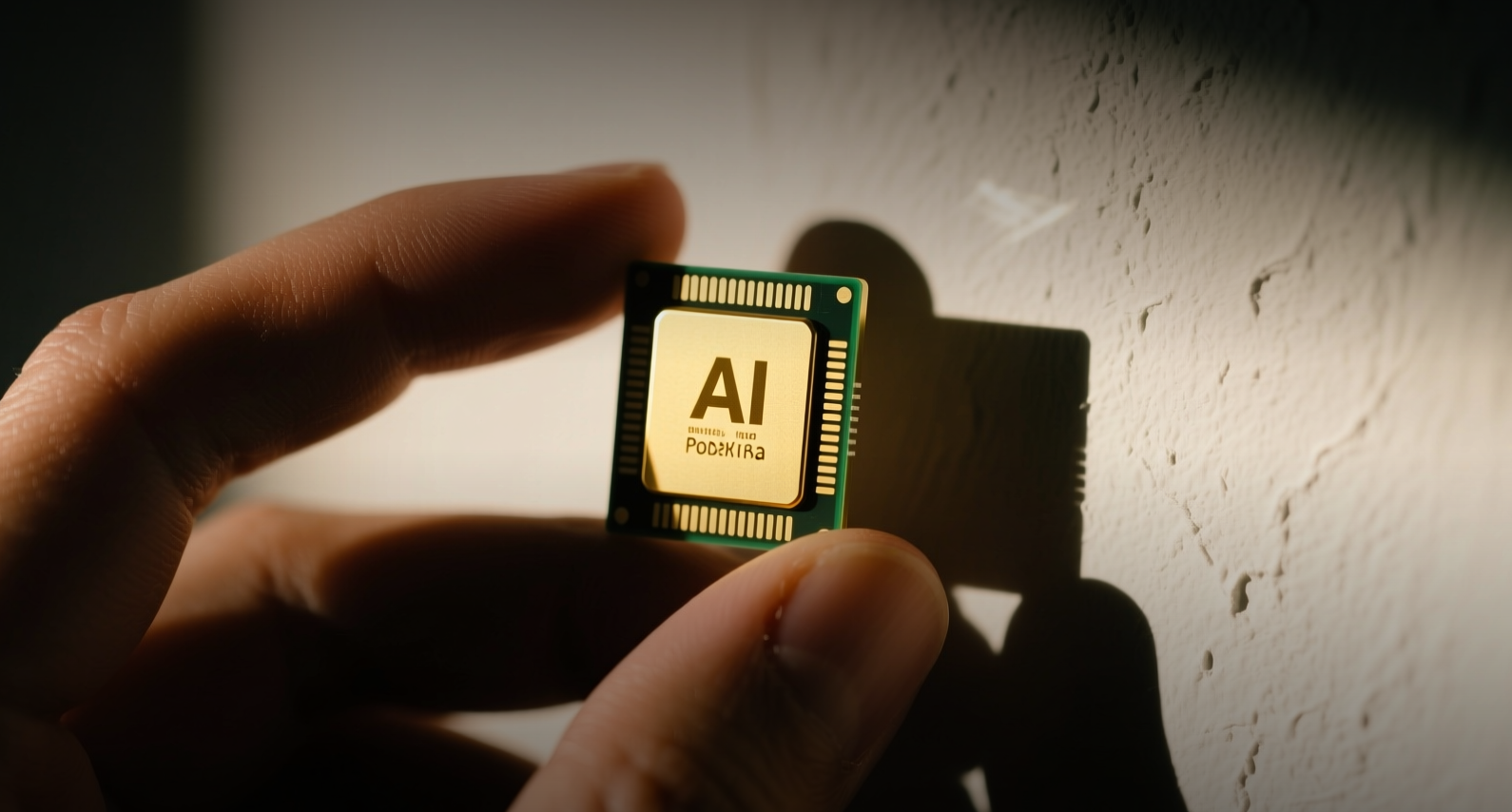
Aptus Capital's Wagner says buy semis after 20% pullback
The Philadelphia Semiconductor Index's 20% decline over the past month was driven by a positioning unwind rather than weakening AI fundamentals, Aptus Capital Advisors' David Wagner said. "Investors should treat this pullback as an opportunity to add equity exposure, not a reason to flee to fixed income," Wagner, a portfolio manager at the firm, said. "The AI investment thesis remains intact — what we're seeing is a technical correction in positioning after an extended rally." The semiconductor benchmark fell about 4.3% in Thursday's session alone, bringing its five-session decline to roughly 7.1%. The broader Nasdaq Composite dropped 1.5% on Thursday and is down 2.9% over the past month. The selloff has coincided with a surge in bearish bets: short positions across U.S. and Canadian equities rose 4% in June to $2.39 trillion, a record in data going back to 2010, S3 Partners data shows. Short interest for the median S&P 500 stock has climbed to 3.2% of market capitalization, the highest level since the 2008 financial crisis, according to Goldman Sachs. For investors, the question is whether the AI-driven bull market can sustain its momentum after a nearly four-year run. Wagner argues it can, recommending investors stay overweight equities and underweight fixed income while using volatility as a portfolio tool. The CBOE Volatility Index rose 9.56% in a single session and has surged 14.13% over the past five trading sessions, reflecting growing investor anxiety. The U.S. 10-year Treasury yield has also drawn attention as investors reassess rate expectations against an AI-driven inflation backdrop. Memory stocks showed early signs of stabilization Monday, with Micron Technology gaining 5% to $887.35 and SanDisk rising 6% to $1,435.70. The bounce followed a punishing stretch that dragged the broader semiconductor complex into oversold territory. JPMorgan strategist Mislav Matejka told clients the sector "will find a floor soon," pointing to the absence of meaningful supply additions before 2028 as a structural support for chip margins. The pullback has been broad-based. Intel, which reports second-quarter results this week, has declined about 27% over the past month as investors weigh competitive pressures against the company's AI-driven turnaround. The chipmaker is expected to post healthy revenue growth supported by resilient demand for its server processors, though profit-taking after a strong rally earlier this year has weighed on the stock. Wagner's call to overweight equities runs counter to the defensive positioning many investors have adopted as AI-driven inflation fears and geopolitical risks mount. Goldman Sachs has warned that rapid AI adoption could add roughly 20 basis points annually to U.S. core PCE inflation, a figure expected to more than double to 50 basis points by year-end as supply constraints persist. Escalating tensions in the Strait of Hormuz have pushed both WTI and Brent crude up about 11.8% over the past five trading sessions, adding to inflation concerns. "Volatility is not something to hide from — it's something to use," Wagner said. "If you're underweight equities right now because you're scared of a 20% drawdown in one sector, you're likely missing the bigger picture." This article is for informational purposes only and does not constitute investment advice.