Edgen AI operates independently of, and is not controlled by Aspen Digital Financial Limited.
South Korea clamps down on leveraged ETFs as 320,000 accounts wiped out
 Edgen Stock·Jul 16 2026, 10:48
Share to
Share to
Copy link

[1] After 320,000 Accounts Were Wiped Out—Where Does South Korea's Deleveraging Stand? (https://wallstreetcn.com/articles/3777115 ...)[2] South Korea toughens regulations on single-stock leveraged ETFs (https://www.msn.com/en-us/money/other/south-k ...)[3] South Korea regulator to announce new measures on single-stock leveraged ETFs (https://www.msn.com/en-us/money/companies/sou ...)[4] Korea Plans Measures on Leveraged ETFs Driving Wild Volatility (https://www.bloomberg.com/news/articles/2026- ...)[5] South Korea to Halt New Listings of Single Stock Leveraged ETFs (https://www.bloomberg.com/news/articles/2026- ...)
Related News

Jul 16 2026, 12:05
ARK Invest buys $52M in SpaceX ahead of Starship Test 13
ARK Invest deployed $52.1 million into SpaceX across multiple exchange-traded funds during the week ended July 10, adding to its largest private-company holding as the Elon Musk-led company prepared for its 13th Starship launch, according to daily trade disclosures published by the firm. The purchase, spread across four ARK funds including the flagship ARKK and the ARK Space Exploration & Innovation ETF, reflects the firm's conviction in commercial space as SpaceX prepares to fly its next Starship prototype from its Boca Chica, Texas, facility on July 16. The test mission will carry the first V3 Starlink satellites, marking a milestone in the company's satellite internet expansion as it seeks to boost network capacity and reduce latency for end users. SpaceX has completed 12 prior Starship tests since April 2023, with each successive flight achieving longer duration and more complex objectives. ARK also added shares of Eli Lilly, Meta Platforms, X-Energy, Coinbase Global and Circle Internet Group during the same period, while reducing positions in Advanced Micro Devices, Roku and Robinhood Markets, according to the Foreign Policy Journal, which first reported the weekly trade data. The firm cut its genomics holdings across Natera, Illumina, Twist Bioscience, 10x Genomics and BioNTech, paring exposure to a sector that has underperformed broader markets this year. The ARK Genomic Revolution ETF has fallen about 6% year-to-date, trailing the S&P 500. The portfolio rotation shifts capital toward space, artificial intelligence platforms and digital finance — sectors that align with ARK's long-held thematic investment framework. SpaceX, valued at roughly $350 billion in secondary market transactions, remains the firm's largest private-market bet. ARK first acquired SpaceX shares in 2021 and has added to the position in subsequent rounds as the company's valuation has grown from about $100 billion, according to prior disclosures. The Starship program is central to SpaceX's growth narrative. The fully reusable rocket, the largest ever built at 120 meters tall, is designed to carry payloads and crew to orbit, the moon and Mars. Flight 13 follows an April test that achieved a controlled splashdown in the Indian Ocean after a suborbital trajectory. Thursday's launch will test upgraded heat shield tiles and the V3 satellite deployment mechanism, both critical for operational missions planned for later this year. The U.S. Federal Aviation Administration issued the launch license for Flight 13 on July 14. ARK's $52.1 million SpaceX purchase represents one of its largest weekly allocations to a single name this year. The firm's ARKK flagship fund has returned roughly 12% year-to-date, outperforming the S&P 500's 8% gain, driven by holdings in Tesla, Coinbase and Roku. The fund has about $15 billion in assets under management, according to the latest available data. The second-quarter earnings season, which begins this week, will test whether ARK's rotation into space and digital assets and away from semiconductors and genomics pays off. SpaceX does not report quarterly earnings as a private company, but its Starlink division has been generating positive cash flow since late 2024, according to published reports. The division's subscriber base has grown to more than 4 million users globally, providing a recurring revenue stream that supports the broader Starship development program. For ARK, the bet is that SpaceX's increasing launch cadence and Starlink's expanding revenue base will justify the premium valuation as the company edges closer to an eventual public listing. This article is for informational purposes only and does not constitute investment advice.
Jul 16 2026, 12:04
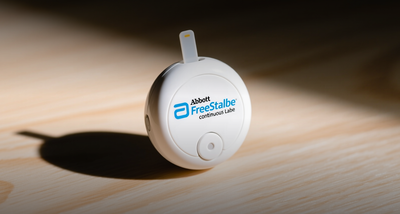
Abbott lifts 2026 profit forecast to $5.60 on heart device demand
Abbott Laboratories raised its full-year profit forecast to as much as $5.60 a share after second-quarter results topped estimates, powered by sustained demand for its heart devices that the company expects to accelerate in the second half. The company's medical devices franchise, including its FreeStyle Libre continuous glucose monitors and cardiovascular portfolio spanning electrophysiology and structural heart, drove the outperformance, Abbott said in its earnings release. The raised guidance reflects "expected strong demand for heart devices in the second half of the year." Second-quarter adjusted earnings reached $1.31 a share, topping the $1.28 consensus from 23 analysts surveyed by LSEG. Revenue rose to $12.6 billion, above the $12.52 billion estimate and up 13% from $11.14 billion a year earlier. The company now expects full-year adjusted profit of $5.45 to $5.60 a share, compared with its prior range of $5.38 to $5.58. The midpoint of $5.53 sits above the $5.49 analyst consensus. Full-year organic sales growth is expected to land between 6.5% and 7.5%. The raised forecast signals that Abbott's core medtech businesses are gaining momentum after a period of stock underperformance. Shares have fallen 27% year to date, and the company trades at 25.15 times earnings — a discount to Boston Scientific at 32 times and Dexcom at 38 times, according to public filings. The valuation gap reflects investor skepticism about Abbott's growth trajectory, which the company is now trying to close with its upgraded outlook. Abbott's diversified portfolio spans four segments: medical devices, diagnostics, nutrition, and established pharmaceuticals. The devices division, which includes the FreeStyle Libre system and cardiovascular products, is the highest-margin and fastest-growing piece of the business. In the first quarter, the established pharmaceuticals division posted 13.2% reported sales growth in emerging markets, while nutrition sales declined 6% as the company worked through pricing adjustments. Selling, general and administrative expenses rose 22.2% year over year in the first quarter, partly reflecting costs tied to European medical device regulation compliance. The company's heart device business faces competition from Boston Scientific in structural heart and electrophysiology, and from Dexcom in continuous glucose monitoring. Abbott's FreeStyle Libre holds a leading market position, but pricing pressure and new product launches from rivals have narrowed the competitive gap. The second-half demand outlook for cardiovascular devices will be a key test of whether Abbott can sustain its market share while expanding margins. For investors, the raised guidance provides a clearer floor for earnings expectations, but the stock's year-to-date decline suggests the market is waiting for proof of execution. With the company trading at a discount to high-growth medtech peers, the second-half results will determine whether the valuation gap narrows or widens. This article is for informational purposes only and does not constitute investment advice.

Jul 16 2026, 12:03
U.S. Bancorp posts record Q2 revenue on loan growth, BTIG deal
U.S. Bancorp reported record second-quarter revenue, driven by strong loan growth, broad fee momentum and a one-month boost from its acquisition of financial-services firm BTIG. The Minneapolis-based lender did not immediately disclose exact revenue or earnings per share figures. Full results are scheduled for release Thursday morning. The record revenue reflects broad-based strength across U.S. Bancorp's lending and fee-generating businesses. Loan growth, a key metric for regional banks, contributed to the top-line performance, while fee income showed momentum across multiple segments including wealth management, payments and capital markets. The BTIG acquisition, which closed during the quarter, added one month of revenue and marks one of the larger M&A transactions in the financial-services sector this year. The results come as regional banks navigate a period of elevated deposit costs and uncertainty around regulatory capital requirements. U.S. Bancorp's performance contrasts with larger peers such as Bank of America, which also reported strong quarterly results driven by record trading revenue. For U.S. Bancorp, the focus remains on net interest margin trends and credit quality as the bank integrates BTIG and expands its fee-based revenue streams. The BTIG deal expands U.S. Bancorp's capabilities in capital markets, equities and advisory services, diversifying its revenue mix beyond traditional lending. The acquisition positions the bank to compete more directly with larger Wall Street firms in select areas while maintaining its regional banking footprint. The record revenue signals strong operational momentum for U.S. Bancorp and could lift sentiment for the broader regional banking sector. If loan growth reflects healthy economic activity, it may also support the case for other regional lenders. The successful integration of BTIG could set a positive precedent for M&A in financial services, potentially encouraging further consolidation among mid-sized banks. Investors will watch for net interest margin data, provision for credit losses and updated guidance when the bank releases full results Thursday. U.S. Bancorp shares are listed on the New York Stock Exchange under the ticker USB. This article is for informational purposes only and does not constitute investment advice.