Edgen AI operates independently of, and is not controlled by Aspen Digital Financial Limited.
Small businesses ditch Salesforce for AI-built apps, saving up to $100K
 Edgen Stock·Jul 22 2026, 09:57
Share to
Share to
Copy link



[1] 美国小企业掀起Salesforce“退订潮”,用AI自建软件大幅压缩成本 (https://wallstreetcn.com/articles/3777668 ...)[2] Fireflies launches AI Sales Suite, bringing enterprise sales intelligence to its 20 million users at a fraction of what legacy platforms charge (https://markets.businessinsider.com/news/stoc ...)[3] Curative CEO says company ditched a $600k-a-year Salesforce contract after vibecoding a CRM in 2 months - Business Insider (https://www.businessinsider.com/curative-ceo- ...)
Related News

Jul 22 2026, 11:12
Planet Fitness faces securities fraud suit after 31% stock crash
Bleichmar Fonti & Auld LLP has opened an investigation into Planet Fitness Inc. (NYSE: PLNT) for potential securities fraud after the fitness chain's stock lost 31% of its value in a single day, wiping out more than $2 billion in market capitalization. "Planet Fitness failed to disclose that it could not sustain membership growth without a significant marketing overhaul and that its planned Black Card price increase was not viable," the law firm said in a statement announcing the probe. The investigation covers investors who bought Planet Fitness shares between Nov. 6, 2025 and May 6, 2026. The lead plaintiff deadline is Sept. 14, 2026. Planet Fitness on May 7 reported first-quarter results that revealed a dramatic slowdown. The company cut its same-store sales growth forecast to about 1% from a prior range of 4% to 5% — a target it had set just six months earlier. It also withdrew its long-term three-year growth algorithm entirely and paused the national rollout of a Black Card price increase, citing an "over-pivoted" marketing campaign that failed to connect with core customers. The stock plunged $19.95 to close at $44.01 on May 7, its steepest single-day decline on record. Multiple law firms including the Law Offices of Frank R. Cruz, Schall Law Firm, and Pomerantz LLP have filed or announced similar class action claims. The complaint alleges that Planet Fitness and its executives made materially false statements about the company's ability to grow membership and execute its pricing strategy. Specifically, the company overstated its growth outlook and exaggerated the effectiveness of its marketing campaigns, according to the lawsuit. The 31% crash puts Planet Fitness shares at their lowest level since early 2023, testing support near the $40 level. Investors will watch for any additional disclosures from the company ahead of its second-quarter earnings report, expected in August. This article is for informational purposes only and does not constitute investment advice.
Jul 22 2026, 11:11
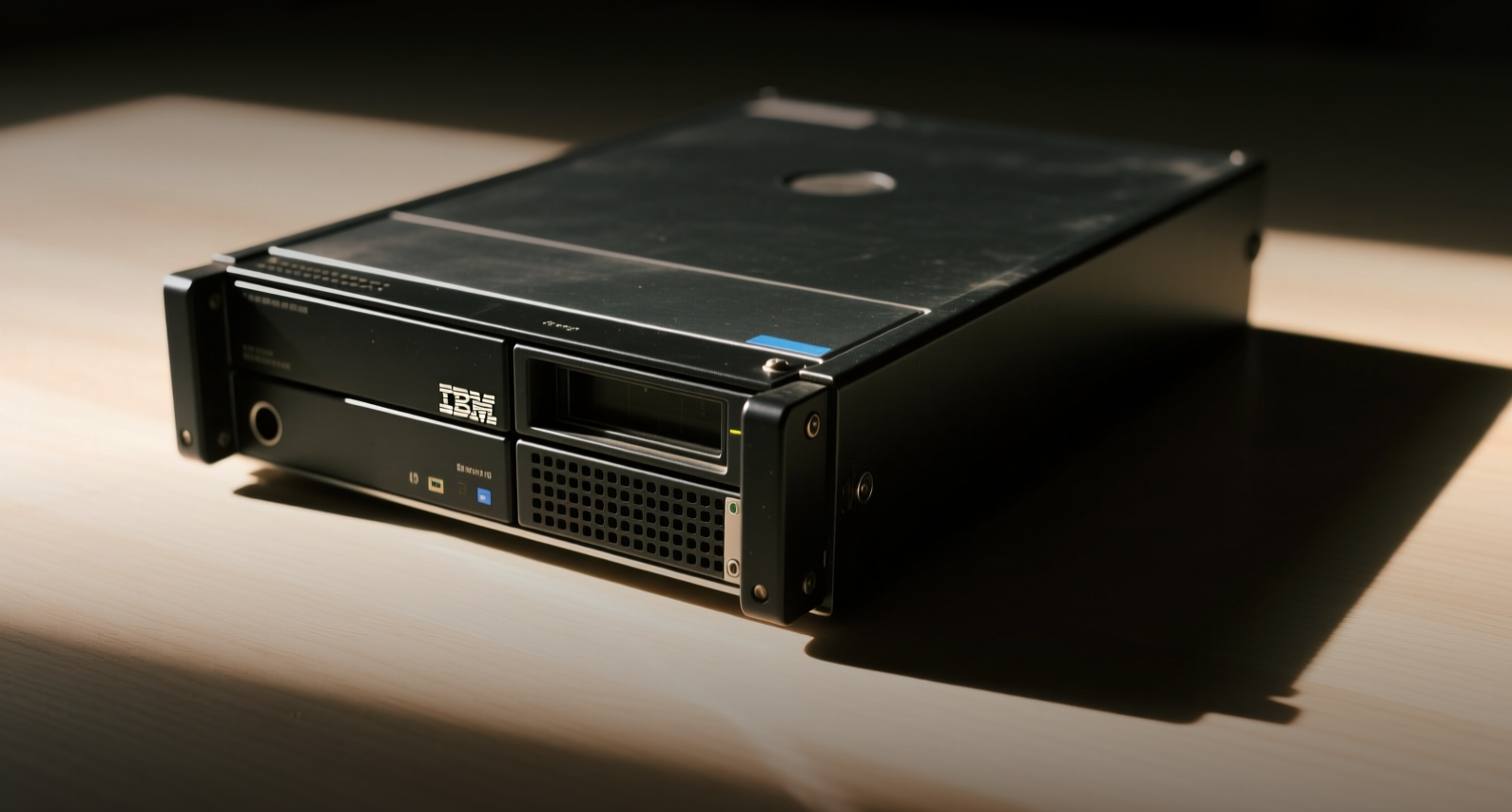
IBM faces securities fraud probe after 25% stock drop on revenue miss
Bleichmar Fonti & Auld LLP launched a securities fraud investigation into International Business Machines Corp. on July 22 after the stock plunged 25% in a single session. The law firm said investors may have relied on IBM's "projected Software and Infrastructure segment growth rates and stability" before the company disclosed preliminary second-quarter results that missed estimates, according to a statement from BFA Law. IBM on July 14 warned that Q2 revenue would come in at $17.2 billion, up just 1% from a year earlier and about $660 million below the $17.85 billion consensus. The company also guided operating non-GAAP earnings per share to $2.93, below the $3.02 estimate. Chief Executive Officer Arvind Krishna acknowledged the company had "faltered," citing clients shifting spending, cybersecurity issues, and deals slipping later than planned. The sell-off erased more than $60 billion in market value, pushing IBM's market capitalization to about $204 billion. The stock closed at $217.07, its lowest level in years, and now trades at 18.27 times trailing earnings, a discount to the sector median of 26.11 times. The investigation centers on whether IBM management painted an overly optimistic picture of its deal pipeline before the surprise warning. Multiple law firms announced probes on the same day, and a securities class action lawsuit is expected to follow. IBM's Q1 results had shown relative strength, with earnings per share of $1.91 topping the $1.81 consensus and revenue of $15.9 billion beating expectations. But net income fell 78% from a year earlier to roughly $1.2 billion, and operating cash flow dropped 61% to $5.17 billion. The company still has catalysts on the horizon. IBM has struck an artificial intelligence partnership with Alphabet Inc.'s Google Cloud, deepened its ties with OpenAI through a cybersecurity program, and unveiled a sub-1-nanometer chip design. Analysts remain cautiously optimistic — a group of 22 analysts rates the stock a "Moderate Buy" with an average price target of $297.77, implying about 41% upside from current levels. Wedbush's Dan Ives and Barclays' Raimo Lenschow both see the stock reaching $350. IBM is scheduled to report full second-quarter results on July 22 after the market close. The outcome will test whether the preliminary warning was a one-time stumble or the start of a deeper trend. This article is for informational purposes only and does not constitute investment advice.

Jul 22 2026, 11:09
Iran denies nuclear work at Mount Ghaen as US strikes hit 11th night
Iran denied any nuclear activity at Mount Ghaen on Tuesday, calling the US focus on the site a pretext for aggression as American airstrikes entered an 11th night and Brent crude topped $94 a barrel. "The US obsession with Mount Ghaen is merely a fabricated excuse for its aggression, destruction and sabotage," said Esmail Baghaei, spokesperson for Iran's Foreign Ministry, in a statement carried by state media. Brent crude traded above $94 a barrel, while the US dollar index rose 0.5% to 100.27 as investors sought safe havens. The yield on the 10-year US Treasury note climbed as traders pushed expectations for the first Federal Reserve rate cut to September, according to Goldman Sachs. The international crude benchmark has surged as the conflict disrupted shipping through the Strait of Hormuz, a waterway that handled about one-fifth of the world's crude oil and natural gas before the war. The standoff over Mount Ghaen — a fortified underground site near one of Iran's primary nuclear enrichment facilities — threatens to widen a conflict that has already wounded more than 500 US personnel and pushed US gasoline to an average of $4 a gallon. President Donald Trump said Tuesday the US would soon target the area, a move Iran's military said would be considered a major escalation triggering attacks on all US interests across the region. "We have no interest in meeting" with Iranian officials, Trump told reporters from the Oval Office. **Strait of Hormuz Blockade Tightens** Iran's paramilitary Revolutionary Guard claimed responsibility for an attack on a tanker in the Strait of Hormuz early Tuesday, forcing the crew to abandon the vessel. US Central Command said it has redirected eight commercial vessels and disabled one to enforce the blockade. The route close to Oman's shores — the corridor the US military had encouraged ships to use to avoid Iranian control — has become a new flashpoint. The blockade has sent ripple effects across energy markets. The last time a major shipping chokepoint faced sustained disruption of this magnitude was during the 2019 Abqaiq-Khurais attacks, when Brent spiked nearly 15% in a single day. This conflict has been more prolonged, with US strikes hitting Iranian military command centers, maritime capabilities, and missile launch sites across at least five provinces over 11 consecutive nights. **Civilian Infrastructure Under Attack** Iran has struck US allies across the region, targeting desalination and power plants in Kuwait for a fourth straight day. About 90% of Kuwait's drinking water comes from desalination, making the attacks a matter of life and death for the tiny Gulf nation. Jordan reported five drones and three missiles were shot down, while Bahrain sounded missile alert sirens as another barrage targeted the island kingdom that hosts the US Navy's 5th Fleet. United Nations Secretary-General Antonio Guterres called the attacks on civilian infrastructure "unacceptable" and a violation of international law. Pakistan, which brokered last month's interim ceasefire that has since collapsed, has been trying to revive diplomacy. Iranian Interior Minister Eskandar Momeni met Pakistani army chief Field Marshal Asim Munir and Prime Minister Shehbaz Sharif this week, but no new arrangement has emerged. The conflict has reshaped currency markets as well. The dollar's rally to 100.27 reflects both safe-haven demand and the relative strength of the US as the world's biggest oil exporter — when crude prices rise, the US economy benefits more than energy-importing regions like Europe or Japan, according to analysts. Traders who entered the year betting on two Fed rate cuts have been forced to cover short positions as those expectations have been pushed out. This article is for informational purposes only and does not constitute investment advice.