Edgen AI operates independently of, and is not controlled by Aspen Digital Financial Limited.
Skyworks Solutions Q3 earnings preview: $922M revenue at stake
 Edgen Stock·Jul 24 2026, 19:49
Share to
Share to
Copy link


[1] Skyworks to Report Q3 Earnings: What's in Store for the Stock? (https://www.zacks.com/stock/news/2960613/skyw ...)[2] SkyWest, Inc. (SKYW) Q2 2026 Earnings Call Transcript (https://seekingalpha.com/article/4925031-skyw ...)[3] Skyworks Solutions snaps six straight sessions of gains (https://www.msn.com/en-us/money/topstocks/sky ...)[4] Southwest Airlines Co. (LUV) Q2 2026 Earnings Call Transcript (https://seekingalpha.com/article/4924855-sout ...)
Related News

Jul 24 2026, 21:41
Dr. Reddy's Laboratories drops 9% as Q1 profit plunges 68.7%
Dr. Reddy's Laboratories shares fell 9% after Q1 profit dropped 68.7% and revenue declined 5.6% from a year earlier, triggering an investor investigation into the earnings miss. "RDY scores in the mid-range primarily due to solid underlying financial strength but a clear recent deterioration in margins and higher debt," Spark, TipRanks' AI analyst, said. The stock carries a consensus Buy rating with a $1,540 price target, implying significant upside from current levels. The technical picture is notably weak, with the price below key moving averages and a negative MACD signal, according to the analysis. The earnings miss prompted Levi & Korsinsky to open a pending investigation into whether the company's disclosures adequately warned investors of the profit decline's magnitude. Revenue fell 5.66% year over year while profit dropped 68.7%, a margin compression that far exceeded the top-line decline. The company did not disclose specific revenue or EPS dollar figures in its regulatory filings. The investigation covers shareholders who suffered losses after the July 22 earnings release, regardless of whether they still hold the shares, with no minimum loss amount required to participate. The 9% decline erased roughly $940 million in market value from the $10.43 billion Hyderabad-based company, which develops and markets generic and branded medicines across multiple therapeutic categories serving both domestic and international markets. Dr. Reddy's posted audio of its July 22 earnings call and filed a Form 6-K with the U.S. Securities and Exchange Commission on July 23. The company also published its unaudited results in Business Standard and Andhra Prabha newspapers, signed by Company Secretary K. Randhir Singh, reinforcing its multi-jurisdictional disclosure compliance across the NYSE, NSE and BSE. The profit collapse signals potential margin pressure from generic competition or rising operational costs that investors will scrutinize in coming quarters. The investigation by Levi & Korsinsky, which has represented shareholders in securities class actions for over two decades and ranked in the ISS Top 50 for seven consecutive years, focuses on investor losses tied to the earnings miss and represents the next catalyst for the stock. The outcome could set a precedent for disclosure standards among Indian pharmaceutical companies listed on U.S. exchanges. This article is for informational purposes only and does not constitute investment advice.
Jul 24 2026, 21:18
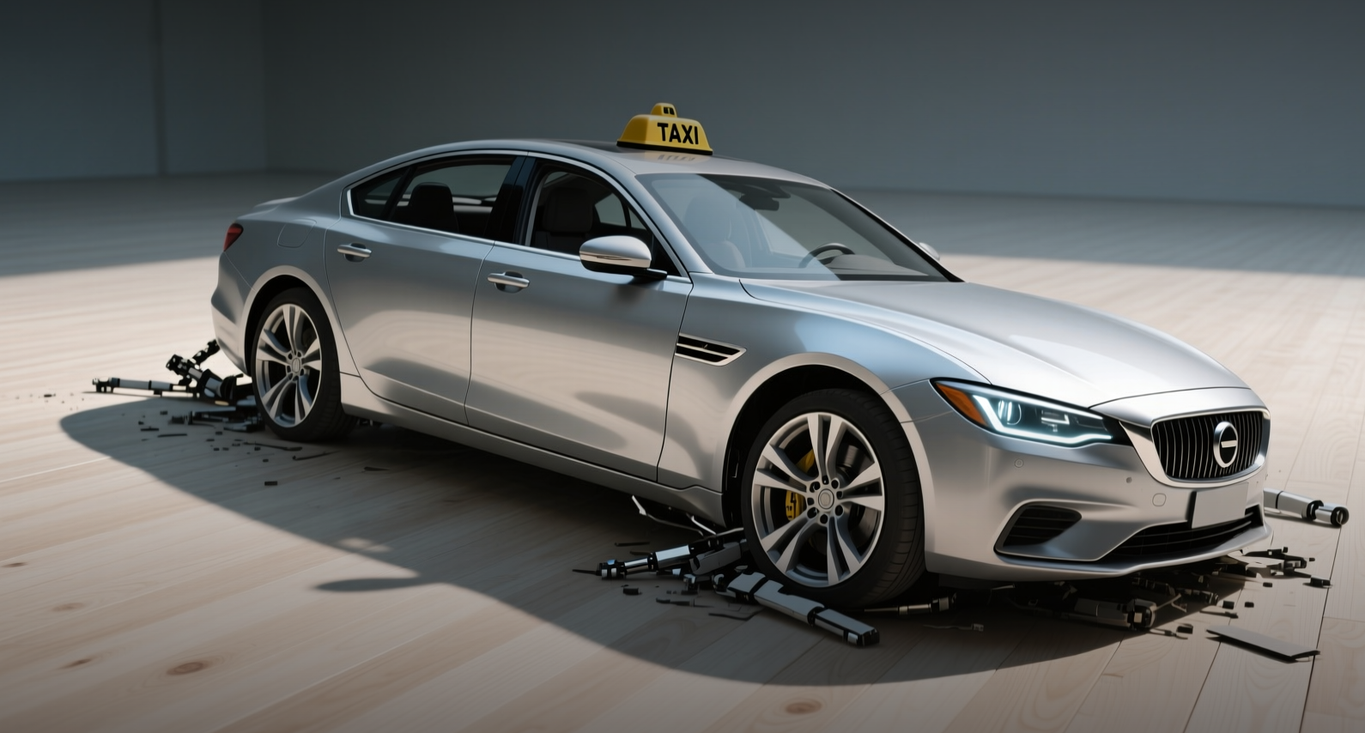
Waymo explores Uber breakup as robotaxi tensions reach $100B
**Waymo is preparing to end its Uber partnership in Austin and Atlanta by early 2028, a split that would reshape who controls the customer relationship in the robotaxi market.** Waymo has notified Uber it plans to launch its own app in Austin and Atlanta from January 2028, the Financial Times reported, as the Alphabet-owned robotaxi operator moves to sever a partnership that has grown strained over operations, finances and strategy. "The two companies were pursuing diverging objectives," a person familiar with the developments told the Financial Times. Uber said the contract covering Austin and Atlanta ends in May 2028, according to TechCrunch. The split follows the end of a nearly three-year Arizona deployment in June, when Waymo pulled its vehicles from Uber's app in Phoenix. Waymo now operates across 11 U.S. metro areas and serves roughly 500,000 paid rides a week, according to TechCrunch. The company last raised money at a $45 billion valuation in 2024 and has discussed a new round at more than $100 billion, The Information reported. Uber shares closed down 4.3% on the FT report. The breakup would end an arrangement that once made strategic sense — Waymo had the self-driving technology, Uber had the riders — but now threatens to limit both companies' ambitions. For Waymo, owning the customer relationship means controlling pricing, loyalty data and routing. For Uber, losing Waymo's fleet would remove a key autonomous vehicle partner from its platform at a time when the ride-hailing giant is trying to position itself as the front door for all urban transport. ## Tensions Built for Months The public friction predated the breakup. In April, Uber CTO Praveen Neppalli posted a video on X showing what he described as a "scary" Waymo moment in San Francisco, where a robotaxi overtook a Muni bus in the wrong lane. In May, Uber CEO Dara Khosrowshahi criticized Waymo's behavior in school zones and emergency situations during an earnings call, without naming the company directly. Behind the scenes, the friction ran deeper. Waymo raised concerns about the cleanliness and routing of its vehicles when operated through Uber's platform, the FT reported. Uber pushed back on the sudden unavailability of Waymo vehicles during bad weather and argued the partnership carried "unsustainable financial terms," according to the report. ## Regulation Becomes the New Battleground The commercial split has a parallel fight playing out in regulation. Uber has opposed a Washington, D.C. bill that would allow fully driverless commercial robotaxi operations, with a $1 million application fee, a $5 million permit fee and at least $5 million in liability insurance. Waymo backs the bill. Uber argues it could hand Waymo a de facto monopoly and hurt human drivers. In New Jersey, Uber has pushed for language requiring human drivers to complete 85% of rides on any platform offering driverless service for three years, Wired reported. That would effectively force Waymo to operate through a platform that also includes human drivers — a structure that preserves Uber's role as the intermediary. San Francisco has given regulators fresh material. Dozens of Waymo vehicles were caught in July 4 gridlock around the Presidio and Crissy Field after the Golden Gate Bridge fireworks, with some running down their batteries and needing to be towed. One unoccupied Waymo caught fire after driving over a small firework, with no injuries reported. Supervisor Bilal Mahmood sent formal inquiries to city agencies, and Mayor Daniel Lurie later asked California officials for tougher robotaxi standards during major events. For investors, the split raises questions about both companies' autonomous vehicle strategies. Waymo, valued at $45 billion in its last funding round and reportedly seeking a $100 billion valuation, is betting it can build a direct-to-consumer robotaxi business without Uber's distribution. Uber, which has partnered with Wayve and other autonomous vehicle developers, must now prove it can replace Waymo's capacity. The outcome will determine whether the robotaxi market consolidates around vertically integrated operators or remains open to platform aggregators. This article is for informational purposes only and does not constitute investment advice.

Jul 24 2026, 21:17
Dow climbs 0.5%, S&P edges up as oil retreats on peace hopes
The Dow Jones Industrial Average rose 0.5%, the S&P 500 gained 0.1% and the Nasdaq composite fell 0.6%, as oil retreated on hopes for peace talks. "If the war continues, crude could reach $125 a barrel, with available inventories insufficient to offset supply losses," David Roche, president of Roche Advisory, said. The divergence between the Dow and the Nasdaq highlighted a rotation out of growth stocks into value-oriented sectors. Technology shares extended their decline after disappointing earnings from two industry heavyweights added to selling pressure on semiconductor stocks. Brent crude fell 3.9% to $96.80 a barrel, retreating from the $100 level breached earlier this week, as traders weighed the prospects for a ceasefire. The retreat in oil helped ease concerns that prolonged energy costs would reignite inflationary pressures and force central banks to keep monetary policy tight for longer. If peace talks progress, lower energy costs could ease inflation concerns and support further equity upside. But the rotation out of technology into value sectors may persist as investors reassess AI-related spending against earnings growth. Markets now turn to next week's Federal Reserve decision for further direction on the rate path. Asian markets ended broadly lower Friday, tracking the mixed close on Wall Street. Japan's Nikkei 225 fell 2.73%, South Korea's Kospi dropped 5.72% and China's Shanghai Composite lost 1.61%. Hong Kong's Hang Seng Index declined 0.98%, while Australia's ASX 200 lost 0.75%. European markets opened higher, with the Stoxx Europe 600 rising 0.5%, led by gains in Spain and Sweden. The U.S. 10-year Treasury yield held near yearly highs reached earlier this week, as traders increased bets that central banks may need to keep policy tight for longer. The dollar strengthened broadly. Gold traded near $4,050 an ounce after falling about 2% in the previous session as rising bond yields reduced demand for the non-yielding asset. The Indian rupee closed unchanged at 96.57 per dollar. The stabilization in U.S. equities followed a volatile week. The S&P 500 had fallen 1.2% on Thursday, while the Nasdaq slumped 2.2% in its steepest single-day decline since late June, as disappointing earnings from two technology companies added to selling pressure in semiconductor shares. The renewed selloff in technology shares on Wall Street and the jump in crude oil prices had prompted investors to scale back risk exposure across global markets. European Central Bank President Christine Lagarde said policymakers could consider another rate increase after keeping the deposit rate unchanged at 2.25%, adding to the global tightening bias. Markets also raised expectations of a U.S. Federal Reserve rate increase by September as energy prices continued to rise, though Friday's oil retreat may temper those bets. Investors are expected to keep a close watch on developments in diplomatic negotiations, crude oil prices and signals from the Federal Reserve as they gauge whether the latest bout of volatility in global equities has further to run. This article is for informational purposes only and does not constitute investment advice.