Edgen AI operates independently of, and is not controlled by Aspen Digital Financial Limited.
Shopify jumps 8% as Meta's Muse agent plugs into Shop Pay
 Edgen Stock·Sep 22 2026, 15:37
Share to
Share to
Copy link


[1] Shopify shares rise 8% after Meta's AI agent adds checkout integration (https://www.proactiveinvestors.com/companies/ ...)[2] No Shirt, No Shoes, No Service: Amazon Blocks Meta’s Muse AI From Shopping (https://www.cnet.com/tech/services-and-softwa ...)[3] Meta’s Muse Tops ChatGPT as AI Agents Head for Checkout (https://www.pymnts.com/news/artificial-intell ...)[4] Meta’s Muse Is a ‘Killer Product’. It Won’t, However, Be the Death of Shopify. (https://www.msn.com/en-us/news/other/meta-s-m ...)[5] Mark Zuckerberg says 'more partnerships' coming as Meta teams with Shopify to power AI purchases: 'Shoppers find more, shops sell more' (https://www.msn.com/en-us/news/other/mark-zuc ...)
Related News
Sep 22 2026, 16:03
ARS Pharmaceuticals faces Oct 5 deadline in 23.9% drop lawsuit
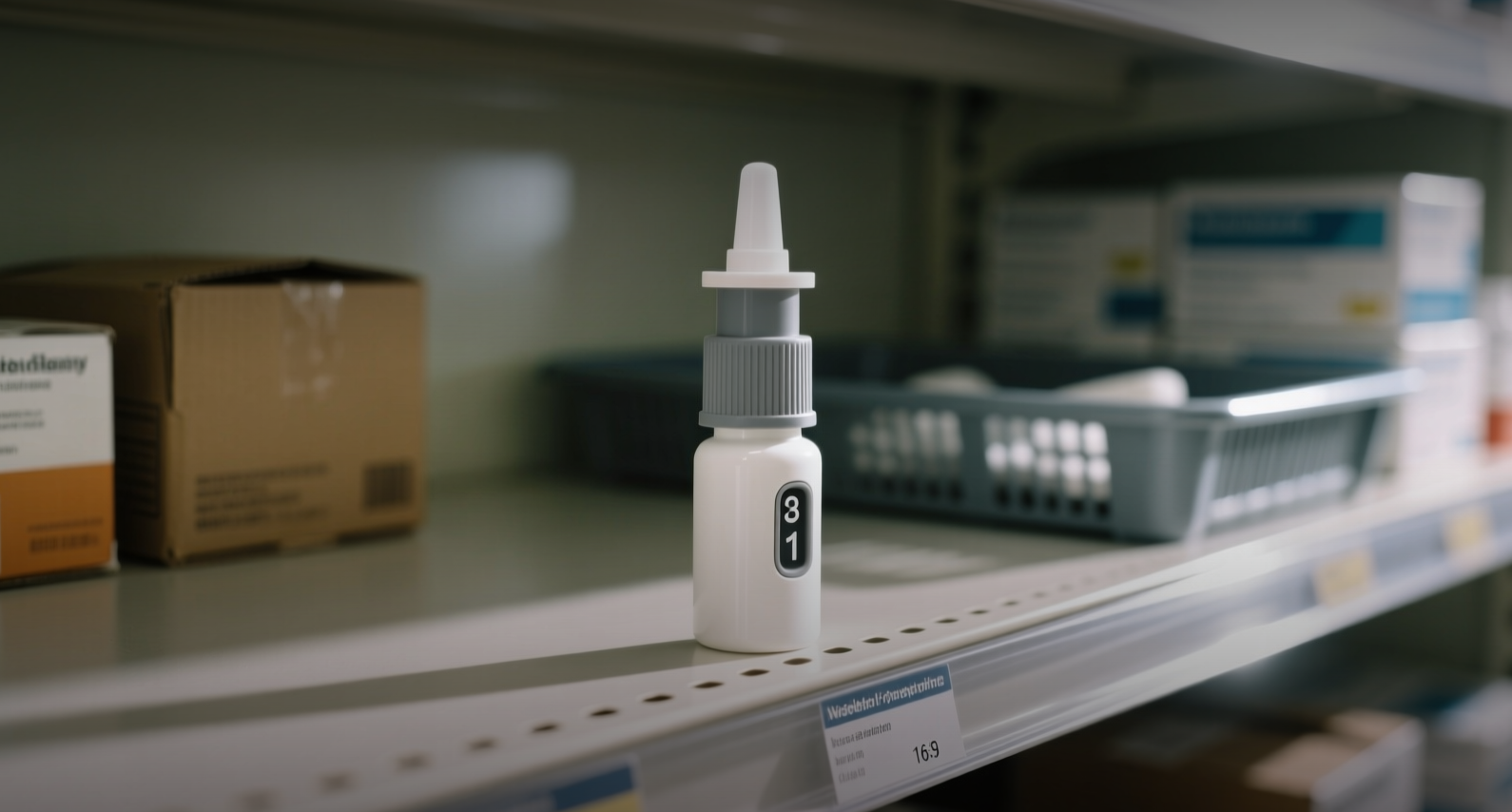
Investors who bought ARS Pharmaceuticals Inc. shares between March 9 and June 24, 2026 have until October 5 to seek lead-plaintiff status in a federal securities class action over the company's CVS Caremark coverage guidance. The complaint alleges the company and its executives told investors that expanded insurance coverage for neffy, its needle-free epinephrine nasal spray, would take effect July 1, 2026, while disclosing only generalized risk language about that timeline. "Defendants provided these overwhelmingly positive statements to investors while, at the same time, failing to adequately disclose the risk that the expanded insurance coverage may not be available by the July 1 deadline," according to the Robbins LLP notice of the action. ARS disclosed the reversal after the close on June 24, 2026, saying no new commercial formulary additions or coverage decisions had been issued for neffy in the July 1 cycle and that CVS Caremark had reserved its decision until January 2027. The stock fell $2.52, or 23.9%, to close at $8.02 on June 25 from $10.54 a day earlier, on unusually heavy volume. That single session is the loss event the class period is built around. The class period runs from March 9, 2026 through June 24, 2026, inclusive, and covers holders of NASDAQ-listed SPRY securities. Under the Private Securities Litigation Reform Act, any investor who purchased during that window may move for appointment as lead plaintiff; courts generally appoint the movant with the largest financial interest who also satisfies Federal Rule of Civil Procedure 23. Participation in any recovery does not require serving in that role, and absent class members keep their claim. At least two firms are running parallel solicitation campaigns on the same deadline. Faruqi & Faruqi, which has offices in New York, Pennsylvania, California and Georgia, is directing investors to partner Josh Wilson, while Robbins LLP, which says it has restored more than $2 billion in value to shareholders, is routing inquiries through attorney Aaron Dumas, Jr. Both notices carry attorney-advertising disclaimers and neither firm has disclosed a filed damage figure. The litigation adds legal expense and management distraction to a company whose commercial story now depends on a January 2027 coverage decision rather than the summer and back-to-school allergy seasons it had guided toward. For holders who bought into the July 1 timeline, the case preserves a recovery path but does not reverse the drawdown — SPRY closed at $8.02, roughly 24% below its June 24 level. The next checkpoint is October 5, 2026, when lead-plaintiff motions are due. Watch for a consolidated complaint and any disclosed settlement framework after that date, and for CVS Caremark's January 2027 formulary decision, which now sets the timeline for neffy's expanded commercial coverage. This article is for informational purposes only and does not constitute investment advice.

Sep 22 2026, 16:01
AST SpaceMobile faces class action over $3 billion dilution disclosure
AST SpaceMobile Inc. was hit with a securities fraud class action alleging the satellite-to-phone operator concealed slow subscriber adoption in the U.S. and Japan while raising roughly $3.0 billion through three separate $1.0 billion convertible note offerings. The complaint, captioned Hunter v. AST SpaceMobile, Inc., No. 26-cv-00378, was filed in the U.S. District Court for the Western District of Texas and covers purchases between March 4, 2025 and July 15, 2026, according to a notice from Kessler Topaz Meltzer & Check LLP. Investors have until November 13, 2026 to seek lead plaintiff status. "Defendants failed to disclose to investors that AST's increasing capital requirements were likely to increase the company's debt load and share dilution with greater frequency and at greater scale than Defendants had signaled," the complaint alleges, per the KTMC summary. The suit also claims AST overstated the durability of its competitive position in the satellite direct-to-cell market, including after its EchoStar transaction. The disclosure issue centers on capital structure. The complaint alleges AST overstated the sufficiency of its liquidity to fund its business plan, and that the company was experiencing slow user adoption in both the U.S. and Japan. AST priced $1.0 billion of 1.625% convertible senior notes due 2034 on July 15, 2026 — the third offering of that size in the class period. Shares fell $11.30, or 17.04%, to close at $55.01 on July 16, 2026, the day after the pricing. The decline followed a January 7, 2026 downgrade to sell from Scotiabank, which cited competition from SpaceX's Starlink, slow customer adoption and satellite launch delays. The case is one of at least two parallel filings. Schall, Brown & Schwartz LLP issued its own shareholder alert on September 22, 2026, citing the same class period and the same November 13, 2026 deadline, and alleging violations of Sections 10(b) and 20(a) of the Securities Exchange Act of 1934 and Rule 10b-5. Neither class has been certified. For holders, the suit keeps two questions in front of the market: whether AST's subscriber ramp in the U.S. and Japan is tracking toward its stated targets, and whether further convertible issuance is needed to fund its satellite constellation buildout. The next scheduled marker is the November 13, 2026 lead plaintiff deadline; any amended complaint or court ruling on a motion to dismiss would extend the legal overhang beyond that date. This article is for informational purposes only and does not constitute investment advice.

Sep 22 2026, 15:59
Papa John's sinks 17% as sales fall 8.3% and dividend suspended
A quarterly payout that had anchored the Papa John's International Inc. (NASDAQ: PZZA) investment case is gone, and the pizza chain's North American same-store sales are shrinking faster than management had told investors to expect. Shares closed at $24.64 on August 6, 2026, down $5.11 or 17.18% in one session, after the company reported an 8.3% drop in North American comparable sales, scrapped its dividend and reset its full-year outlook. "It's clear that our transformation is taking longer than expected," CEO Todd Allan Penegor said on the company's second-quarter conference call. "We must execute better and move faster." The company told investors it now expects global system-wide sales to decline between 2% and 4% for fiscal 2026, with adjusted EBITDA of $180 million to $190 million. North American comparable sales are guided to a decline of 6% to 8% for the year, against a prior outlook of roughly a 3% decline at the midpoint — a deterioration of about 4 percentage points. Papa John's also said it will spend roughly $35 million on supplemental marketing and franchisee subsidies to accelerate the turnaround. Penegor added that the company "probably didn't meet the consumer as much as we should have," and that its rebuilt innovation pipeline was "not bringing in as many new consumers with the innovation as we had expected." Removing the payout strips out a cash-return leg that had supported the stock through the earlier phase of the turnaround, and the guidance reset shifts the investment case entirely onto the pace of comparable-sales recovery. Papa John's operates close to 6,000 restaurants across roughly 50 countries and territories and reported total revenue of about $2.1 billion for fiscal 2025, essentially flat year over year. It competes with Domino's Pizza (NASDAQ: DPZ), Yum Brands' Pizza Hut (NYSE: YUM) and Little Caesars in an increasingly promotional quick-service pizza market. The disclosures drew a federal securities class action covering investors who bought Papa John's common stock between August 7, 2025 and August 5, 2026. The complaint alleges the company made materially false or misleading statements by describing the transformation as working while North American comparable sales steadily declined. Law firms including Wolf Haldenstein Adler Freeman & Herz, Kaplan Fox & Kilsheimer, Levi & Korsinsky and Bronstein, Gewirtz & Grossman have issued notices to shareholders. The lead-plaintiff deadline is November 2, 2026. The complaint cites a sequence of management reassurances during the class period. On August 7, 2025, Penegor said second-quarter results were "evidence that our strategy is working" and that the company had "returned to comparable sales growth in North America." On November 6, 2025, with North American comparable sales down roughly 3%, he pointed to "strong performance and building momentum" in international markets. On May 7, 2026, when an Oppenheimer analyst suggested management derisk its guidance, Penegor said the outlook was already "derisked" and a "prudent and realistic outlook for the year." The single-session repricing from $29.75 to $24.64 leaves the shares well below their pre-disclosure level, with the comparable-sales trend now the only variable that matters for the equity story. Investors will watch the third-quarter 2026 report for evidence that the $35 million marketing push is stabilizing North American traffic, and the November 2 lead-plaintiff deadline sets the near-term legal calendar. This article is for informational purposes only and does not constitute investment advice.