Edgen AI operates independently of, and is not controlled by Aspen Digital Financial Limited.
Schmid warns inflation at double the Fed's 2% target ahead of July meeting
 Edgen Stock·Jul 16 2026, 17:42
Share to
Share to
Copy link

[1] 美国堪萨斯城联储主席称通胀过热,且高于目标水平时间过长 (https://wallstreetcn.com/livenews/3135210 ...)[2] Kansas City Fed’s Schmid Says Inflation Still Looks Sticky - Finimize (https://finimize.com/content/kansas-city-feds ...)[3] menu (https://intellectia.ai/blog/fed-interest-rate ...)[4] Fed's Warsh signals hawkish stance for 2026 rates (https://cryptobriefing.com/feds-warsh-signals ...)[5] Fed Interest Rate Decision July 2026: Market Impact & Investment Strategy (https://intellectia.ai/blog/fed-interest-rate ...)
Related News
Jul 16 2026, 19:27
Alphabet drops 5% as Google Gemini AI model faces delay
**Google's delayed Gemini AI model threatens Alphabet's competitive position against OpenAI and Microsoft just days before its Q2 earnings report.** Alphabet shares fell 5% on July 16 after a media report that Google's next-generation Gemini AI model will be delayed, raising questions about the company's competitive standing in the $200 billion-plus AI market. "The delay comes at a critical moment when every week of lost time cedes ground to OpenAI and Microsoft," said Dan Coatsworth, head of markets at AJ Bell trading group. The selloff pushed Alphabet's stock roughly 12% below its 52-week high of $408.61, paring its year-to-date gain to about 14%. The company is scheduled to report second-quarter results on July 22, with analysts projecting earnings per share of $2.87, up 24% from a year earlier, on revenue of roughly $116.5 billion. The Gemini delay threatens to slow the conversion of Alphabet's $462 billion cloud backlog — nearly double the prior quarter — into revenue at a time when Google Cloud is the company's fastest-growing segment, expanding 63% year over year to $20.03 billion in the first quarter. **Cloud Revenue at Stake** Google Cloud has emerged as Alphabet's primary growth engine, crossing the $20 billion quarterly revenue threshold for the first time in Q1. Management said just over half of the $462 billion backlog should convert to revenue over the next 24 months. A delayed Gemini model could slow enterprise customers' willingness to commit to Google's AI-powered cloud services, potentially pushing revenue recognition into 2027 and beyond. The competitive pressure is intensifying. Amazon committed an additional $13 billion last month for AI and cloud infrastructure in India, while Microsoft's partnership with OpenAI continues to capture enterprise AI workloads. Alphabet itself is investing heavily, with capital expenditure guidance raised to $180 billion to $190 billion, including a $14.5 billion data center project in Andhra Pradesh, India. The Wiz acquisition, now reported within Google Cloud, is expected to create a low single-digit percentage-point headwind to the segment's operating margin for the remainder of 2026. Alphabet will also begin recognizing a small amount of TPU hardware revenue later this year as it starts delivering chips directly into select customer data centers, with the majority of that revenue expected in 2027. **Earnings Test Looms** The July 22 earnings report will be the first clear read on whether the Gemini delay has affected near-term demand. Alphabet has beaten consensus earnings estimates in each of the past four quarters, including Q1's blowout when earnings per share of $5.11 crushed expectations and revenue growth of 22% was the fastest since 2022. Fifty-four analysts rate the stock a Moderate Buy, according to data compiled by Bloomberg. A clean print on Cloud and Search could push shares toward record highs, but any sign that the Gemini delay is weighing on cloud deal flow could extend the selloff. Alphabet trades at roughly 22 times forward earnings, a discount to Microsoft's 30 times, reflecting the market's uncertainty about the company's AI trajectory. This article is for informational purposes only and does not constitute investment advice.
Jul 16 2026, 19:02
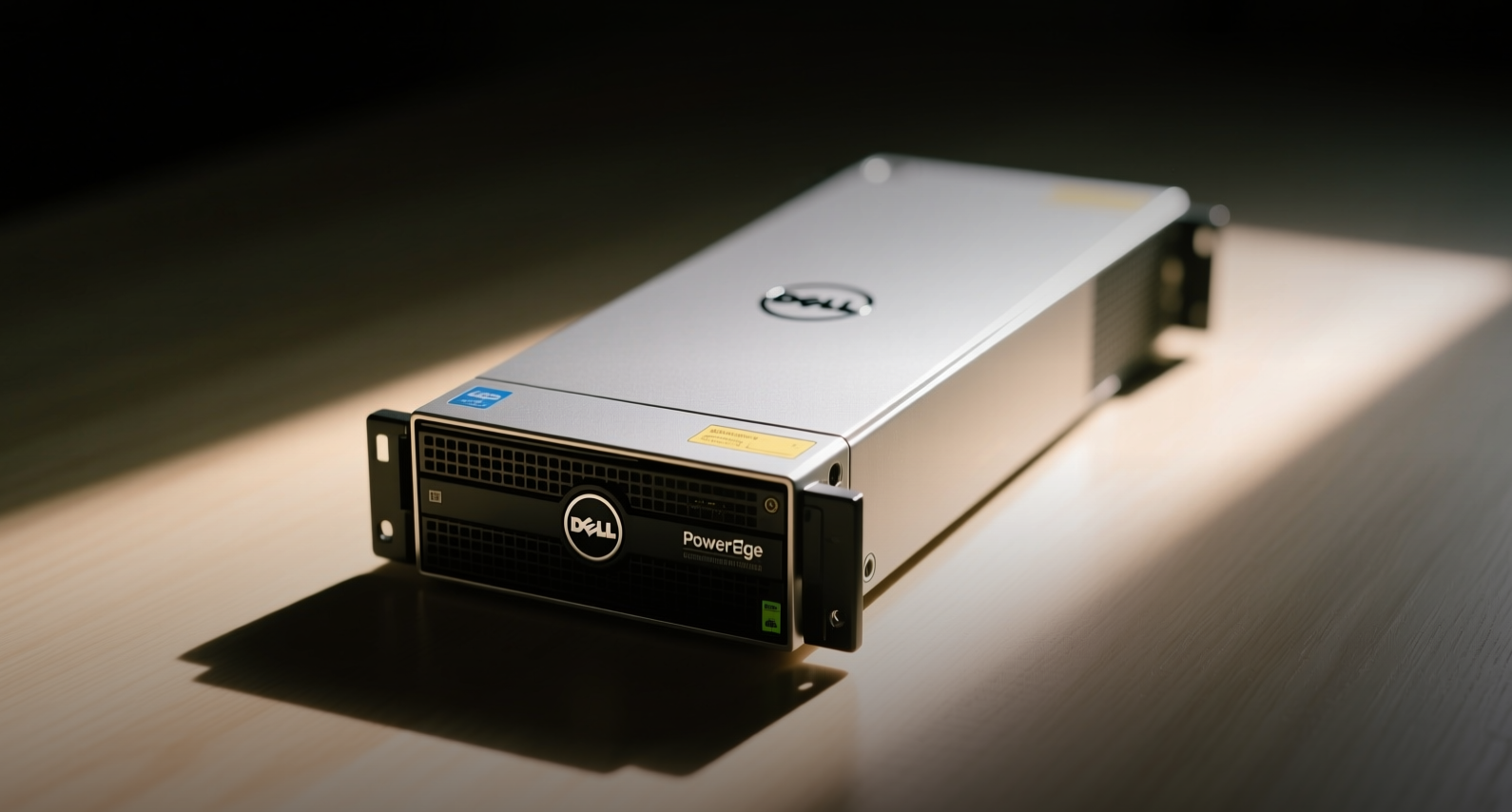
Dell AI server backlog surges as $1.37 trillion infrastructure boom drives demand
**Dell Technologies has emerged as one of the biggest beneficiaries of the AI infrastructure buildout, with its AI-optimized server backlog swelling as enterprises and governments race to deploy Nvidia-powered data centers.** Dell Technologies has emerged as a primary beneficiary of the AI infrastructure boom, with its AI-optimized server backlog swelling as enterprises and governments race to deploy Nvidia-powered data centers. "Dell's expanding AI server backlog shows that enterprise and government adoption of AI infrastructure is accelerating far beyond initial expectations," George Tsilis said in a Tech Corner segment covering the company's AI server business. The company's AI-optimized server business has benefited from a broader surge in infrastructure spending. Gartner estimated worldwide spending on AI infrastructure alone will reach $1.37 trillion in 2026, accounting for more than 54 percent of total AI spending and representing a nearly 43 percent increase over 2025. Dell's partnership with Nvidia has been central to its success, positioning the company to capture demand from enterprises seeking pre-configured, scalable AI systems rather than building custom infrastructure from scratch. The infrastructure boom has created a two-speed market where companies with established data center relationships and manufacturing scale are winning disproportionate share. Dell's ability to deliver Nvidia-powered servers at volume has made it a go-to provider for organizations that lack the internal engineering resources to design and deploy AI clusters independently. The competitive landscape is intensifying. Super Micro Computer has also reported strong AI server demand, while Hewlett Packard Enterprise has focused on liquid-cooled solutions for high-density AI workloads. Dell's advantage lies in its global supply chain and enterprise sales force, which give it reach into both large corporations and government agencies — a segment that is increasingly prioritizing sovereign AI infrastructure. The broader AI infrastructure spending cycle shows no signs of slowing. Gartner projects AI infrastructure spending will grow another 28 percent in 2027, suggesting Dell's server backlog could continue expanding. However, component shortages remain a constraint. HPE Chief Executive Officer Antonio Neri said in March that the memory supply crisis is a bigger problem than the constraints faced during the Covid-19 pandemic, with conventional DRAM contract prices rising 74 percent quarter on quarter in the second quarter. For investors, Dell's AI server momentum reinforces its position as a key AI infrastructure play. The company's expanding backlog suggests sustained revenue visibility, which could drive further upside in DELL shares and positively influence sentiment across the AI hardware supply chain, including Nvidia, Super Micro Computer and Hewlett Packard Enterprise. Dell trades at roughly 15 times forward earnings, a discount to Nvidia's multiple, reflecting the market's view of Dell as a hardware supplier rather than a platform company — a gap that could narrow if AI server revenue continues to compound. This article is for informational purposes only and does not constitute investment advice.

Jul 16 2026, 19:00
Norfolk Southern faces 6.7% revenue decline in Q2 earnings report
Norfolk Southern reports Q2 earnings July 23 with consensus EPS of $3.23, down 1.8% from a year ago. "The railroad operator has benefited from an uptick in freight market demand and cost-cutting initiatives," Zacks Equity Research said in a note ahead of the results. The Zacks Consensus Estimate for revenue stands at $3.32 billion, a 6.7% decline from the prior-year quarter. The intermodal segment is expected to post a 5.7% revenue increase, driven by e-commerce demand. The company's Precision Scheduled Railroading operating plan has improved service quality and asset utilization, analysts said. The earnings report comes as Norfolk Southern seeks to sustain its momentum after beating consensus estimates in each of the past four quarters, with an average beat of 6.45%. In the first quarter, the company posted adjusted EPS of $2.65, topping the $2.51 consensus, while revenue edged up 0.2% to $3.0 billion. The adjusted operating ratio widened to 68.7% from 67.9% a year earlier, reflecting higher costs and fuel headwinds. The consensus estimate for Q2 EPS has been revised upward by 3.53% over the past 60 days to $3.23, though that still implies a decline from the $3.29 reported a year ago. Norfolk Southern carries a Zacks Rank #3 (Hold) with an Earnings ESP of +0.21%, suggesting a potential beat. The results will serve as a bellwether for the broader freight and industrial economy in the US. Investors will watch for updates on cost-cutting progress and whether intermodal growth can offset weakness in other segments. The company reports before the market opens on July 23. This article is for informational purposes only and does not constitute investment advice.