Edgen AI operates independently of, and is not controlled by Aspen Digital Financial Limited.
Regeneron hit with class action after failed trial erases 16% of value
 Edgen Stock·Jul 17 2026, 17:14
Share to
Share to
Copy link


[1] Gainey McKenna & Egleston Announces A Class Action Lawsuit Has Been Filed Against Regeneron Pharmaceuticals, Inc. (REGN) (https://www.globenewswire.com/news-release/20 ...)[2] Investor Notice: Robbins LLP Informs Investors of the Regeneron Pharmaceuticals, Inc. Class Action Lawsuit (https://www.aol.com/articles/investor-notice- ...)[3] Gainey McKenna & Egleston Announces A Class Action Lawsuit Has Been Filed Against Regeneron ... (https://www.caledonianrecord.com/gainey-mcken ...)[4] SHAREHOLDER ALERT: Levi & Korsinsky, LLP Notifies Investors It Has Filed a Complaint to ... (https://www.reflector.com/news/national/share ...)[5] Novo Nordisk price target raised to $55 from $50 at BMO Capital (https://www.msn.com/en-us/money/top-stocks/no ...)
Related News
Jul 17 2026, 18:13
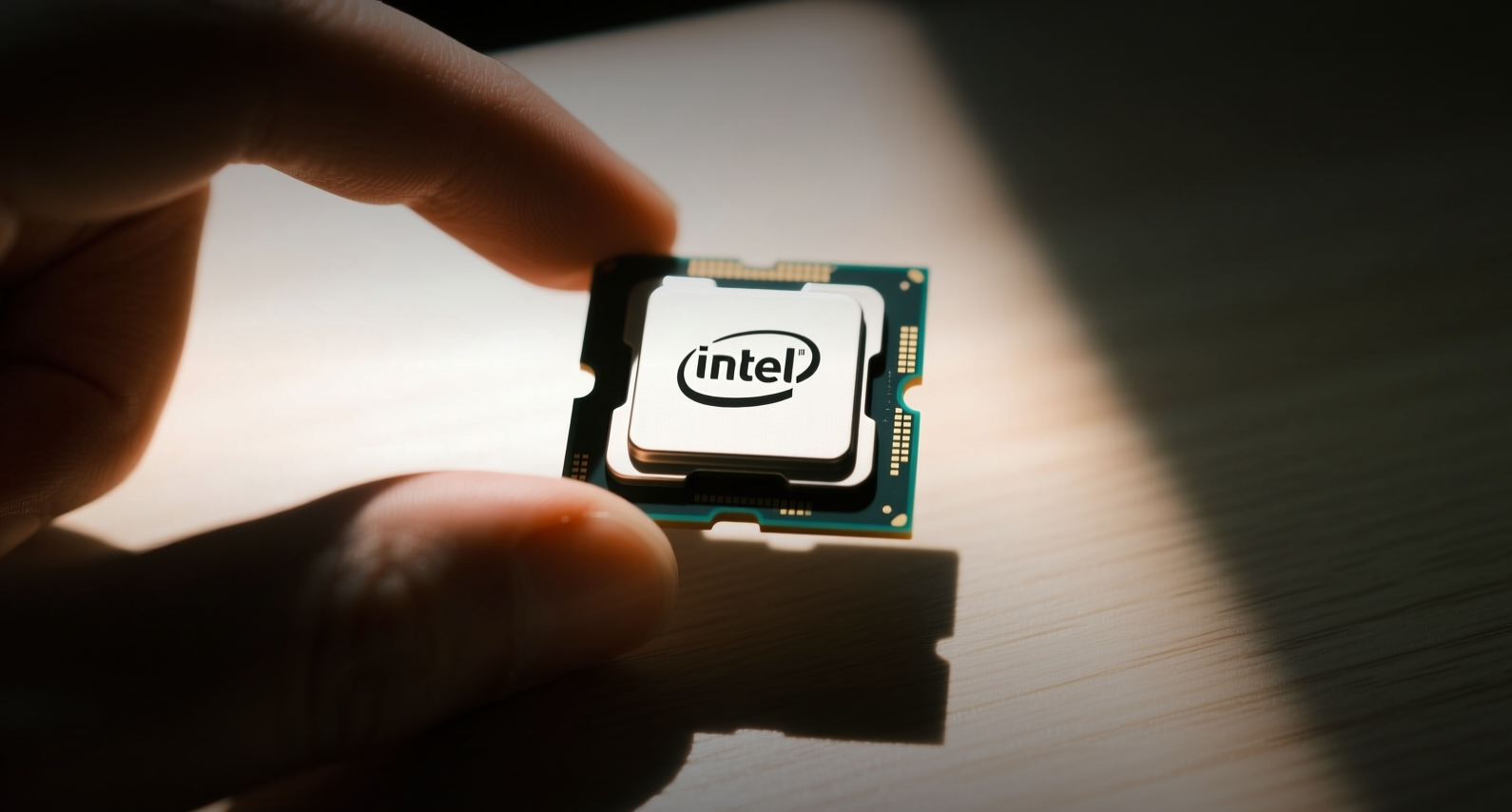
Schaeffer's recommends buying Intel dip as stock falls 11% this week
Schaeffer's Investment Research recommended buying Intel Corp. shares on the dip, as the stock fell 11% this week to $97.69. "The pullback creates an attractive entry point for subscribers ahead of Intel's Q2 earnings report on July 23," the firm's Weekend Trader service said in a note Sunday. Intel has dropped 19% over the past month and 11% this week, though it remains up 158% year to date and 328% over the past year. The stock is testing the $100 level, a psychologically important support zone, and bouncing from its 50-day moving average, according to technical analysis. Options markets are pricing an 11% swing in either direction following the July 23 earnings report, consistent with Intel's history of dramatic post-earnings moves — the April 2026 report triggered a 27% surge, while August 2024 saw a 32% collapse. The recommendation comes as Intel's turnaround under Chief Executive Officer Lip-Bu Tan gains traction. The company's 18A process yields have reached 85%, closing in on Taiwan Semiconductor Manufacturing Co.'s N2 at 90%, while data center revenue rose 22% year over year to $5.1 billion in the first quarter. The U.S. government converted $9 billion in federal grants into a 10% equity stake, making it Intel's largest shareholder. Competitors including Nvidia Corp. and SoftBank Group Corp. have invested $5 billion and $2 billion, respectively, effectively funding the turnaround. Intel's foundry pipeline now includes design wins from Apple Inc., Nvidia, Advanced Micro Devices Inc., Marvell Technology Inc., Microsoft Corp., Micron Technology Inc., OpenAI, and Amazon.com Inc.'s AWS Trainium 3. The company also announced a 5 billion euro ($5.7 billion) investment in its Ireland facility to boost production of Xeon 6 processors. Mizuho analysts said Intel remains supply constrained, with server CPU tight through 2027 and some customers signing long-term agreements providing demand visibility into 2028. The broader chip sector received a tailwind this week after June core consumer prices rose 2.6% year over year, below the 2.9% forecast, reopening the door to a friendlier interest rate environment. IBM Corp.'s warning that clients shifted enterprise budgets toward AI hardware also confirmed that demand for semiconductor infrastructure remains strong. The combination of a soft inflation print and a fundamental read-through from IBM provided a strong setup for chip stocks. The Schaeffer's recommendation suggests the recent pullback is viewed as a buying opportunity ahead of a potentially volatile earnings report. Investors will watch the July 23 report for updates on server CPU pricing, which Intel plans to raise 6% to 15% in the third quarter, and GPU foundry yields. This article is for informational purposes only and does not constitute investment advice.

Jul 17 2026, 18:08
Tech selloff spreads beyond chips to IPOs as AI trade wobbles
A selloff in technology stocks deepened on July 17, spreading beyond semiconductor names to engulf many of 2026's largest tech initial public offerings as the artificial intelligence trade faced its most sustained test of the year. "The broadening of the selloff from semiconductors into newly public names suggests investors are reassessing the timeline for AI monetization," said Sarah Lin, equity strategist at a New York-based research firm. "This looks more like a healthy rotation than a structural breakdown." The pullback swept across the tech sector, with chip stocks that had led the AI rally giving up gains alongside recent IPOs that had priced at elevated valuations earlier in 2026. The dispersion marked a shift from earlier selloffs that had been concentrated in specific sub-sectors. Some Wall Street analysts characterized the decline as a necessary correction after months of AI-driven exuberance, arguing that valuations had outpaced fundamental business performance. The rotation out of high-multiple tech names into value-oriented sectors reflects growing caution about the pace of AI adoption and the timeline for returns on massive capital expenditures. The selloff comes as investors weigh the sustainability of AI-related spending against the potential for regulatory headwinds and rising competition among chipmakers and cloud providers. With second-quarter earnings season approaching, market participants are watching for signs that corporate AI investments are translating into measurable revenue growth. This article is for informational purposes only and does not constitute investment advice.

Jul 17 2026, 17:37
Meta's AI spend shows 33% revenue growth as $125B capex nears earnings test
**Meta Platforms is converting its AI compute bill into a revenue receipt in the same quarter it writes the check — and three metrics suggest the trend has room to run before the July 29 earnings report.** Meta Platforms Inc. (NASDAQ: META) reported first-quarter revenue of $56.3 billion, up 33% from a year earlier and above the $55.4 billion consensus, as AI-powered ad tools drove a 19% increase in ad impressions alongside a 12% rise in average price per ad. Adjusted earnings per share of $7.31 also beat estimates, marking the company's fastest top-line growth since 2021. The results came as Meta raised its full-year 2026 capital expenditure guidance to a range of $125 billion to $145 billion, up from $115 billion to $135 billion, driven primarily by higher component costs for its AI infrastructure buildout. "The enhancements to Lattice modeling drove a more than 6% increase in conversion rate for landing page view ads," Chief Financial Officer Susan Li said on the earnings call, citing the adaptive ranking model that added another 1.6% conversion lift across major Facebook and Instagram surfaces. Meta's value optimization suite is now running at an annual revenue run rate of more than $20 billion, more than doubling year over year, while more than 8 million advertisers are using generative AI ad creative tools. Business AI conversations grew from 1 million to more than 10 million per week inside a single year. The spending discipline behind those numbers is what separates this cycle from prior tech investment waves. First-quarter capital expenditure reached $18.997 billion, up 46.8% year over year, yet full-year expense guidance remained pinned at $162 billion to $169 billion, unchanged from the prior range. Operating margin held at 41%, while operating cash flow of $32.23 billion — up 34.13% — is funding the buildout. The balance sheet shows net debt of $5.59 billion against a $1.72 trillion market cap, with a debt-to-equity ratio of 0.386 and interest coverage of 71.48 times. Return on equity stands at 30.24%, and return on invested capital at 20.69%. **The Ad Auction Yield Loop Is the Core Thesis** The most important metric is the one that connects GPU spending directly to ad revenue. Meta's Lattice modeling and adaptive ranking systems are converting compute clusters into higher average revenue per person in the same quarter the hardware is installed. Ad impressions grew 19% while average price per ad climbed 12% — a combination that implies the platform is showing more ads without degrading user experience, and charging more for each one because conversion rates are improving. The 3.56 billion daily active people across Meta's family of apps provide the scale base; the AI layer is extracting more value from each user. **New Revenue Streams Are Emerging Beyond Advertising** Meta's value optimization suite, which helps advertisers automate campaign targeting and bidding, has reached a $20 billion annual revenue run rate — doubling year over year without any contribution from the planned cloud computing unit. Chief Executive Officer Mark Zuckerberg told shareholders in May that getting into cloud computing was "definitely on the table," and the company has reportedly been setting up a unit to sell spare computing power. Earlier this week, Meta announced that its Hyperion data center in Richland Parish, Louisiana, will expand to 5 gigawatts of compute capacity from an earlier plan for 2 GW, pushing total investment in the project past $50 billion. The site is where Meta trains its largest AI models, and construction has been running since December 2024. **The Risk That Could Derail the Thesis** Reality Labs, Meta's augmented and virtual reality division, lost $4.03 billion in the first quarter. Total expenses grew 35% year over year, and Li acknowledged that Meta has "continued to underestimate our compute needs." If the ad auction yield loop stalls — if conversion rate improvements stop outpacing impression growth — the depreciation wave from $125 billion to $145 billion in annual capex would hit earnings hard. The forward price-to-earnings ratio of 22.4 times sits roughly in line with the company's five-year average, suggesting the market is already pricing in some caution. Little to no earnings growth is expected in fiscal 2026 due to the heavy spending, though analysts project a 19% increase for fiscal 2027. **What the Analysts Are Saying** Meta holds a consensus "Strong Buy" rating from 53 Wall Street analysts, with a mean price target of $823.50 — implying 23% upside from current levels around $664.54. The highest target stands at $1,015, while even the lowest of $700 sits above the current stock price. Citizens JMP analyst Andrew Boone recently lowered his target to $800 from $825 while maintaining a "Market Outperform" rating, citing execution risks from rising computing needs. UBS analyst Stephen Ju reduced his target to $766 from $865 while keeping a "Buy" rating. Polymarket data shows traders pricing a 91% probability that Meta beats estimates again on July 29, which would mark the company's sixth consecutive EPS beat. Meta trades at 22.4 times forward earnings, a multiple that looks reasonable given the growth rate but leaves little room for error. If the cloud unit materializes and turns Hyperion's spare capacity into a revenue line, the spending that is holding back 2026 earnings could become the reason those earnings accelerate in 2027. The July 29 report will show whether the ad auction yield loop is still tightening — or whether the depreciation wave is starting to arrive. This article is for informational purposes only and does not constitute investment advice.