Edgen AI operates independently of, and is not controlled by Aspen Digital Financial Limited.
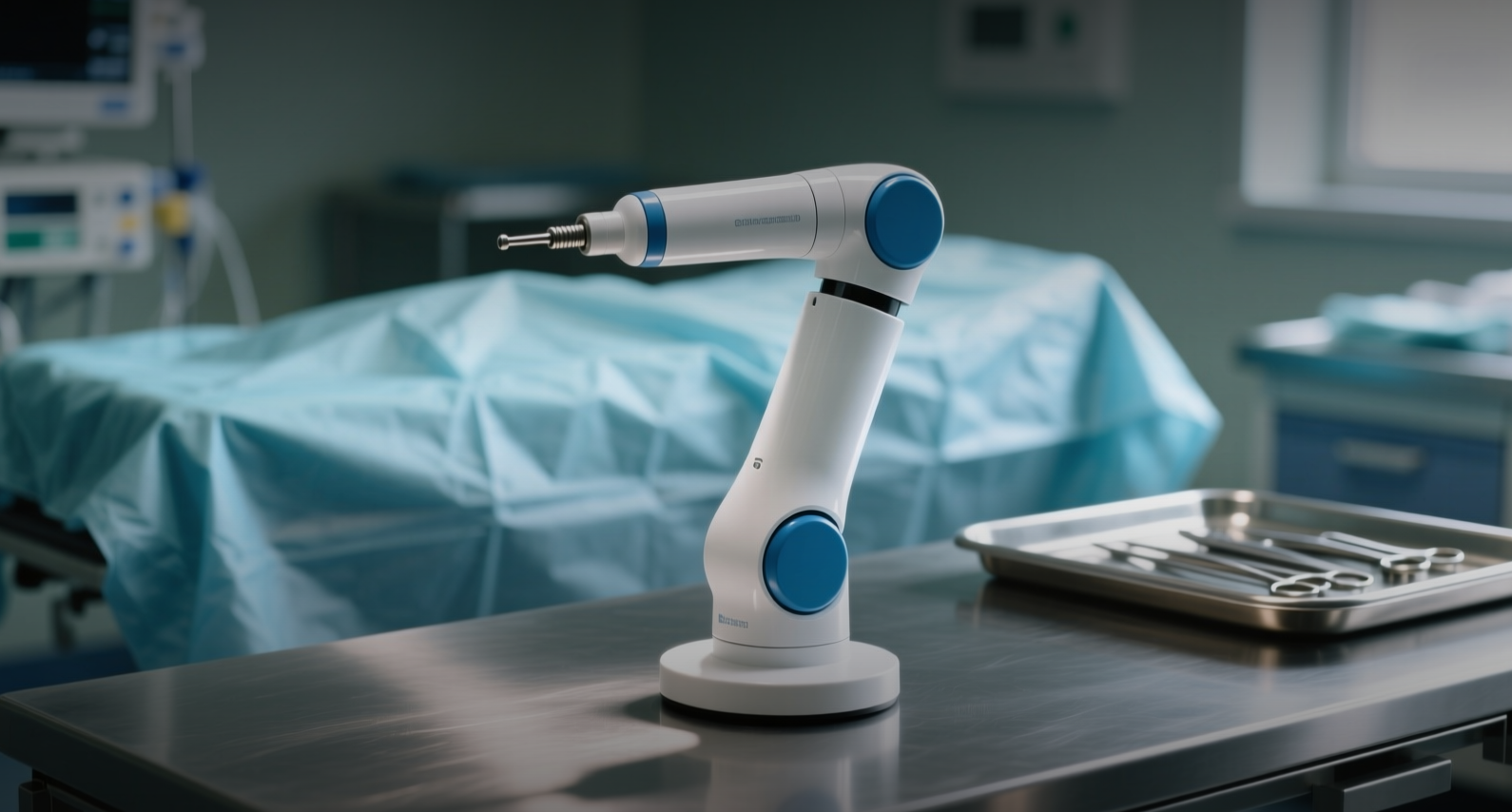
PRCT faces Sept 22 lead-plaintiff deadline in handpiece suit
 Edgen Stock·Sep 21 2026, 16:39
Share to
Share to
Copy link

[1] Kaplan Fox Encourages PROCEPT BioRobotics Corporation (NASDAQ: PRCT) Investors Seeking Recovery to Contact the Firm Before September 22, 2026 (https://www.globenewswire.com/news-release/20 ...)
Related News
Sep 21 2026, 16:59
Beta Bionics faces class action over iLet FDA compliance gaps
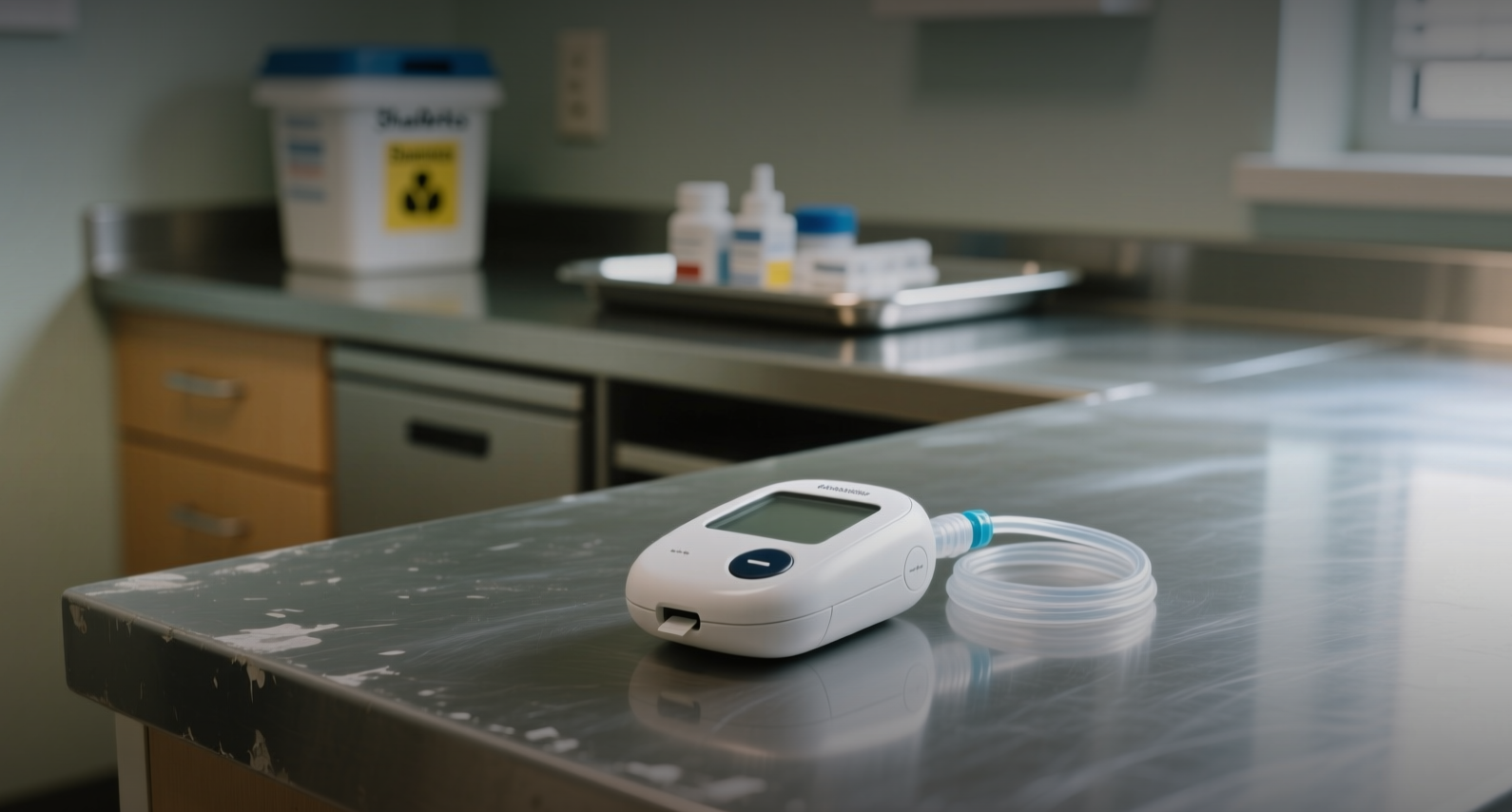
A securities fraud complaint announced Sept. 21 by Kaplan Fox & Kilsheimer LLP targets Beta Bionics Inc. (NASDAQ: BBNX) and covers anyone who bought the stock across a seven-month stretch that ended the same day the FDA published a warning letter describing violations the company had spent months calling benign. The suit alleges the iLet Bionic Pancreas drew thousands of customer complaints, including reports of severe hypoglycemia requiring hospitalization, and that the device's dosing algorithm sat at the root of those events. "The warning letter made clear that Defendants' prior interpretation of FDA reporting requirements had not been reasonable, and had excluded numerous serious patient incidents that clearly should have been reported," the complaint states, according to Kaplan Fox's notice of the action. The class period runs from July 30, 2025 to February 24, 2026 and is bracketed by two disclosures. On January 8, 2026, Beta Bionics missed on new iLet patient starts, its key growth metric, and the stock fell 37% in a single session. On February 24, 2026, the FDA released a warning letter detailing violations and what the complaint describes as a failure to correct them. Investors seeking lead plaintiff status must file with the court by November 3, 2026; class membership does not require serving as lead plaintiff to share in any recovery. ## What the iLet does, and why the algorithm matters The iLet is an automated insulin delivery system — a pump that reads continuous glucose monitor data and calculates insulin doses without requiring the user to count carbohydrates or set basal rates. That autonomy is the product's commercial pitch and its regulatory exposure. An algorithm tuned toward aggressive correction shortens the path to target glucose ranges, but it also widens the tail of hypoglycemic events, the low-blood-sugar episodes that in severe cases require emergency treatment. Beta Bionics competes in a market dominated by Medtronic's MiniMed line and Tandem Diabetes Care's t:slim X2 with Control-IQ, alongside Insulet's Omnipod 5. Those systems generally require more user input on meal dosing, which is precisely the friction the iLet was designed to remove. The trade-off is that a dosing error scales across the entire installed base rather than one patient's settings, which is why complaint volume functions as a leading indicator for device makers in a way it does not for most medtech categories. The FDA pathway matters for how much protection the company has. Automated insulin delivery systems typically reach market through the 510(k) route, cleared as substantially equivalent to a predicate device, a lower evidentiary bar than a premarket approval. That makes post-market surveillance and adverse event reporting the primary safety net — and makes the adequacy of that reporting the central factual question in the litigation. ## The 37% session that reset expectations The January 8 patient-start miss was the first crack. New starts are the metric investors use to gauge whether a device is winning share from Medtronic and Tandem, and a miss on that line undercuts the growth multiple a commercial-stage medtech carries. The 37% one-day decline repriced the equity before any regulatory document was public. The February 24 warning letter supplied the second half of the story. A warning letter is the FDA's escalation step short of seizure or injunction, and it typically requires a written corrective action plan with a defined response deadline. Remediation at that stage carries direct costs — quality systems work, possible retrospective complaint review, potential field corrections — plus the indirect cost of slowed new-patient onboarding while sales representatives answer clinician questions about the letter. Beta Bionics has not disclosed the financial scope of any remediation, and no recall has been announced. Those figures are not yet disclosed. ## What BBNX holders are actually pricing For investors, the litigation creates a two-sided problem. The damages theory rests on the gap between what the company said about back-filed complaints and what the warning letter described, which means the class period's boundaries define who can claim losses and how large the potential class is. A longer certified period with a 37% drawdown inside it raises the theoretical exposure. The operational problem is separate and arguably larger. Beta Bionics is commercial-stage but not yet consistently profitable, so any slowdown in iLet starts hits cash burn directly, and any institutional exit tied to the litigation adds selling pressure on a stock with a limited float. Peer read-through is muted: Medtronic and Tandem face no allegations here, so the risk is company-specific rather than a sector re-rating. The next hard dates are November 3, 2026, the lead plaintiff deadline, and the company's response to the warning letter, which has not been made public. Until both resolve, BBNX trades on legal uncertainty rather than on the patient-start trajectory that drove the stock before January. This article is for informational purposes only and does not constitute investment advice.
Sep 21 2026, 16:52
Grok 4.7 undercuts GPT-5.6 Sol by 70% on output tokens
SpaceXAI set a new floor for frontier inference on Sept. 21, listing Grok 4.7 at $2 for every million tokens of input and $6 for every million of output — a 70% discount to GPT-5.6 Sol's $20 output rate and 88% below Fable 5.1's $50. The company says the model runs twice as fast as comparable systems at half the price, and it is available the same day through Cursor, its own Grok Build coding agent, the Grok API, third-party coding harnesses and model routers, and major cloud platforms. "Grok 4.7 sits at the frontier in price-performance," SpaceXAI said in its release announcement, a claim the company supports with its own benchmark table rather than independent testing. SpaceXAI did not disclose the test conditions behind the "twice as fast at half the price" comparison, and the effort settings differ across the table — Grok 4.7 is measured at xhigh, Grok 4.6 at high, and both GPT-5.6 Sol and Fable 5.1 at max. The pricing gap is the widest single number in the release. Grok 4.7 and its predecessor Grok 4.6 both list at $2 and $6 per million tokens, against $4 and $20 for GPT-5.6 Sol and $10 and $50 for Fable 5.1. On output tokens, the line item that dominates agentic workloads where models generate long chains of reasoning and code, Grok 4.7 costs a third of GPT-5.6 Sol and roughly an eighth of Fable 5.1. SpaceXAI also serves a fast variant at twice the output speed for twice the price, and is giving the model away free inside Grok Build at x.ai/build. ## A price leader that does not lead every benchmark The benchmark table shows a model that wins on cost and on several long-horizon tasks, but not on all of them. On CursorBench 4.0, which SpaceXAI says stresses longer-running coding work, Grok 4.7 scored 46.3%, ahead of Grok 4.6 at 40.4% and GPT-5.6 Sol at 41.7%, but behind Fable 5.1 at 51.8%. On DeepSWE v1.1 the ordering tightens: 71.0% for Grok 4.7 at high effort, 65.2% for Grok 4.6, 72.7% for GPT-5.6 Sol and 70.0% for Fable 5.1. The clearest gains come on multi-hour work. Terminal-Bench 4.0, which covers extended terminal sessions, puts Grok 4.7 at 38.0% against 20.3% for Grok 4.6, 37.3% for GPT-5.6 Sol and 57.9% for Fable 5.1. On AA Briefcase v1.1, measuring multi-hour office tasks, Grok 4.7 scores 1,657 versus 1,546 for its predecessor, 1,487 for GPT-5.6 Sol and 1,678 for Fable 5.1. The Harvey Legal Agent Benchmark is the outlier in Grok's favor: 19.6% for Grok 4.7, 15.8% for Grok 4.6, 2.5% for GPT-5.6 Sol and 6.7% for Fable 5.1. On EEBench, covering electrical engineering, Grok 4.7 reaches 64.0% against 39.4% for GPT-5.6 Sol and 56.4% for Fable 5.1. HealthBench Professional runs the other way, at 56.7% for Grok 4.7, 60.5% for GPT-5.6 Sol and 62.1% for Fable 5.1. A separate GDPval chart reports Elo scores of 1,735 for Fable 5.1, 1,695 for Grok 4.7, 1,605 for Grok 4.6 and 1,542 for GPT-6 Astra. SpaceXAI attributes the step-up to a larger base model than Grok 4.6 and a longer reinforcement learning run on a harder task mix weighted toward problems that take many hours to complete. The company says Grok 4.7 verifies its own work more reliably, handles longer context, and was trained to understand the Grok Bot harness natively — the always-on agent team SpaceXAI introduced on Aug. 11, 2026. It also says the model is better at producing documents and presentations. ## What the $6 output token does to rival pricing power The distribution list matters as much as the price. Grok 4.6 was extended in August 2026 to GitHub Copilot, Amazon Bedrock, the Gemini Enterprise Agent Platform and Microsoft Foundry, and Grok 4.7 arrives in Cursor and Grok Build on day one alongside the API and third-party routers. That puts a $6 output token inside the tools developers already use, rather than behind a separate sign-up, which is the mechanism by which a price point becomes a reference point. For OpenAI, Google and Anthropic, the pressure lands on the premium tier. A frontier model at $2 and $6 per million tokens sets a ceiling on what rivals can charge for comparable coding and knowledge work, and the gap is large enough that matching it would compress gross margins on inference unless serving costs fall in step. The counterargument is that benchmark leadership still commands a premium: Fable 5.1 tops CursorBench 4.0, AA Briefcase v1.1 and GDPval while charging $10 and $50, and GPT-5.6 Sol leads on DeepSWE v1.1 and HealthBench Professional at $4 and $20. Buyers who need the top score on a specific evaluation have not been given a reason to switch. Cheaper inference also cuts both ways for infrastructure. Lower cost per token tends to expand usage volumes, which supports demand for accelerators and data center capacity even as it reduces revenue per unit of work — the dynamic that has kept AI capital expenditure forecasts rising through 2026. SpaceXAI's own safeguard claims point to where enterprise budgets may move next: the company says Grok 4.7 tops LatchBio's biosafety benchmark at 62.4% and allowed only 3.3% of risky dual-use prompts through on its HackerBench v0.3 test, while rarely blocking legitimate security work. It has begun giving select cybersecurity partners invite-only access to the model's red-team capabilities for defense research. The next test is whether rivals respond with list-price cuts or with capability. SpaceXAI has not disclosed a date for the next Grok release, and no competing vendor has announced a pricing change in response to the Sept. 21 launch. This article is for informational purposes only and does not constitute investment advice.

Sep 21 2026, 16:48
Corcept's Lifyorli wins CHMP backing as EU decision looms
Corcept Therapeutics won a positive opinion from the European Medicines Agency's Committee for Medicinal Products for Human Use for relacorilant (Lifyorli) plus nab-paclitaxel in platinum-resistant ovarian cancer, leaving only the European Commission's formal decision, expected in the fourth quarter of 2026, before the combination can launch across the EU. "The CHMP's positive opinion takes us a big step closer to making the benefits of glucocorticoid receptor antagonism available to patients in the EU," Joseph K. Belanoff, Corcept's chief executive officer, said. "I want to thank the CHMP for conducting such an efficient and timely review." The opinion rests on the Phase 3 ROSELLA trial, which enrolled 381 patients across the United States, Europe, South Korea, Brazil, Argentina, Canada and Australia. Relacorilant plus nab-paclitaxel produced median progression-free survival of 6.54 months versus 5.52 months for nab-paclitaxel alone, a hazard ratio of 0.70, meaning a 30% reduction in the risk of progression or death. Final analysis of the trial's other dual primary endpoint showed median overall survival of 16.0 months versus 11.9 months, a hazard ratio of 0.65. The safety profile matched nab-paclitaxel monotherapy, with anemia, nausea, diarrhea, neutropenia and fatigue the most common adverse reactions. The CHMP opinion covers adults with platinum-resistant high-grade epithelial ovarian, fallopian tube or primary peritoneal cancer who have received one to three prior systemic treatment regimens. Every patient in ROSELLA had prior bevacizumab, and roughly six in 10 had received a PARP inhibitor, a heavily pretreated population that has exhausted platinum-based chemotherapy. Relacorilant is a selective, reversible glucocorticoid receptor antagonist. It binds the glucocorticoid receptor without engaging the body's other hormone receptors, blocking cortisol signaling that otherwise inhibits chemotherapy-induced apoptosis — the tumor-killing effect chemotherapy is designed to trigger. Corcept says it is the only selective glucocorticoid receptor modulator approved by the FDA for any indication. The FDA cleared the same combination in March 2026 for platinum-resistant ovarian cancer, and Lifyorli generated $47.6 million in the second quarter of 2026, its first quarter of commercial availability. Corcept resubmitted a new drug application for relacorilant in hypercortisolism, or Cushing's syndrome, in June 2026; the FDA accepted it and set a target action date of Dec. 17, 2026. The European Commission typically finalizes marketing authorization about 67 days after a CHMP recommendation, which places a decision in the fourth quarter of 2026. Corcept estimates roughly 20,000 women with platinum-resistant disease begin a new therapy each year in the United States, with at least an equal number in Europe — a market the company currently serves only in the U.S. Corcept is also testing relacorilant with other anticancer therapies in platinum-sensitive ovarian, prostate, endometrial, cervical and pancreatic cancers. The Phase 2 BELLA study, part A, is evaluating relacorilant plus nab-paclitaxel and Roche's Avastin (bevacizumab) in platinum-resistant ovarian cancer, testing whether the three-drug regimen adds benefit over the approved two-drug combination. Shares of Corcept have climbed 216.9% year to date, against a 2.9% decline for the broader industry, a re-rating that already prices in substantial regulatory success. The EC decision is the next binary event for holders; the Dec. 17, 2026 FDA action date on the Cushing's syndrome application is the second. Both sit inside the same quarter, concentrating the company's near-term risk into a narrow window. This article is for informational purposes only and does not constitute investment advice.