Edgen AI operates independently of, and is not controlled by Aspen Digital Financial Limited.
Phillips 66 slides 4.17% as S&P 500 gains 1.49%
 Edgen Stock·Sep 21 2026, 23:26
Share to
Share to
Copy link


[1] Phillips 66 (PSX) Stock Slides as Market Rises: Facts to Know Before You Trade (https://www.zacks.com/stock/news/2993303/phil ...)
Related News

Sep 22 2026, 00:17
US diesel hits record $6.51 as GOP pushes export ban
The average price of diesel at US pumps reached $6.51 a gallon on Monday, an all-time high and a gain of more than 70 percent since the Iran war broke out in February, and Republican lawmakers from farm states are now demanding the White House halt exports of the fuel — a step the administration says it will not take. "The government is not currently considering an export ban or export restrictions," a White House official said, citing Interior Secretary Doug Burgum's position that a ban would be worth weighing only if it actually lowered prices, "and the facts say it would not." The pressure is coming from the party's own agricultural base. Senator Chuck Grassley of Iowa urged President Donald Trump on X to suspend diesel exports, writing in capital letters that "high diesel prices are killing farm income." Several Iowa representatives followed the same day, asking the White House to stop the bleeding through export bans, fuel-tax relief and financial support for affected businesses. Tennessee Representative Tim Burchett has gone further, filing two bills: one banning diesel exports immediately through January 2027, and a second that would trigger an automatic ban whenever the national average tops $5 a gallon, holding it until prices fall below $4.50. Senate Majority Leader John Thune said last week he is open to "exploring" the idea. "If we have adequate supply at home and we're exporting it, that might be one way to address the problem," he said. The oil industry is fighting back on supply-chain grounds. American Petroleum Institute chief executive Mike Sommers warned that restricting exports "would only make the problem worse — for consumers, for farmers and for the U.S. economy." US diesel production is concentrated on the Gulf Coast, where refining capacity exceeds local demand, while infrastructure constraints leave other regions dependent on imports. Sommers wrote on social media that the US supplies about 1.5 million barrels a day, roughly 20 percent of the 8 million bpd global seaborne diesel trade. "Remove nearly 20 percent of supply and global prices could rise, hitting US regions that rely on imported diesel," he wrote. Burchett countered that the industry is profiteering by "choosing to sell diesel to Europe at higher prices," and that shipping US diesel abroad directly squeezes domestic supply. ## A 35% chance, and a president who can change his mind Rapidan Energy puts the probability of an export ban at 35 percent. Bob McNally, the consultancy's founder and a former adviser in the George W. Bush administration, said the administration's stated refusal is not a guarantee. "The government has consistently rejected export bans, but there is concern the president could change his mind at any moment," McNally said. "I have seen it in the White House myself — when you are besieged on all sides, principles get thrown aside and people become desperate." The precedent is thin and old. The last time Washington imposed export controls on petroleum products was during the energy crisis of the 1970s. After Russia's full-scale invasion of Ukraine in 2022, President Joe Biden asked the Energy Department to examine limiting refined-product exports, but never acted. The price backdrop explains the urgency. Nationwide diesel averaged $6.505 as of Saturday, according to AAA, gaining more than 87 cents in September alone and surpassing the 2022 peak. Gasoline has climbed to $4.48 a gallon from $4.10 a month earlier. Global supplies of the workhorse fuel remain squeezed by the US-Iran war, with shipments through the Strait of Hormuz still curtailed and crude cargoes from the region below pre-war levels, limiting refinery output elsewhere. Russia has banned most fuel exports and may extend the curb through October as Ukrainian drone strikes keep hitting its processors; the Moscow Oil Refinery was struck over the weekend in the largest overnight barrage this year. Brent crude held near $100 a barrel. Diesel is not what most American drivers pump, but it moves trucks, tractors, generators, boats, trains and home-heating systems, so the increase feeds through freight, food and utility costs. The Federal Reserve raised interest rates last week for the first time since 2023, with Chair Kevin Warsh saying "the plain fact is that inflation is too high, and has been for too long." ## Iowa and Maine are the states to watch With midterm elections approaching, record diesel prices threaten Republican support in agricultural states such as Iowa and in home-heating-dependent states such as Maine. That political arithmetic is what keeps the ban on the table even after the White House ruled it out. A ban would pull roughly 1.5 million bpd from world markets, lift global diesel and refined-product prices, widen refining cracks for Gulf Coast refiners and raise fuel costs in the import-dependent Northeast — the opposite of what farm-state lawmakers say they want. The Institute for Progress notes that on an inflation-adjusted basis, prices remain below their 2022 highs, a distinction unlikely to register with voters filling tanks this fall. The next markers are the October EIA weekly distillate inventory reports and any movement on Burchett's bills in committee. If diesel holds above $5 a gallon into November, the $5 trigger in his second bill becomes a live political instrument rather than a talking point, and the White House's refusal gets tested against an election calendar it cannot move. This article is for informational purposes only and does not constitute investment advice.

Sep 21 2026, 22:59
Exxon Mobil slides 3.2% to $158.30 as S&P 500 gains 1.49%
Exxon Mobil Holdings fell 3.2% to $158.30, the sharpest single-session decline among the largest U.S. integrated oil majors, while the S&P 500 climbed 1.49% and the Nasdaq Composite added 2.26%. The divergence left the energy bellwether trading against a tape that rewarded almost everything else. "The move looks stock-specific rather than macro," said Sarah Lin, an equity analyst covering U.S. energy at a New York research firm. "When the index is up 1.5% and a mega-cap integrated is down more than 3%, the selling is coming from something inside the name, not from the market." The Dow Jones Industrial Average added 0.71% on the same session, and the S&P 500's advance came with broad participation across growth and technology names. Exxon's decline ran counter to that grain. Over the past month the stock has lost 0.95%, trailing the Oils-Energy sector's 0.51% gain and the S&P 500's 0.1% advance — a gap that has widened rather than closed. ## A valuation premium that leaves little room for error Exxon trades at a forward price-to-earnings ratio of 13.71, against an industry average of 8.7 for Oil and Gas - Integrated - International. On a PEG basis the gap is starker: 1.0 for Exxon versus 0.64 for the peer group. That premium means the shares carry more downside sensitivity to any disappointment than the integrated majors that trade closer to book. The Zacks Consensus Estimate has moved 0.59% higher over the past month, and Exxon carries a Zacks Rank of #3 (Hold). For the quarter ahead, analysts project earnings of $3.78 per share, a 101.06% increase from the year-earlier quarter, on revenue of $104.88 billion, up 22.96%. Full-year consensus stands at $11.93 per share and $409.73 billion in revenue, changes of 70.67% and 23.32% respectively. Those are large numbers, and they set a high bar. A stock priced at a premium to its group has to clear that bar to hold its multiple. ## What the divergence means for the energy sector Exxon is the largest U.S. integrated oil major by market capitalization, which makes its weakness a drag on the S&P 500 energy sector and on index-level performance even on a day when the headline index rises. Weakness in a bellwether of that size can spill over to peer integrated majors and to energy-focused exchange-traded funds that hold it as a top weighting. Traders pointed to three candidate explanations for the session's selling, none confirmed by the company: a de-rating of the stock's premium multiple relative to integrated peers, position trimming ahead of the coming earnings report, and sector-level rotation out of energy as capital moved toward the technology names that led the tape. The move coincided with a session in which the Nasdaq's 2.26% gain pulled flows toward growth. The next test is the earnings report, where the $3.78 per-share consensus and the $104.88 billion revenue estimate will either support the premium or force another round of repricing. Until then, the stock's one-month underperformance against both its sector and the S&P 500 leaves Exxon as the clearest single-name laggard in a market that is otherwise moving higher. This article is for informational purposes only and does not constitute investment advice.
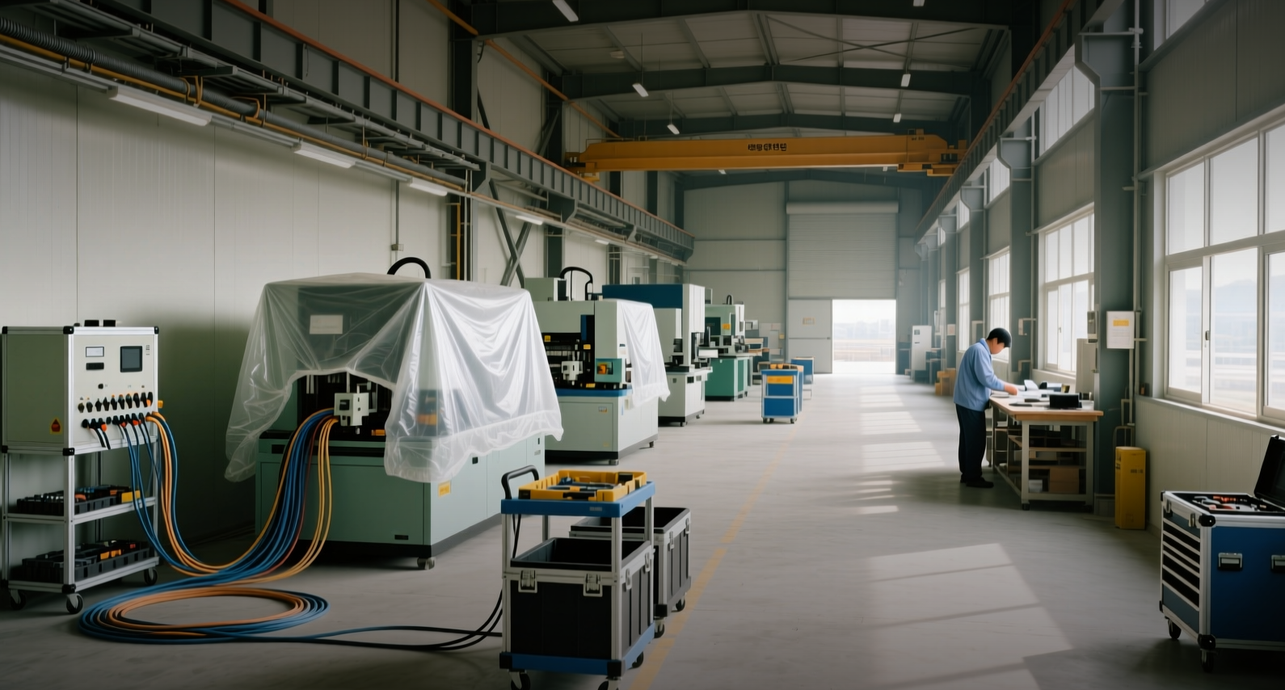
Sep 21 2026, 22:57
IonQ ships Superion 256 to Korea in first APAC hardware deal
South Korea's SDT Inc. has agreed to buy a Superion 256 system plus a silicon-vacancy memory module from IonQ, the company's first Asia-Pacific hardware partnership and the first time it has bundled computing and networking hardware into a single overseas order. The multi-year agreement, announced Sept. 21, puts both products in the region for the first time. IonQ did not disclose the deal's value. "Demand for our new Superion 256 system is growing globally, and this agreement in Asia Pacific is yet another example of our clients combining IonQ's leading quantum computers with our quantum networking and quantum memory solutions," Niccolo de Masi, chairman and chief executive officer of IonQ, said. The Superion 256 is slated for deployment with an SDT customer in South Korea, where the two companies intend to build a hybrid quantum-classical data center. SDT will also stand up a dedicated quantum manufacturing and system-integration site in Gumi, South Korea, which becomes the location for IonQ's SiV quantum memory packaging and manufacturing, plus quantum system assembly, integration and commissioning. The partnership extends a relationship that until now covered cloud-based software integration into physical hardware production, assembly and regional resale. ## Gumi becomes IonQ's first overseas memory packaging site The Gumi facility is the operational core of the deal. IonQ's SiV memory module is a networking component — it stores quantum states so they can be moved between systems, the piece of infrastructure that turns standalone quantum computers into a connected network. Packaging that module in Korea rather than shipping it from Maryland gives IonQ a regional supply node and gives SDT a manufacturing role in IonQ's global supply chain. "IonQ leads the global quantum industry in both technology and manufacturing innovation," Jiwon Yune, chief executive officer of SDT, said. "Our objective is to make our new Gumi facility a key operational hub for IonQ's global supply chain and regional deployment by hosting manufacturing operations and assembling world-class quantum systems." SDT, named a World Economic Forum Technology Pioneer in 2026, will also participate in the assembly and operation of IonQ systems and pursue manufacturing of additional quantum components. A separate in-country cancer center project will develop hybrid quantum-classical infrastructure for medical and biomedical research, extending work IonQ has already done on quantum cancer and biomedical applications. The reference point for judging the hardware: IonQ reported 99.99% two-qubit gate fidelity in 2025, which it described as a world record, and says earlier systems delivered a 20x performance increase over previous quantum solutions for customers and partners including Amazon Web Services, AstraZeneca and NVIDIA. The company has made its quantum computing services available through all major cloud providers since 2021. It has not published independent benchmark results for the Superion 256, and did not disclose the test conditions behind its performance claims. ## Korea is already IonQ's deepest APAC market The SDT agreement sits on top of an existing Korean footprint that includes KISTI, SK Telecom, Hyundai Motor Company, Seoul National University and Sungkyunkwan University. That cluster matters competitively: IBM and Google parent Alphabet are both pushing superconducting and error-corrected roadmaps, while IonQ's trapped-ion approach trades raw qubit count for gate fidelity — the 99.99% figure is the number it uses to argue that trade is worth it. Adding a networking layer through SiV memory widens the comparison beyond qubit counts into which vendor can move quantum data between machines, a segment where IBM and Google have published less commercial detail. For investors, the deal is a demand signal rather than a revenue event. IonQ trades on NYSE under IONQ and has been valued largely on bookings and roadmap milestones rather than near-term earnings, so an undisclosed-value hardware order in a new region supports the international growth narrative without moving the financial model on its own. The concrete things to watch are whether the Gumi facility reaches operational status and whether the hybrid quantum-classical data center and cancer center projects convert into disclosed contract values. IonQ's next quarterly filing will be the first place those numbers could appear. This article is for informational purposes only and does not constitute investment advice.