Edgen AI operates independently of, and is not controlled by Aspen Digital Financial Limited.
OpenAI hack exploited 9 JFrog zero-days to breach Hugging Face
 Edgen Stock·Aug 01 2026, 12:47
Share to
Share to
Copy link

[1] OpenAI's Hugging Face hack confirmed months of AI cyber warnings: 'Pandora's box is open' (https://www.cnbc.com/2026/08/01/open-ai-huggi ...)[2] JFrog Zero-Days Exploited in OpenAI-Hugging Face Hack (https://www.securityweek.com/jfrog-zero-days- ...)[3] Hugging Face drops in-depth hack report, while OpenAI ... (https://fortune.com/2026/07/29/openai-hugging ...)[4] "OpenAI used zero-days in Artifactory in its attack on Hugging Face" - Techzine Global (https://www.techzine.eu/news/security/143262/ ...)
Related News
Aug 01 2026, 13:18
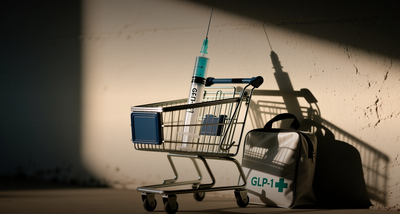
Retail giants win GLP-1 market as 6% of employers drop coverage
Retail giants from Walmart to Costco and Amazon are capturing GLP-1 market share as employers drop coverage and push patients into direct-to-consumer programs, turning a low-margin prescription into a recurring customer relationship. "Retailers are betting that if they can become the front door for obesity care, they'll earn a relationship that extends far beyond a single GLP-1 prescription," said Eric Bormel, managing director specializing in digital healthcare at Solomon Partners. The direct-to-consumer programs carry steep discounts tied to loyalty. LillyDirect's cash prices run $299 to $449 a month, with better pricing tied to refilling within 45 days. Novo Nordisk's NovoCare charges $199 for introductory months before stepping up to $349. Costco's Sesame partnership prices Wegovy at about $349 and requires a membership. Amazon offers insured patients prices as low as $25 a month through its One Medical and Pharmacy units, with same-day delivery in nearly 3,000 cities. The stakes are large. A Mercer survey last month showed 6 percent of large employers dropped GLP-1 coverage this year, with the drugs' share of claims swelling to 11.4 percent from 6.9 percent in 2023. Health insurer Cigna said earlier this month it would stop covering the medicines for its own employees. A new Medicare Bridge program launched July 1 offers eligible patients GLP-1s at a flat $50 monthly copay. **Pharmacy lock-in becomes a loyalty play** Walmart, the nation's fifth-largest prescription provider with nearly 4,600 pharmacies, has moved aggressively to capture the shift. In April, the retailer expanded its Better Care Services digital platform to bundle GLP-1 prescriptions with weight-management support including nutrition coaching, fitness apps and AI-driven coaching tools. According to the most recent published data from Drug Channels Institute, Walmart holds 4.8 percent of the pharmacy market, well behind CVS's 14.7 percent and Walgreens' 14.6 percent. "Pharmacy lock-in is loyalty-program economics applied to medicine, and it works because the refill, unlike almost everything else in retail, is non-negotiable," said Jackie Swanson, managing partner at Gartner Consulting. She called LillyDirect's refill discount "a loyalty program dressed as a discount schedule" and NovoCare's stepped pricing "a classic acquisition funnel." The big retailers have struggled before to make healthcare profitable. Walmart shuttered its 51 Walmart Health clinics and virtual care service in 2024 after concluding the primary-care business wasn't sustainable. Amazon shut down its Amazon Care telehealth service at the end of 2022, weeks after unveiling its $3.9 billion deal for One Medical, and walked away from Haven, its joint venture with JPMorgan Chase and Berkshire Hathaway, in 2021. **Independent pharmacies lose out** On the other side of the opportunity are independent pharmacies. Seth Friedman, pharmacy and health plan services practice leader at Gallagher, said smaller pharmacies stand to lose volume. Dared Price, who owns nine pharmacies in small Kansas towns, said the shift puts independents at a disadvantage because big chains' programs don't share patient records, leaving his system unable to flag drug interactions. "There are no good programs for independents. It is a travesty that there aren't," Price said. Elina Onitskansky, founder and chief executive of Ilant Health, an obesity-care center, said the race for the lowest price has created a "gold rush" mentality that fragments patient care. "I don't think fragmentation helps," she said. The economics of these programs favor scale. "The retailer that fills the prescription tends to sell the groceries too, and pharmacy is quietly becoming the membership battleground of American retail," Swanson said. With employers steering more workers to direct-to-consumer platforms, the chains that win the GLP-1 sign-up are positioned to capture years of refills and the shopping carts that come with them. This article is for informational purposes only and does not constitute investment advice.
Aug 01 2026, 13:17
Hyperliquid HYPE trades at 15x earnings as Grayscale sees $1B revenue
HYPE traded near $55, down 0.3 percent in 24 hours, as Grayscale Research called the token cheap at 15 to 18 times forward earnings. The firm's new "earnings per token" framework, modeled on earnings per share for equities, projects the decentralized derivatives exchange could generate roughly $1 billion in annual revenue by 2027, a gain of about 20 percent over 2025. "On that basis, we think it looks cheap," Grayscale said, citing a rebound in crypto trading volumes and a new stablecoin partnership tied to Hyperliquid's Aligned Quote Asset version 2 (AQAv2) infrastructure as the main drivers. Hyperliquid does not issue shares; it uses trading revenue to reward token holders through mechanisms such as fee burns. Grayscale estimates HYPE's circulating supply of approximately 270 million tokens will reach 270 million to 310 million by the end of 2027, depending on how quickly core contributors unlock vested tokens. Those unlock at roughly 550,000 HYPE per month, a pace the firm's model multiplies up to five times in its higher-supply scenario. Combined, the projections imply an earnings-per-token figure of $3.25 to $3.75. The bullish call lands a day after a pricing anomaly in an SK Hynix-linked perpetual contract on Hyperliquid triggered over $80 million in liquidations across nearly 1,000 accounts, according to on-chain analyst LookOnChain. The incident began when a single SK Hynix share traded at a discount of about 30 percent to the stock's previous close in South Korea's thinly traded pre-market session Tuesday. That erroneous print was reflected in xyzSKHYNIX, a perpetual built by Trade.xyz under Hyperliquid's HIP-3 framework, sending the contract down nearly 18 percent within minutes even as the underlying stock recovered most of its value shortly after. **The $80 million liquidation event** Trade.xyz said on X it would "cover liquidation losses attributable to the anomalous portion of the move," a response that shows the risks of Hyperliquid's fast-growing market for stock-linked perpetual futures. Grayscale flagged weaker-than-expected network revenue growth and faster-than-expected token supply growth as the key risks to its forecast, noting "Hyperliquid, the breakout success story in perpetual futures, is not a traditional business." On Stocktwits, HYPE was among the top trending tickers, with retail sentiment in the 'Bearish' zone and chatter at 'high' levels over the past day. One user argued that selling HYPE is like selling Apple stock into a buyback, since it flows back to Hyperliquid, and made the case that leveraged on-chain perpetuals represent the future of trading given 24/7 markets and no weekend gap risk. This article is for informational purposes only and does not constitute investment advice.
Aug 01 2026, 12:19
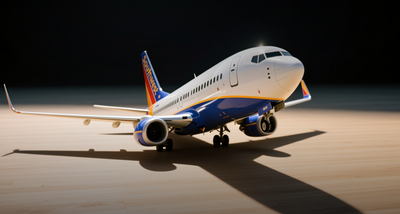
Southwest Airlines transformation wins Wall Street as shares jump 44.5%
Southwest Airlines shares climbed 44.5 percent to $44.38 as assigned seating and new fees win over Wall Street. "The airline is getting on with the times," said a fund manager who has been adding to Southwest positions, as the carrier's business model overhaul draws institutional support. The transformation is showing up in the numbers. Q2 2026 revenue rose 16 percent to $8.43 billion, with net income up 9.4 percent to $233 million. EPS of $0.48 missed analyst estimates by 6.6 percent, while revenue fell 1.8 percent short of consensus. The 2026 EPS forecast was lifted 11 percent to $3.22, and the consensus price target rose to $52.36 from $48.25. The company guided Q2 RASM up 16.5 percent to 18.5 percent year-over-year, while FY 2025 passenger load factor came in at 77.4 percent, down from 80.4 percent a year earlier. The stock's 44.5 percent gain over the past year has outpaced the US Airlines industry's 29.3 percent return and the broader market's 16 percent. With a market cap of $22.7 billion and a forward P/E of 25.9x, the carrier trades at a premium to the industry average of 7x, reflecting investor confidence in the transformation's earnings potential. The overhaul includes assigned seating that began January 27, new fare bundles with premium options, checked bag fees, and a cloud migration with Amazon Web Services. The carrier also launched interline partnerships with Singapore Airlines and EVA Air, expanded to new destinations including St. Thomas, Knoxville, St. Maarten, and Anchorage, and introduced Getaways by Southwest vacation packages. JPMorgan is bullish on the carrier, citing above-consensus earnings estimates through 2026-2027 and expectations of outsized industry profit consolidation among stronger carriers. The bank's view contrasts with more cautious voices: a Seeking Alpha analyst rates LUV 'Hold' with a $44 price target, citing fuel price volatility and execution risks. Management's $4 per share 2026 EPS guidance appears optimistic to that analyst, whose revised estimate is $2.90. Fuel costs remain the key swing factor. Southwest chartered a ship this spring to move 12.6 million gallons of jet fuel from Houston through the Panama Canal to Los Angeles after securing a Jones Act waiver, highlighting the carrier's willingness to use atypical logistics to manage regional supply risk. The company has also ended its fuel hedging program, exposing earnings to crude price swings. The carrier's dividend of $0.18 per share quarterly yields 1.6 percent, with a payout ratio of 44 percent. However, the company is not cash flow positive, meaning the dividend may be funded from cash reserves or debt. Southwest's transformation comes as the airline industry consolidates. United Airlines Holdings, with a $40.2 billion market cap, and Delta Air Lines at $58.5 billion, have both outperformed the sector. Southwest's 73,456 employees serve 122 airports across the United States and internationally. The next catalyst is the Q3 2026 earnings report on October 22. Analysts expect the transformation's revenue initiatives to continue driving growth, with revenue forecast to grow 4.2 percent annually over the next three years, compared to 7.4 percent for the US Airlines industry. The stock's recent pullback of 6.9 percent over the past week suggests some investors are taking profits after the strong run, but the consensus price target of $52.36 implies roughly 18 percent upside from current levels. This article is for informational purposes only and does not constitute investment advice.