Edgen AI operates independently of, and is not controlled by Aspen Digital Financial Limited.
NXP in talks to buy Ambarella in $3.3 billion chip deal
 Edgen Stock·Jul 31 2026, 17:11
Share to
Share to
Copy link



[1] Ambarella jumps on report NXP Semiconductors in talks to purchase (https://www.msn.com/en-us/money/general/ambar ...)[2] NXP in talks to buy $3.3bn designer of camera chips for self-driving cars (https://www.ft.com/content/f02ce02b-fa33-49ad ...)[3] NXP Semiconductors in Talks to Acquire Ambarella - marketscreener.com (https://www.marketscreener.com/news/nxp-semic ...)[4] NXP said to be in talks to buy Ambarella - Breakingthenews.net (https://breakingthenews.net/Article/NXP-said- ...)
Related News

Jul 31 2026, 18:28
BJ's Restaurants beats Q2 estimates with $0.94 EPS, $388.9M revenue
BJ's Restaurants reported Q2 EPS of $0.94, beating the $0.90 consensus, with revenue of $388.9 million. The Huntington Beach, California-based casual dining chain posted earnings per share of $0.94 for the quarter ended June 30, compared with the $0.9024 analyst estimate, according to the company's earnings release. Revenue of $388.9 million topped the $384.4 million consensus forecast by $4.5 million, a 1.2 percent beat. EPS came in 4.2 percent above the consensus figure. | Metric | Actual | Consensus | Beat/Miss | |--------|--------|-----------|-----------| | Revenue | $388.9M | $384.4M | +$4.5M | | EPS | $0.94 | $0.90 | +$0.04 | The company did not disclose same-store sales, guidance, or year-over-year comparisons in the initial release. BJ's Restaurants operates casual dining locations across the United States and trades on the NASDAQ under the ticker BJRI. The company competes with peers including Darden Restaurants, Texas Roadhouse, and Brinker International. The results come as the broader casual dining sector reports earnings this season. Investors are watching restaurant chains for signs of consumer spending resilience, with labor costs and food inflation remaining key margin pressures across the industry. The earnings beat on both metrics suggests the company managed costs effectively during the quarter. However, without same-store sales data or updated guidance, investors lack a full picture of underlying demand trends at BJ's Restaurants locations. Investors will watch for management commentary on the earnings call for same-store sales trends and full-year guidance. The stock's reaction to the print will determine whether the beat was sufficient to move the shares, with the company's next major earnings report expected later this year. This article is for informational purposes only and does not constitute investment advice.

Jul 31 2026, 18:28
Ameren beats Q2 EPS estimates as revenue misses by $203 million
Ameren reported Q2 EPS of $1.13, beating the $1.10 consensus, while revenue of $2.09 billion missed the $2.30 billion estimate. The St. Louis-based utility holding company posted adjusted earnings per share of $1.13 for the quarter ended June 30, compared with the $1.0976 average analyst estimate. Revenue of $2.09 billion fell short of the $2.30 billion consensus by approximately $203 million. | Metric | Actual | Consensus | Beat/Miss | |--------|--------|-----------|-----------| | Revenue | $2.09B | $2.30B | -8.8% | | EPS | $1.13 | $1.10 | +3.0% | The EPS beat of $0.0324 per share represents roughly 3 percent upside to consensus, while the revenue shortfall of about 8.8 percent reflects a wider gap on the top line. Ameren's regulated utility model ties revenue largely to rate structures and energy demand across its Missouri and Illinois service territories, where it operates electric and natural gas distribution systems serving residential, commercial, and industrial customers. The mixed quarter comes as Ameren continues to invest in grid modernization and transmission infrastructure. The company's capital expenditure program supports regulated rate base growth, the primary earnings driver for utility holding companies. Ameren has not yet disclosed updated full-year guidance or specific commentary on the revenue miss, leaving investors to assess whether the top-line shortfall reflects weather-related demand weakness, rate case timing, or other factors. The revenue shortfall stands out against a utility sector that has drawn investor attention for steady cash flows and infrastructure investment demand. Larger peers such as Exelon Corp. and Duke Energy Corp. have similarly focused on grid upgrades and electrification-driven load growth, though Ameren's results reflect the specific demand and rate dynamics of its Midwestern service territory. Shares of Ameren trade on the New York Stock Exchange under the ticker AEE. The company's next earnings report is scheduled for the third quarter of fiscal 2026. For investors, the EPS beat provides some support, but the revenue miss raises questions about demand trends and rate recovery in the quarter. The next catalyst will be the company's Q3 earnings release, where management is expected to provide updated guidance and commentary on load growth and regulatory proceedings. This article is for informational purposes only and does not constitute investment advice.
Jul 31 2026, 18:25
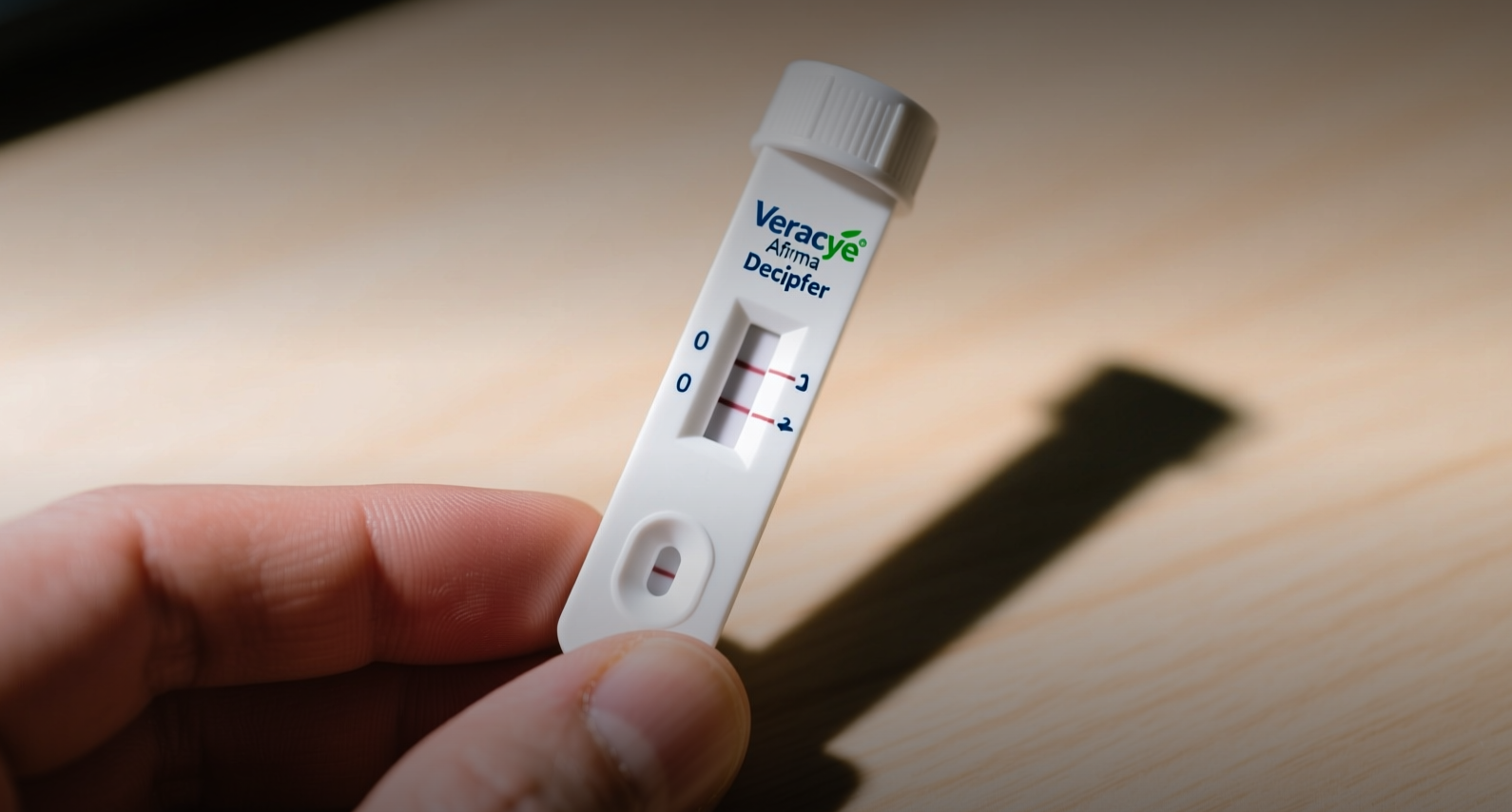
Veracyte beats Q2 EPS estimates by 123% on $150.3M revenue
Veracyte reported Q2 EPS of 54 cents, beating the 24-cent consensus, on revenue of $150.3 million that topped estimates. The South San Francisco-based genomic diagnostics company, which trades on the Nasdaq, said the results reflected continued demand for its Afirma thyroid test and Decipher prostate cancer assay, according to its earnings release. Revenue of $150.3 million came in about $2.9 million, or roughly 2 percent, above the $147.4 million consensus. Earnings per share of 54 cents compared with the 24-cent average analyst estimate, a beat of about 30 cents. The beat extends Veracyte's run of topping Wall Street expectations as it expands its installed base of genomic tests. The company did not disclose updated full-year guidance in the release; investors will watch the earnings call for margin and volume commentary. Veracyte's Afirma test, used to guide thyroid nodule management, and Decipher, which informs prostate cancer treatment decisions, anchor a portfolio that also includes the Envisia genomic classifier for interstitial lung disease. The company competes with Exact Sciences and Myriad Genetics in the molecular diagnostics space, where test volume and reimbursement rates determine profitability. The company did not disclose year-over-year revenue growth or a stock price reaction in the release. Analysts will look for volume trends across its test franchises when management speaks on the earnings call, with Afirma and Decipher together driving the bulk of revenue. The beat comes as the molecular diagnostics sector faces reimbursement pressure from payers, making volume growth and test pricing key swing factors for Veracyte's margin trajectory. A 123 percent EPS beat against consensus suggests operating leverage is building as the company scales its test volumes, though the sustainability of that pace depends on how quickly it can convert new accounts into recurring testing. The 123 percent EPS beat signals operating leverage is building as Veracyte scales its test volumes. Investors will watch the earnings call for updated guidance and commentary on reimbursement trends. This article is for informational purposes only and does not constitute investment advice.