Edgen AI operates independently of, and is not controlled by Aspen Digital Financial Limited.
Nike ends Top Sports online sales as China revenue slides 17%
 Edgen Stock·Jul 22 2026, 00:37
Share to
Share to
Copy link


[1] Top Sports: Received notification from Nike that the Group's current online platform sales of Nike products will be fully terminated, which will have a significant negative impact on the Group's business in the short term (https://wallstreetcn.com/livenews/3137818 ...)[2] Nike to tighten online sales in China amid 'cluttered' marketplace (https://www.msn.com/en-us/money/news/nike-to- ...)[3] Nike to cut off thousands of online distributors in China, restructure digital footprint (https://www.msn.com/en-us/money/companies/nik ...)[4] Nike discrimination suit closing arguments: What you need to know (https://www.msn.com/en-us/money/companies/nik ...)[5] Nike to tighten online sales in China amid ‘cluttered’ marketplace - KELO-AM (https://kelo.com/2026/07/21/nike-to-tighten-o ...)
Related News

Jul 22 2026, 01:41
Gold rises above $4,080 as U.S.-Iran deal hopes weaken dollar
Spot gold rose 1.8% to $4,081.07 an ounce on July 21, rebounding after repeatedly testing the $4,000 support level through the prior week. "Iran's openness to talks pulled bond yields lower and weakened the dollar, giving gold a bid after it held the $4,000 floor," a strategist at Tickmill said. COMEX gold futures gained 1.7% to settle at $4,085.37. The rally followed Iran's Foreign Ministry statement that it had received mediator proposals about the conflict with the U.S. and that negotiations could be pursued based on national interests, according to Mehr News Agency. Spot silver jumped 4.3% to $58.84 an ounce, while platinum added 1.6% to $1,628.90. Gold had defended the $4,000 level through four separate tests since mid-July as U.S.-Iran military strikes entered their 10th consecutive day, with the U.S. targeting Iranian command centers and air defense sites while Iran struck U.S. bases in Jordan and Kuwait. The next major resistance sits at $4,200, according to David Morrison, senior market analyst at Trade Nation, while a break below $4,000 would weaken the bullish structure. The Federal Reserve's July 29 policy decision is the next macro catalyst, with markets pricing a 55% probability of a 25-basis-point rate hike in September, CME FedWatch data shows. **Iran diplomacy shifts the macro backdrop** Iran's diplomatic signal marked a departure from the prior week's escalation, during which three U.S. service members were killed in separate incidents in Jordan and Iraq. Brent crude eased from session highs to $91.24 a barrel, still up 2.3%, as traders weighed the prospect of de-escalation against ongoing Houthi threats to Red Sea shipping. U.S. gasoline prices crossed $4 a gallon for the first time since the conflict began, AAA data showed. Fed Chair Kevin Warsh's comment that inflation risks have eased added further support for gold by reducing the opportunity cost of holding the non-yielding asset. The 10-year Treasury yield edged lower, and the Bloomberg Dollar Spot Index weakened, creating a tailwind for bullion. **Gold miners track the rebound** Newmont Corp., the world's largest gold producer, rose 2.5% in pre-market trading to $91.39, benefiting from the metal's recovery ahead of its July 23 earnings report. Analysts project second-quarter earnings per share of $1.99 to $2.20, representing roughly 54% year-over-year growth, according to consensus estimates compiled by Investing.com. Barrick Mining has shed about 13.7% over the past month, suggesting the broader gold mining complex is recovering alongside bullion's rebound from recent lows. This article is for informational purposes only and does not constitute investment advice.

Jul 22 2026, 01:37
CATL expected to top CNY 23B Q2 profit as rotation from AI builds
**Morgan Stanley expects CATL's second-quarter net profit to exceed both company guidance and the bank's own estimates, as investors rotate from crowded AI trades into quality laggards.** CATL is set to report second-quarter net profit above CNY 23 billion on Friday, Morgan Stanley said, as a rotation out of overcrowded AI stocks into quality laggards gains momentum across Asian equity markets. "We expect CATL to beat both its own guidance of CNY 22 billion and our estimate of CNY 23 billion, with a strong outlook for the second half," the Morgan Stanley team wrote in a report Tuesday, maintaining an overweight rating on the stock. The bank cited multiple growth drivers: diesel vehicle electrification, an energy storage super-cycle, and the launch of a sodium-ion battery product cycle. CATL's 2027 growth outlook remains strong as these secular trends compound, Morgan Stanley said. The company deployed 13.5 GWh of energy storage in the second quarter, up more than 40% from 9.6 GWh a year earlier and from 8.8 GWh in Q1, according to industry data. The call comes as investors increasingly seek to diversify from the semiconductor and AI trade that has dominated markets this year. Over the past month, the iShares Semiconductor ETF has fallen about 20% from its high, while value stocks and lagging sectors have rallied. CATL, which trades at a discount to its five-year average P/E, stands to benefit from this rotation, Morgan Stanley said. Many investors the bank has spoken with recently expressed a desire to rotate out of overcrowded AI positions into companies with solid fundamentals that have lagged the broader rally, the report said. CATL fits that profile: the world's largest battery maker has seen its stock underperform the AI-driven tech rally despite posting consistent delivery growth and commanding an estimated 37% share of the global EV battery market. The energy storage super-cycle is a particular bright spot. CATL's 13.5 GWh of storage deployments in Q2 marked a 53% sequential increase from Q1's 8.8 GWh, a trajectory that supports Morgan Stanley's view that storage will become an increasingly large share of CATL's revenue mix. The business diversifies CATL's dependence on EV battery sales, which remain tied to the pace of China's passenger EV adoption. On the EV side, CATL's sodium-ion battery product cycle is expected to open a new addressable market in entry-level EVs and two-wheelers, where LFP chemistry (lithium iron phosphate, cheaper but with lower energy density than NMC) has dominated. Sodium-ion cells promise even lower costs, potentially expanding battery adoption in price-sensitive segments across China and Southeast Asia. BYD, CATL's primary domestic rival, has also invested in sodium-ion technology, setting up a competitive race in the low-cost battery segment. Diesel vehicle electrification — the replacement of diesel-powered trucks, buses, and construction equipment with battery-electric alternatives — represents another multi-year growth vector. China's push to electrify its heavy-duty fleet, combined with tightening emissions standards in Europe, creates a demand pipeline that extends well beyond the passenger EV market. CATL's commercial vehicle battery unit has been expanding its customer base among Chinese truck makers and European bus manufacturers. The rotation narrative adds a near-term catalyst. The S&P 500 has been essentially flat over the past month, but beneath the surface, money has been moving: healthcare stocks gained 7.4%, energy companies rose 6.4%, and financials climbed 4.5%, while technology fell 5.4%, according to data from State Street. CATL, as a high-quality name in a sector that has lagged the AI rally, is positioned to capture some of those flows if the rotation continues. This article is for informational purposes only and does not constitute investment advice.
Jul 22 2026, 01:13
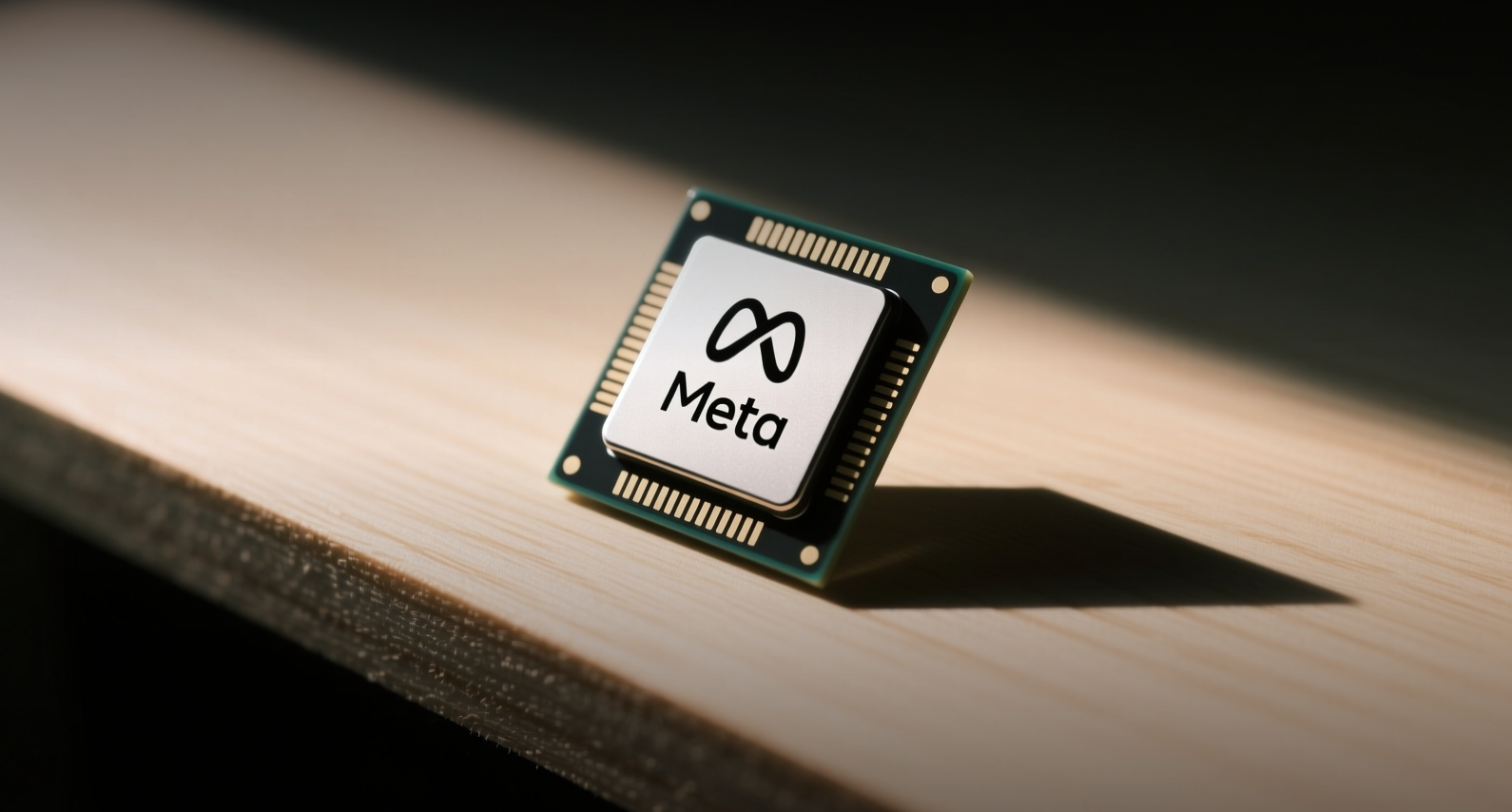
Meta builds Switchboard router as AI costs hit $145B
**Meta is building an AI model router to stop paying premium prices for simple coding tasks — a direct response to the soaring inference costs threatening its $145 billion infrastructure bet.** Meta's internal AI incubator is developing Switchboard, a model routing tool that sends simple coding requests to cheaper small models, directly targeting the inference costs eating into its $145 billion infrastructure budget. "We pay top model prices for every coding request, including simple ones," the internal project documents state, according to The Information, which first reported the project on July 21. Switchboard, built by Meta's Applied AI Engineering incubator AAI Labs, scores each task by difficulty and routes simple requests to smaller, cheaper models. The documents describe inference cost as the "primary obstacle" to wider deployment of AI agents inside the company. Meta began capping AI token usage in June, weeks after encouraging broader adoption. The tool mirrors OpenRouter's Auto Router, which has drawn acquisition interest from a larger tech company at a potential valuation exceeding $1.3 billion. Meta's version could be released externally, creating a new revenue stream as the company seeks to monetize its AI investments beyond advertising. **The Inference Cost Problem** Meta expects to spend as much as $145 billion on AI infrastructure and other capital expenditures this year, more than double its 2025 spending. Yet the company was routing every internal coding request — from trivial autocomplete queries to complex multi-step logic — through its most expensive frontier models. The internal documents obtained by The Information were blunt: "Cost is the limiting factor for running agents at scale." The problem is not unique to Meta. Goldman Sachs Research forecasts that AI token consumption will increase 24-fold by 2030, reaching 120 quadrillion tokens per month as enterprise adoption grows. Companies across the industry are racing to build routing layers that match task complexity to model capability, avoiding the waste of paying frontier-model prices for simple lookups. OpenAI embedded routing directly into GPT-5, automatically switching to cheaper models when user prompts are straightforward. Databricks and Palantir have built their own routing tools. Spectro Cloud on July 21 launched PaletteAI Inference Launchpad, a turnkey solution it claims can reduce token costs by as much as 70% by running inference locally on enterprise infrastructure. **From Cost Center to Revenue Stream** Switchboard belongs to AAI Labs, Meta's internal incubator established in March 2026 that allows employees to submit AI product proposals. The lab has approved roughly 200 projects spanning consumer products, developer tools, and internal infrastructure. Switchboard is one of the few being considered for external release. The dual-path strategy — deploy internally to cut costs, then sell externally as a product — reflects Meta's broader push to convert its massive AI spending into new business lines. Chief Executive Officer Mark Zuckerberg told analysts in April that AI agents mean "small teams can make very rapid progress" and predicted the technology would drive "a lot of innovation." He said Meta could build as many as 50 new applications. AAI Labs is also developing an AI-powered driving tour application that runs on Apple CarPlay and Android Auto, narrating nearby landmarks and allowing drivers to ask questions. The product is positioned as an extension of Instagram's map experience, potentially integrating location-based Reels content, travel recommendations, and Meta Ray-Ban smart glasses. **The Competitive Landscape** OpenRouter has emerged as the early leader in the model routing space, giving developers access to dozens of models through a single API while automatically selecting the most cost-effective option. The company was valued at $1.3 billion in April and is now in acquisition talks that could push its valuation significantly higher, according to The Information. For Meta, building rather than buying a routing layer makes strategic sense. The company operates some of the largest open-source language models, including the Llama family, giving it deep control over model architecture and inference optimization. An internal routing tool that learns which models perform best on which tasks could give Meta a cost advantage that compounds as token volumes grow. The broader implication for investors is that the AI industry is shifting from a "bigger is better" mindset to an efficiency-first approach. The companies that win the next phase of AI adoption may not be those with the most powerful models, but those that can deliver the right model for each task at the lowest cost. Meta's Switchboard, if successful, positions the company to do both — and potentially sell the solution to others. This article is for informational purposes only and does not constitute investment advice.