Edgen AI operates independently of, and is not controlled by Aspen Digital Financial Limited.
New Oriental annual profit jumps 27.8% to US$475M, guided 14%-18% growth
 Edgen Stock·Jul 29 2026, 11:36
Share to
Share to
Copy link


[1] <Results>NEW ORIENTAL-S Annual NP US$475M, Up 27.8%; ADR Up 3%+ Premarket (https://www.aastocks.com/en/stocks/news/aafn- ...)[2] New Oriental Announces Results for the Fourth Fiscal Quarter and the Fiscal Year Ended May 31, 2026 (https://www.tmcnet.com/usubmit/2026/07/29/104 ...)
Related News
Jul 29 2026, 12:42
Kospi plunges 13% as South Korea vows new measures to curb ETF speculation
**South Korea's benchmark Kospi Index suffered its worst selloff in decades, triggering a second straight circuit breaker as retail investors dumped shares and policy makers scrambled to contain the damage from leveraged ETF products.** The Kospi slid as much as 13% to below the 6,000 mark on Wednesday before paring losses to about 6% in afternoon trading, extending a monthly decline of roughly 33% — a record for the gauge. The Kosdaq Index of smaller companies also fell more than 10%, triggering its own trading halt. Retail investors sold 1.8 trillion won ($1.3 billion) of Kospi stocks, a sharp reversal from their earlier pattern of dip-buying, according to exchange data. "People seem to be just running away," said Yoon Joonwon, a fund manager at DS Asset Management. "Technically or emotionally, this is irrational selling." The rout was led by SK Hynix Inc. and Samsung Electronics Co., which together account for nearly half of the Kospi's market capitalization. SK Hynix tumbled as much as 20%, extending a two-day drop that reached 30% at one point, after its earnings call with analysts offered scant details on shareholder returns and long-term contract pricing. The company reported a six-fold surge in quarterly profit and said it would boost capital spending to at least $31 billion. Samsung Electronics fell as much as 14%. "SK Hynix is lifting capex to the high 40 trillion won range, while staying silent on shareholder returns and the pricing inside its long-term contracts, and that's left investors feeling uneasy," said Josh Gilbert, lead analyst for Asia Pacific and the Middle East at Etoro Ltd. "Given the weight of SK Hynix and Samsung on the Kospi, there's nowhere to hide when they fall together." **Policy makers apologize as leveraged ETFs amplify losses** Finance Minister Koo Yun-cheol apologized during a parliamentary session on Wednesday for introducing single-stock leveraged ETFs without adequate safeguards, responding to a lawmaker's demand for accountability. Lee Eog-weon, chairman of the Financial Services Commission, also expressed regret, saying the regulator had "fallen short in properly meeting the public's expectations" over overseeing the products. The government is now considering raising transaction costs to curb speculation in leveraged ETFs, according to officials familiar with the matter. The products, mostly tied to Samsung Electronics and SK Hynix, had attracted heavy retail inflows earlier this year as investors bet on sustained AI-driven demand for memory chips. The subsequent collapse has triggered forced liquidations and margin calls, compounding the selling pressure. "The most immediate possibility would be to deploy the market stabilization fund, encourage institutional investors such as the National Pension Service to rebalance into domestic equities, and provide liquidity through state-backed institutions," said Jung In Yun, chief executive officer at Fibonacci Asset Management Global. **Circuit breakers and the scale of the selloff** Of the 15 circuit breakers triggered in the Kospi since 2000, nine have taken place this year alone, underscoring the severity of the current downturn. The back-to-back suspensions on Tuesday and Wednesday were unprecedented for the benchmark. The selloff reflects a broader reassessment of the AI trade that had powered South Korean equities to world-beating gains earlier this year. SK Hynix shares have fallen since June as doubts grew about whether global AI spending — particularly by big tech firms such as Meta Platforms Inc. — would justify the chip sector's elevated valuations. Recent technological advances by Chinese competitors added to the caution. Investors are now awaiting earnings results from Samsung Electronics on Thursday and from major US technology companies later this week, which could provide further direction for the market. This article is for informational purposes only and does not constitute investment advice.

Jul 29 2026, 12:40
Moonshot AI raises $3.5B at $35B valuation ahead of HK IPO
Moonshot AI closed a $3.5 billion Series F financing round at a $35 billion post-money valuation, more than triple its original $1 billion target, as the Beijing-based startup accelerates toward a Hong Kong IPO. "The oversubscription reflects strong institutional demand for Chinese AI platforms with proven commercial traction," Kevin Ip, an analyst covering HK equities, said. "Moonshot is now the highest-valued private AI company in China." The round was priced at a $31.5 billion pre-money valuation, with the extra demand flowing into the raise size rather than a higher share price. Series G, the company's Pre-IPO round, has already opened at a $50 billion pre-money valuation and may close as soon as next week, according to people familiar with the matter. The rapid succession of rounds — the Series F closed early after exceeding its target by more than threefold — signals urgency ahead of a Hong Kong listing the company wants to complete before the end of 2026. Moonshot's fundraising momentum follows the July 16 launch of Kimi K3, a 2.8-trillion-parameter open-weight model that reached No. 1 on Hugging Face's trending chart within 30 minutes of its release. The model trails Anthropic's Claude Fable 5 and OpenAI's GPT-5.6 Sol on overall benchmarks but outperforms many frontier models on coding and agentic tasks, with operating costs estimated at one-half to one-third of comparable closed models. Annual recurring revenue reached $300 million in June, up from $200 million in April, according to Bloomberg. The company has distributed a shareholder resolution to backers seeking approval for a Hong Kong IPO, setting a six-month outer bound on the timeline. Moonshot was founded in March 2023 by Yang Zhilin, a Carnegie Mellon PhD graduate who previously interned at Google Brain and Facebook AI Research, alongside Tsinghua University classmates Zhou Xinyu and Wu Yuxin. The state-run National Artificial Intelligence Industry Investment Fund is among its investors. The $50 billion Pre-IPO valuation represents a roughly 60 percent premium over the Series F pre-money price, testing whether investor appetite can sustain the re-rating. A successful listing would make Moonshot one of the most valuable Chinese technology companies to go public in Hong Kong, joining a pipeline that includes MetaX, which filed confidentially for a Hong Kong listing in July, and DeepSeek, which paused its second funding round while weighing a Shanghai IPO for 2027. First-day trading will test institutional demand for Chinese AI exposure in a public market context. This article is for informational purposes only and does not constitute investment advice.
Jul 29 2026, 12:38
Samsung Electro-Mechanics hikes MLCC prices 30% as AI demand reshapes supply
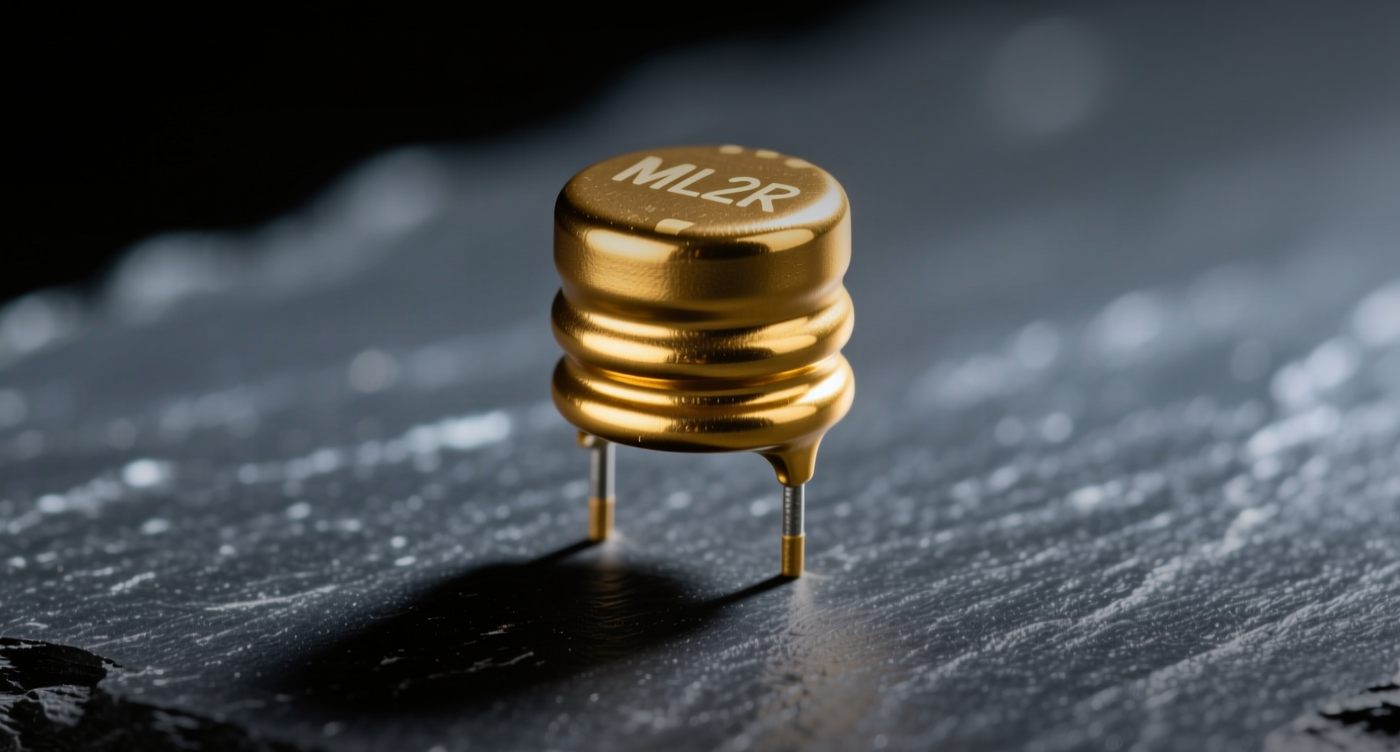
Samsung Electro-Mechanics will raise prices on all multilayer ceramic capacitors by 30% from Aug. 1, and Taiyo Yuden plans to follow in September, as AI server demand pushes component supply chains past their limits. "Over the past few months, structural demand growth has appeared in the global electronics industry," Samsung Electro-Mechanics said in a notice to sales partners. "Despite improvements in production efficiency and expanded production lines, supply chain pressures have exceeded manageable levels." The price increase applies to all products under the company's Markup Business Code and takes effect on shipments from Aug. 1. Samsung Electro-Mechanics signed supply contracts for AI server MLCCs worth 453.9 billion won ($327 million) in June and 295.1 billion won ($213 million) this month. Taiyo Yuden, Japan's No. 3 MLCC maker, told customers it cannot guarantee delivery times after its planned September price increase, according to The Elec. The price hikes reflect a broader reallocation of production capacity. Japanese and Korean manufacturers are shifting lines from consumer-grade X5R capacitors to high-end X6S and X7R specifications needed for AI accelerators, which require more capacitors per server to handle power fluctuations and heat. This is squeezing supply of mid-to-high capacitance consumer MLCCs — the 1 microfarad to 22 microfarad range — where inventory for mainstream part numbers has fallen below 30 days, according to TrendForce. The supply-demand imbalance is visible across the industry. Samsung Electro-Mechanics' book-to-bill ratio — a measure of orders relative to shipments — reached 1.31 at the end of June, meaning orders exceeded shipments by 31%. Murata, the global leader, posted a ratio of 1.30, and Taiyo Yuden 1.25. All three are at their highest levels since the Covid-19 pandemic, TrendForce data show. The three companies shipped a combined 2.78 trillion units in June, a five-year high, with momentum continuing into July. Channel prices have already moved ahead of the official increases. Distributors and Tier 2 and Tier 3 customers are paying 20% to 25% more on average, with some spot-market prices reaching two to three times normal levels, according to TrendForce. The dynamic has created an unusual market structure: end-user demand for consumer electronics remains soft, but component prices are rising because supply is being redirected to AI applications. ## Big Tech CapEx fuels the cycle The demand driver is the scale of AI infrastructure spending. Bloomberg forecasts Amazon, Alphabet, Meta and Microsoft will invest $725 billion in capital expenditures this year, up 77% from $410 billion in 2025. Alphabet recently raised its investment plan to as much as $190 billion, and Meta increased its target to $145 billion. That spending flows first to high-bandwidth memory and then to supporting components like MLCCs, creating a cycle where rising memory prices and component costs reinforce each other. A semiconductor industry executive said the spread of price increases from memory to components suggests the AI investment cycle will last longer than initial forecasts. "As big tech companies continue to revise their investment plans upward, it is highly likely that the boom in both memory and component sectors will persist for some time," the executive said. For investors, the MLCC price increases show that the AI supply chain is broadening beyond memory chips. Samsung Electro-Mechanics, a unit of Samsung Group, stands to benefit directly from both higher prices and volume growth. Taiwan's Yageo and Walsin Technology, along with Chinese manufacturers, are receiving order spillover as customers seek alternative sources for consumer-grade capacitors. Downstream electronics makers face higher input costs and delivery risks, particularly for mid-range products where supply is tightest. The structural shift — AI applications consuming an increasing share of passive component capacity — suggests the pricing environment will remain favorable for manufacturers through at least the first half of 2027. This article is for informational purposes only and does not constitute investment advice.