Edgen AI operates independently of, and is not controlled by Aspen Digital Financial Limited.
NDRC AI plan targets $177B industry as China accelerates development
 Edgen Stock·Jul 17 2026, 04:58
Share to
Share to
Copy link

[1] 国家发改委发布《人工智能合作发展行动计划》 (https://wallstreetcn.com/livenews/3135476 ...)[2] China Plans AI Agent Recalls. America Can’t Even Agree Who Regulates Them - Forbes (https://www.forbes.com/sites/robertszczerba/2 ...)[3] China steps up AI growth, governance (https://www.chinadaily.com.cn/a/202607/16/WS6 ...)[4] 2026 Xi-Trump summits (https://www.scmp.com/topics/2026-xi-trump-sum ...)[5] China Internet Stocks Catch an AI Lift as Beijing Warms to Tech (https://www.bloomberg.com/news/articles/2026- ...)
Related News

Jul 17 2026, 06:29
Uber launches $14.8B takeover bid for Delivery Hero in global push
Uber Technologies launched a voluntary public takeover offer for Delivery Hero on Thursday, valuing the Berlin-based food delivery company at about $14.8 billion in a cash deal that would extend the US ride-hailing firm's reach to 99 markets worldwide. "The combination will extend affordable, reliable delivery to many millions more people in many of the world's most dynamic economies," said Dara Khosrowshahi, chief executive officer of Uber, in a statement. "Delivery Hero's talented team has built an extraordinary business, with beloved local brands and leading positions across many of the fastest-growing delivery markets." Uber will offer €41.50 per share in cash, representing a premium of about 34% over Delivery Hero's three-month volume-weighted average share price before the announcement and roughly 127% over the unaffected three-month average before May 8, when earlier talks emerged. The offer is conditional on a minimum acceptance threshold of 50% plus one share. Delivery Hero shares closed at €38.18 on Wednesday and rose about 5.7% in Frankfurt premarket trading Thursday. The acquisition marks Uber's largest-ever deal and signals its intent to dominate global food delivery beyond its core US market. Combined pro-forma gross bookings reached $236 billion in 2025, with Uber's mobility and delivery footprint nearly doubling from 34 to 58 markets where it operates both services. Uber projected $1.2 billion in annual cost and revenue synergies and said the deal would unlock about 50 million new users across Delivery Hero's brands, which include Baedal Minjok in South Korea, Glovo across Europe, HungerStation in Saudi Arabia, talabat in the Middle East, and PedidosYa in Latin America. **Deal Structure and Financing** Uber will fund the transaction through existing cash on its balance sheet and new debt financing, with a committed bridge facility of about €14 billion arranged by affiliates of Morgan Stanley, Bank of America, and Deutsche Bank. The company said the deal is expected to be accretive to non-GAAP earnings per share upon closing, with high-single-digit percentage accretion by year three. Major shareholder Prosus, which holds just under 17% of Delivery Hero, has agreed to tender its entire stake. Combined with Uber's existing 24.77% direct stake and an additional roughly 11.74% economic exposure through equity derivatives, Uber's total economic interest would reach about 53%, giving it effective control. **Antitrust and Regulatory Path** To address regulatory overlap, Delivery Hero separately agreed to sell its businesses in 14 markets — including foodora in Austria, Norway, and Sweden, Glovo in Spain and Poland, and Yemeksepeti in Turkey — to New York-based investment firm SSW Partners for about $1.6 billion. SSW will independently seek strategic buyers for those assets after closing. Uber has pledged to retain Delivery Hero's Berlin headquarters and make no changes to its German workforce through at least 2029, while committing €2 billion in investment in Germany by 2031 for corporate operations, business expansion, and autonomous vehicle partnerships with the German automotive industry. Morgan Stanley and Deutsche Bank are serving as lead financial advisors to Uber, with Bank of America and Goldman Sachs also advising. Freshfields and Wachtell, Lipton, Rosen & Katz are legal counsel to Uber, while Evercore is advising SSW. The deal is expected to close in the second half of 2027, pending merger control approvals across multiple jurisdictions. This article is for informational purposes only and does not constitute investment advice.

Jul 17 2026, 06:28
IRGC destroys 2 radar sites as Strait of Hormuz crisis deepens
Iran's IRGC destroyed a maritime radar system on Oman's Salama Island and a US radar station inside the Strait of Hormuz, retaliating for American airstrikes that have killed at least 35 people across Iran's southern provinces. "The attacks on Omani territory represent a dangerous escalation that directly threatens a country that has tried to mediate between the two sides," said Elena Fischer, geopolitical risk analyst at Edgen. "Oman's coastal radar coverage over the Strait of Hormuz is now compromised." Brent crude rose 0.2% to $84.93 a barrel after briefly topping $86, while gold gained as investors sought havens. The VIX, Wall Street's fear gauge, remained elevated above 22 as the sixth consecutive night of US strikes targeted Iranian air defenses, missile sites and coastal surveillance systems across Hormozgan, Bushehr and Khuzestan provinces. The Strait of Hormuz handles about 21% of global oil trade, and Iran has declared the waterway closed until further notice. With the US reinstating a naval blockade of Iranian ports and India banning seafarer deployment through the strait, the disruption threatens to push Brent above $100 a barrel if the standoff persists beyond August. The IRGC said it destroyed the radar installations using precision strikes, calling the operation retaliation for US bombing campaigns that have hit Bandar Abbas, Qeshm Island, Bushehr and Ahvaz since the ceasefire collapsed on July 8. Iranian state media reported that at least 35 people have been killed and more than 300 wounded across five nights of American strikes, including near the Shahid Baghaei children's cancer hospital in Ahvaz, which was evacuated. Oman, which has tried to position itself as a neutral mediator, now finds itself directly in the crossfire. The attack on Salama Island follows IRGC strikes on July 12 that hit coastal radar sites in the Musandam Peninsula — which overlooks the Strait of Hormuz — as well as logistics stores at an airbase in central Oman and bunkering facilities in Duqm. Omani authorities have downplayed the incidents, with Foreign Minister Sayyid Badr Al Busaidi telling Le Monde on July 12 that "complex talks have begun to shape a lasting framework guaranteeing freedom of navigation in the Strait of Hormuz." ## Oil Markets Price in Prolonged Disruption Brent crude has risen more than 12% since the ceasefire collapsed, though it remains well below the $120 peak reached during the conflict's earlier phase. The backwardation structure in Brent futures has steepened, indicating traders expect sustained supply tightness. Iran's threat to impose environmental compensation fees on ships transiting the strait — calculated by vessel type, tonnage and cargo — adds another layer of cost uncertainty for shippers already grappling with war risk premiums that have surged to multiyear highs. The US has intercepted at least two vessels attempting to violate its reinstated blockade of Iranian ports, including the Curacao-flagged M/T Belma, which was disabled by a Hellfire missile strike after ignoring warnings while heading toward Iran's Kharg Island export terminal. CENTCOM said it has redirected three commercial vessels since the blockade was reimposed on Tuesday. ## Regional Spillover Threatens Broader Conflict Iran has expanded its retaliation beyond the strait, launching missile and drone attacks on US military facilities in Jordan, Kuwait, Bahrain and Qatar. The IRGC claimed it struck the Al Udeid airbase in Qatar — the largest US base in the Middle East — with ballistic missiles, while also targeting Patriot air defense systems and radar sites in Kuwait and communications infrastructure in Bahrain. Kuwait's military confirmed it was intercepting "hostile drone attacks," and Bahrain activated air raid sirens. The widening geographic scope of attacks has prompted the European Union Aviation Safety Agency to warn airlines to avoid the airspace of Bahrain, Kuwait, Qatar, the UAE and parts of the Gulf of Oman through at least July 29, citing "unpredictable military developments" and the risk of misidentification by air defense systems. The last time the Strait of Hormuz faced a sustained closure threat was during the Iran-Iraq War in the 1980s, when the Tanker War saw Iran attack Kuwaiti and Saudi vessels, prompting US naval intervention. That crisis lasted more than two years and contributed to a doubling of oil prices. The current standoff, now in its fifth month since the initial US strikes in late February, has already disrupted global shipping routes and forced energy importers from Asia to Europe to seek alternative supply sources. *This article is for informational purposes only and does not constitute investment advice.*
Jul 17 2026, 06:27
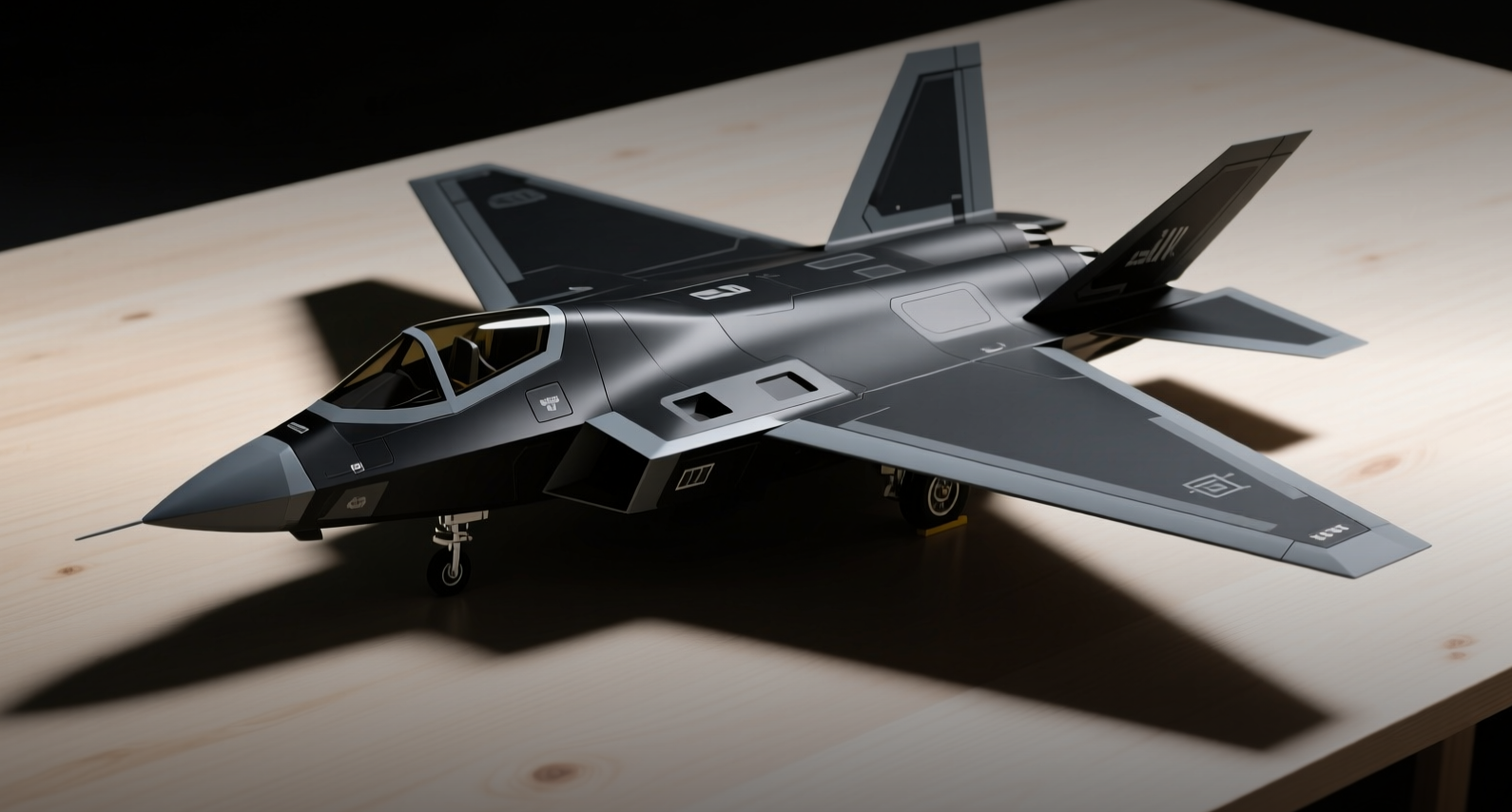
Defense takes 50% of Farnborough Airshow as wars reshape priorities
Spiraling security risks are pushing defense to the forefront of Britain's Farnborough Airshow, with weapons makers accounting for half of the record 1,600 exhibitors as aerospace and arms makers struggle to keep pace with demand while cementing a fragile recovery in civil jet production. "The global security environment is arguably more complex and volatile today than we have seen in many, many decades," Air Chief Marshal Harv Smyth, head of the Royal Air Force, told an International Air Chiefs Conference ahead of the show. Defense companies now represent 50% of exhibitors at the July 20-24 show, up from 40% historically, organizers told Reuters. The shift follows the cancellation of the Royal International Air Tattoo at RAF Fairford due to the Iran war, with the US Air Force citing "uncertainty over access" to the base. European defense spending is seeing its biggest rise since the Cold War, while the US has pitched a $1.5 trillion military budget aimed at revitalizing the industrial base. The biennial gathering comes as NATO allies grapple with diverging spending commitments and the collapse of the Franco-German-Spanish Future Combat Air System, leaving a potential gap in next-generation fighter development. The outcome of defense procurement decisions made at Farnborough could shape the competitive landscape for years, with startups developing AI-powered drones and uncrewed systems challenging established primes. The shift in emphasis marks a departure from Farnborough's traditional role as a commercial jet order battleground between Boeing and Airbus. Industry sources said total aircraft orders may struggle to climb above 300 units, well below some pre-show forecasts of as many as 800 jets, as production capacity constraints limit the scope for new deals. "Winning orders is not the question. It's not the relevant measuring stick that it used to be because of production capacity constraints," said Jerrold Lundquist, managing director of advisory firm The Lundquist Group. **Supply Chains Face Dual Pressure** The supply chain strains affecting commercial aerospace are also testing defense production. Airbus has set a repeatedly delayed target to lift single-aisle jet output by about 25% to 75 a month in 2027, while Boeing is studying production increases above currently targeted levels to narrow the gap against its rival. "The supply chain has improved relative to where it was a year or two ago but not to the point where Airbus can pursue its goal of 75," said Kevin Michaels, managing director of AeroDynamic Advisory. "And as Boeing raises rates, it's surely going to cause issues there as well." Engine deliveries remain one of the most persistent bottlenecks. GE Aerospace, one of the world's largest jet-engine makers, lifted its 2026 forecast on Thursday as conditions improved, though Chief Executive Larry Culp said "more work to do" remains. **Defense Startups Challenge Incumbents** The wars in Ukraine and Iran are exposing the need for faster development cycles and mass-produced systems, creating an opening for defense technology startups. Helsing, the European AI defense company co-chaired by former Airbus Chief Executive Tom Enders, raised 1.8 billion euros last week at an 18 billion euro valuation. "The younger companies are aggressive, not risk-averse," Enders told Reuters. "Procurement agencies and armed forces increasingly understand this is the way for a dynamic fast-moving industry." The US Air Force has awarded production contracts to General Atomics and Anduril for drone wingmen programs, signaling a shift toward uncrewed systems. But Byron Callan, managing partner of research firm Capital Alpha, noted that "most militaries are still spending the vast amount of their resources on manned platforms." The UK last month unveiled a 298 billion pound Defense Investment Plan pushing investments in space, autonomous systems, and cyber warfare, with a commitment to reach 3% of GDP on defense spending in the next Parliament and 3.5% by 2035. The US has seen a 25% surge in aerospace exports over the past year, with the UK among the top five destinations, according to Aerospace Industries Association Chief Executive Eric Fanning. The last time European defense spending rose at this pace was during the 1980s Cold War buildup, when NATO members averaged 3% to 4% of GDP. Today, the gap between US demands and European capacity remains a central tension, with President Donald Trump continuing to push allies to take on more of the burden. This article is for informational purposes only and does not constitute investment advice.