Edgen AI operates independently of, and is not controlled by Aspen Digital Financial Limited.
NAND flash supply to exceed demand in H2 2027, TrendForce says
 Edgen Stock·Jul 22 2026, 07:40
Share to
Share to
Copy link


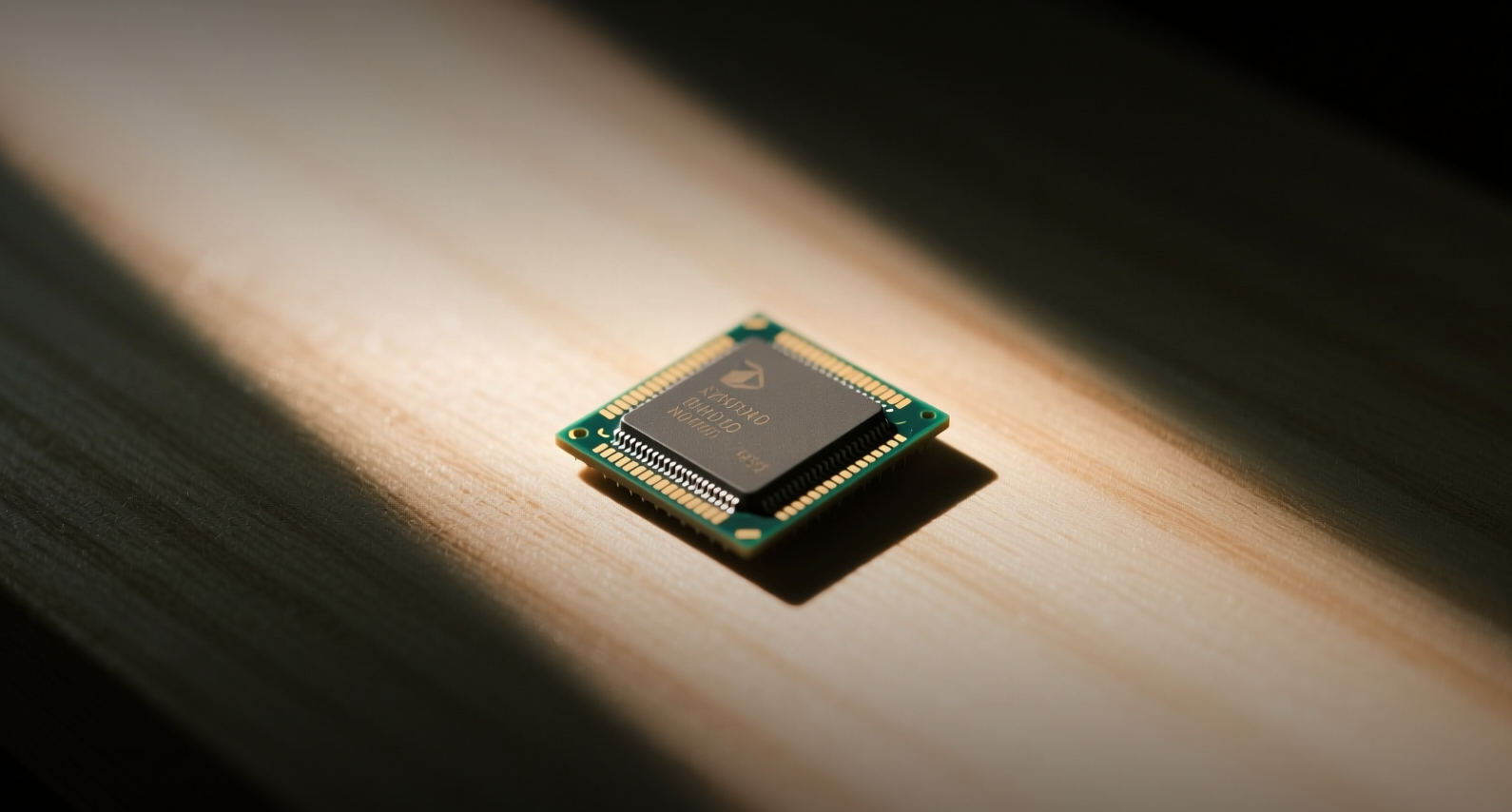
[1] Chipmakers headed into glut territory, research shows. But this may not be the whole picture (https://www.proactiveinvestors.co.uk/companie ...)[2] NAND Flash Supply Growth to Outpace Demand in 2027, Easing Supply Constraints in 2H27, Says TrendForce (https://markets.businessinsider.com/news/stoc ...)[3] NAND Flash shortages are expected to end in 2027, per new report (https://www.tweaktown.com/news/112748/nand-fl ...)[4] NAND shortages could finally ease in 2027, but ADATA warns the DRAM crisis may last another 10 years (https://www.techspot.com/news/113186-nand-sho ...)[5] Chipmakers face potential NAND flash oversupply... - Pluang (https://pluang.com/en/news-feed/produsen-chip ...)
Related News

Jul 22 2026, 08:31
Tencent slides 6.75% as funds cut RMB 18.5 billion in holdings
**Chinese mutual funds dumped nearly RMB 18.5 billion of Tencent stock in the second quarter, the largest position reduction among actively managed equity funds.** Tencent Holdings (0700.HK) fell 6.75% to HKD 442.2 on July 22, with HK$27.1 billion in turnover, after data showed actively managed Chinese mutual funds cut their positions by nearly RMB 18.5 billion in the second quarter. The data, compiled from 2Q26 fund filings, showed Tencent was the single largest position reduction among actively managed equity funds during the period. The selling was concentrated in funds that had held the stock since 2024, according to the filings. The reduction contrasted sharply with Zhongji Innolight (300308.SZ), an optical module maker that began its Hong Kong public offering on July 22. Mutual funds raised holdings in the A-share listed company by more than RMB 89 billion during the quarter, making it the most added position. Zhongji Innolight A-shares also fell 6.67% on the day. The divergence signals a rotation within Chinese equity markets away from mature internet platforms toward AI hardware and optical infrastructure plays. Zhongji Innolight, a key supplier of optical transceivers used in AI data centers, has benefited from surging demand tied to the global GPU infrastructure buildout. Its Hong Kong listing, launched on the same day as the fund data release, aims to tap international investor demand for AI supply chain exposure. The shift mirrors a broader Asia-wide trend where institutional capital has flowed into semiconductor and AI supply chain names. The iShares MSCI Taiwan ETF, which allocates 22.3% to Taiwan Semiconductor Manufacturing Co., has returned 82.8% over the past year, while the iShares China Large-Cap ETF, dominated by banks and consumer-internet names including Tencent, is down 6.63% over the same period. For Tencent, the fund exodus adds to a challenging year. The stock's 6.75% drop on July 22 came with HK$27.1 billion in turnover and a short-selling ratio of 17.06%, reflecting elevated bearish positioning. The company remains one of China's largest internet platforms by revenue, but fund managers have increasingly favored AI infrastructure names that offer direct exposure to the data center buildout cycle. This article is for informational purposes only and does not constitute investment advice.
Jul 22 2026, 08:23
Volkswagen targets 2H27 for L3 autonomous driving in China
**Volkswagen is accelerating its autonomous driving push in China, targeting deliveries of Level 3-capable vehicles by the second half of 2027 through deeper AI collaboration with Horizon Robotics.** Volkswagen's partnership with Horizon Robotics gives the German automaker access to AI foundation models that could help close the gap with Chinese rivals like BYD and Huawei in the world's largest autonomous driving market. "China has become one of Volkswagen Group's key innovation and technology hubs, particularly in software, artificial intelligence and automated driving," Oliver Blume, CEO of Volkswagen Group, said. Carizon, VW's intelligent driving unit, will integrate Horizon Robotics' AI foundation model with its own C7H system-on-chip and GAIA World Model data platform. The L2++ advanced driver assistance system, which adds urban Navigate on Autopilot capabilities, entered series production in the third quarter of 2026 and will roll out across seven new energy vehicle models this year. The L3 system, expected in 2H27, is designed to handle conditional automation where the vehicle manages all driving tasks under specific conditions. Horizon Robotics shares rose 6.7% on the announcement, with short selling accounting for 30.5% of turnover. The partnership confirms Horizon's AI technology as a platform for a major global automaker, potentially expanding its addressable market beyond China. The AI driving model being developed combines Horizon Robotics' foundation model capabilities with Carizon's proprietary technology stack. Volkswagen said the integrated system is designed to meet safety and quality requirements for Level 3 and future Level 4 applications, including robotaxi scenarios. The system will also support continuous improvement of the existing L2++ systems already in production. "With our own L2++ ADAS solution already in series production, we have demonstrated our ability to deliver and the strength of our in-house capabilities," Ralf Brandstaetter, member of the Board of Management of Volkswagen AG responsible for China and chairman and CEO of Volkswagen Group China, said. "Building on one of the most advanced AI models for automated driving on the market now sharpens our tech edge." The autonomous driving system will be integrated with Volkswagen Group's China Electronic Architecture, the company's first locally developed zonal electrical and electronic architecture. Volkswagen said the architecture will enable deployment across multiple vehicle platforms in China and selected markets, starting with models based on the CEA architecture from next year. By the end of 2025, Carizon had delivered its first L2+ system enabling highway Navigate on Autopilot and memory parking on the ID. UNYX 07 and ID. UNYX 06. The L2++ systems now entering production expand those capabilities to urban environments. For investors, the partnership strengthens Horizon Robotics' position in the autonomous driving supply chain. The company's AI chips and foundation models now underpin a major automaker's L3 roadmap, putting it in direct competition with Mobileye and Qualcomm's Snapdragon Ride platform in China. Volkswagen trades at about 4x forward earnings, and a successful L3 rollout could help reverse its market share decline in China, where it has lost ground to local EV makers. Horizon Robotics, valued at roughly $8 billion after its Hong Kong IPO, gains a marquee customer that could drive volume for its chip platforms across millions of vehicles. This article is for informational purposes only and does not constitute investment advice.

Jul 22 2026, 08:17
Tencent slides 7% as mobile revenue fears hit Hong Kong tech stocks
The Hang Seng Tech Index slid 3.1% to 4,663 on Wednesday after Tencent Holdings (0700.HK) tumbled 7% on mobile gaming revenue concerns. "The potential revenue downfall could be an excuse for the market to take profits on Tencent's recent gains," said Steven Leung, executive director at UOB Kay Hian. Tencent had risen about 10% in the first three weeks of July before Wednesday's selloff. The selloff spread across Hong Kong-listed technology names. NetEase (09999.HK) dropped 7.3% to HK$193.2, making it the worst-performing blue chip, while Kuaishou Technology (01024.HK) fell more than 6%. Alibaba Group (09988.HK) declined 2.9%, JD.com (09618.HK) lost 2.2%, and Baidu (09888.HK) slid 2.8%. Semiconductor Manufacturing International Corp. (00981.HK) fell 3.8%, Xiaomi Corp. (01810.HK) dropped 2.9%, and Meituan (03690.HK) declined 2.3%. XD Inc. (2400.HK), another game developer, also fell more than 6%. The selloff erased roughly 10% of Tencent's July gains. BNP Paribas' sales team wrote in a client report that gaming stocks were heavily sold off on rumors of a decline in Tencent's mobile revenue. The Hang Seng Index fell 1% to 24,868, with turnover reaching HK$260.6 billion. Tencent's short-selling volume reached HK$3 billion, representing 17.1% of its total turnover, while NetEase's short-selling ratio hit 28.1%, the highest among major tech stocks. JD.com also saw elevated short-selling at 43.3% of its turnover, and Xiaomi's ratio stood at 31.1%, indicating broad bearish bets across the sector. The trigger for the selloff was a Bloomberg report citing traders who expected Tencent's second-quarter mobile gaming revenue to edge lower. BNP Paribas' sales team reinforced the move by flagging the rumor in a client note. Tencent's mobile gaming business, which includes titles such as Honor of Kings and PUBG Mobile, has been a core revenue driver, and any slowdown would weigh on the company's overall growth trajectory. Tencent's decline of 6.4% to HK$443.6 marked its largest single-day drop since April 2025. The stock had been one of the best performers in the Hang Seng Tech Index this month before Wednesday's reversal. The selloff comes ahead of Tencent's second-quarter earnings report, where investors will scrutinize mobile gaming revenue trends. Any confirmation of a decline could extend pressure on the stock and its peers, given Tencent's weighting in the Hang Seng Tech Index. The company's gaming division accounted for roughly 30% of its total revenue in the first quarter, making it the largest single contributor to earnings. The Hang Seng Index's decline to 24,868 pushed it further below the 25,000 level, a key psychological threshold. The index has struggled to hold above that mark as concerns over China's economic recovery and regulatory uncertainty in the technology sector persist. This article is for informational purposes only and does not constitute investment advice.