Edgen AI operates independently of, and is not controlled by Aspen Digital Financial Limited.

 Portfolio
Investment Ideas
Personal
Agentic Execution
Aura Leaderboard
Rebate
 Edgen Stock·Jul 30 2026, 12:53

Unitree Robotics, the Chinese humanoid robot maker that landed on the cover of Time magazine this month, plans to raise 4.2 billion yuan ($618 million) in a Shanghai IPO that tests investor appetite for a company at the center of US-China tech tensions. "The speed of this listing — 73 days from application to approval — shows Beijing's willingness to back strategic industries with capital market access," said Tom Brennan, an IPO and M&A analyst at Edgen. "But the US import ban adds a layer of geopolitical risk that retail investors on the STAR Market have not had to price before." The company is offering 40.4 million shares, or 10% of its post-IPO total, with preliminary pricing on Aug. 5, subscription on Aug. 10 and payment due Aug. 12. Unitree received registration approval from the China Securities Regulatory Commission in early July, the fastest sign-off in the STAR Market's history. The IPO values the company at roughly 42 billion yuan on a pre-money basis, based on the 10% dilution. The listing comes weeks after the US Federal Communications Commission banned new imports of foreign-made humanoid and quadruped robots on national security grounds, a move aimed squarely at Chinese manufacturers. Unitree, which shipped more than 5,500 robots in 2025 and holds over 32% of the global quadruped market, now faces a US market that is effectively closed to new sales. The question for investors is whether domestic demand and other export markets can compensate. Unitree's journey from a startup founded by Wang Xingxing in 2016 to a Time cover story in July 2026 mirrors the rapid ascent of China's robotics industry. The company's humanoid robot revenue surged from 1.88% of total sales in 2023 to 51.78% in 2025, reflecting a broader shift as Chinese manufacturers scaled production faster than overseas rivals. Its G1 humanoid robot uses self-developed joint motors that cost 30% to 40% of comparable Western components, with a localization rate exceeding 90%. The IPO proceeds are expected to fund production expansion and research into next-generation humanoid platforms. Unitree's H2 Plus humanoid was selected by Nvidia in June as the hardware foundation for its open GR00T reference platform, a partnership that underscores the company's technical standing even as Washington restricts its market access. **Geopolitical headwinds** The US ban, announced July 28, prohibits new imports of humanoid and quadruped robots along with power inverters used in data centers and renewable energy. The FCC's Covered List now includes advanced robotic devices that can move, sense their surroundings and connect to networks — a definition that captures Unitree's entire product line. Products already approved for sale in the US can continue operating through January 2029, but new sales are blocked. China's foreign ministry accused Washington of abusing national security to suppress Chinese companies and said it would take all necessary measures to defend its businesses. The timing is notable: several Chinese humanoid makers are preparing public listings, with AgiBot planning a Hong Kong IPO next year at a valuation of up to $6.4 billion, and Leju Robotics and DEEP Robotics filing applications in Shenzhen and Shanghai. **Comparable valuations** Unitree's implied valuation of about 42 billion yuan places it among the most valuable robotics companies in China. For context, CXMT, a Chinese memory chip maker, surged 466% on its Shanghai debut earlier this week, becoming the country's most valuable listed company. Mainland retail investors have shown a willingness to pay substantial premiums for strategic tech names, even as US lawmakers debate additional restrictions. The STAR Market has become Beijing's preferred venue for funding strategic industries, from semiconductors to robotics. Unitree's IPO will test whether the enthusiasm extends to humanoid robots, a sector that Morgan Stanley forecasts could reach $15 billion in China alone by 2030. *This article is for informational purposes only and does not constitute investment advice.*
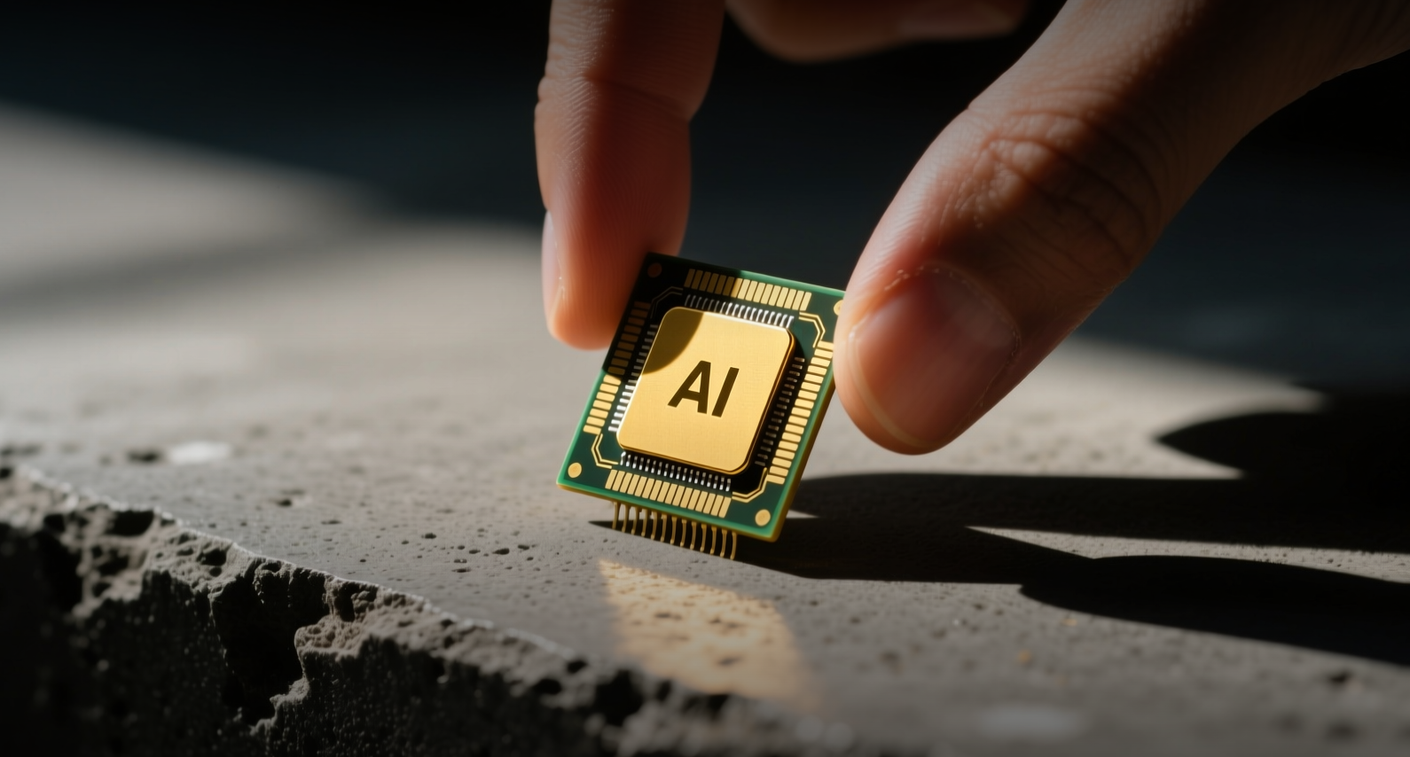
A broad pre-market rally lifted US semiconductor stocks on Thursday, with ARM recovering from an 8% intraday decline to trade 11% higher, as investors rotated back into chipmakers after a $1 trillion sector rout. US semiconductor stocks staged a broad pre-market rebound on Thursday, with ARM surging 11% and Lam Research jumping 12%, as dip buyers returned after the sector shed more than $1 trillion in market value since Friday. "This is a sentiment-driven snapback after an overdone selloff, not a fundamental re-rating," Michael Field, equity strategist at Morningstar, said. "The AI demand thesis hasn't changed — what changed was the price." SanDisk rose 7.66%, Western Digital gained 7.13% and Seagate added 6.72%, while Marvell climbed 5.79%, AMD advanced 5.53% and Micron rose 5.29%. SK Hynix added 4.67%, Intel gained 4.54%, ASML rose 4.35%, TSMC edged up 3.66%, Broadcom added 2.47% and Nvidia rose 2.08%. Qualcomm narrowed its decline to 2.9% after falling as much as 8% earlier. The Philadelphia semiconductor index, which has fallen nearly 20% in the past month, was indicated higher. The rebound comes after two days of heavy selling triggered by disappointing SK Hynix earnings and Meta's $2.40 billion legal charge that weighed on tech sentiment. Microsoft's after-hours beat — Azure revenue accelerated to 43% constant-currency growth — provided a fresh catalyst showing that cloud AI infrastructure spending remains strong despite the sector's recent volatility. **Microsoft's Azure Strength Reaffirms AI Demand** Microsoft reported Azure and other cloud revenue up 43% ex-FX, surpassing estimates of 39.6%, with annual Azure revenue topping $100 billion for the first time. The company guided for around 45% constant-currency growth in the current quarter, accelerating from Q4. Microsoft 365 Copilot now has over 30 million paid seats, and GitHub Copilot reached 50 million users. The results suggest that enterprise AI adoption is still accelerating, even as chip stocks have been hammered by fears that capital expenditure may be peaking. **The $1 Trillion Wipeout and What Changed** Since Friday's close, the world's most valuable semiconductor names have lost a combined $1.3 trillion, per CNBC and FactSet. Nvidia alone shed $238 billion. SK Hynix closed 9.6% lower in Seoul despite record quarterly profit, while Samsung fell more than 5%. The Kospi plunged 16% in two days, triggering back-to-back circuit breakers for the first time since 2000. Charlie Dai, analyst at Forrester, said the selloff was less about weakening AI demand and more a repricing after an exceptionally strong rally. The Philadelphia semiconductor index had risen 92% over 12 months before the pullback. Nvidia, trading at roughly 35x forward earnings, rose 2.08% in pre-market. Morgan Stanley's Joseph Moore maintained his $165 target on the stock, calling the competitive threat from in-house chips "years away from material revenue impact." For investors, the question is whether the sector's 20% drawdown represents a buying opportunity or the start of a deeper correction as AI capex growth decelerates from its current torrid pace. This article is for informational purposes only and does not constitute investment advice.

**Oracle is embedding Google's Gemini AI model into its enterprise applications, a partnership that pits two smaller cloud players against AWS and Microsoft Azure.** Oracle will embed Google's Gemini AI model into its enterprise applications under an expanded partnership announced July 30, giving the two cloud providers a joint weapon against larger rivals Amazon Web Services and Microsoft Azure. The partnership unites two of the 17 companies named to Gartner's 2026 Magic Quadrant for Cloud AI Infrastructure, where Google led all vendors in both execution and vision while Oracle ranked fifth in execution, according to the report. Google's custom-designed TPUs, purpose-built for massive-scale distributed model training and low-latency inference, allow enterprises to achieve greater efficiency for foundation model development, Gartner said. Oracle's OCI Supercluster architecture, featuring ultra-low-latency networking and massive-scale interconnects, provides the infrastructure layer for training foundation models. Google's AI Hypercomputer combines TPUs and GPUs with optimized high-performance networking and storage into an integrated architecture. The combined offering targets enterprises seeking alternatives to AWS, which ranked second in Gartner's quadrant, and Microsoft Azure, which placed third in vision and fourth in execution. **Closing the AI Integration Gap** The partnership addresses a structural weakness for both companies. Oracle's smaller network of prebuilt third-party AI integrations and less extensive community resource base has translated to fewer plug-and-play solutions compared to hyperscalers, according to Gartner's analysis. Google's AI pricing, spanning multiple service layers and consumption options including token-based charges and commitment models, has made total-cost-of-ownership forecasting more difficult for large-scale AI initiatives. By embedding Gemini directly into Oracle's enterprise applications, both companies bypass these limitations. Oracle gains immediate access to one of the most advanced large language model families without the years-long investment required to build comparable capabilities in-house. Google secures a major enterprise distribution channel for Gemini beyond its own Google Cloud customer base. **Competitive Stakes in the Cloud AI Market** The deal reshapes the competitive dynamics of the cloud AI infrastructure market, which Gartner defines as cloud service providers delivering infrastructure optimized for AI workloads including training, inference and servicing. AWS, Google, Microsoft and Oracle all rank as Leaders in the quadrant, but the partnership effectively creates a combined offering that challenges the two largest players. For Oracle, the partnership could accelerate its cloud AI revenue growth as enterprises seek cost-effective AI solutions that drive returns on investment. "AI infrastructure is in high demand for both clients and for partners like ourselves," Sepehr Noorizadeh, president of BizCloud Experts, an AWS Premier partner, said in the Gartner report. "Organizations need the infrastructure and us partners to manage, service and control the infrastructure side." For Alphabet, the deal shows enterprise adoption of Gemini beyond Google Cloud's own customer base, potentially expanding the addressable market for its AI model family. Google has been investing heavily in its AI infrastructure, with its TPU roadmap and AI Hypercomputer architecture positioning it as a leader in both training and inference workloads. The company also offers varied pricing models including consumption, value and commitment-based options. The partnership also puts pressure on AWS and Microsoft to respond. AWS's strength lies in its broad global reach, multi-availability-zone resiliency and deep security capabilities, while Microsoft excels in linking its cloud AI infrastructure with its broader Azure and application environment. Both now face a combined Oracle-Google offering that pairs enterprise software distribution with leading AI models. The expanded partnership is effective immediately, with enterprise applications integrating Gemini expected to roll out in the coming months, according to the companies. Financial terms of the deal were not disclosed. Both Oracle and Alphabet shares could see positive momentum as investors view the partnership as a strategic growth driver for cloud and AI revenues. *This article is for informational purposes only and does not constitute investment advice.*