Edgen AI operates independently of, and is not controlled by Aspen Digital Financial Limited.
Momentum crash wipes 25% from retail-favored stocks in two months
 Edgen Stock·Jul 24 2026, 13:52
Share to
Share to
Copy link



[1] "YOLO"散户反被套!动量因子创四年最大回撤,最热抱团股一个月蒸发25% (https://wallstreetcn.com/articles/3777891 ...)[2] Albertsons shares head for worst day as consumer caution fuels forecast cuts (https://www.msn.com/en-ca/money/topstories/al ...)[3] United States (https://www.aljazeera.com/where/united-states ...)
Related News

Jul 24 2026, 15:42
Uber cuts 10% of customer service roles as AI reshapes workforce
**Uber's latest job cuts show how Silicon Valley is trading human headcount for AI infrastructure, a trend reshaping employment across the technology sector.** Uber is cutting 10% of its customer service staff, joining a growing list of companies restructuring operations to redirect resources toward artificial intelligence infrastructure. "Our organization has become too complex and siloed," Megha Yethatika, Vice President of Global Community Operations at Uber, said in a memo to staff. The department "has made some strides" in using AI, she wrote, "but to unlock this potential, we need an effective organization to layer AI on." The cuts affect Uber's Community Operations team, which handles rider, driver and account support globally. The 10% reduction follows a 23% cut to Uber's human resources division in June, which affected less than 1% of the company's global workforce. Employees who keep their jobs but work remotely are being required to return to hub offices at least three days a week. The restructuring reflects a broader shift across Silicon Valley: companies are reducing headcount not to survive a downturn, but to fund the massive capital expenditure required for AI infrastructure. Gartner analysts have warned that organizations are cutting jobs to afford AI systems, not because those systems are already doing the work. **AI Efficiency vs. Human Cost** CEO Dara Khosrowshahi has framed AI as a tool that creates "employees with superpowers," noting that 10% of Uber's code is now generated by autonomous AI agents. "If every person at this company can increase their throughput by 20%, 30%, 50%, 100%, I think leading headcount growth and leaning in on AI investment is going to be well worth it," Khosrowshahi said. The company is still hiring for more than 500 roles, primarily engineers and staff to support robotaxi partnerships. But the cuts have hit tenured project managers, escalation specialists and junior customer service agents — roles that design the workflows AI chatbots will soon manage. "This isn't how I imagined this chapter would end," Reem Hassan, a project manager at Uber, wrote after the layoffs. **A Template for the Industry** Uber is not alone. Block Inc. and Oracle Corp. have also tied recent job cuts to AI efficiency pushes. Industry analysts at Gartner warn that the pattern may accelerate: companies are cutting jobs to fund the infrastructure buildout, even as the return on those AI investments remains unproven at scale. For investors, the calculus is straightforward. Uber's restructuring could improve margins as AI handles routine customer inquiries at a fraction of the cost of human agents. But the broader implications for American employment are less clear. If every major technology company follows the same playbook, the cumulative effect on customer service jobs — one of the largest employment categories in the US — could be significant. This article is for informational purposes only and does not constitute investment advice.

Jul 24 2026, 15:41
Pakistan pushes to restart US-Iran talks as oil drops 4%
**Pakistan is leveraging its role as a U.S.-Iran mediator to seek $10 billion in American financial support, a diplomatic gambit that sent crude prices sliding more than 4%.** Pakistan is exploring ways to restart diplomatic talks between the United States and Iran, a Reuters report showed, as the South Asian nation seeks to convert its wartime mediation into as much as $10 billion in American financial backing. "Pakistan's push for a reserve facility is geopolitical rent coming after its mediation in the U.S.-Israeli war on Iran," said Adeel Malik, an associate professor at Oxford University. The diplomatic effort helped push Brent crude down more than 4% on expectations that renewed negotiations could ease sanctions and boost oil supply. Pakistan's Finance Minister Muhammad Aurangzeb this week requested a $10 billion U.S. exchange stabilization fund in Washington, plus a separate trade-finance facility with the U.S. EXIM Bank, according to sources with knowledge of the matter. A successful restart of U.S.-Iran talks could unlock Iranian oil exports and lower crude prices, but failure risks escalating regional tensions that have already pushed oil above $100 a barrel. The outcome carries direct implications for energy markets, Gulf state finances, and Pakistan's own fragile external position. **A $10 Billion Ask Backed by Diplomatic Capital** Pakistan helped broker a ceasefire between the U.S. and Iran earlier this year, a role that Islamabad now hopes will translate into economic relief. The country repaid the United Arab Emirates $3.5 billion in April — a fifth of its reserves — and turned to a $3 billion Saudi backstop to plug the gap. Its gross reserves remain thin, and the $7 billion International Monetary Fund program carries politically unpopular conditions including tax increases and spending curbs. The proposed U.S. exchange stabilization fund would provide a "vital cash cushion" for Pakistan's reserves without the IMF's strict conditions or the constant renewal required for Chinese and Saudi deposits, said Gareth Leather of Capital Economics. The EXIM Bank facility would let Pakistani buyers defer payments to U.S. exporters for one to three years, narrowing America's trade deficit with the South Asian country. **China's Stake and Washington's Calculus** China likely would not oppose U.S. help for Pakistan. Beijing wants the country stabilized but does not want to remain its sole backer, said Yun Sun, director of the China Program at the Stimson Center. The Trump administration has also sought a greater role in Pakistan's critical minerals sector, said Uzair Younus, a partner at The Asia Group, adding that any financing could further cement U.S. involvement in potential mining deals. Not everyone in Washington is convinced. Mark Sobel, a former senior Treasury official who is now U.S. chair of the OMFIF think tank, said Treasury should decline any swap line for Pakistan despite the security alliance, calling the country a "permanent ward" of the IMF. Martin Muehleisen, a fellow at the Atlantic Council and former IMF strategy chief, questioned the scale of the request against Pakistan's roughly $138 billion debt pile, calling $10 billion "a different order of magnitude." The last time a Trump ally sought a similar financial shield — Hungary's Viktor Orban in November 2025 — the U.S. did not offer one. Orban's party lost Hungary's election five months later. For energy markets, the stakes are clear. Iran's return to formal oil exports could add 1 million to 1.5 million barrels per day of supply, potentially reversing the supply premium that has kept Brent above $100. For Pakistan, fresh liquidity can buy time but cannot buy growth, as economist Vaqar Ahmed put it — without tax, energy and state-owned-enterprise reforms, the country will keep returning to the IMF. This article is for informational purposes only and does not constitute investment advice.
Jul 24 2026, 15:13
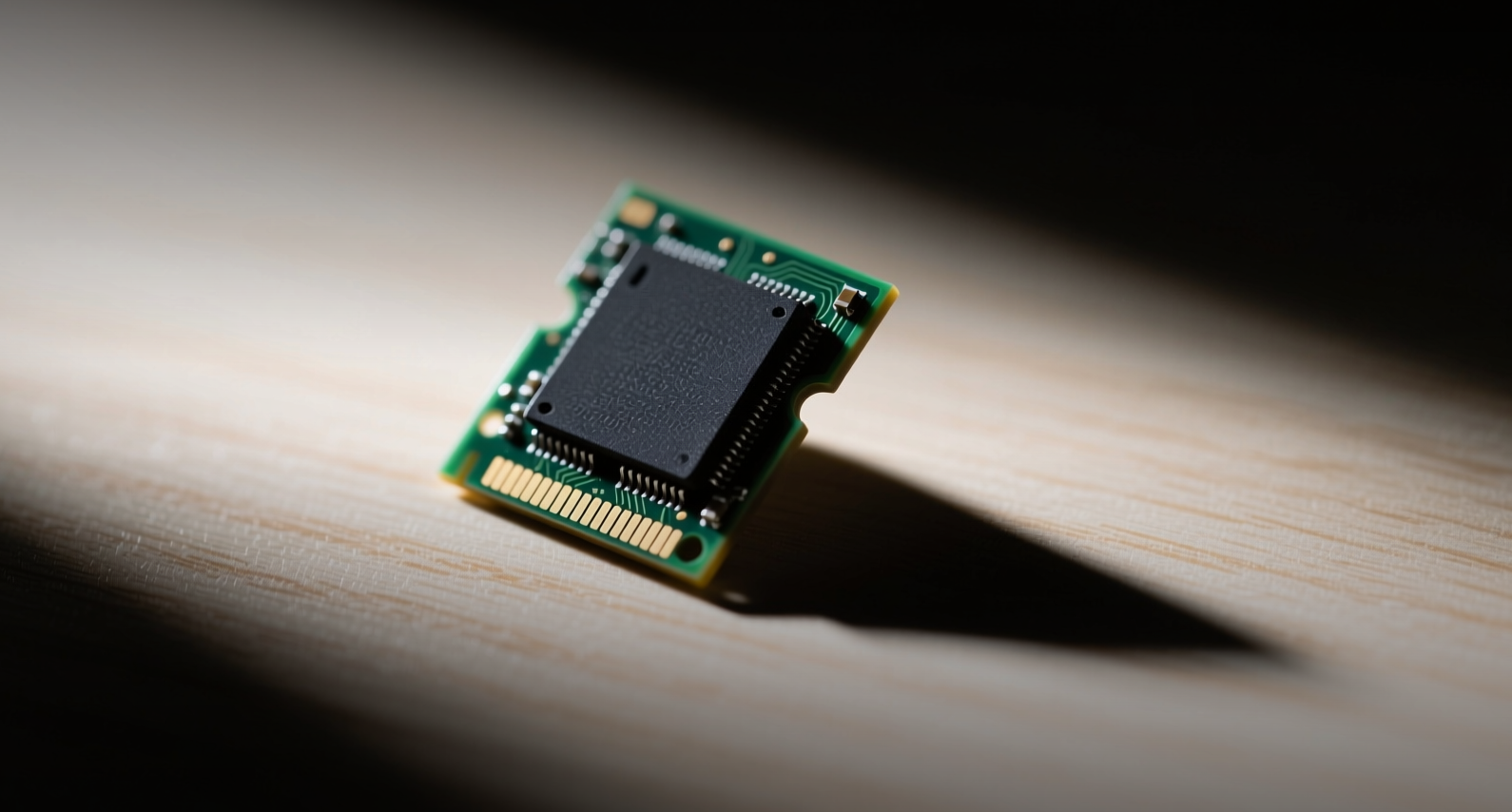
Semiconductor stocks tumble 4.1% as memory chip rout deepens
US semiconductor stocks suffered their worst session in three weeks on Thursday, with the PHLX Semiconductor Index dropping 4.1% as memory chip makers plunged on demand concerns. The selloff was broad-based, with all 30 components of the PHLX index declining. Memory chip stocks were hit hardest: the US memory chip index fell more than 6.4%, with Sandisk dropping 9.4%, Micron Technology falling 6.6%, Western Digital sliding 5.8% and Seagate Technology losing 4.9%, according to market data. Other semiconductor names saw even steeper declines. Credo Technology plunged 10%, Astera Labs fell 9.3%, Coherent dropped 8.8% and Marvell Technology declined 7%. Nvidia, the sector's largest company by market capitalization, fell a relatively modest 0.3%, making it the best performer among major chip stocks on the day. The Nasdaq 100 Index declined 1.2%. Thursday's losses deepen what has become a brutal July for semiconductor stocks. The PHLX Semiconductor Index has now fallen more than 22% this month, after doubling during the first six months of 2026, according to LSEG data. Nineteen large-cap semiconductor and related stocks have posted July declines of at least 25%, led by Sandisk's 40.4% drop, Corning's 39.5% decline and Astera Labs' 37.1% slide. **Memory Chip Rout Accelerates** The memory chip segment has been the epicenter of July's semiconductor selloff. Sandisk, which had surged 471% year-to-date through June, has seen its forward price-to-earnings ratio compress to 6.4 from 13.6 at the end of 2025, as earnings estimates rose faster than the stock price. Micron Technology, up 197% for the year, has fallen 26.5% in July alone. Western Digital has declined 25.3% this month despite a 177% year-to-date gain, per LSEG data. The rotation out of semiconductor stocks comes after a historic first-half rally driven by artificial intelligence spending. The iShares Semiconductor ETF (SOXX) now trades at a forward P/E of 22.8, roughly in line with the S&P 500's forward P/E of 20.3, after trading at a significant premium earlier this year. **What's Driving the Selloff** The broad-based nature of the decline — affecting memory, analog, networking and equipment stocks alike — suggests a sector-wide reassessment rather than company-specific issues. Equipment makers have been particularly hard hit: KLA Corp fell 29.5% in July, Lam Research dropped 27.7% and Applied Materials declined 26.7%, according to LSEG data. These companies, which supply the tools used to manufacture chips, are often viewed as bellwethers for future production demand. Intel, which has surged 158% year-to-date after optimism about its foundry business, has fallen 31.9% in July. The company is scheduled to report earnings Thursday after the closing bell, with options pricing implying a potential 12% swing in either direction. **Investment Impact** For investors, the semiconductor selloff presents a valuation question. After doubling in the first half of 2026, the sector's forward multiples have compressed sharply — but earnings estimates have also been rising, creating a moving target. The divergence between Nvidia's 0.3% decline on Thursday and the 7% to 10% drops across memory and networking chipmakers suggests capital is rotating within the sector rather than abandoning it entirely. *This article is for informational purposes only and does not constitute investment advice.*