Edgen AI operates independently of, and is not controlled by Aspen Digital Financial Limited.
Meta slides 4.94% to $1.60 trillion as tech selloff deepens
 Edgen Stock·Jul 17 2026, 15:25
Share to
Share to
Copy link


[1] Coreweave Down 35% . This Analyst Reiterated His $250 Target Even After ‘Meta Co... (https://finance.yahoo.com/markets/stocks/arti ...)[2] Why Is Semtech (SMTC) Stock Rocketing Higher Today (https://finance.yahoo.com/markets/stocks/arti ...)[3] Stocks Set to Open Lower as SK Hynix Sparks Chip Selloff, U.S. Inflation Data... (https://finance.yahoo.com/markets/stocks/arti ...)[4] Here Are Thursday’s Top Wall Street Analyst Research Calls: Alphabet, BlackRock,... (https://finance.yahoo.com/markets/stocks/arti ...)
Related News
Jul 17 2026, 16:33
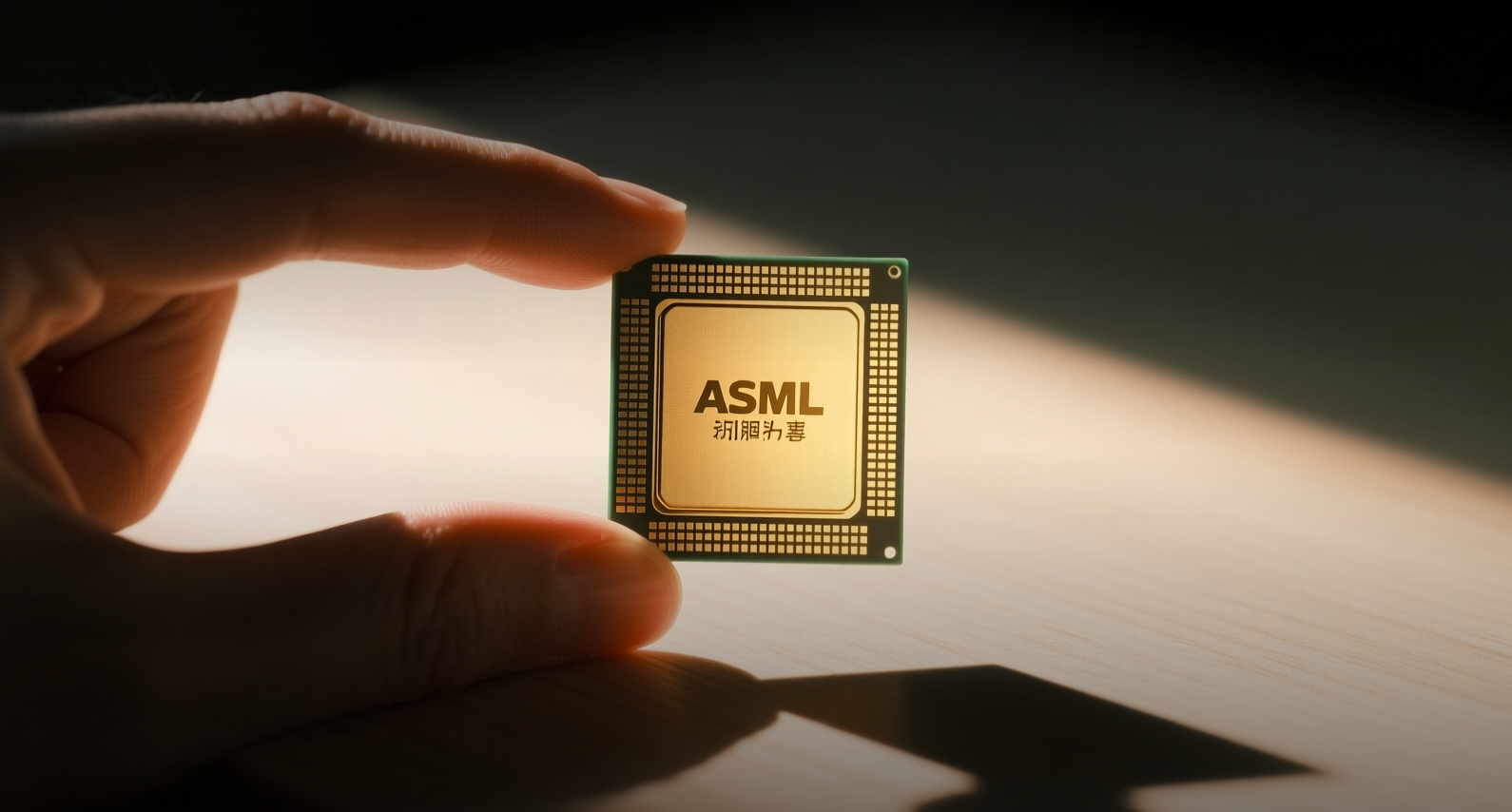
ASML awards €20,000 bonus to every employee as AI demand surges
**The AI chip boom is now flowing directly into workers' paychecks across the semiconductor supply chain, with ASML becoming the latest equipment maker to share record profits with staff.** ASML Holding will grant all 45,000 employees globally a one-time €20,000 ($22,862) share award, the company confirmed Friday, as surging demand for its chipmaking machines drives the Dutch company to its highest-ever sales. The award, granted Jan. 1, 2027, vests by early 2030 for staff who remain with the company through the entire period, according to a person familiar with the matter. "This reflects the extraordinary year we're having and the commitment of our people to deliver for customers," a company spokesperson said, confirming the payout. The bonus comes as ASML raised its 2026 revenue forecast for the second time this year to between €43 billion and €45 billion, after reporting second-quarter net sales of €9.33 billion — beating the €8.80 billion consensus estimate. Net income reached €2.92 billion, ahead of the €2.62 billion analyst forecast, while gross margin hit 54%, above the company's own 51% to 52% guidance. The company sold 86 new lithography systems in the quarter, up from 67 in the first quarter. ASML joins a wave of AI-boom payouts sweeping the chip industry. Samsung Electronics offered average bonuses of $340,000 to chip division workers after record profits. SK Hynix made similar awards. Taiwan Semiconductor Manufacturing Co. committed to boosting profit-sharing by more than 30% on average this year. South Korea's deputy prime minister warned in May that AI-driven labor conflicts will keep arising as "super-large companies" emerge from the infrastructure buildout. **The retention calculus behind the award** The €900 million total award doubles as a retention tool for the engineers who build the most complex machines in the semiconductor supply chain. ASML is in the middle of a restructuring that cuts management layers while simultaneously needing to hire and retain the technical talent required to execute its most aggressive capacity expansion in company history. ASML plans to expand EUV and DUV production capacity by 30% annually for 2027, with a further 30% increase under investigation for 2028. The company is cutting EUV machine build time by a third and is nearly sold out through 2028, according to its Q2 earnings statement. As the sole manufacturer of extreme ultraviolet lithography machines, every advanced chip from TSMC, Samsung, and Intel depends on ASML's equipment — giving the company pricing power and order visibility that extends years into the future. The 2030 vesting date locks employees in for nearly four years, covering the period of ASML's most aggressive capacity ramp. At roughly €900 million in total value, it is one of the largest single employee payouts in European tech history. **What this means for the AI chip investment cycle** The bonus wave signals that the AI infrastructure super-cycle is generating cash flows large enough to reach employees across the supply chain — from South Korean memory makers to Dutch lithography specialists. For investors, the question is whether these payouts are a one-time profit-sharing event or the start of structurally higher labor costs in an industry that has long relied on lean workforces. ASML shares have gained roughly 66% year to date, reflecting a market consensus that the company occupies a structurally irreplaceable position. The company trades at approximately 35x forward earnings, a premium that analysts at JPMorgan have called justified given the multi-year visibility into demand. ASML will update its longer-term financial outlook at its next Capital Markets Day, scheduled for June 10, 2027. This article is for informational purposes only and does not constitute investment advice.

Jul 17 2026, 16:33
US-Iran tensions push crude above $81 as tanker deployment escalates conflict
**The US military escalation against Iran is driving a cross-asset repricing, with crude surging past $81 and bond markets pricing in heightened geopolitical risk.** The US deployed more than 20 aerial refueling tankers to Israel as American airstrikes hit Iran's Bushehr and Bandar Abbas, pushing WTI crude above $81 a barrel and sending Treasury yields to session highs. "The real danger is not necessarily all-out war but a thousand small escalations that hollow out Iraq's sovereignty," said Inna Rudolf, senior fellow at the Centre for Statecraft & National Security at King's College London, warning that Iran-aligned factions could strike from Iraqi soil and invite reprisals. WTI crude rose 0.6% to $81.32 a barrel within five minutes of the deployment news, while Brent climbed to $87.31. US Treasury yields hit fresh session highs as investors rotated out of government bonds on inflation concerns tied to rising energy costs. The escalation follows the collapse of a fragile US-Iran ceasefire on July 8, with American strikes now targeting Iran's southern coastline. An airstrike on Bushehr injured at least one person, according to Governor Mohammad Mozaffari, while separate strikes damaged power lines in Bandar Abbas, a key hub for the Islamic Revolutionary Guard Corps navy. Explosions were also reported in Kuwait, according to Iran's Fars news agency. The Strait of Hormuz handles about 21% of global oil trade, and any supply disruption could push crude prices significantly higher, reigniting inflationary pressures that complicate central bank policy. Market pricing reflects a decreased likelihood of the next US-Iran peace meeting occurring by Sept. 30, according to prediction markets, while the probability of a formal US war declaration by year-end has edged higher. ## Oil Risk Premium Widens as Supply Routes Face Threat The last time US-Iran tensions escalated to this level, in early 2020 after the killing of Qasem Soleimani, WTI spiked above $65 before retreating within weeks as diplomatic channels held. This time, the collapse of a formal ceasefire on July 8 and the deployment of US tanker aircraft to Israel suggest a more sustained confrontation. Iran's retaliatory capacity includes the ability to target US military bases across Iraq and the Gulf, as well as commercial shipping through the Strait of Hormuz, a chokepoint that carries about 21% of global oil consumption. Iraq, which hosts fewer than 2,000 US troops scheduled to withdraw by Sept. 30, is caught between its security relationship with Washington and deep political, religious and economic ties to Tehran. Kataib Hezbollah, one of the largest Iran-aligned militias within Iraq's Popular Mobilisation Forces, has signaled it would fight alongside Iran if the conflict widens, according to a statement carried by Iran's Fars news agency. Baghdad's balancing act has become increasingly difficult as Prime Minister Ali al-Zaidi's recent Washington visit combined economic cooperation talks with US demands to disarm Iran-backed armed groups. ## Bond Market Reprices as Inflation Fears Resurface US Treasury yields rose across the curve as investors weighed the inflationary impact of sustained energy price increases. The last time oil breached $80 on geopolitical risk, the 10-year yield moved 15 basis points higher over two weeks as inflation expectations repriced. A prolonged conflict could disrupt global oil supply chains, adding to cost pressures that have already kept the Federal Reserve cautious on rate cuts. Defense sector stocks have also drawn investor attention as governments in the region reassess military spending priorities. This article is for informational purposes only and does not constitute investment advice.

Jul 17 2026, 16:30
SFNC misses Q2 estimates by 5.7% as revenue trails consensus
SFNC posted Q2 EPS of $0.50, missing the $0.53 consensus, as revenue fell to $251.6 million. The company did not provide executive commentary with the release. Simmons First National, a regional bank holding company listed on the Nasdaq, has faced pressure from higher funding costs compressing net interest margins across the sector. | Metric | Actual | Consensus | Miss | |--------|--------|-----------|------| | Revenue | $251.6M | $256.3M | -1.8% | | EPS | $0.50 | $0.53 | -5.7% | The revenue shortfall of $4.7 million and the EPS miss of 3 cents per share come as regional banks contend with elevated deposit costs as the rate environment shifts. The Federal Reserve's rate path remains a key variable for net interest income across the sector. Regional banks have been particularly sensitive to deposit competition, with many institutions raising rates on savings accounts to retain customer funds. The KBW Regional Banking Index has declined this year as investors weigh the impact of persistent inflation on the rate outlook. Smaller lenders like Simmons First National, with a footprint primarily in Arkansas and surrounding states, face additional pressure from slower loan growth in their core markets compared with larger national competitors. The company's net interest margin, a key profitability metric for banks, has been under pressure as the cost of deposits rises faster than yields on loans. Peer regional banks such as Bank OZK and Home BancShares, also based in the region, have reported similar margin compression in recent quarters. The Q2 results mark a continuation of the earnings challenges for SFNC. The company did not disclose updated guidance for the remainder of the fiscal year. Investors will be watching for any commentary on expense management and credit quality trends when the company holds its earnings call. Shares of SFNC will face selling pressure when trading opens. The company's next catalyst will be its Q3 earnings report, where investors will look for signs of margin stabilization and loan growth. The regional banking sector continues to face an uncertain rate outlook, with the Fed's next policy decision expected in September. This article is for informational purposes only and does not constitute investment advice.