Edgen AI operates independently of, and is not controlled by Aspen Digital Financial Limited.
Lucid Group hit with securities class action after 29-day supplier disruption
 Edgen Stock·Jul 22 2026, 17:03
Share to
Share to
Copy link


[1] Bronstein, Gewirtz & Grossman LLC Urges Lucid Group, Inc. Investors to Act: Class Action Filed Alleging Investor Harm (https://www.globenewswire.com/news-release/20 ...)[2] Levi & Korsinsky Reminds Lucid Group, Inc. Investors of the Pending Class Action Lawsuit With a Lead Plaintiff Deadline of July 28, 2026 - LCID (https://www.lelezard.com/en/news-22306406.htm ...)[3] Pomerantz Law Firm Announces the Filing of a Class Action Against Lucid Group, Inc . and ... (https://www.reflector.com/news/national/pomer ...)[4] Earnings Announcements (https://www.baystreet.ca/articles/earnings_ne ...)[5] Lucid Group, Inc. (LCID) Shareholders Who Lost Money Have Opportunity to Lead Securities Fraud Lawsuit - PR Newswire (https://www.prnewswire.com/news-releases/luci ...)
Related News
Jul 22 2026, 18:41
AI earnings grow 26% to 31% as Citi CIO urges staying invested
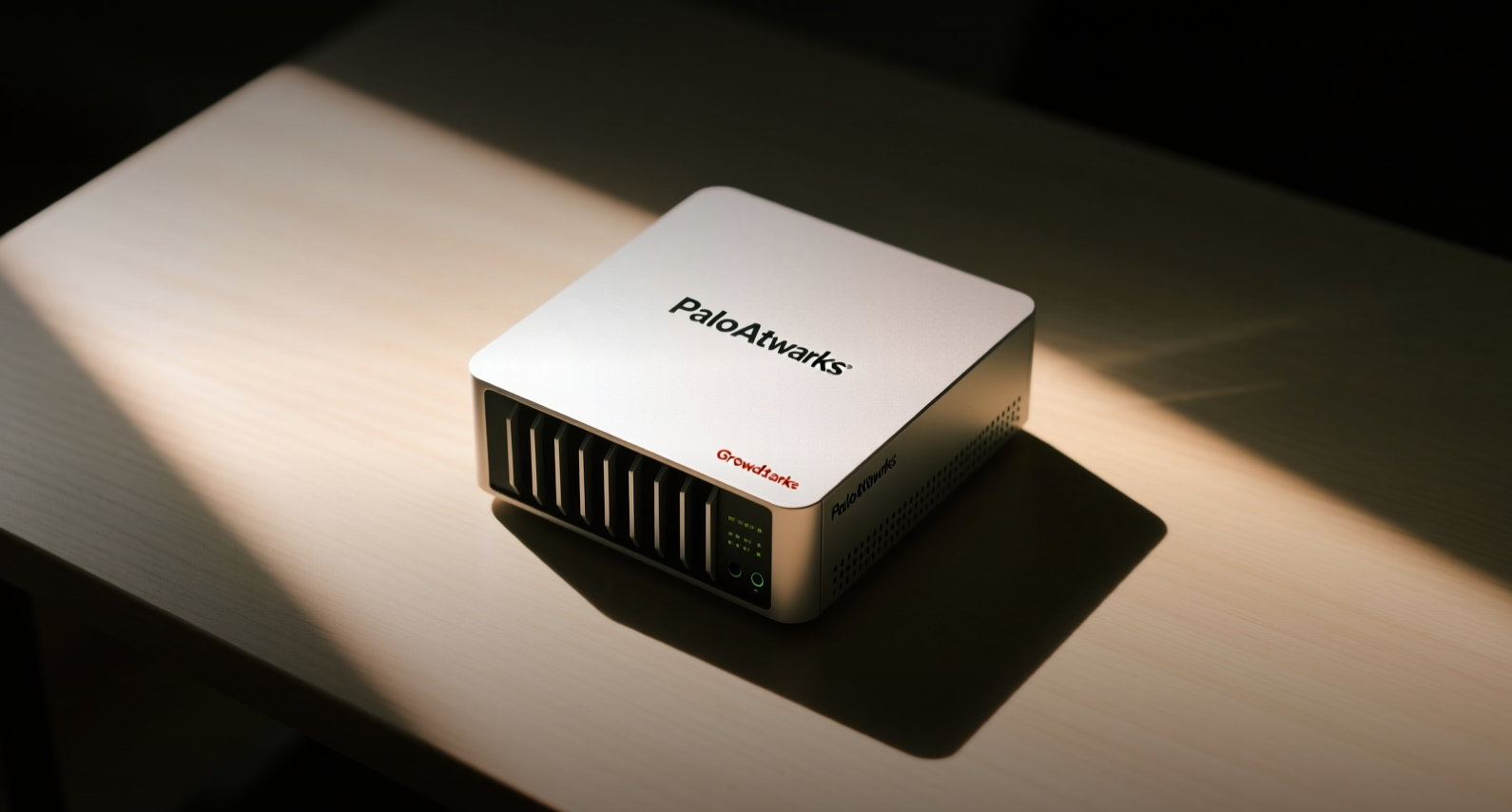
**AI stocks pulled back this spring, but earnings from CrowdStrike and Palo Alto Networks show the bull case remains intact.** The selloff in AI stocks this spring erased months of gains, but earnings from CrowdStrike and Palo Alto Networks — showing revenue growth of 26% and 31% — argue the pullback was a valuation reset rather than a demand problem. "We are definitely game on. Yes, fully invested," Kate Moore, chief investment officer at Citi Wealth, said on CNBC on July 21. "Earnings have been powering the equity market higher. It's not been multiples. In fact, there's been multiple contractions across every major market." Palo Alto Networks' next-generation security annual recurring revenue surged 60% year over year, while CrowdStrike posted 26% revenue growth. Core PCE reached 130.08 in May, up 0.3% month over month, and real GDP registered at 2.1% annualized as of Q4 2025. Moore noted that pullback windows in spring 2026 lasted only days, leaving cash-heavy investors with shrinking opportunities to buy at lower prices. "These drawdowns are going to be short," she said. The AI investment thesis now hinges on whether megacap earnings can justify the sector's valuation. With nearly 88% of reporting S&P 500 companies beating estimates this earnings season, according to Apex Securities, the next test comes from Alphabet and Tesla, whose results will either confirm the demand narrative or reopen the capital expenditure debate. **'Infinite AI Agents' Reshape the Cybersecurity Market** Moore's second argument for staying invested centers on cybersecurity. "We're not talking about a single kind of cyber attack or a series of people that could be engaging in it, but almost infinite AI agents across a huge attack surface," she said, arguing that enterprise security budgets remain dangerously underfunded relative to the threat. CrowdStrike and Palo Alto are direct beneficiaries: both companies reported accelerating demand as enterprises upgrade legacy defenses against AI-powered attacks. The cybersecurity market's share of enterprise technology spending is still too small, Moore argued, even as AI-generated threats multiply at an accelerating pace. **What Earnings Say About AI Infrastructure Demand** The 26% and 31% revenue growth rates from two of the largest cybersecurity firms offer a proxy for broader AI infrastructure spending. Palo Alto's 60% surge in next-gen security ARR suggests enterprises are prioritizing AI-native security platforms over traditional firewall solutions. For investors, the question is whether this demand can sustain the sector's elevated multiples. Nvidia, the bellwether for AI chip demand, reports next quarter, and its data center revenue will provide the clearest signal yet on whether the spring pullback was a buying opportunity or a warning. CrowdStrike and Palo Alto shares have recovered most of their spring losses, but the sector still trades below February highs. If Alphabet and Tesla deliver strong results this week, it could trigger a broader rotation back into AI names. If they disappoint, the pullback could deepen. Either way, Moore's message is clear: sitting in cash is the riskier bet for investors who believe the AI demand story is still in its early innings. This article is for informational purposes only and does not constitute investment advice.

Jul 22 2026, 18:39
GSK's Jideytro wins FDA approval for 44% response rate in NSCLC
The FDA approved GSK's Jideytro (zidesamtinib) for ROS1-positive non-small cell lung cancer patients who received a prior ROS1 inhibitor, the company said Wednesday. "The responses observed in ARROS-1, including in heavily pre-treated patients, represent meaningful progress for people living with this disease," Alexander Drilon, chief of the early drug development service at Memorial Sloan Kettering Cancer Center and ARROS-1 trial investigator, said. The approval was based on 117 patients from the global single-arm ARROS-1 phase I/II trial. The objective response rate was 44 percent, with 82 percent of responders maintaining response at six months and 69 percent at 12 months. Among patients with brain metastases, the intracranial response rate was 48 percent, including 20 percent achieving complete responses. The most common adverse reactions included edema, peripheral neuropathy, constipation, fatigue and dyspnea. The approval came ahead of the Sept. 18 target action date and marks GSK's first approved lung cancer medicine. Jideytro was part of the portfolio from GSK's recently completed acquisition of Nuvalent Inc., which also yielded neladalkib for ALK-altered NSCLC — now under FDA review with a Nov. 27 decision date — and NVL-330 for HER2-altered NSCLC. Zidesamtinib was designed as a next-generation ROS1-selective inhibitor to address resistance mutations such as G2032R and penetrate the blood-brain barrier while avoiding off-target TRK-related central nervous system side effects, according to GSK. About 50,000 people worldwide are diagnosed annually with ROS1-positive NSCLC, often non-smokers in their 40s and 50s who may stay on treatment for several years. The approval gives GSK a foothold in lung cancer, the largest oncology market, and validates its Nuvalent acquisition. Investors will watch for neladalkib's FDA decision in November and the ongoing ARROS-1 expansion into first-line treatment. This article is for informational purposes only and does not constitute investment advice.

Jul 22 2026, 18:23
Fed Chair Warsh's July 29 press conference to test 88% rate-hold consensus
**The Federal Reserve's July 29 decision will test whether Chair Kevin Warsh breaks with a market pricing 88% odds of a hold.** The Federal Reserve faces its most consequential policy communication in months on July 29, when Chair Kevin Warsh delivers the post-FOMC press conference at 02:30 ET with markets pricing an 88% probability of a hold. "Markets are pricing a near-certain hold, but the risk is that Warsh delivers a hawkish surprise given the inflation impulse from higher energy costs," said Tony Sycamore, market analyst at IG. "The combination of gold above $4,100 and elevated volatility suggests investors are bracing for a more cautious tone." The July 28-29 FOMC meeting comes as gold trades at $4,119.54 an ounce, up 1% on the day, while silver climbed 1.9% to $59.93. The precious metals rally reflects safe-haven demand amid escalating Middle East tensions, including fresh military exchanges near the Strait of Hormuz and Houthi threats against Red Sea shipping. Higher oil prices have reinforced inflation expectations, potentially limiting the Fed's ability to signal future easing. OIS markets assign just a 12.2% probability of a 25-basis-point hike, according to data compiled from market expectations. The stakes are unusually high because the Fed must navigate conflicting signals: a resilient economy that argues against rate cuts, and geopolitical shocks that could either suppress growth or fuel inflation — or both. The last time the Fed faced a comparable energy-supply shock was in 2022, when the Russia-Ukraine war pushed Brent above $130 and the central bank responded with 75-basis-point hikes. If Warsh signals a prolonged hold, the dollar could strengthen further, putting additional pressure on emerging-market currencies and commodities priced in the greenback. The next FOMC meeting after July is scheduled for September, giving markets a six-week window to digest whatever signal Warsh delivers. The press conference format itself carries significance. Warsh, who succeeded Jerome Powell as Fed chair, has used previous appearances to recalibrate market expectations through carefully chosen language. His July 29 remarks will be parsed for any shift in the Fed's assessment of the dual mandate — particularly whether the recent spike in energy-driven inflation is viewed as transitory or persistent. **Gold's Rally Complicates the Fed's Messaging** The surge in precious metals underscores the tension in the Fed's position. Spot gold has climbed above $4,100, with Sycamore noting that a sustained move above technical resistance at $4,120 could pave the way for a recovery toward the 200-day moving average near $4,494. Silver extended gains after surging more than 4% in the prior session. The rally in haven assets suggests investors doubt the Fed can ease policy anytime soon, even as growth concerns mount. A stronger dollar and higher Treasury yields have failed to dent bullion's appeal — a sign that geopolitical risk premiums are overwhelming traditional rate-differential logic. **What Markets Are Watching** Beyond the rate decision itself, traders will focus on three elements of Warsh's communication: the statement's characterization of inflation, any reference to the Middle East conflict's economic impact, and the implied rate path for 2027. The CME FedWatch tool shows the next meaningful probability of a cut emerging only in the September meeting, contingent on how inflation data evolves through August. This article is for informational purposes only and does not constitute investment advice.