Edgen AI operates independently of, and is not controlled by Aspen Digital Financial Limited.
Jim Cramer calls biotech hottest group as $19.8B Lilly revenue leads M&A wave
 Edgen Stock·Jul 09 2026, 16:02
Share to
Share to
Copy link



[1] Jim Cramer Says Biotech is The Hottest Group in The Market Right Now (https://247wallst.com/investing/2026/07/09/ji ...)[2] Jim Cramer Calls Biotech “The Hottest Group in the Market” as He Predicts “Deals... (https://finance.yahoo.com/healthcare/articles ...)[3] Jim Cramer says biotech is the hottest group in the market right now (https://www.msn.com/en-us/money/markets/jim-c ...)[4] Jim Cramer sees a big risk to the bull market resurfacing — and it's not the Iran war (https://www.cnbc.com/2026/07/08/jim-cramer-ri ...)[5] Thursday, July 9, 2026: Cramer says the Club needs to be invested in fewer chip stocks (https://www.cnbc.com/video/2026/07/09/thursda ...)
Related News

Jul 17 2026, 20:10
uniQure sharpens gene therapy focus as AMT-130 targets 2026 FDA filing
**uniQure is reshaping its gene therapy strategy around a faster regulatory path for AMT-130, its Huntington's disease candidate, while narrowing its operating model to pure research and development.** uniQure's AMT-130 gene therapy for Huntington's disease could reach the FDA by the third quarter of 2026 after the agency accepted three-year Phase I/II data as the primary basis for an accelerated approval filing, the company said after a recent Type B meeting. "The FDA's feedback gives us a clearer regulatory path for AMT-130," Matt Kapusta, chief executive officer of uniQure, said. The agency indicated that three-year data from the Phase I/II study could support a biologics license application seeking accelerated approval, though alignment on the confirmatory trial design remains outstanding. The company reported a cash runway extending into the second half of 2029, providing financial flexibility through the regulatory process. Beyond Huntington's, uniQure's pipeline includes AMT-260 for refractory mesial temporal lobe epilepsy, where three of six patients in the first low-dose cohort achieved 79 percent to 100 percent reductions in disabling seizures during months four through six. AMT-191 for Fabry disease showed sustained increases in alpha-galactosidase A enzyme activity and stable Lyso-Gb3 levels, with all 11 dosed patients having discontinued enzyme replacement therapy as of February 18. **Regulatory Path Takes Center Stage** AMT-130 has received Regenerative Medicine Advanced Therapy, Breakthrough Therapy and Fast Track designations from the FDA, reflecting the high unmet need in Huntington's disease, a condition with no approved disease-modifying treatments. The therapy uses uniQure's miQURE gene-silencing platform, employing a microRNA designed to silence the huntingtin gene and the potentially toxic exon 1 protein fragment. The FDA has favored a concurrent standard-of-care control group rather than a sham-controlled trial for the confirmatory study, a detail that shapes the design costs and timeline. uniQure plans to complete regulatory alignment before its targeted third-quarter 2026 submission. PTC Therapeutics, whose PTC518 program has received Fast Track designation for Huntington's disease, and Wave Life Sciences give investors additional reference points in the space. Their presence underscores the competitive landscape uniQure faces as it advances AMT-130 through the regulatory process. **A Leaner Operating Model** uniQure is also simplifying its business structure. After selling its commercial manufacturing business to Genezen in 2024, the company moved in 2026 to transfer HEMGENIX manufacturing responsibilities directly to Genezen. The remaining HEMGENIX supply and minimum purchase commitments are expected to end after delivery of specified batches, with no impact on future royalties or milestone payments from CSL Behring. The result is a more focused research-and-development organization. Sarepta Therapeutics, which has a rare neuromuscular portfolio including gene therapy and exon-skipping treatments in Duchenne muscular dystrophy, shows why execution remains central for genetic medicine companies. **What This Means for Investors** QURE shares have rallied on the clearer regulatory outlook, but the stock's valuation now reflects a higher probability of AMT-130 success. The confirmatory trial design discussions with the FDA will be the next major catalyst, and any delays or design complications could pressure the stock. The pipeline beyond Huntington's — AMT-260 in epilepsy and AMT-191 in Fabry disease — provides optionality but remains early-stage. With cash runway through 2029, uniQure has time to execute, but the next 12 months of regulatory alignment will determine whether the current valuation is justified. This article is for informational purposes only and does not constitute investment advice.

Jul 17 2026, 19:44
Air taxi stocks sink 40% to 62% as eVTOL sector faces reality check
**The three largest publicly traded air taxi companies have lost more than $7 billion in combined market value this year as investors reassess the timeline for commercial electric vertical takeoff and landing operations.** Joby Aviation, Archer Aviation and EHang Holdings have each fallen 40% to 62% year to date through July 17, wiping out more than $7 billion in combined market value. "The market is repricing the entire eVTOL cohort as the gap between certification milestones and revenue generation becomes harder to ignore," said Sarah Lin, equity analyst at a New York-based research firm. Joby shares are down 45% to about $7.25, giving the company a $7.2 billion market capitalization. Archer has lost 40%, valuing the company at $3.47 billion. EHang, the smallest of the three, has tumbled 62% to a $288 million market cap. Over the past month alone, Joby fell 22%, Archer dropped 16% and EHang slid 28%. None of the three companies are profitable on a trailing 12-month basis, and all are burning cash to fund flight testing, regulatory certification and manufacturing scale-up. The sector's ability to raise additional capital without further diluting existing shareholders will depend on whether Joby launches passenger service in Dubai as planned and whether Archer begins U.S. commercial operations later this year. **Financial Reality Sets In** The numbers behind the selloff paint a stark picture. Joby reported a fourth-quarter 2025 operating loss of $206.8 million on research and development spending of $161.3 million. The company guided for fiscal 2026 revenue of $105 million to $115 million — a fraction of its operating costs. Archer's first-quarter 2026 net loss widened to $217.7 million from $93.4 million a year earlier, on revenue of just $1.6 million. EHang delivered only four EH216 aircraft in the first quarter, down from 66 in the prior quarter, and revenue collapsed to $3.8 million against a consensus estimate of $133 million. **Cash Positions Diverge** Joby ended 2025 with $1.41 billion in cash and added roughly $1.2 billion through equity and convertible debt in February, giving it the strongest balance sheet in the group. Archer holds about $1.8 billion in liquidity and became the first eVTOL company to close Phase 3 of the Federal Aviation Administration's four-phase type certification process. EHang, by contrast, had just $23.7 million in cash and equivalents, though its board approved a $30 million buyback in June. **What Comes Next** Sell-side analysts still see a median price target of $11.01 for Joby, implying 52% upside from current levels, with a split of three buys, five holds and three sells. Archer's partnerships with Nvidia, Palantir Technologies and Anduril, along with its role as the official air taxi provider for the 2028 Los Angeles Olympics, provide a pipeline of potential catalysts. EHang holds the world's first full suite of airworthiness certifications for a pilotless human-carrying eVTOL and has expanded test flights to Thailand, Mexico and Rwanda. Whether the group recovers depends on three milestones: Joby's Dubai launch, Archer's U.S. commercial operations and EHang's ability to deliver on its back-loaded 2026 schedule. Each quarter of delay risks further compression of equity valuations and additional dilution for existing shareholders. This article is for informational purposes only and does not constitute investment advice.
Jul 17 2026, 19:41
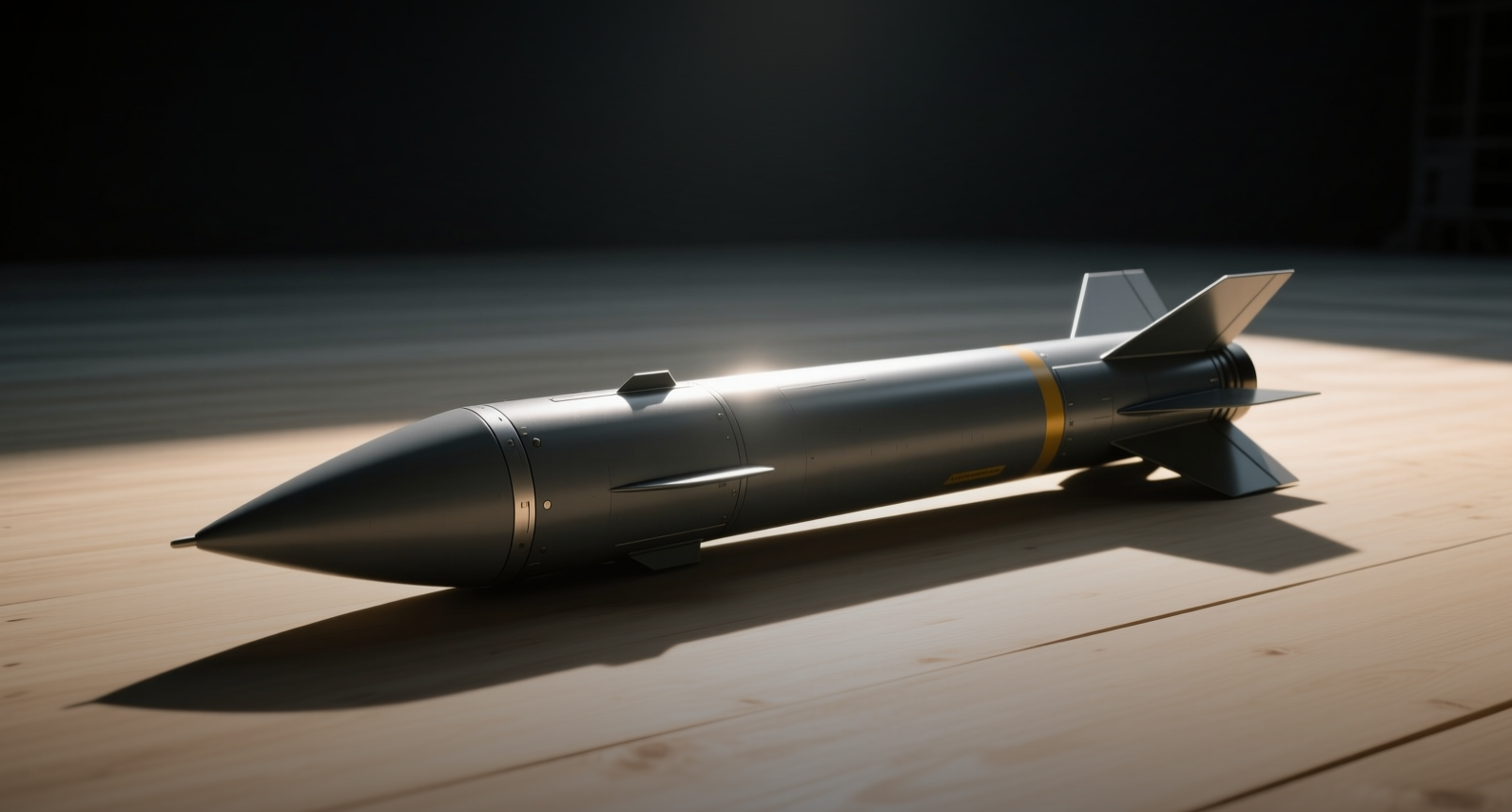
Lockheed Martin boosts missile output as Pentagon orders 28,000 cruise missiles
**The Pentagon's $12.6 billion plan to acquire 28,000 low-cost cruise missiles is driving the largest expansion of Lockheed Martin's missile production capacity in a decade.** Lockheed Martin Corp. is expanding missile production under new U.S. agreements as the Pentagon's $12.6 billion push to buy 28,000 low-cost cruise missiles drives the biggest ramp-up in defense manufacturing since the Cold War. "This is a structural shift in how the Pentagon thinks about munitions — moving from precision scarcity to volume dominance," said Byron Callan, managing director at Capital Alpha Partners. "The demand signal is multi-year and backed by hard contracts." The Bethesda, Maryland-based contractor secured $13 billion in contracts on Wednesday, including $10.5 billion for U.S. Special Operations Command logistics support through Aug. 10, 2038, $1.6 billion for F-35 spare parts over seven years, and $439 million for ATACMS guided missile systems funded by Taiwan with completion by Feb. 28, 2031. The U.S. Air Force also increased production of stealthy cruise anti-ship missiles as part of the broader procurement push, according to a separate Pentagon announcement. The production expansion gives Lockheed Martin multi-year revenue visibility at a time when global defense spending is rising. NATO allies have pledged to increase defense budgets to 2% of GDP, while U.S. defense outlays are projected at $886 billion for fiscal 2026, creating sustained demand for air and missile defense systems that could support Lockheed Martin's top line for the rest of the decade. The contracts span Lockheed Martin's three main business segments — missiles and fire control, aeronautics, and space — providing diversification against program-specific risks. The SOCOM logistics contract alone, valued at $10.5 billion over 12 years, represents one of the largest support contracts awarded this year and will require the company to maintain operations at multiple domestic and international locations. **Pentagon's Volume Strategy Reshapes Munitions Procurement** The $12.6 billion investment in 28,000 cruise missiles marks a departure from the Pentagon's traditional focus on high-cost, low-volume precision munitions. Each missile is designed to cost well under $1 million, a fraction of the price of systems like the Tomahawk cruise missile, which carries a unit cost of roughly $2 million. The strategy aims to overwhelm enemy air defenses through mass, a doctrine shift informed by the war in Ukraine, where both sides have expended thousands of missiles at rates not seen since World War II. The approach mirrors the Pentagon's shift toward "affordable mass" outlined in its 2022 National Defense Strategy. Lockheed Martin's ATACMS contract, funded by Taiwan, underscores the geopolitical drivers behind the ramp-up. The Army Tactical Missile System can strike targets beyond the range of existing Army cannons, rockets and other missiles, according to the company's published specifications. The Taiwan-funded portion, with a Feb. 28, 2031 completion date, reflects the island's efforts to bolster deterrence amid rising cross-strait tensions. China has ramped up military activities around Taiwan in recent years, conducting multiple rounds of large-scale exercises that have drawn U.S. condemnation and accelerated allied defense planning in the Indo-Pacific. **Defense Sector Outlook Points to Sustained Growth** The last time the U.S. undertook a munitions buildup of this scale was during the Reagan-era expansion of the 1980s, when annual defense spending exceeded 6% of GDP. Current spending at roughly 3.2% of GDP suggests room for further increases, particularly as the Pentagon prioritizes munitions stockpiles over new platform programs. The Congressional Budget Office projects defense spending could reach $1 trillion by 2030 under current law. For Lockheed Martin, the contracts provide a buffer against potential cuts to major programs like the F-35, which faces ongoing technical challenges and budget scrutiny. The F-35 spare parts contract, valued at $1.6 billion over seven years, ensures continued revenue from the existing fleet even as new procurement slows. The defense sector has outperformed the broader market this year, with the S&P 500 Aerospace & Defense index rising 18% year to date as geopolitical risk premiums widen. Lockheed Martin shares have gained 12% in 2026, tracking the broader defense rally, while the S&P 500 has returned about 8% over the same period. The iShares U.S. Aerospace & Defense ETF has attracted $2.3 billion in net inflows this year, reflecting investor appetite for defense exposure. This article is for informational purposes only and does not constitute investment advice.