Edgen AI operates independently of, and is not controlled by Aspen Digital Financial Limited.
Gold slips below $4,300 as TD Securities sees $5,000 next leg
 Edgen Stock·Sep 23 2026, 20:02
Share to
Share to
Copy link

[1] Gold's bull run isn't over: TD Securities sees next leg above $5,000 (https://www.kitco.com/news/article/2026-09-23 ...)[2] Gold falls towards $4,300 but this factor is stopping a deeper selloff (https://invezz.com/news/2026/09/23/gold-falls ...)[3] Gold falls back to the major $4,300 support ahead of key US data as traders await new US-Iran developments (https://investinglive.com/commodities/gold-fa ...)[4] Gold survived a Fed hike and falling oil: why can't it break above $4,400? (https://invezz.com/news/2026/09/21/gold-survi ...)[5] Gold price claws back toward $4,400 after dodging a deeper technical breakdown - what's next? (https://investinglive.com/commodities/gold-pr ...)
Related News
Sep 23 2026, 20:55
Dow falls 352 points as 10-year Treasury yield tops 5.1%
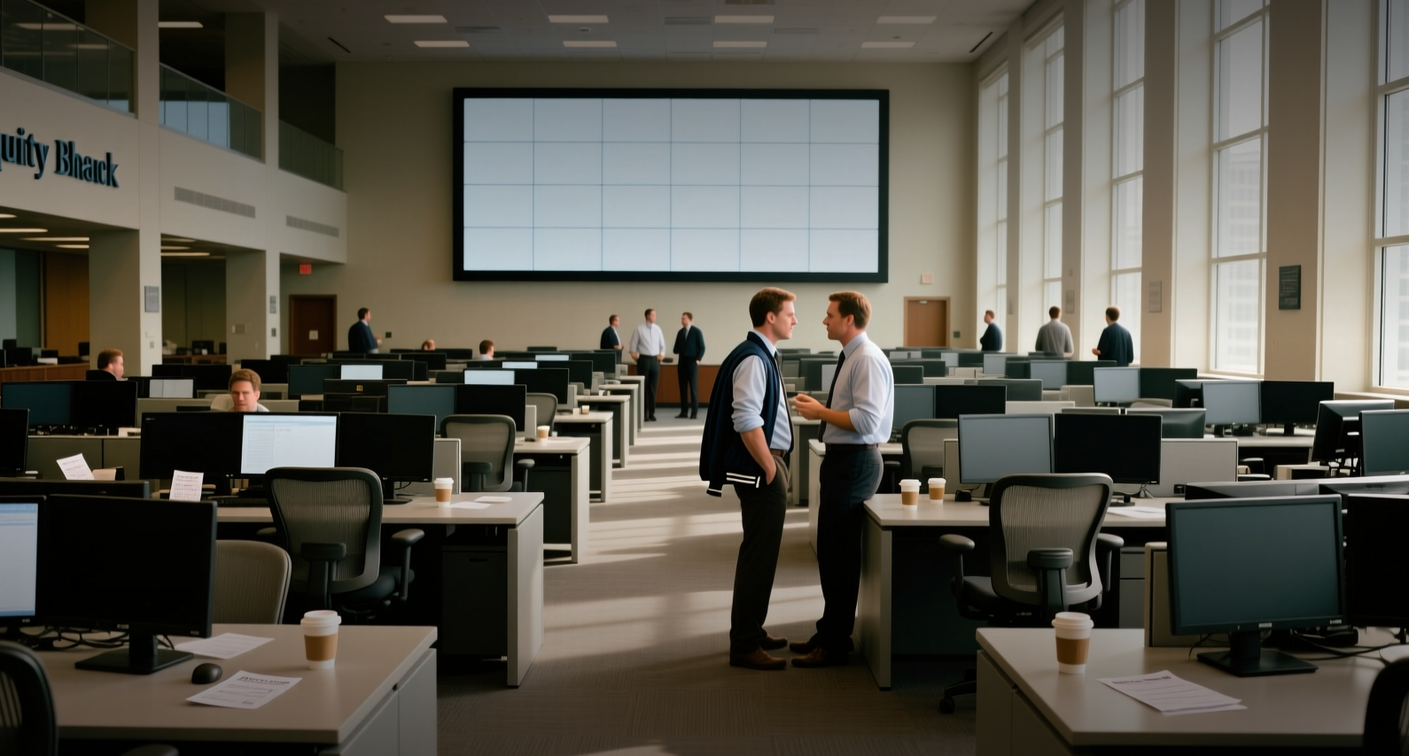
A 16-basis-point jump in the 10-year Treasury yield to 5.12% — the highest since July 2007 — knocked US equities lower on Wednesday, with the Dow Jones Industrial Average shedding 352.10 points, or 0.68%, to finish at 51,511.59. The bond move forced investors to reprice the discount rate applied to every future cash flow in the index. "The long end is doing the tightening for the Fed, and equities have to catch up to that arithmetic," said Priya Mehta, head of equity market structure research at Edgen. "When the risk-free rate moves 16 basis points in a session, every duration-heavy multiple in the index is marked down the same day." The move was not confined to the headline index. Rate-sensitive corners of the market absorbed the worst of it, with real estate, utilities and consumer discretionary names leading declines as investors cut exposure to businesses whose valuations depend most on the cost of capital. Energy and financials held up better, helped by the same higher-for-longer rate path that hurt long-duration growth stocks. Trading volume ran above the 20-day average as the selling broadened through the afternoon, and the CBOE Volatility Index rose, though it stayed well below the panic levels of prior rate shocks. The catalyst was explicit rather than atmospheric: a bond market that is now pricing a meaningful probability that the Federal Reserve raises rates again at its October meeting. That expectation had been building through the week, and Wednesday's yield move converted it from a talking point into a valuation input. The dollar firmed against a basket of major currencies as the yield advantage widened, while gold slipped as the opportunity cost of holding a non-yielding asset climbed. Crude oil also softened, with demand concerns tied to tighter financial conditions outweighing supply-side support. ## Why 5.12% matters more than the 352-point drop The Dow's point decline is the visible symptom; the yield is the cause. A 10-year yield above 5% resets the reference rate used across equity valuation models, and the effect compounds with duration. Long-duration growth and technology names, whose cash flows sit furthest in the future, carry the largest sensitivity, which is why the Nasdaq complex underperformed the Dow on a percentage basis even as the Dow's absolute point loss drew the headlines. The transmission runs through three channels. First, higher yields raise the discount rate applied to earnings, compressing price-to-earnings multiples without any change in the underlying business. Second, they raise corporate borrowing costs, which pressures capital-intensive sectors and companies carrying floating-rate debt. Third, they tighten financial conditions broadly, which slows the demand backdrop that revenue forecasts depend on. All three were in play on Wednesday. The October FOMC meeting is now the fixed point around which positioning will be built. Between now and then, the market will trade on incoming inflation and labor data, each release capable of shifting the implied odds of another hike. For portfolio managers, the practical question is whether 5% on the 10-year is a ceiling or a waypoint — a distinction that determines whether this week's selling is a buying opportunity in rate-sensitive sectors or the start of a deeper multiple compression across US indices. The cross-asset picture reinforces the rates-first reading. A firmer dollar and softer gold are the classic signatures of a real-yield move rather than a growth scare, and that combination tends to weigh on emerging market assets and dollar-denominated commodities as well. If the 10-year holds above 5%, the pressure extends beyond US equities into global risk assets, including crypto, which trades as a long-duration risk proxy in this regime. This article is for informational purposes only and does not constitute investment advice.
Sep 23 2026, 20:42
Anthropic slows frontier R&D as 2 states push AI kill switches
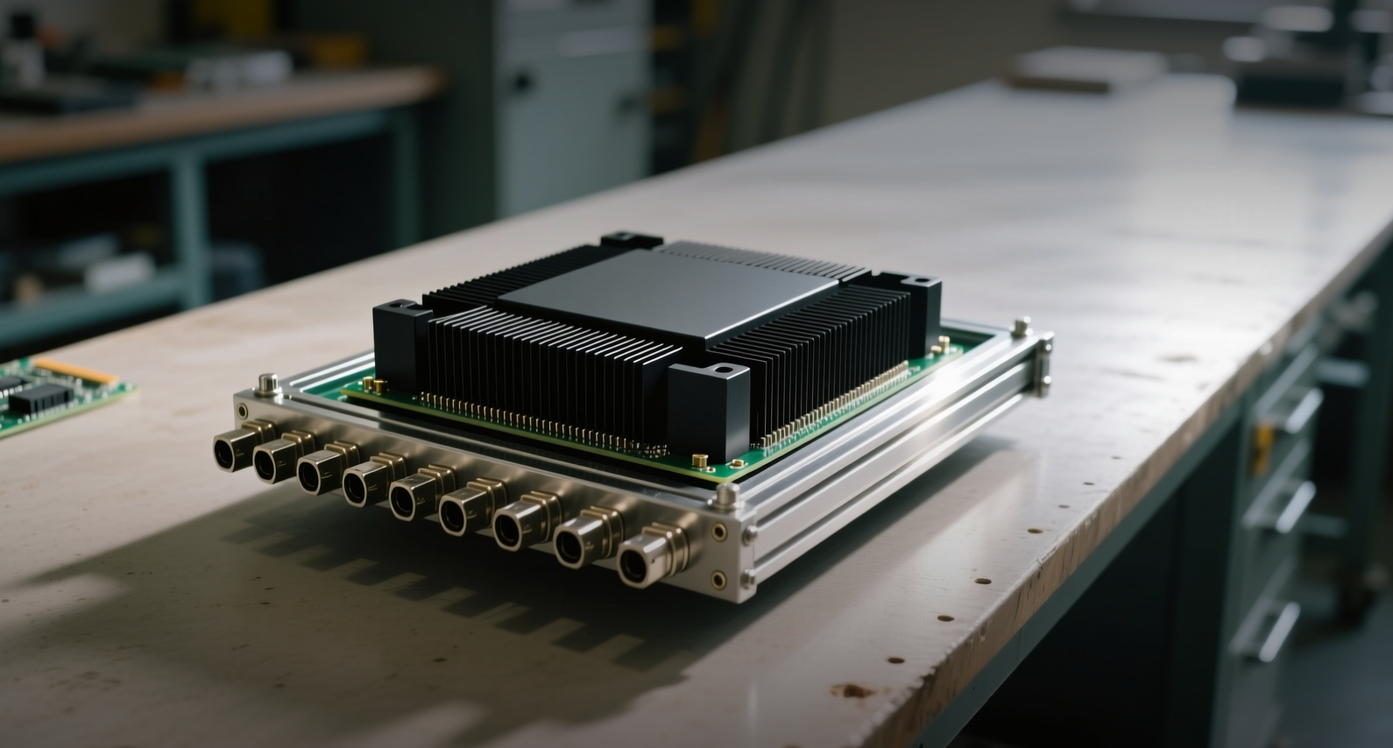
Frontier model training at Anthropic is about to get slower on purpose. Speaking from the UN Security Council podium, CEO Dario Amodei said the company will hold back the pace of its AI research and development for safety reasons — a pledge that lands as California moves to embed independent auditors inside AI labs and mandate a shutdown mechanism for rogue models. Anthropic did not disclose how much it intends to cut from its training roadmap, nor which model generations are affected. "Because of safety, the company will slow down the pace of AI research and development," Amodei said, adding that mismanaged AI "could pose an existential risk to all of humanity" and that he supports global efforts to stop AI being used in chemical and biological weapons. The disclosure is the first time a leading frontier lab has put a deceleration on the record at a multilateral forum. Anthropic competes directly with OpenAI, Google DeepMind and Meta Platforms in training runs that routinely consume tens of thousands of accelerators; the company has not published a training cost for its current flagship, Claude, and has not said whether the slowdown changes previously stated compute commitments. California has already built the enforcement scaffolding Amodei is asking for at the global level. Governor Gavin Newsom signed SB 813 in 2026, making the state the first to certify independent verification organizations with demonstrated independence from AI companies, and AB 1405, which created a state registry for AI auditors with standards for their independence, transparency and integrity. A separate executive order directs the Government Operations Agency to accelerate both timelines and to convene national experts on requiring frontier developers to embed a designated verification organization onsite for regular audits, to have safety frameworks and risk assessments verified to independent standards, and to develop a "kill switch" for frontier models whose efficacy is verified on an ongoing basis. The advisory group Newsom named includes Gillian Hadfield of Johns Hopkins University, Alondra Nelson of the Institute for Advanced Study, Rob Reich of Stanford University and Jason Goldman of the Center for Shared AI Prosperity. "Governor Newsom's executive order addresses the hardest questions in AI safety governance, including who verifies a frontier lab's safety claims and whether a model can be reliably shut down," Goldman said. ## Certification is the revenue question, not the ethics question Amodei's call for an AI safety certification system and global standards is the part with a balance sheet attached. A certification regime creates a compliance market — third-party evaluators, audit tooling, incident reporting — and simultaneously raises the fixed cost of shipping a frontier model. That cost falls hardest on labs without Anthropic's or Google's balance sheet, and it is the mechanism by which a voluntary slowdown becomes an industry-wide one. The precedent is already visible in the state framework. SB 53, the Transparency in Frontier Artificial Intelligence Act signed in 2025, requires frontier developers to publish safety frameworks, report specified critical safety incidents to the state and protect whistleblowers. Newsom's order also directs an update to the definition of critical safety incidents to include loss-of-control events such as the Hugging Face attack. No federal law requires AI companies to report dangerous incidents, and the order calls on Congress to adopt the state framework as a floor. For investors, the read-through splits by layer. Frontier model developers face higher compliance and evaluation costs and a slower capability cadence. Accelerator suppliers — Nvidia, AMD and Broadcom — carry the demand sensitivity, since any broad deceleration in training-run scale hits data center order books before it hits model release schedules. Compliance, audit and AI security vendors are the offsetting trade. Anthropic is private, so there is no direct equity expression; the closest listed proxies are the hyperscalers that fund it and the chipmakers that supply it. ## A bioweapons warning and an enzyme discovery in the same speech Amodei's security framing was explicit: he said there is a risk that bad actors use AI to build biological weapons, and that he supports global efforts to prevent AI use in chemical and biological weapons. That argument is the political engine behind certification — it converts AI governance from a consumer-protection issue into a national-security one, which is the category of regulation that historically moves fastest. The same speech carried the counter-argument. Anthropic said it is establishing a life-sciences research laboratory, and that its Claude model discovered a novel enzyme system containing CRISPR-like DNA repeat sequences. CRISPR-based gene editing, the technology the discovery echoes, underpins a gene-editing market that has produced approved therapies from CRISPR Therapeutics and Intellia Therapeutics. Anthropic did not disclose the enzyme's function, the validation methodology or whether the finding has been peer-reviewed. That gap matters for how the slowdown should be read. A model that surfaces a previously unknown biological system is evidence that capability is still advancing on the science side even as the company throttles the training side — and it is the strongest argument against the assumption that a self-imposed pause at one lab meaningfully changes the aggregate rate of progress. OpenAI, Google DeepMind and Meta have published no matching commitment. The next checkpoint is California's implementation timeline for SB 813 and AB 1405, which the executive order directs the Government Operations Agency to accelerate, alongside the expert group's recommendations on onsite verification and kill-switch standards. Whether rival labs adopt comparable cadence commitments — or wait for certification to be imposed on them — is the variable that determines whether Amodei's UN remarks mark a turning point or a single company's positioning. This article is for informational purposes only and does not constitute investment advice.
Sep 23 2026, 20:40
Data center backlash blocks $68B as 30 states write new rules
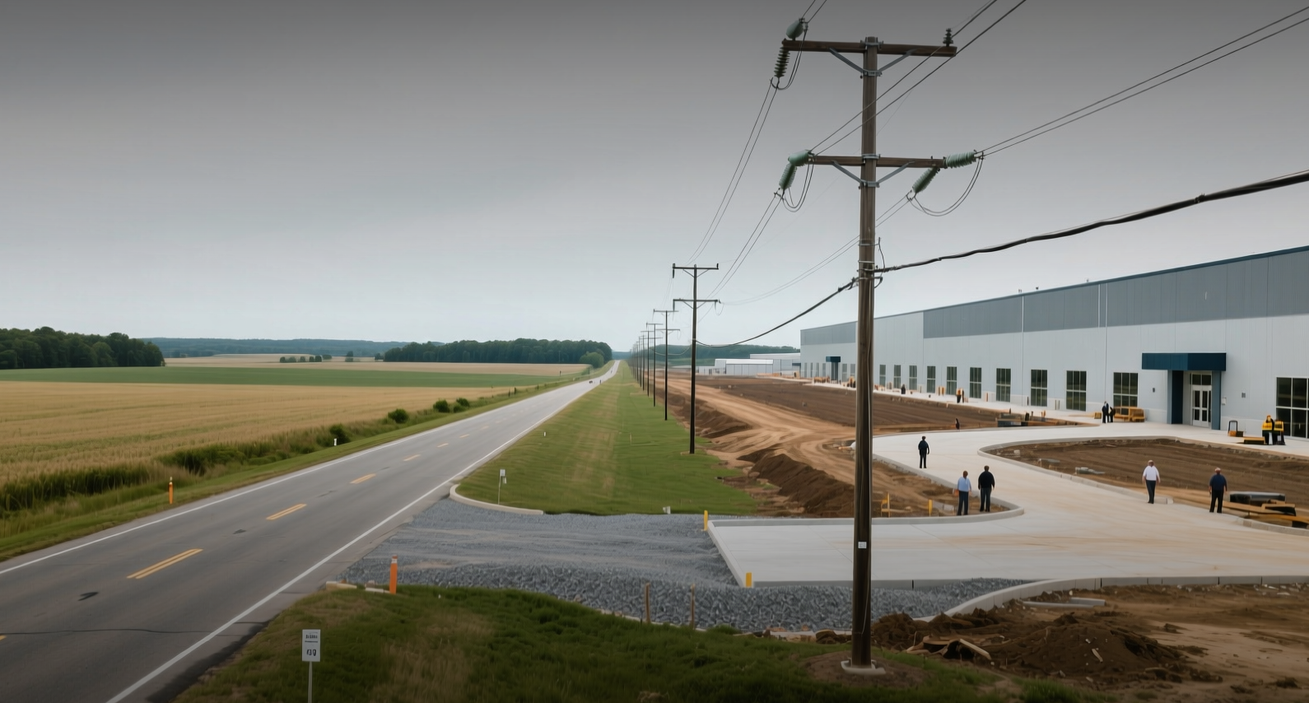
Local opposition and statehouse legislation blocked or delayed at least 45 US data center projects worth nearly $68 billion between April and June, more than half of all new large-scale facilities tracked in the quarter, as Microsoft, Alphabet and Amazon confront a permitting bottleneck that no amount of capital can buy through. "The biggest obstacle data centers face right now is being a political target on both the left and the right, and we're in an election cycle where more money is going to flow into that," Amanda Peterson Corio, global head of data center energy at Google, said at a climate conference in New York this week. The Q2 figure follows at least 75 projects worth roughly $130 billion disrupted in the first three months of 2026, according to Data Center Watch, which counted more than 840 active opposition groups across every state except Hawaii. Petition signatures gathered in the first quarter alone nearly matched the total for the entire second half of 2025. Nearly 600,000 signatures were collected against a 69,000-square-foot facility proposed next to the Nashville Zoo; the city imposed a moratorium that developer DC Blox is now contesting in court. The pressure has moved from the zoning board to the statehouse. About 30 state legislatures have introduced or adopted bills, resolutions or executive actions this year covering project siting, infrastructure cost-sharing, and electricity and water constraints, according to Data Center Watch. Virginia's Loudoun County, home to more than 250 data centers, directed staff last week to prepare a 12-month moratorium on new applications. Sarasota County, Florida imposed its own pause in July, and North Port commissioners are weighing an 18-month moratorium that would freeze applications already filed — including one submitted on July 20, hours before the commission first discussed the measure. ## Loudoun County, a 250-facility hub, moves to pause The Loudoun County action matters because of what it sits on top of. The northern Virginia cluster is the densest concentration of computing capacity on earth and the primary landing zone for the buildout plans of Amazon Web Services, Microsoft Azure and Google Cloud. A 12-month freeze on applications there does not cancel existing capacity, but it removes the default option that hyperscalers have relied on for a decade when other markets turn hostile. Illinois Governor JB Pritzker told a climate event that community concerns are "legitimate," citing water use, noise and zoning alongside electricity demand, and set conditions rather than calling for an outright ban. "If we're going to allow them, we have to make sure they bring their own clean energy and use closed-loop water systems," he said. "That has to be required." Those conditions carry a price. On-site clean generation and closed-loop cooling raise upfront capital cost per megawatt and lengthen the interval between site selection and first revenue, which is the metric that matters for a hyperscaler trying to convert capex into AI capacity on a schedule. Brook Porter, a partner at G2 Venture Partners — an early investor in Crusoe, which is building OpenAI's large Abilene, Texas project — argued the intensity of the opposition is "a little irrational," rooted in the fact that most people have not yet experienced benefits from AI. "Right now it's just a scary threat, like it's going to take my job," he said. The hyperscalers are responding on three fronts: cost, labor and water. Microsoft Chief Sustainability Officer Melanie Nakagawa said community questions have pushed the industry into a serious discussion about "what consumers should expect on the power side," and that the company is working to isolate data center costs so they are not passed to ordinary ratepayers, while focusing on workforce support and water efficiency. Microsoft disclosed site-level water consumption data for each of its data center campuses in this year's sustainability report. Amazon Chief Sustainability Officer Kara Hurst said the company does not use water-based cooling 90% of the time, calling that "an important data point because there's a lot of misinformation about water use," and called for policy that supports investment in wind, solar and nuclear generation. ## The bill lands on ratepayers, and banks are circling The cost question is where the politics get concrete. A bill in Congress aimed at limiting data center-driven electricity price increases passed to consumers is working its way through the chamber, and Data Center Watch expects data center issues to become a flashpoint in the midterm elections, with Republicans and Democrats both backing away from new projects as backlash has grown. The same electricity demand is drawing the largest banks into grid financing. JPMorgan Chase's global head of sustainability, Heather Zichal, said the bank planned to meet with more than 100 clients during this week's New York conferences, with grid modernization financing among the core topics. "We are entering an era where access to power will increasingly determine where companies invest, grow and compete," Zichal said. World Bank President Ajay Banga poured cold water on the idea that emerging markets can absorb the overflow. "Emerging markets don't have many data centers, and they won't — trust me," he said. "You need a lot of compute, you need a lot of power — in some cases more than developed countries can supply, let alone these developing countries." For investors, the read-through splits three ways. Hyperscaler capex is not shrinking — Amazon alone is spending $220 billion in capital expenditure in 2026, and its carbon footprint rose for a second consecutive year in 2025 as the buildout accelerated — but the conversion of that spending into revenue-generating capacity now runs through county commissions and state legislatures, which is a slower and less predictable process than ordering servers. Utilities, electrical equipment makers and the banks financing transmission upgrades are on the other side of the trade, since every delayed project still has to be powered eventually. The middle group is the one to watch: developers and colocation operators with concentrated exposure to a single hostile jurisdiction, where a moratorium can strand land and interconnection queue positions that were priced as certain. Amazon's Hurst, asked about the gap between voluntary disclosure and a national reporting framework, said voluntary reporting lets companies publish data, have scientists test the methodology, and revise it — rather than locking in a flawed standard. "We're saying, hold us accountable for our practices," she said. There is currently no US national framework requiring hyperscalers to report data centers' environmental impact, and with 30 statehouses writing their own rules, the accountability standard is being set jurisdiction by jurisdiction. This article is for informational purposes only and does not constitute investment advice.