Edgen AI operates independently of, and is not controlled by Aspen Digital Financial Limited.
Gold slides 2.1% to $4,043 on Fed rate hike bets, inflation fears
 Edgen Stock·Jul 24 2026, 06:14
Share to
Share to
Copy link

[1] Gold extends slide as inflation fears lift Fed hike bets and USD amid Trump's tariffs (https://www.fxstreet.com/news/gold-extends-sl ...)[2] Silver Rate in Bangalore Today (as on 23 Jul, 2026) (https://www.livemint.com/silver-prices/bangal ...)[3] America’s Roundup: Dollar hits new 40-year high versus yen, Wall Street falls , Gold dips, Oil prices surge (https://www.econotimes.com/Americas-Roundup-D ...)[4] AUD/USD Price Forecast: Bulls struggle below the 50-day SMA (https://www.fxstreet.com/news/aud-usd-price-f ...)[5] Dollar hits new 40-year high versus yen, euro softer after ECB stands pat on rates (https://www.msn.com/en-us/money/economy/dolla ...)
Related News

Jul 24 2026, 07:32
AUD/USD faces downside to 0.6886 as surging US bond yields fuel dollar
The Australian dollar slipped toward the lower end of its two-month range as a surge in US Treasury yields to 17-month highs reinforced the greenback's safe-haven appeal, overpowering domestic jobs data that smashed expectations by more than fourfold. The AUD/USD pair traded near 0.6900 on Friday, down from a July peak above 0.6950, as the yield on the US two-year note climbed to levels not seen since early 2025. "The dollar is drawing strength from a repricing of Fed rate expectations, with markets now pricing in a lower probability of cuts this year as the economy remains resilient," said Carol Kong, currency strategist at Commonwealth Bank of Australia. "Until we see a clear peak in US yields, the Aussie will struggle to sustain any rally." Australia added 76,300 jobs in June, the Bureau of Statistics reported Wednesday, far exceeding the 16,400 consensus estimate and marking the largest monthly increase since April 2022. The unemployment rate held at 4.4% as the participation rate rose to 67.0%, a one-year high. Yet the positive labor data failed to lift the currency above the 50-day simple moving average near 0.6952, with the pair retreating as Brent crude climbed to $96.49 a barrel — a six-week high — on escalating Middle East tensions along the Strait of Hormuz. The divergence between Australia's labor strength and the dollar's yield advantage leaves the AUD/USD at a crossroads. A break below the 0.6886 support — the September 2024 high — could open the door to 0.6796 and eventually 0.6596, according to technical analysis. The next catalyst is Australia's second-quarter CPI report due Wednesday, which will shape RBA rate expectations, followed by the Federal Reserve's policy decision on July 29. **Geopolitical Risk Premium Weighs on Risk Assets** The Strait of Hormuz, through which about 21% of global oil trade passes, has become a focal point for safe-haven flows as attacks on tankers in the region intensified. The geopolitical risk premium has pushed Brent crude above $96, adding to inflationary concerns that could keep central banks on a hawkish path. Gold slipped 0.6% to $4,103.39 an ounce after touching a two-week high of $4,165.87, as rising oil prices and elevated bond yields dampened demand for the non-yielding metal. The last time US two-year yields traded at current levels was in early 2025, preceding a period of sustained dollar strength that pushed AUD/USD below 0.6800 within six weeks. A repeat of that pattern would test the pair's medium-term uptrend, which has held since the December 2025 low of 0.6410. **China's Role as a Counterweight** Australia's export outlook remains tied to China's economic trajectory, with iron ore, natural gas, and copper prices providing a partial cushion against dollar strength. Markets are watching for additional stimulus measures from Beijing after the People's Bank of China signaled willingness to support growth. Any positive development from China could help offset the dollar's yield advantage, though the current risk-off environment has limited the Aussie's upside. The Australian dollar's resilience also hinges on whether the RBA needs to resume rate hikes. Money markets have increased bets on a rate increase after the June jobs report, with the Q2 CPI print on Wednesday likely to be the decisive factor. A hot inflation reading would strengthen the case for tighter policy, potentially narrowing the rate differential with the US. This article is for informational purposes only and does not constitute investment advice.
Jul 24 2026, 07:31
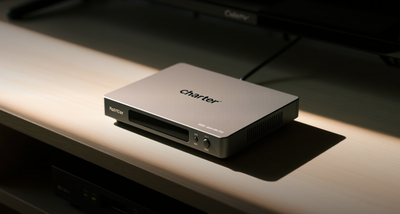
Charter Communications faces Q2 revenue decline of 2% amid sector headwinds
Charter Communications is expected to report Q2 revenue of $13.51 billion on Friday, a 2% decline from a year earlier. "Charter faces a challenging quarter as fixed wireless expansion and aggressive fiber buildouts pressure the legacy cable model," said Craig Moffett, analyst at MoffettNathanson. Analysts project earnings per share of about $1.44, up 13% from the prior-year quarter, according to Fiscal.ai data. The company's forward price-to-earnings ratio of 2.9x stands well below Verizon Communications Inc.'s 8.8x, AT&T Inc.'s 9.5x and T-Mobile US Inc.'s 13.7x. The results come as SpaceX's Starlink pushes deeper into consumer mobile services, adding pressure on traditional cable operators. Charter's ability to retain broadband subscribers and manage programming costs will be key to any post-earnings move. The telecom and cable sector has been reshaped by three forces over the past year: fixed wireless access from T-Mobile and Verizon, fiber-to-the-home expansions from AT&T and regional providers, and AI-driven cost optimization across the industry. Charter's broadband subscriber count, the single most watched metric for the stock, will determine whether the company can stabilize revenue in the face of intensifying competition. Retail sentiment on the stock was bearish on trading platforms at the time of writing, reflecting broader caution around cable's competitive positioning. Wall Street analysts are split, with several firms revising their price targets lower in the weeks ahead of the print. The Q2 report will set the tone for Charter's second half. Investors will focus on broadband net additions, average revenue per user trends, and any update on capital allocation, including share buybacks. The stock's low valuation — below 3x forward earnings — suggests the market has already priced in significant headwinds, leaving room for upside if results surprise. This article is for informational purposes only and does not constitute investment advice.

Jul 24 2026, 07:30
AstraZeneca shares slide 10% as trial failure tests Soriot's track record
AstraZeneca shares are down 10% this year after a late-stage trial failure, testing CEO Pascal Soriot's record of R&D success. "Fundamentally, do I like AstraZeneca's R&D strategy, engine, company? Yes I do. Do I feel confident that investing in the stock right now is a good idea? No, I don't," Rajesh Kumar, an analyst at HSBC who downgraded the stock from buy to hold, said. The setback came from Wainua, an approved treatment for rare neurological disorder ATTR-CM, which failed a Phase III trial testing the medicine in a form of heart disease. The failure erased about $20 billion of AstraZeneca's market value. The company's shares have more than quadrupled during Soriot's 14-year tenure, outperforming the FTSE 100 and rival GSK. Attention now turns to two closely watched oncology trials — breast cancer study SERENA-4 and lung cancer trial AVANZAR — both due to report this year. "If both fail, Astra will have missed three out of three important readouts this year," Markus Manns, a portfolio manager at Union Investment, said. The Wainua failure has sharpened scrutiny on AstraZeneca's pipeline, which the company has positioned to deliver $80 billion in annual revenue by 2030, up from about $59 billion last year. A Citeline report in January showed AstraZeneca leading the top 10 global drugmakers in new drug development programs and late-stage trial assets. Not all analysts see the setback as a broader problem. Jefferies analyst Michael Leuchten called the share price decline a "significant overreaction," noting the company has about 200 late-stage pipeline assets. TD Cowen's Michael Nedelcovych also cautioned against drawing broad conclusions from a single trial failure. "Sometimes you just don't get the answer you were looking for. That's part of the R&D game," Leuchten said. "I think they can stomach that kick in the shin, even if it hurts." The outcome of the AVANZAR trial carries particular weight because it would validate the company's proprietary biomarker for selecting patients, with implications for several future oncology studies, HSBC's Kumar said. AstraZeneca is scheduled to report second-quarter earnings on Monday. Analysts and investors said they will focus less on the financial numbers and more on what executives say about the outlook for SERENA-4 and AVANZAR. The decline puts AstraZeneca's stock at its lowest relative level in two years, trailing both GSK and the FTSE 100. The company's next major catalyst is the Q2 earnings call on July 28, where management is expected to provide updates on both oncology trials. *This article is for informational purposes only and does not constitute investment advice.*