Edgen AI operates independently of, and is not controlled by Aspen Digital Financial Limited.
Ford and Geely form JV to build 4 new models at Spain plant
 Edgen Stock·Jul 23 2026, 09:07
Share to
Share to
Copy link



[1] FORD AND GEELY AUTO JOIN FORCES IN EUROPE TO PRODUCE NEXT-GENERATION MULTI-ENERGY VEHICLES IN SPAIN (https://www.prnewswire.com/news-releases/ford ...)[2] Ford and Geely Agree to Share Underused Spanish Auto Factory (https://www.bloomberg.com/news/articles/2026- ...)[3] Ford and Geely strike deal for EV production at Spanish plant, newspaper reports (https://www.aol.com/articles/ford-geely-strik ...)[4] Geely Will Start Building Cars At A Ford Plant In Spain (https://www.carscoops.com/2026/07/geely-will- ...)
Related News

Jul 23 2026, 10:29
Brent crude surges toward $100 as Middle East attacks reignite supply fears
Brent crude surged toward $100 a barrel Thursday after Houthi forces struck two Saudi tankers in the Red Sea, reigniting supply fears that sent government bond yields across developed markets to multi-year highs. "The market had been pricing in a resolution in the Strait of Hormuz that simply hasn't materialized," said Mike Bell, head of market strategy at RBC BlueBay Asset Management. "Burying your head in the sand doesn't make geopolitical risk disappear." Germany's 10-year Bund yield rose 3 basis points to 3.21%, the highest since 2011, while the US 10-year yield climbed to 4.68%, approaching the 4.69% peak hit during the initial phase of the Iran conflict. France's 10-year yield breached 4% for the first time since 2009, and the UK's 10-year gilt yield added 5 basis points to 5.08%. The cross-asset repricing reflects a fundamental shift in rate expectations. Derivatives markets now fully price two additional 25-basis-point rate hikes from the European Central Bank, while the Federal Reserve is expected to deliver at least two quarter-point increases by March 2027 — a complete reversal from the rate-cut consensus that prevailed before the Middle East conflict escalated. The attack early Thursday by Yemen's Houthi forces on two Saudi-flagged oil tankers in the Red Sea — vessels the group said violated its recently announced maritime blockade — pushed Brent crude up nearly 3% intraday, bringing it within striking distance of the $100 psychological barrier. The move extends a rally that has seen crude gain more than 30% in just three weeks, with the international benchmark now trading at levels not seen since May, when it briefly touched $126 a barrel. The transmission from oil to bonds has been unusually direct. Since early July, the 10-year Bund yield has tracked Brent crude almost tick-for-tick as it climbed from the low $70s, reflecting a market that is re-embedding energy-driven inflation risk into long-duration assets. The US one-year inflation swap rate rose to 4.15% Thursday, the highest since January 2025, indicating that investors expect price pressures to persist well beyond any temporary supply shock. **Rate Paths Flip as Energy Costs Bite** The European Central Bank is widely expected to hold its deposit rate at 2.25% at its meeting Thursday, but the policy outlook has shifted dramatically. ING strategist Francesco Pesole said a surprise hike could not be ruled out if the Middle East situation deteriorates further, noting that European natural gas prices — already at their highest since 2023 — are rising faster than crude. Bundesbank President Joachim Nagel has flagged energy prices as the decisive variable for the inflation outlook, urging the ECB to remain vigilant. In the US, the rate narrative has flipped entirely. Interest-rate derivatives show investors now expect the Federal Reserve to raise rates at least twice by early next year, a stark reversal from the pre-conflict consensus that centered on rate cuts. New Fed Chair Kevin Warsh reinforced that hawkish tilt at his first policy meeting last month, stating the central bank would prioritize its inflation mandate over external political pressure. **Policy Buffers Wear Thin** Unlike earlier phases of the energy shock, policymakers have fewer tools to contain the fallout. The Bank of England warned in its latest Financial Stability Report that strategic petroleum reserve releases and other buffers that helped stabilize markets earlier this year may offer only limited support if the crisis deepens. US crude inventories including the Strategic Petroleum Reserve have fallen to 791 million barrels, the lowest since February 2024, with eight consecutive weekly draws. The 3-2-1 crack spread — a measure of refinery profit margins — has surged to a record $70 per bundle, equivalent to roughly $23 per barrel, according to HFI Research. That compares with about $27 per bundle in July of last year. Such elevated spreads suggest both crude and refined products are mispriced relative to actual supply conditions, the firm said, adding that Brent could reach $150 a barrel if the Strait of Hormuz remains effectively closed. "Once cushions thin out, prices have to do more of the adjustment work," said Mehmet Beceren, vice president and senior market strategist at Rosenberg Research. "That means either consumers pay more or demand gets destroyed." For households, the impact is already visible. US gasoline prices have climbed back above $4 a gallon, and the average 30-year mortgage rate is at its highest in nearly a year as the 30-year Treasury yield extends its longest stretch above 5% since 2003. Consumer sentiment, already near all-time lows, faces further pressure as the summer driving season enters its peak. *This article is for informational purposes only and does not constitute investment advice.*
Jul 23 2026, 10:28
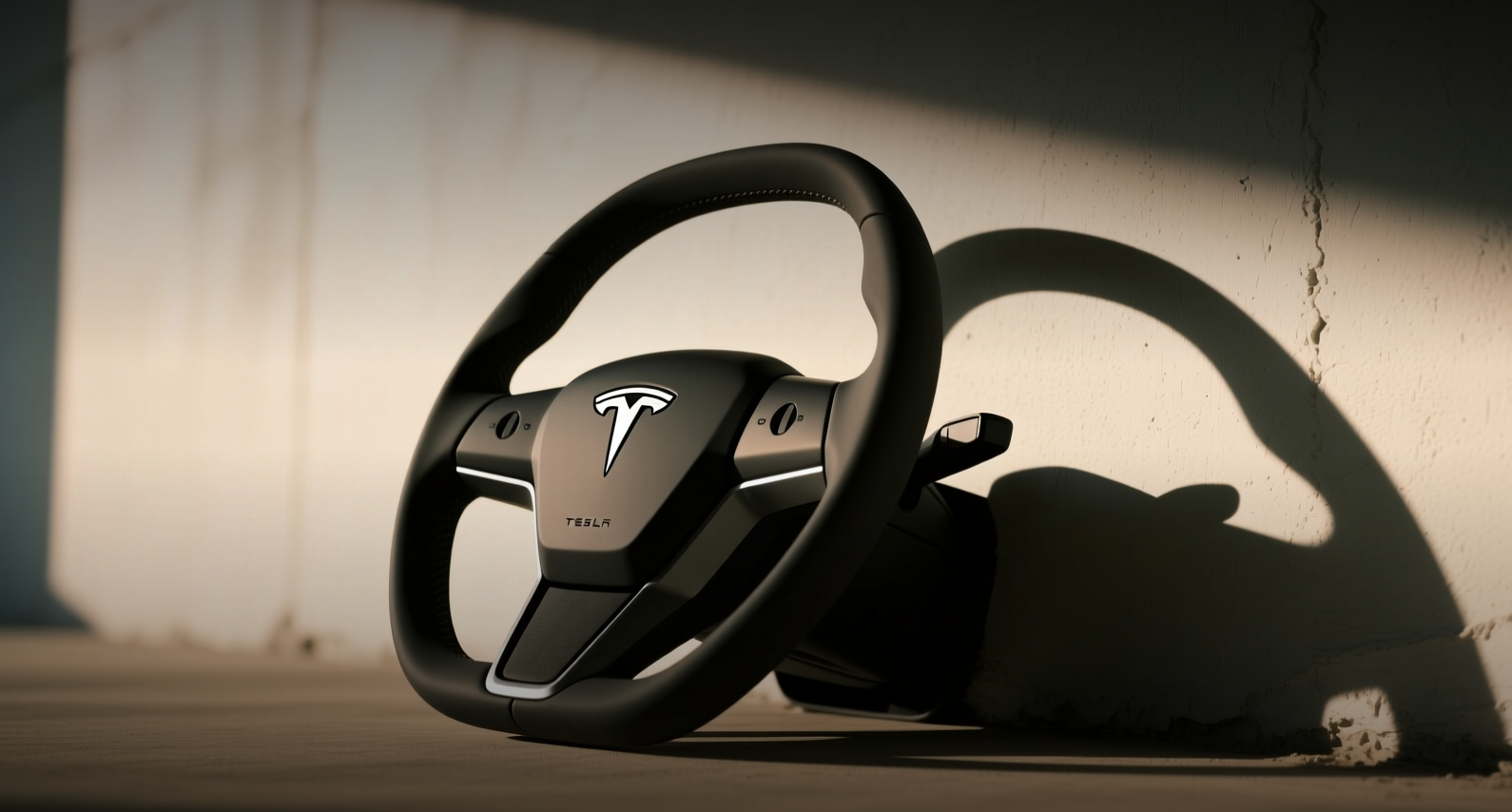
Tesla's operating margin sinks to 1.4% on record AI spending
Tesla reported Q2 operating profit of $398 million, a 57% decline, as record capital spending on AI and robotics pushed its operating margin to 1.4%. "We've never been more optimistic about the future," Tesla said in its shareholder deck, noting the company is in its largest and most exciting period of investment. Revenue rose to a record $28.24 billion, beating the $26.69 billion consensus, while adjusted EPS of $0.33 missed the $0.55 average estimate. Capital expenditure hit $5.79 billion, up 142% from a year earlier, with funds directed to AI compute clusters, Optimus robot production lines and Cybercab manufacturing. The results reflect a deliberate strategy by Chief Executive Elon Musk to redirect resources from Tesla's auto business toward autonomous driving and humanoid robots, a bet that hinges on whether those technologies can generate revenue before the car business bleeds too much cash. | Metric | Actual | Consensus | Beat/Miss | |--------|--------|-----------|-----------| | Revenue | $28.24B | $26.69B | +5.8% | | Adj. EPS | $0.33 | $0.55 | -40% | | Op. Margin | 1.4% | -- | -- | Tesla delivered 480,000 vehicles in the quarter, a Q2 record, and said FSD subscriptions reached 1.48 million, above expectations. But lower average selling prices, the expiration of EV tax credits and higher costs tied to AI investments squeezed profitability. Auto gross margin excluding regulatory credits fell to 16.3%. By comparison, General Motors posted an adjusted operating margin of about 8% in the same period, while Ford reported roughly 7%. The company said it has begun production of the Cybercab, with the Semi truck on track for later this year. First-generation production lines for the Optimus humanoid robot are being installed in Fremont, California, where Tesla converted the former Model S and Model X assembly space into a robotics factory. Musk acknowledged on the earnings call that capital efficiency matters less than speed, adding that the company is pursuing the fastest industrial expansion since World War II. Tesla's Robotaxi service now operates in seven US cities, including Austin, San Francisco and Miami, though vehicle counts remain in the dozens per city. The company said it expects Robotaxi to have a material financial impact by 2027. Optimus production targets call for 1,000 units per week by September and 2,000 to 2,500 per week by year-end. Tesla ended the quarter with $43.5 billion in cash. The spending trajectory implies the company will need to demonstrate meaningful progress on Robotaxi commercialization and Optimus production milestones in the coming quarters to justify the current valuation. The stock trades at more than 220 times trailing earnings, reflecting the market's pricing of an AI and robotics option that has yet to generate material revenue. Investors will watch the pace of Robotaxi fleet expansion and Optimus production ramp in the coming months. This article is for informational purposes only and does not constitute investment advice.
Jul 23 2026, 10:23
Jensen Huang urges no ban on Chinese AI as Kimi K3 triggers 12% selloff
Nvidia's Jensen Huang said the US should not restrict Chinese open-source AI models, arguing a ban would hurt American companies more than China, as chip stocks fell 12.5% in a week after Moonshot's Kimi K3. "These Chinese models are excellent. Open-source models that are excellent should be used," Huang said in an interview with Axios on July 22 at the opening of a Wistron plant in Fort Worth, Texas, that builds Nvidia's AI infrastructure. Moonshot AI released Kimi K3 on July 16, a model with 2.8 trillion parameters and a 1-million-token context window. Independent evaluators ranked it third on Artificial Analysis' Intelligence Index, behind only Anthropic's Claude Fable 5 and OpenAI's GPT-5.6 Sol, and first on LMArena's Frontend Code Arena. The model costs $15 per 1 million output tokens, compared with $50 for Anthropic's Fable 5 and $0.87 for DeepSeek V4. "The market misunderstood the impact of DeepSeek the first time, and it has misunderstood the impact of Kimi again this time," Huang said, arguing that cheaper, more capable models drive broader adoption and, in turn, greater demand for Nvidia's chips and data center infrastructure. Nvidia briefly lost its crown as the world's most valuable company after the Kimi K3 release, with semiconductor stocks dropping more than 20% from their June 2026 peaks. **Washington Weighs Sanctions as IP Theft Allegations Mount** White House Office of Science and Technology Policy Director Michael Kratsios accused Moonshot AI on July 22 of using Anthropic's Fable model to develop Kimi K3, claiming the company built a "sophisticated internal platform" to perform large-scale distillation while evading detection. Treasury Secretary Scott Bessent said the administration is investigating whether Chinese AI companies improperly extracted knowledge from US models, with sanctions possible within "days or weeks." Huang dismissed the theft narrative. "Distillation, learning from AI, learning from other sources of knowledge, is fundamental to intelligence," he said. He also argued that open-weight models are safer than closed ones because researchers can inspect them for vulnerabilities, adding that "if everything just becomes one single model, one single point of attack, one single source of failure, I think the world is much, much more vulnerable." **Silicon Valley Rallies Against a Ban** Nearly 200 Silicon Valley companies, including startup accelerator Y Combinator and encrypted email provider Proton, urged the Trump administration not to restrict access to Chinese open-weight AI models. In letters sent by the newly formed Little Tech Association, the companies argued that US startups rely on affordable open AI models that cannot easily be replaced by more expensive proprietary alternatives from OpenAI or Anthropic. Tesla Chief Executive Officer Elon Musk backed Huang's stance, replying "True" to a social media post highlighting the Nvidia leader's argument. Huang also called on Anthropic to open up its cybersecurity model Claude Mythos, which is currently restricted to a vetted group of roughly 200 partners through its Project Glasswing program. The full weights of Kimi K3 are set to go public on July 27, at which point independent testing will either confirm or challenge Moonshot's benchmark claims. Epoch AI estimates the gap between the best open and closed models has narrowed to about three months, raising the question of whether US restrictions would have any practical effect once the weights are available globally. Nvidia shares, which have declined along with the broader semiconductor sector, face an uncertain regulatory outlook. Huang has endorsed keeping Nvidia's most advanced Blackwell and Rubin architectures out of China, but his broader argument — that open AI drives chip demand — will be tested as Washington decides whether to impose restrictions on Chinese models. This article is for informational purposes only and does not constitute investment advice.