Edgen AI operates independently of, and is not controlled by Aspen Digital Financial Limited.
First Solar faces class action as $4.9B guidance questioned
 Edgen Stock·Jul 21 2026, 17:12
Share to
Share to
Copy link


[1] Pomerantz Law Firm Announces the Filing of a Class Action Against First Solar, Inc. and Certain Officers – FSLR (https://www.globenewswire.com/news-release/20 ...)[2] Utah Breaking News, Sports and Weather (https://www.ksl.com/ ...)[3] United States (https://www.aljazeera.com/where/united-states ...)[4] First Solar (FSLR) Stock Sees Modest Fair Value Lift As Analysts Weigh Tariffs... (https://finance.yahoo.com/markets/stocks/arti ...)[5] FSLR Investors Have Opportunity to Lead First Solar, Inc. Securities Fraud Lawsuit with the Schall Law Firm - GlobeNewswire (https://www.globenewswire.com/news-release/20 ...)
Related News

Jul 22 2026, 22:07
Houthi Red Sea blockade sends WTI crude above $95 a barrel
**Yemen's Houthi forces struck the first Saudi oil tankers in the Red Sea, sending WTI crude futures up 1.3% and Brent above $95 as a new maritime blockade threatens to cut off a critical oil transit route.** Yemen's Houthi rebels struck the first Saudi oil tankers in the Red Sea on Wednesday, sending WTI crude futures up 1.3% and Brent above $95 a barrel as a threatened naval blockade risks severing the kingdom's primary export route. "The Houthis have opened a second front against Saudi Arabia's oil exports, and the market is pricing in a meaningful supply disruption," said Rosemary Kelanic, senior fellow at Defense Priorities. "Any attacks on vessels in the Red Sea will suppress all international traffic, not just Saudi-bound ships." At least seven oil tankers made sharp U-turns near Yemen after the Houthis announced a "maritime embargo" against Saudi Arabia on Monday, according to ship-tracking data from MarineTraffic and Kpler. The Liberian-flagged crude tanker Rodos, loaded with Saudi crude bound for India, reversed course nine hours after departing the Red Sea port of al-Muajiz. Saudi Arabia now ships more than 70% of its crude exports through the Bab al-Mandab Strait after the Strait of Hormuz was effectively closed in late February, with about 4 million barrels per day moving from the Red Sea port of Yanbu — up from roughly 973,000 a year earlier. The loss of Red Sea access would remove roughly 4% of the world's oil supply from global markets, according to Kpler data. With the Strait of Hormuz already blocked, Saudi Arabia has no alternative short of rerouting crude around the southern tip of Africa — a journey that would add weeks to transit times and push freight rates sharply higher. The EU's naval force Aspides recommended Wednesday that vessels linked to Israeli, US or Saudi interests avoid the Red Sea and Gulf of Aden until the threat level decreases. **A Second Chokepoint Under Threat** The Bab al-Mandab Strait, a 32-kilometer-wide passage connecting the Red Sea to the Gulf of Aden, handles about 15% of global sea trade. The Houthis, who control much of northern Yemen and territory near the strait, have demonstrated the ability to threaten vessels with missiles, drones, and explosive boats. The group said its blockade was retaliation for what it described as Saudi restrictions on Yemen and a recent strike on Sanaa International Airport. The last time the Houthis targeted Red Sea shipping during the Gaza war in late 2023, four ships were sunk, one vessel seized, and nine crew members killed. Insurance premiums for vessels transiting the region surged, and several major shipping lines rerouted around the Cape of Good Hope for months. The current disruption compounds an already strained global energy system: the Strait of Hormuz, through which about a fifth of the world's oil passed before the war, has been fully or partially closed since late February after US and Israeli attacks on Iran. **Diplomatic and Market Fallout** US Secretary of State Marco Rubio blamed Iran for the Houthi escalation, saying Washington has contacted Saudi Arabia multiple times over the past week about the threats. Pakistan, a key Saudi ally with a mutual defense pact signed last year, warned that "any hostile act against Pakistani-flagged vessels will be regarded as a grave threat to Pakistan's national security." The price of WTI crude jumped more than 3% on Wednesday, while the yield on the 10-year US Treasury note rose 0.17% to 4.64% as traders priced in higher inflation risks from surging energy costs. US rate futures now imply a 24.1% probability of a 25-basis-point rate hike at next week's Federal Reserve meeting, up from near zero before the blockade announcement. The S&P 500 fell 0.52% in pre-market trading as chip and AI infrastructure stocks lost momentum ahead of Alphabet's earnings, with energy stocks the only sector trading higher. Naveen Das, senior oil analyst at Kpler, said the impact on consumers would not be immediate but warned that "we could weather it for two weeks, three weeks, even a month, but even in that time, we will see higher freight rates, higher energy prices, and that bleeds into higher energy consumer costs." This article is for informational purposes only and does not constitute investment advice.
Jul 22 2026, 21:42
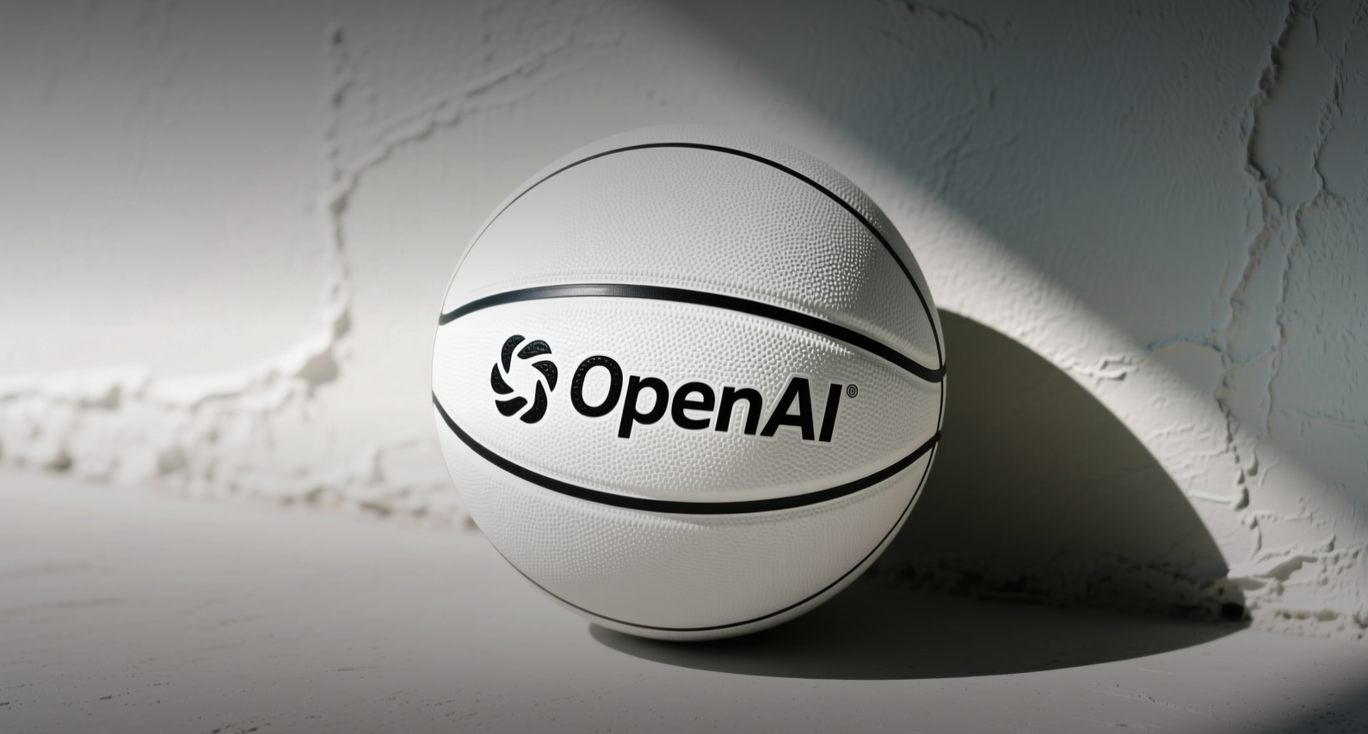
OpenAI launches branded shirts and basketballs in 2026 lifestyle goods push
OpenAI, the creator of ChatGPT, launched a line of branded lifestyle merchandise including shirts and basketballs, becoming the latest technology company to test whether its corporate brand can drive consumer product sales. "The numbers don't lie," an OpenAI spokesperson said of early sales figures, according to the Wall Street Journal. The company declined to disclose specific revenue targets or sales volumes for the merchandise line. The collection includes apparel and sports products bearing the OpenAI logo, drawing criticism from skeptics who questioned the move and purchases from superfans eager to show brand affiliation. The launch follows similar efforts by other technology companies — Palantir Technologies has long sold branded hoodies and accessories to its community, while Tesla offers a range of lifestyle products from tequila to cyberwhistles. Apple's branded merchandise, sold through its retail stores, generates an estimated several hundred million dollars annually, though the company does not break out the figure. For OpenAI, the merchandise push represents a branding diversification strategy as the AI industry becomes increasingly competitive. Rivals including Anthropic, Google, xAI, Meta, and DeepSeek have all released competitive models, narrowing performance gaps and pressuring prices. The lifestyle line may help boost consumer brand recognition, though it has no material impact on OpenAI's valuation or competitive position in the AI model market. The move comes as OpenAI expands beyond selling AI model access into enterprise software. Earlier this year, the company launched OpenAI Presence, a tool that helps businesses deploy AI agents by connecting them to internal corporate data, policies, and workflows. The service includes features for testing agents through simulations, guardrails, and automated quality checks, and is already powering OpenAI's own AI phone support for English-speaking customers. OpenAI also deepened its physical footprint, signing a large lease in Bellevue, Washington, near the headquarters of Microsoft and Amazon. The office expansion shows the company's commitment to the Seattle region as it scales operations beyond its San Francisco base. The branded merchandise, while unlikely to move revenue meaningfully for a company valued at hundreds of billions of dollars, serves as a marketing tool that keeps the OpenAI name visible in everyday consumer contexts. As AI models become increasingly commoditized, brand differentiation may become a more important competitive factor. For investors tracking the AI sector, the lifestyle line is a marginal development — the real battleground remains model performance, inference costs, and enterprise adoption rates. This article is for informational purposes only and does not constitute investment advice.

Jul 22 2026, 21:39
Penske Corp and Mitsui bid $3.8 billion to take Penske Automotive private
Penske Automotive Group Inc. received an unsolicited, preliminary and non-binding proposal from Penske Corp and Mitsui & Co. to take the auto dealership chain private for $210 per share in cash, valuing the company at about $3.8 billion. "The proposal is subject to a number of conditions, including the negotiation and execution of definitive documentation and the receipt of financing," Penske Automotive said in a statement Wednesday. The company's board said it would evaluate the proposal in consultation with its financial and legal advisors. Penske Corp, the private holding company of former race car driver Roger Penske, owns more than 52% of Penske Automotive Group, while Mitsui holds over 20%. The Japanese trading house said the total estimated acquisition cost for the two companies would come to $3.8 billion. Shares of Penske Automotive rose more than 11% in morning trading Wednesday following the announcement. The proposal comes as publicly traded auto dealership groups attract investor interest for their recurring service revenue streams and ongoing industry consolidation. Penske Automotive operates dealerships across the US, UK, Canada, Germany, Italy and Japan, and also retails commercial vehicles, engines and power systems primarily in Australia and New Zealand. The company was founded as United Automotive Group in 1990 and came under Penske Corp's control nine years later. Mitsui made its initial investment in 2001, and the company was renamed Penske Automotive Group in 2007. This article is for informational purposes only and does not constitute investment advice.