Edgen AI operates independently of, and is not controlled by Aspen Digital Financial Limited.
Fed set to hold rates at 3.5%-3.75% as 76 economists agree
 Edgen Stock·Jul 22 2026, 19:39
Share to
Share to
Copy link

[1] Economists are more confident than traders about next week's meeting outcome (https://wallstreetcn.com/livenews/3138372 ...)[2] Warsh Confuses Traders, Makes Them Guess Next Week’s Rate Move (https://www.bloomberg.com/news/articles/2026- ...)[3] NFL Latest Updates - Yahoo Sports (https://sports.yahoo.com/nfl/news/ ...)[4] San Diego Union-Tribune (https://www.sandiegouniontribune.com/ ...)[5] Broader Market Settles Higher as Positive Inflation News Outweighs Chip Rout (https://finance.yahoo.com/markets/stocks/arti ...)
Related News
Jul 22 2026, 21:20
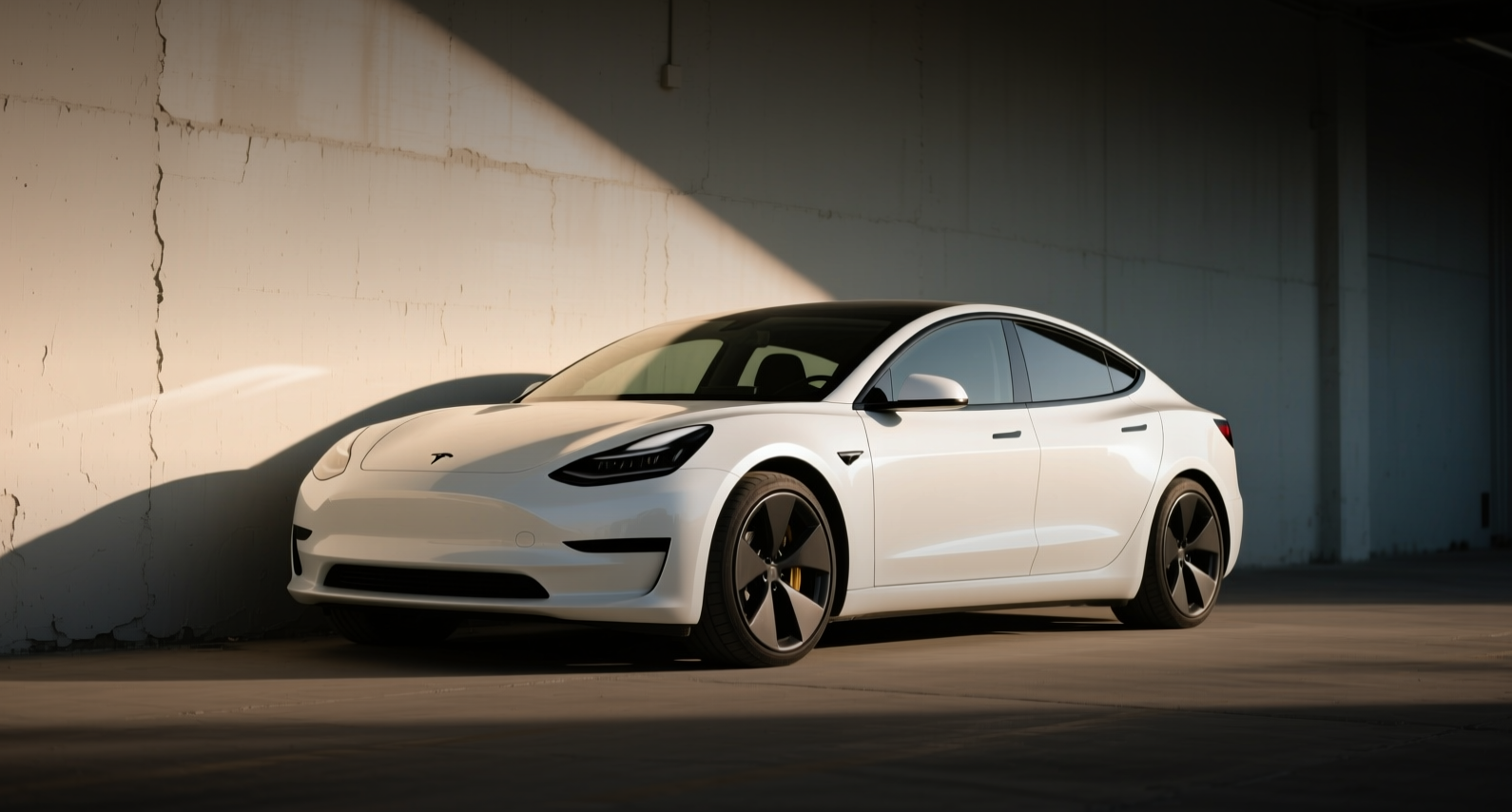
Tesla delays 3 key products as spending surges to $25 billion
Tesla no longer expects to reach volume production of the Cybercab, Tesla Semi, or Megapack 3 in 2026, pushing three marquee products past their original targets as capital spending surges to $25 billion next year. "Tesla is trying to increase battery production, specifically around the company's 4680 cell, in order to start building the Cybercab and Tesla Semi at scale," the company said in its Q2 2026 shareholder letter published Wednesday. Chief Financial Officer Vaibhav Taneja had previously warned that the development push would lead to negative cash flow for the remainder of the year. The delays mark a sharp reversal from January, when Tesla said all three products would reach volume production in 2026. The company reported net income of $1.1 billion in the second quarter, down 5% from a year earlier, while operating expenses ballooned 47% to $4.3 billion. Free cash flow swung to negative $1 billion from positive $1.44 billion in the prior quarter and $146 million a year earlier. The pullback raises questions about capital allocation at a company spending $25 billion in 2026 — roughly three times its historical annual rate — while pushing revenue-generating products further into the future. Tesla's automotive revenue rose 24% to $20.5 billion on deliveries of more than 480,000 vehicles, its best quarter since late 2024, but the margin pressure from heavy investment shows no sign of easing. **A Product Portfolio Under Pressure** Tesla started building the first production Cybercabs at its Austin, Texas factory earlier this year but said it is still constructing manufacturing lines for the Semi and Optimus. The company did not offer a reason for pushing back volume production of the new Megapack or say whether there are holdups with Optimus. The delays come as Tesla attempts to transform from an electric vehicle maker into an AI and robotics company — a shift Chief Executive Officer Elon Musk has said would require elevated spending. Capital expenditures more than doubled in the second quarter, contributing to operating income of $398 million, down 57% from $932 million a year earlier. **Automotive Sales Hold Up, but Costs Bite** Tesla delivered more than 480,000 vehicles in the second quarter, an increase of more than 120,000 from the first quarter and its best result since the third quarter of 2024, when it delivered nearly 500,000 vehicles. Record sales in markets including South Korea, Australia, Japan, and Thailand drove the rebound. Energy storage and solar revenue rose 13% to $3.1 billion, while subscriptions to Tesla's Full Self-Driving (Supervised) system reached 1.48 million, up 56% from a year earlier. But those bright spots were overshadowed by a 47% jump in operating expenses and negative free cash flow that Taneja had forecast would persist through year-end. Tesla shares face competing pressures: improving delivery volumes and FSD adoption versus escalating costs and delayed product timelines. The company's $25 billion capital expenditure plan for 2026 — roughly triple historical levels — means investors may not see a return on the Cybercab, Semi, or Megapack investments for years. With the Model S and Model X now discontinued at the Fremont factory to make way for Optimus production, Tesla is betting its future on products that have yet to reach volume scale, while rivals including BYD continue to expand their EV lineups without comparable capital spending burdens. This article is for informational purposes only and does not constitute investment advice.

Jul 22 2026, 21:18
Pfizer's prostate cancer combo gets FDA priority review in 6 months
Pfizer said Wednesday the U.S. Food and Drug Administration granted priority review to its application seeking expanded approval of its prostate cancer treatment combination, accelerating the regulatory timeline to six months. The FDA designates priority review for therapies that offer significant advances over existing treatments. The designation shortens the review period to six months from the standard 10 months under the Prescription Drug User Fee Act. The application covers a combination regimen for prostate cancer, which ranks among the most frequently diagnosed cancers in men. Pfizer did not disclose the specific drug names in the combination or provide clinical trial data in the announcement. The priority review designation reduces regulatory uncertainty and could accelerate Pfizer's path to expanded market exclusivity for the combination. The FDA is expected to deliver a decision within six months. An approval would broaden Pfizer's oncology portfolio and strengthen its competitive position in the prostate cancer treatment market. This article is for informational purposes only and does not constitute investment advice.

Jul 22 2026, 21:18
Google Gemini hits 950 million users, closing in on ChatGPT's 1 billion
**Google's Gemini app added 200 million users in five months but the pace is cooling, raising questions about how the company converts reach into revenue.** Google's Gemini app reached 950 million monthly active users, narrowing the gap with OpenAI's ChatGPT at roughly 1 billion, but the pace of growth has slowed as Alphabet's consumer AI push faces a conversion challenge. "Gemini now has 950 million monthly active users," CEO Sundar Pichai said on Alphabet's second-quarter earnings call July 22. Daily active users have tripled over the past year, he added. The milestone marks a gain of about 200 million users since February, when Alphabet reported 750 million. But the trajectory is flattening: the app added roughly 150 million users between February and Google I/O in May, then only about 50 million in the two months since. Alphabet reported total revenue of $119.8 billion, up 24%, while Google Cloud revenue surged 82% to $24.8 billion — the segment where AI generates billed consumption. The 950 million figure measures reach, not revenue. Alphabet does not disclose Gemini-specific revenue, and the app's economics remain opaque even as capital spending reached $44.9 billion in the quarter, roughly double a year earlier. Nearly 90 percent of the Fortune 100 use Gemini Enterprise, and Google's models process 22 billion API tokens per minute — consumption the company can bill for. The question for investors is how many of those 950 million users convert to paid tiers or generate measurable ad and cloud revenue. ## Growth Cools as Scale Increases The deceleration is partly mathematical — adding 50 million users at 950 million is harder than adding 150 million at 750 million — but it also reflects the absence of a major product event. Much of the late-2025 surge coincided with the launch of Gemini 3, Google's flagship model at the time. No comparable launch has driven the current quarter. Google rolled out three lower-cost Gemini Flash variants this week, including one aimed at security work, and teased that early work on Gemini 4 has started, but its Gemini 3.5 Pro model remains delayed. ## The Revenue Question Alphabet's consumer AI monetization runs through paid subscription tiers and ad-supported Search surfaces that Gemini increasingly powers, but none of it is disclosed as a Gemini line item. The contrast with Google Cloud is stark: Cloud operating income more than tripled to $8.8 billion from $2.8 billion a year earlier, driven by AI infrastructure demand. Alphabet's "other income" surged to $97.8 billion from $2.2 billion, largely from equity securities including investments in Anthropic and SpaceX. The comparison with ChatGPT is also imprecise. OpenAI reports weekly active users, a tighter measure than Gemini's monthly count, while Sensor Tower estimates ChatGPT at roughly 1 billion monthly users. Google's broader AI surfaces — AI Overviews at 2.5 billion users and AI Mode at 1 billion — dwarf the standalone app, but those are Search features, not discrete products. For investors, the key metric is not user count but revenue per user. Alphabet trades at a premium to peers on the strength of its Cloud business, but the consumer AI app adds data center load without a disclosed revenue line to offset it. Regulatory pressure in Europe, where officials have ordered Google to share Android and Search data with rival AI assistants, could also erode the distribution advantage that feeds Gemini's user numbers. The next test is the Gemini 3.5 Pro launch and whether it can reaccelerate growth — or whether the app settles into a slower, more conventional adoption curve. This article is for informational purposes only and does not constitute investment advice.