Edgen AI operates independently of, and is not controlled by Aspen Digital Financial Limited.
Davis Commodities delisted from Nasdaq as shares drop 93% in 2026
 Edgen Stock·Sep 21 2026, 16:35
Share to
Share to
Copy link

[1] Davis Commodities Limited Announces Nasdaq Delisting and Continued Quotation on OTC Markets (https://www.globenewswire.com/news-release/20 ...)
Related News
Sep 21 2026, 17:06
Oura seeks $2.2B IPO with 73% of shares sold by backers
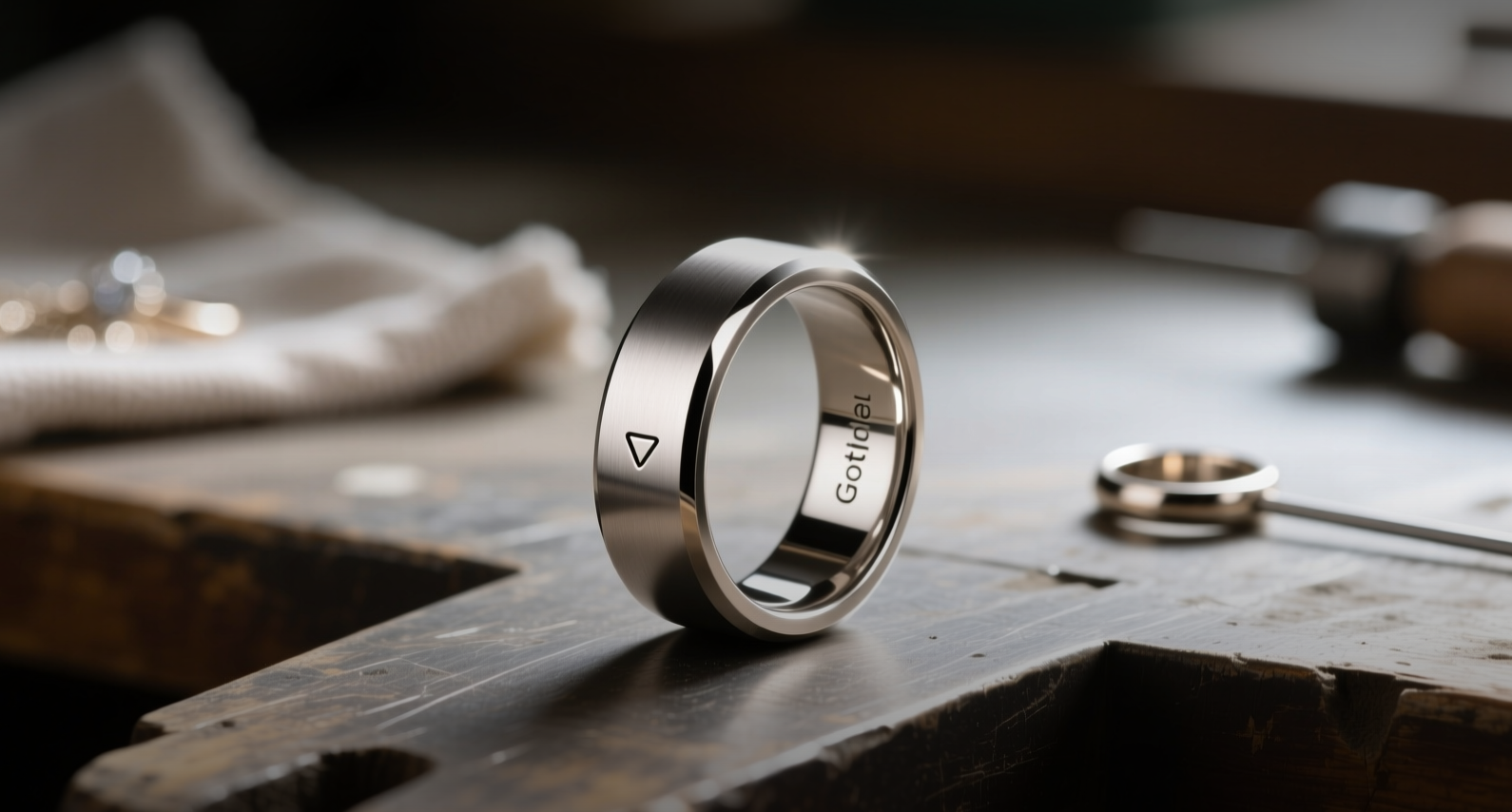
Oura Inc. plans to sell 50 million shares at $40 to $44 each on Nasdaq, a deal worth up to $2.2 billion in which existing holders — not the company — take the bulk of the proceeds. Only 13.5 million shares are new stock issued by Oura; the remaining 36.5 million come from backers including Forerunner Ventures and Lifeline Ventures, according to the filing the Helsinki-based company submitted Monday with the US Securities and Exchange Commission. "The secondary mix tells you what the cap table has been waiting for," said Tom Brennan, an analyst covering IPO and M&A deal flow, said. "When 73 percent of a deal is insider stock, the offering is a liquidity event first and a growth financing second." At the midpoint of the range, the primary tranche raises roughly $567 million before fees, against a fully diluted valuation of $15.62 billion. That is a step up from the roughly $11 billion private mark Reuters reported last year, and it lands while bond yields are higher and the Federal Reserve's path is less predictable — conditions that push up the discount rate applied to future profits and hit fast-growing hardware companies first. The financials cut both ways. Revenue for the nine months ended June 30 rose 74 percent from a year earlier to $1.21 billion, and Oura sold 3.6 million rings in the 12 months through June. Net losses over the same nine months widened to $924.3 million from $182.8 million, a figure larger than the primary proceeds the company expects to bank. Management is leaning on recurring revenue to bridge the gap, projecting about 5.7 million paid members by fiscal 2026 against roughly 5 million today, with women accounting for 72 percent of the customer base. ## Goldman, Morgan Stanley and JPMorgan lead a 19-bank syndicate Goldman Sachs, Morgan Stanley and J.P. Morgan are lead underwriters, with Allen & Company, Jefferies, BofA Securities, Barclays, Wells Fargo Securities, Citizens Capital Markets, KeyBanc Capital Markets, Guggenheim Securities, Canaccord Genuity, Needham & Company, Raymond James, Rothschild & Co, Truist Securities, William Blair and Robinhood also in the syndicate. Two anchor indications are on the book: Eli Lilly has signaled interest in up to $100 million of the offering and Dragoneer up to $300 million, together covering about 18 percent of the deal at the top of the range. The structure echoes the 2021 cohort of consumer hardware listings, when founders and venture backers routinely sold into the IPO rather than after lock-up expiry. What differs is the rate environment. After the previous cycle of consumer-tech debuts priced into rising yields, several traded below their offer price within six months, and underwriters responded by cutting deal sizes and raising the share of primary stock. Oura is doing the opposite: a larger deal, weighted toward sellers. Pricing is expected next week, with the shares due to begin trading on Nasdaq under the ticker OURA. A clean print would give private wearables and health-tech candidates — a pipeline that has thinned since 2022 — a fresh valuation reference and could pull other issuers forward. A weak one would suggest the reset from the 2021 playbook still has room to run, and would leave Oura funding a $924.3 million nine-month loss with a balance sheet that received less than a third of the headline raise. This article is for informational purposes only and does not constitute investment advice.

Sep 21 2026, 17:03
Corning jumps 6% as AI optics demo lifts fiber suppliers
Corning Inc. climbed 6% to $159.12 on Monday, outrunning the company that authored the announcement, after a joint AI optical interconnect demonstration at the European Conference on Optical Communication in Málaga, Spain, put the fiber and photonics layer of AI infrastructure in the spotlight. Lumentum Holdings unveiled plans to show a high-density die-to-die optical interconnect built for AI scale-up architectures at the conference, combining a die-to-die interface subsystem from Qualcomm Technologies with Lumentum's laser-based optical interconnect platform. Multimode fiber connectivity from Corning supplies the high-density glass ferrules the setup runs on. "As optical links move closer to compute devices, fiber connectivity must support increasing density, precision and scalability," said Claude Echahamian, vice president and general manager for emerging businesses and EMEA at Corning Optical Communications. The buying spread well past the three demonstration partners. Lumentum rose 4% to $969.69, Coherent Corp. gained 4% to $329.66 and Applied Optoelectronics added 4% to $109.05. Neither Coherent nor Applied Optoelectronics is a party to the Málaga demonstration, and neither had a company announcement of its own driving the session. The Roundhill Photonics & Optics ETF rose 3% to $26.91, while the SPDR S&P 500 ETF Trust added 1.38% to $772.18 — a gap that puts every optical name in the group ahead of the broad index. The inversion is the session's sharpest signal. A collaboration bid that was cleanly repricing its participants would not be expected to lift the fiber supplier further than the author, and Corning's 6% move against Lumentum's 4% is what makes Monday look more like a thematic re-rate on AI optics than a discrete news trade. ## A fiber component inside a demo is not a revenue event Corning's scale cuts both ways. The company carries a market capitalization of $124.18 billion and a trailing price-to-earnings ratio of 66.13, and it sells into optical communications alongside mobile consumer electronics, display, automotive, solar, semiconductors and life sciences. One fiber component inside a single conference demonstration is not a revenue event at that scale — a very different situation from a pure-play optical supplier whose name appears on the headline. That breadth dilutes how much any single optical win can move the top line, but it also cushions the exposure if the Málaga signal cools. Corning's 52-week range of $76.38 to $271.27 shows how violently the market has already repriced this name in both directions. The bull case rests on where the fiber sits in the architecture. As photonics migrate physically closer to the processor, the value of fiber density rises, and Corning sells that layer rather than competing in the transceiver market where pricing pressure concentrates. Coherent's own ECOC 2026 slate makes the same point from the other side of the stack: the company is showing a 3.2T pluggable transceiver in an OSFP-size package with eight 425G PAM4 line-side lanes, a 6.4T near-packaged optics engine, 2D VCSEL and photodiode arrays for co-packaged optics, and a new PhotonLink integrated optics platform. Coherent also flagged specialty fibers — polarization maintaining, mode-matched and multi-core — for high-density AI data center use. ## What would confirm the re-rate Monday's move extends a pattern rather than starting one. Optical names rallied on Sept. 16 with no shared headline, and again on Sept. 18 while the broader market slid. The group also sold off hard on Aug. 28 when the AI hardware trade cooled, and Applied Optoelectronics sank 12% on Aug. 24 after a $600 million equity offering. The sector is trading as one instrument, in both directions. The confirmation test is whether the buying holds after the Málaga conference wraps on Sept. 23 and the demonstration headlines fade. A conference demonstration is not an order, and no design win or purchase commitment has been disclosed by any of the four companies. If the fiber layer keeps re-rating on AI optical demand, Lumentum, Coherent and Applied Optoelectronics can hold their gains alongside Corning and the photonics ETF can keep leading the S&P 500 by the margin visible today. The risk profile is not uniform across the group. Corning carries a diversified business behind its shares, while Lumentum, Coherent and Applied Optoelectronics are far more sensitive to any pause in hyperscaler optical spending. Treating the four names as a single trade ignores that difference. This article is for informational purposes only and does not constitute investment advice.
Sep 21 2026, 16:59
Beta Bionics faces class action over iLet FDA compliance gaps
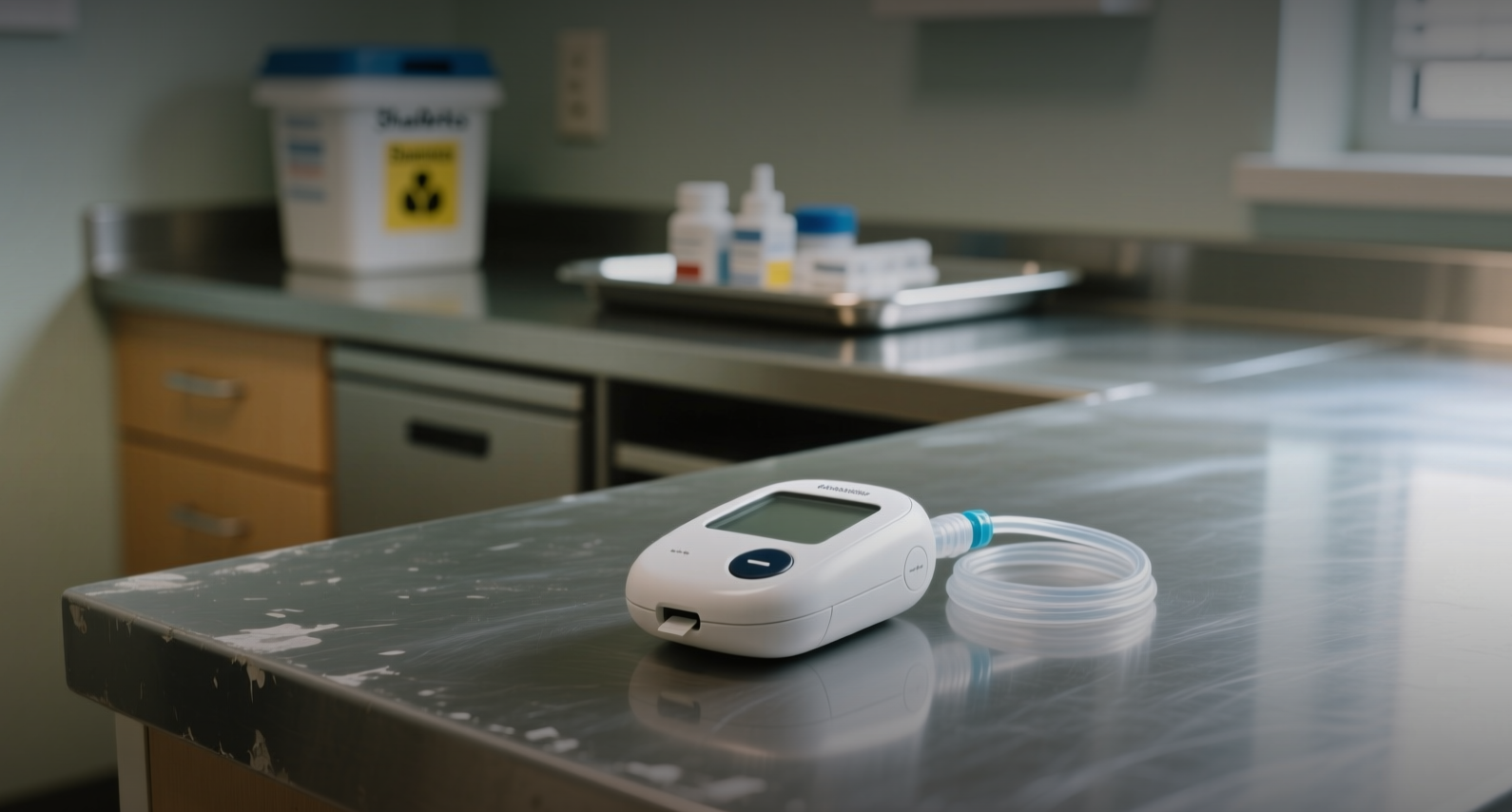
A securities fraud complaint announced Sept. 21 by Kaplan Fox & Kilsheimer LLP targets Beta Bionics Inc. (NASDAQ: BBNX) and covers anyone who bought the stock across a seven-month stretch that ended the same day the FDA published a warning letter describing violations the company had spent months calling benign. The suit alleges the iLet Bionic Pancreas drew thousands of customer complaints, including reports of severe hypoglycemia requiring hospitalization, and that the device's dosing algorithm sat at the root of those events. "The warning letter made clear that Defendants' prior interpretation of FDA reporting requirements had not been reasonable, and had excluded numerous serious patient incidents that clearly should have been reported," the complaint states, according to Kaplan Fox's notice of the action. The class period runs from July 30, 2025 to February 24, 2026 and is bracketed by two disclosures. On January 8, 2026, Beta Bionics missed on new iLet patient starts, its key growth metric, and the stock fell 37% in a single session. On February 24, 2026, the FDA released a warning letter detailing violations and what the complaint describes as a failure to correct them. Investors seeking lead plaintiff status must file with the court by November 3, 2026; class membership does not require serving as lead plaintiff to share in any recovery. ## What the iLet does, and why the algorithm matters The iLet is an automated insulin delivery system — a pump that reads continuous glucose monitor data and calculates insulin doses without requiring the user to count carbohydrates or set basal rates. That autonomy is the product's commercial pitch and its regulatory exposure. An algorithm tuned toward aggressive correction shortens the path to target glucose ranges, but it also widens the tail of hypoglycemic events, the low-blood-sugar episodes that in severe cases require emergency treatment. Beta Bionics competes in a market dominated by Medtronic's MiniMed line and Tandem Diabetes Care's t:slim X2 with Control-IQ, alongside Insulet's Omnipod 5. Those systems generally require more user input on meal dosing, which is precisely the friction the iLet was designed to remove. The trade-off is that a dosing error scales across the entire installed base rather than one patient's settings, which is why complaint volume functions as a leading indicator for device makers in a way it does not for most medtech categories. The FDA pathway matters for how much protection the company has. Automated insulin delivery systems typically reach market through the 510(k) route, cleared as substantially equivalent to a predicate device, a lower evidentiary bar than a premarket approval. That makes post-market surveillance and adverse event reporting the primary safety net — and makes the adequacy of that reporting the central factual question in the litigation. ## The 37% session that reset expectations The January 8 patient-start miss was the first crack. New starts are the metric investors use to gauge whether a device is winning share from Medtronic and Tandem, and a miss on that line undercuts the growth multiple a commercial-stage medtech carries. The 37% one-day decline repriced the equity before any regulatory document was public. The February 24 warning letter supplied the second half of the story. A warning letter is the FDA's escalation step short of seizure or injunction, and it typically requires a written corrective action plan with a defined response deadline. Remediation at that stage carries direct costs — quality systems work, possible retrospective complaint review, potential field corrections — plus the indirect cost of slowed new-patient onboarding while sales representatives answer clinician questions about the letter. Beta Bionics has not disclosed the financial scope of any remediation, and no recall has been announced. Those figures are not yet disclosed. ## What BBNX holders are actually pricing For investors, the litigation creates a two-sided problem. The damages theory rests on the gap between what the company said about back-filed complaints and what the warning letter described, which means the class period's boundaries define who can claim losses and how large the potential class is. A longer certified period with a 37% drawdown inside it raises the theoretical exposure. The operational problem is separate and arguably larger. Beta Bionics is commercial-stage but not yet consistently profitable, so any slowdown in iLet starts hits cash burn directly, and any institutional exit tied to the litigation adds selling pressure on a stock with a limited float. Peer read-through is muted: Medtronic and Tandem face no allegations here, so the risk is company-specific rather than a sector re-rating. The next hard dates are November 3, 2026, the lead plaintiff deadline, and the company's response to the warning letter, which has not been made public. Until both resolve, BBNX trades on legal uncertainty rather than on the patient-start trajectory that drove the stock before January. This article is for informational purposes only and does not constitute investment advice.