Edgen AI operates independently of, and is not controlled by Aspen Digital Financial Limited.
Connecting Excellence raises £600,000 for Bitcoin treasury as Adam Back funds a third
 Edgen Stock·Sep 22 2026, 16:05
Share to
Share to
Copy link

[1] Connecting Excellence raises funds to support Bitcoin treasury (https://www.proactiveinvestors.com/companies/ ...)[2] Connecting Excellence Group PLC Announces Institutional Subscription Raising £600,000 (https://finance.yahoo.com/markets/crypto/arti ...)[3] Belgi 4: Bestemming bereikt (https://www.wieringernieuws.nl/index.php?pagi ...)
Related News
Sep 22 2026, 17:29
CanCambria raises $5 million at $0.30 to fund Hungary oil drilling
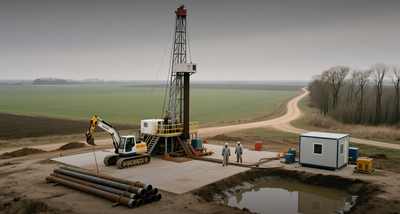
CanCambria Energy Corp. agreed to sell units at CAD$0.30 apiece for gross proceeds of up to CAD$5.0 million, with Research Capital Corporation acting as sole agent and sole bookrunner on the brokered, best-efforts listed issuer financing exemption private placement. The Vancouver-based explorer, which trades on the TSX Venture Exchange under CCEC and on the Frankfurt and OTCQB markets as 4JH and CCEYF, said proceeds are earmarked to accelerate its high-impact shallow oil project in southern Hungary, running alongside a deeper gas program in the same basin. The company did not disclose a closing date, the number of units to be issued, or a use-of-proceeds breakdown beyond the shallow oil acceleration. Existing shareholders, certain members of management and directors, and other President's List investors are expected to participate for aggregate proceeds of up to CAD$700,000, or 14 percent of the total raise. That insider and affiliated allocation is the single most concrete signal in the announcement: management is buying the same units at the same CAD$0.30 price as outside investors, with no disclosed discount or warrant sweetener attached to their participation. The offering is structured under the listed issuer financing exemption, which allows the units to be sold free of the four-month hold period that normally applies to Canadian private placements. For a small-cap issuer, that distinction matters — it means buyers can trade the units immediately rather than carrying restricted paper through the drilling campaign. At CAD$0.30 per unit, the raise implies roughly 16.7 million units issued if fully subscribed, against a company whose share count was not restated in the announcement. That is the arithmetic cost of the financing: existing holders absorb the dilution in exchange for capital that funds near-term drilling rather than general working capital. The macro backdrop is doing real work here. European natural gas and power prices have run well above their five-year averages through 2026, a function of reduced Russian pipeline flows, tight LNG supply and strong industrial demand. For an operator with acreage in Hungary — an EU member state with domestic production incentives and access to premium-priced regional gas markets — that price environment raises the netback on every barrel and every thousand cubic feet produced. The shallow oil project is the near-term leg. Shallow targets typically carry lower drilling costs and faster cycle times than deep formations, which is why the company is directing the bulk of the raise there rather than toward the deeper gas play. The deep gas strategy remains the larger prize on paper, but it requires more capital and longer lead times, and the CAD$5.0 million does not appear sized to fund it. Peer context is instructive on scale. Banyan Gold Corp., a TSXV-listed explorer, announced a CAD$50 million brokered offering at CAD$2.00 per share in September 2026, alongside a concurrent CAD$8 million non-brokered placement — roughly ten times the size of CanCambria's raise. CanCambria's CAD$5.0 million sits firmly in the junior micro-cap tier, where financings of this size are common and where a single dry hole can reset the equity story. The CAD$0.30 unit price is the number to watch. If the units carry a warrant component, the effective cost of capital is higher than the headline suggests, and the overhang extends past the drilling result. If they do not, the raise is a straight equity sale at a price that existing holders will measure against their own entry points. What happens next depends on the drill bit. The company has not disclosed a spud date, a target depth, or an expected result timeline for the shallow oil program, and those three data points will determine whether the CAD$5.0 million converts into a re-rated asset or a sunk cost. Investors should also watch whether the offering closes at the full CAD$5.0 million or is scaled back — a shortfall would signal weaker institutional demand than the insider commitment implies. This article is for informational purposes only and does not constitute investment advice.

Sep 22 2026, 17:01
Barkin says September hike will resolve inflation as Fed path stays open
Richmond Fed President Tom Barkin said the quarter-point increase that lifted the federal funds rate to 3.75%-4.00% last week "will help" return inflation to the central bank's 2% target, a signal that officials are not ready to declare the tightening cycle finished even as markets price only a coin-flip chance of another move. "The risks to inflation outweigh the risks to maximum employment. That's why we raised rates," Barkin said in remarks prepared for delivery to the CFA Society Baltimore on Tuesday. Asked whether more increases are coming, he said: "Will additional hikes be required, and how many? We'll see." Barkin, who does not vote on the rate-setting Federal Open Market Committee this year, described US economic conditions as "if anything, firming," pointing to consumer spending and demand strength beyond the artificial intelligence buildout. He flagged the defense sector as "hot," said manufacturing contacts "are starting to sound more upbeat," and noted bankers describing healthy pipelines. His read on prices is that shocks once assumed to be temporary are not behaving that way: much of the Personal Consumption Expenditures Price Index is running above a 3% annual rate, against a headline reading of 3.4% and a 2% target. The transmission chain is already visible across assets. The policy-sensitive 2-year Treasury yield trades near 4.73%, well above the 4.204% high yield at the August auction, and the dollar index sat at 100.4 after touching its highest since late July. Equities have absorbed the hike without breaking: the S&P 500 has climbed since the decision and sits near record highs, a contrast with the more than 19% drawdown the index suffered during the 2022-2023 tightening campaign. That divergence is the crux of the debate. Traders assign roughly a 50% probability that the Fed lifts the funds rate window another 25 basis points to 4.00%-4.25%, according to market pricing cited by Reuters, while Fed Governor Lisa Cook's colleague Boston Fed President Susan Collins has said she backed last week's hike and now sees a greater likelihood of scenarios in which inflation stays notably above 2%. Against that, New York Fed President John Williams has argued the Middle East conflict and tariffs remain the biggest inflation drivers, with no second-round effects visible and inflation expectations well anchored. ## Oil is doing some of the Fed's work The hawkish case has one obvious leak. Brent crude fell below $99 a barrel on Tuesday after Iran proposed reopening the Strait of Hormuz within seven days if the US eases military pressure and lifts its blockade of Iranian ports — a report later disputed by Iran's Fars News Agency. A sustained decline in energy prices would ease the inflationary pressure that Barkin says justifies keeping rates elevated, and would erode the dollar's yield advantage over the yen and euro. The dollar index was 0.02% lower at 100.4, the yen firmed 0.12% to 157.15 per dollar, and the euro held near $1.146. Barkin's framing matters because it shifts the burden of proof. If inflation is being driven by demand rather than by energy, tariffs and other supply shocks that fade on their own, then a single hike is unlikely to be the end of the story — and the "higher for longer" narrative holds. If oil keeps sliding and goods prices follow, the Fed's own rationale weakens and the next move could be a hold rather than a hike. The last time the Fed raised rates into an economy this firm, in 2022-2023, the S&P 500 fell more than 19% and the dollar surged to multi-decade highs. This time the equity market has treated the hike as evidence of institutional independence rather than a growth threat, which is why the reaction function has inverted: the risk investors appear to fear most is a Fed that declines to tighten while inflation sits at 3.4%. The next FOMC decision is the near-term arbiter. Between now and then, the inputs that matter are the PCE print, the trajectory of Brent crude through the Hormuz standoff, and whether additional Fed officials echo Barkin's demand-side diagnosis or Williams's supply-side one. A 25 basis point move to 4.00%-4.25% in October would confirm Barkin's read; a pause would suggest the oil channel is doing the work for him. This article is for informational purposes only and does not constitute investment advice.
Sep 22 2026, 16:55
Bloom Energy faces Sept 28 deadline in scandium securities suit
A fifth law firm joined the queue of investor notices against Bloom Energy Corporation on Sept. 22, with Portnoy Law Firm telling shareholders they must move for lead plaintiff status by Sept. 28, 2026 in a securities class action covering purchases made between Feb. 27, 2025 and July 8, 2026. The Los Angeles-based firm's alert follows at least four similar notices issued since Sept. 20 by Rosen Law Firm, Bronstein Gewirtz & Grossman, Kaplan Fox & Kilsheimer and Bragar Eagel & Squire, all naming the same class period and the same deadline for the NYSE-listed fuel-cell maker. The complaint, filed in the U.S. District Court for the Northern District of California, alleges Bloom Energy obtained scandium through intermediaries that sourced the metal from China, and that the company understated how much it depended on Chinese supply of the rare-earth element used in solid oxide fuel cells. "Bloom is . . . reliant on Chinese scandium, according to global trade data, Chinese corporate filings, satellite imagery, and Hunterbrook's messages with Bloom's suppliers in China," the complaint states, citing a July 8, 2026 report published by Hunterbrook Media at approximately 1:00 p.m. EST. That July 8 publication is the event that closes the class period. Under the Private Securities Litigation Reform Act, the 15-day window to publish notice after a complaint is filed runs through the Sept. 28 motion deadline, after which the court appoints the lead plaintiff with the largest financial interest. No class has been certified, and investors who take no action remain absent class members with the same claim on any future recovery. Bloom Energy has not publicly commented on the litigation, and no settlement amount, damages estimate or trial schedule has been disclosed. The company's shares trade on the New York Stock Exchange under the ticker BE; the stock's price reaction to the Sept. 20-22 notices was not yet disclosed at the time of publication. The case sits at the intersection of two pressures on Bloom Energy's equity story. Scandium is a niche input for solid oxide fuel cells, and China controls the bulk of global rare-earth processing, so any finding that Bloom's supply chain ran through Chinese intermediaries touches the same sourcing risk that has drawn scrutiny across the U.S. energy-equipment sector. Peer fuel-cell and clean-power names including Plug Power and FuelCell Energy carry similar supply-chain exposure, though neither is named in the Bloom complaint. For holders, the near-term signal is procedural rather than financial: the Sept. 28 deadline determines who directs the litigation, not whether it proceeds. The next hard date after that is the court's lead plaintiff ruling, which typically follows within 60 days of the motion deadline. Investors will also watch whether Bloom Energy addresses the scandium sourcing question in its next quarterly filing, which would be the first company statement on the record since the Hunterbrook report. This article is for informational purposes only and does not constitute investment advice.