Edgen AI operates independently of, and is not controlled by Aspen Digital Financial Limited.
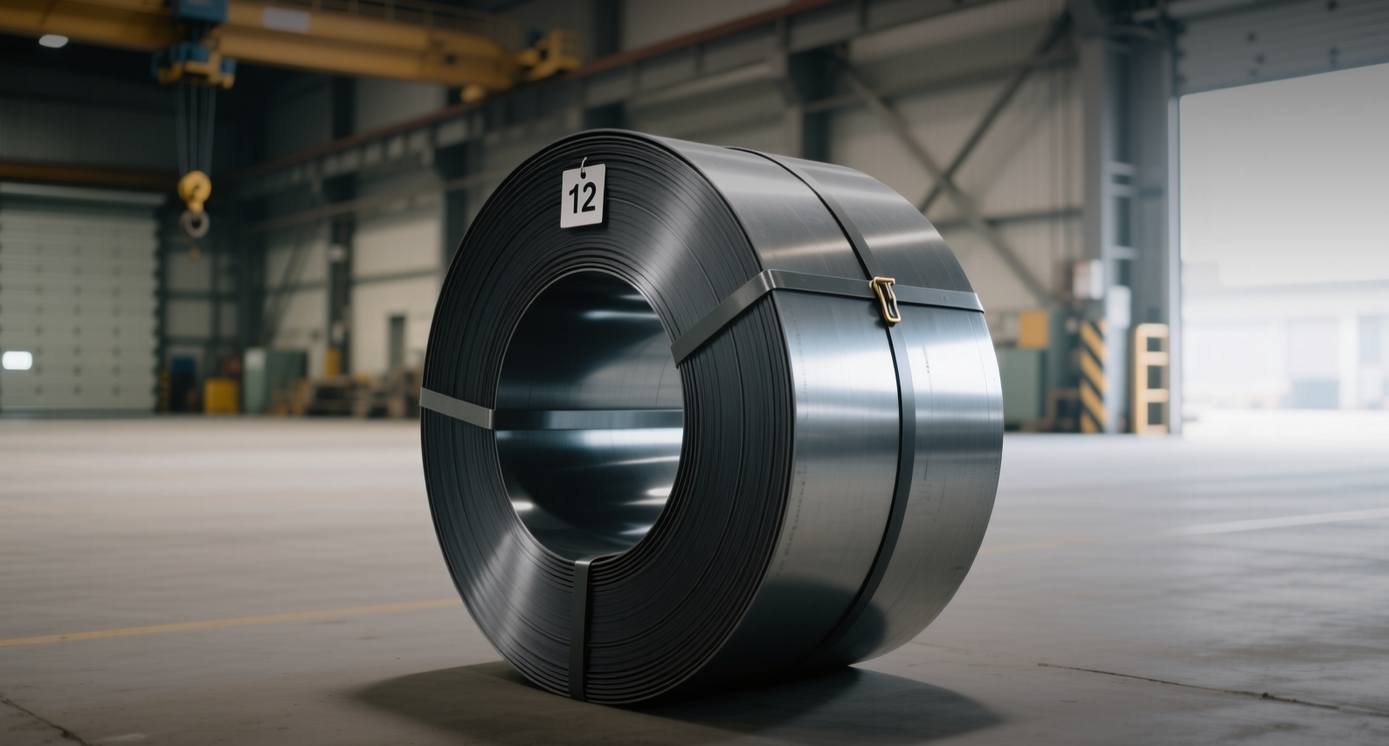
Cleveland-Cliffs jumps 5% as steel rebound outruns peers
 Edgen Stock·Sep 22 2026, 18:29
Share to
Share to
Copy link

[1] Cleveland-Cliffs Jumps 5% as Month-Long Rebound Extends; Nucor and Steel Dynamics Tick Up (https://247wallst.com/investing/2026/09/22/cl ...)[2] Cleveland-Cliffs Inc. Stock Price: Quote, Forecast, Splits & News (CLF) (https://www.perplexity.ai/finance/CLF?compari ...)
Related News

Sep 22 2026, 19:58
Gulf states press Trump on Iran as Hormuz risk holds oil premium
Gulf Cooperation Council officials meet President Donald Trump in New York on Tuesday to push for an off-ramp from the Iran war, a diplomatic opening that leaves the crude risk premium tied to the Strait of Hormuz intact until a deal is actually signed. "The central question for Washington will be how they view the choice between renewed escalation and a diplomatic off-ramp," said Danny Citrinowicz, an Iran analyst at Israel's Institute for National Security Studies, writing on X. Trump said his team held a three-hour meeting with an Iranian delegation on the sidelines of the UN General Assembly, calling it "productive" and adding that "they have another one scheduled in the very near future." In his UN address, he framed the choice as a deal or annihilation of the Islamic Republic, and said he expects an agreement after the US midterms. Iran's Revolutionary Guards countered that Tehran has "toughened" its conditions since a June deal collapsed. The meeting is the second time this year Gulf capitals have tried to steer Washington away from escalation. In early August, Trump said he called off a major strike at the request of Saudi Arabia, the United Arab Emirates and Qatar, whose leaders believed a deal with Tehran was within reach. More than a month later no agreement has emerged, and the war has widened rather than narrowed. ## Hormuz is the price mechanism, not the headline The chokepoint is where the GCC's diplomatic problem becomes a crude-market problem. Iran's parliament has warned that unauthorized commercial vessels transiting Hormuz will be fined 20 percent of their cargo value, with ships liable to temporary seizure until payment — a direct claim of ownership over the passage that carries roughly a fifth of global oil trade. The physical damage is already visible. Satellite imagery published Tuesday showed destroyed fuel depots at Saudi Arabia's King Khalid Airport. Yemen's Iran-backed Houthis have struck Saudi oil facilities and declared a blockade of ships moving to and from Saudi ports through the Red Sea, while Iran-backed militias in Iraq have been accused of hitting the kingdom's East-West pipeline — the route that exists specifically to bypass Hormuz. Riyadh's exposure is now two-front. Crown Prince Mohammed bin Salman asked Trump to strike the Houthis and the president declined, CNN reported, less than a year after Washington signed a defense agreement with Riyadh and designated Saudi Arabia a major non-NATO ally. US forces continue to provide intelligence and targeting support. Qatar, Bahrain and Kuwait are absorbing trade disruption from the Hormuz closure. The UAE has taken the opposite tack, stepping up engagement with Tehran; Anwar Gargash, diplomatic adviser to the UAE president, said the two sides agreed on the need to "turn the page," while warning that trust could take decades to rebuild and that dialogue must be paired with deterrence. That split is the bloc's core weakness. Gulf leaders can only move Trump if they speak with "one united voice" and bring him "very, very specific asks," Bader al-Saif, an assistant professor of history at Kuwait University, told CNN. He argues the first ask should be narrower than a sweeping peace deal: freedom of navigation through Hormuz, potentially traded for limited relief on Iranian oil sales and access to goods. ## A security bargain under strain Behind the immediate war decision sits a slower-moving risk to the same trade: senior Pentagon officials have privately made clear they want to scale back US troop presence in several Gulf countries, shifting more of the defense burden onto regional partners, three sources familiar with the discussions told CNN. For Gulf governments, discussing a drawdown while attacks spread risks handing Iran a victory. "This is not the time to have these conversations at all," an official familiar with Saudi thinking told CNN, adding the message has been conveyed to the Trump administration. Supreme Leader Mojtaba Khamenei has argued the US bases made Gulf states targets without delivering the security Washington promised. The last time the Gulf faced a comparable supply threat was 1991, when Iraqi forces threatened Saudi export infrastructure and crude prices roughly doubled in the months around the invasion of Kuwait. That episode produced the security bargain now under strain: Gulf states host American forces and buy US weapons in exchange for deterrence. Al-Saif calls the current moment a "test case" for the reverse shift. "We've had three decades of a US-led order. That order is over," he said. The market is pricing the ambiguity rather than a resolution. Trump has also backed a US diesel export ban as fuel prices surged, and Treasury Secretary Scott Bessent said Washington is examining whether a full or partial ban is feasible given refining capacity — a domestic-supply response that signals how far the energy shock has already travelled into US politics. Qatar's own read on the diplomacy is the most sobering input for anyone holding a risk premium. Majid al-Ansari, spokesman for Qatar's Foreign Ministry, told a conference in Abu Dhabi this month that Iran could withstand a long war, that Washington may hope pressure weakens Tehran while Tehran may hope the conflict shifts US politics, and that both sides may see more to gain by waiting. "What is the desired outcome for both parties in this war?" he asked. "If anyone can answer that, I am willing to pay a million dollars — from my own money." For crude traders, the operative signal is the gap between Tuesday's meeting and a signed agreement. A unified GCC ask that produces a Hormuz navigation guarantee would compress the geopolitical premium in Brent and WTI and pull gold back from its safe-haven bid. A meeting that ends in another round of talks without terms leaves the chokepoint risk priced in, with Saudi export routes, the East-West pipeline and Red Sea shipping all still inside the strike radius. The next scheduled US-Iran contact, which Trump said is set for the near future, is the date that matters. This article is for informational purposes only and does not constitute investment advice.

Sep 22 2026, 19:57
Grayscale swaps Bitcoin miners ETF for AI compute at 0.59% fee
The Grayscale Bitcoin Miners ETF no longer exists as a Bitcoin-miners product. On September 22 the firm retracked the fund to the Indxx High Performance Computing Index, renamed it the Grayscale AI Compute ETF and gave it the ticker GCPU, keeping the 0.59 percent expense ratio it charged under MNRS. The portfolio, though, still reads like a mining fund. IREN accounts for 15.84 percent of holdings, Hut 8 for 11.61 percent and Applied Digital for 8.37 percent, according to the fund page published as of September 21. MARA Holdings sits at 4.87 percent, Riot Platforms at 4.54 percent, CleanSpark at 4.53 percent, Bit Digital at 4.24 percent and Bitdeer at 4.07 percent. Nvidia, at 4.11 percent, is the only name in the top nine that does not operate Bitcoin mining infrastructure. Grayscale said the pivot reflects a physical constraint on AI growth rather than a change of view on mining. "AI's growth is constrained by physical compute. Data centers have just six months of capacity, and new ones take two to five years to build," the firm said in its September 22 announcement, adding that AI infrastructure capex is projected to exceed $1 trillion. The new mandate permits exposure to AI and GPU cloud services, data-center hosting, high-performance and accelerated computing infrastructure, and related hardware and services. GCPU trades on NYSE Arca and is classified as non-diversified, meaning single positions can carry outsized weight. Grayscale's updated disclosures flag risks including changes in computing technology, competition, electricity availability, equipment shortages, supply-chain disruptions and export restrictions, and caution that demand for AI infrastructure may not develop as expected. ## Miner economics still drive the wrapper The conversion changes the label faster than it changes the cash flows. Bitcoin mining and high-performance computing share electricity capacity and large-scale facilities, but the two businesses have different computing requirements and economics. IREN, Hut 8 and Applied Digital have each been building data-center operations alongside their mining businesses, which is what makes them eligible for the new index while keeping GCPU exposed to Bitcoin prices, mining economics and energy costs. The fund held 27 companies as of September 21, with a market price of $38.56. Its cumulative market-price return since inception was 29.17 percent through August 31. The three-month return was negative 34.46 percent and the six-month return 9.99 percent — figures that predate the conversion and therefore describe the old Bitcoin-miners strategy, not the GCPU mandate. That performance gap is the commercial logic behind the switch. Capital rotation into AI-related equities has been cited as one driver of this year's bitcoin bear market, and the rotation has made diversification harder for large allocators. Monte Tarbox, chief investment officer of the $326 billion New York City Retirement Systems, told Bloomberg he turned down a private equity fund because it was too exposed to AI: "In many respects, it's a terrifying time for somebody in my position." Goldman Sachs estimated in April that AI investment would drive roughly 40 percent of S&P 500 earnings growth this year, while an Invesco survey of 90 sovereign wealth funds found market concentration topped the list of AI-related risks. For a fund issuer, that concentration is a marketing problem and an opportunity at once: a Bitcoin-miners wrapper with a negative three-month return is a hard sale, while an AI compute wrapper holding the same companies is a different product on the shelf. ## What the 0.59% fee buys At 0.59 percent, GCPU sits in the middle of the AI and mining ETF field rather than undercutting it. The fee is the same one MNRS carried, which means Grayscale is competing on mandate and index methodology rather than price — a defensible position only if the Indxx High Performance Computing Index delivers exposure that a broader technology fund does not. The conversion is the second structural change to Grayscale's exchange-traded lineup this month. Earlier in September, the firm filed an amendment with the Securities and Exchange Commission seeking to convert its Litecoin Trust (LTCN) into an ETF listed on NYSE Arca. LTCN has traded on OTC Markets since August 2020, and the proposed conversion remains subject to regulatory approval. For holders, the practical question is which index they now own. GCPU retains exposure to Bitcoin prices, mining economics and energy costs through its largest positions, while adding a broader set of AI computing and data-center names. The next test comes with the fund's first full reporting period under the new mandate, when index reconstitution will show whether the miner weighting falls or the AI label simply sits on top of it. Grayscale has not disclosed a reconstitution date. This article is for informational purposes only and does not constitute investment advice.
Sep 22 2026, 19:56
Trump backs diesel export ban as prices hit record
President Donald Trump said his administration will decide "fast, one way or the other" whether to restrict U.S. diesel exports, endorsing the first curb on American energy shipments in more than a decade as road-fuel costs sit at record highs and Republican midterm candidates press for relief. "I've said let's not send out the diesel. We make a lot of diesel," Trump told reporters Tuesday at the United Nations General Assembly in New York, after being asked about a call for restrictions from Sen. Dan Sullivan, an Alaska Republican. "It could have a little bit of an effect on regular automobile gasoline because when you do that, you know, it's a sort of a flow. It's a balance." Treasury Secretary Scott Bessent, appearing alongside Trump, said the administration is examining "whether it's feasible in terms of the overall refining capacity and whether a full or partial ban would work." No decision date has been set, and no draft rule has been published. The proposal splits two of the administration's core constituencies. Farm-state Republicans, facing voters in November with diesel at record levels, have pushed for the restriction; the American Petroleum Institute and the refiners group American Fuel & Petrochemical Manufacturers oppose it outright. Energy Secretary Chris Wright has argued in recent days that throttling exports would force refiners to cut runs, reducing output of every barrel-derived product, gasoline included. The supply shock behind the price spike is not American. Ukrainian strikes on Russian refineries have taken refining capacity offline and pushed Moscow to impose its own diesel export ban, while damage to fuel manufacturing in the Middle East has tightened distillate availability. Trump said he planned to raise the refinery attacks with Ukrainian President Volodymyr Zelenskyy, calling them a "serious hit on the price of diesel." That framing cuts against the remedy under review. "Higher diesel prices are a concern, but the main driver of the higher prices is the war in Iran," said Gbenga Ajilore, chief economist at the Center on Budget and Policy Priorities and a former senior rural development adviser at the Agriculture Department. "End the war in Iran, open up the Strait of Hormuz, and diesel prices will fall. Any other solution will fail." Industry groups made the same argument in blunter terms. Mike Sommers, president and chief executive of the American Petroleum Institute, said export restrictions "risk making a difficult situation worse," adding that "restricting U.S. energy exports would only compound the problem—exacerbating refining challenges and ultimately hurting consumers." Geoff Moody, senior vice president of government relations and policy at AFPM, said a ban would "backfire," noting that "administrations from both parties have repeatedly opted against fuel export bans." ## Why a ban would move cracks, not just pump prices The mechanism matters more than the headline. U.S. refiners, particularly along the Gulf Coast, run heavy crude and export the distillate they cannot absorb domestically; the export channel is what supports utilization rates and, by extension, the diesel crack spread that drives margins for operators such as Valero Energy, Marathon Petroleum and Phillips 66. Removing that outlet would push more barrels into the domestic market, softening U.S. diesel prices at the pump while compressing the export-linked premium those refiners earn. The last comparable intervention came in 2015, when the Obama administration lifted a decades-old ban on crude oil exports rather than imposing one — a reminder that Washington has spent a decade moving in the opposite direction. Energy analysts have warned that any relief from a diesel ban would be temporary, because producers facing a shrunken export market would eventually drill less, and because the global distillate market is already short after the Russian and Middle East outages. A U.S. ban would raise diesel costs for buyers in Europe and Latin America while doing little to address the war-driven supply loss. The cross-asset read is two-sided. A ban announcement would likely lift refiners' domestic sales volumes but hit their margins and their share prices, while pulling global distillate benchmarks higher and adding to freight and agricultural input costs that feed directly into headline inflation. A decision to stand down would leave the export channel intact and shift the burden of relief back onto crude supply and the wars themselves. Trump's own framing — "I've called for it within my people. I've been talking about it" — leaves the administration room to land on a partial measure, such as a volume cap or a temporary suspension, rather than a full ban. Bessent's reference to "whether a full or partial ban would work" is the clearest signal that the middle path is live. For traders, the practical consequence is that the binary outcome is unpriced. With no timeline attached and a decision promised quickly, energy equities, diesel futures and freight-sensitive names carry headline risk in both directions until the administration publishes its choice. This article is for informational purposes only and does not constitute investment advice.