Edgen AI operates independently of, and is not controlled by Aspen Digital Financial Limited.
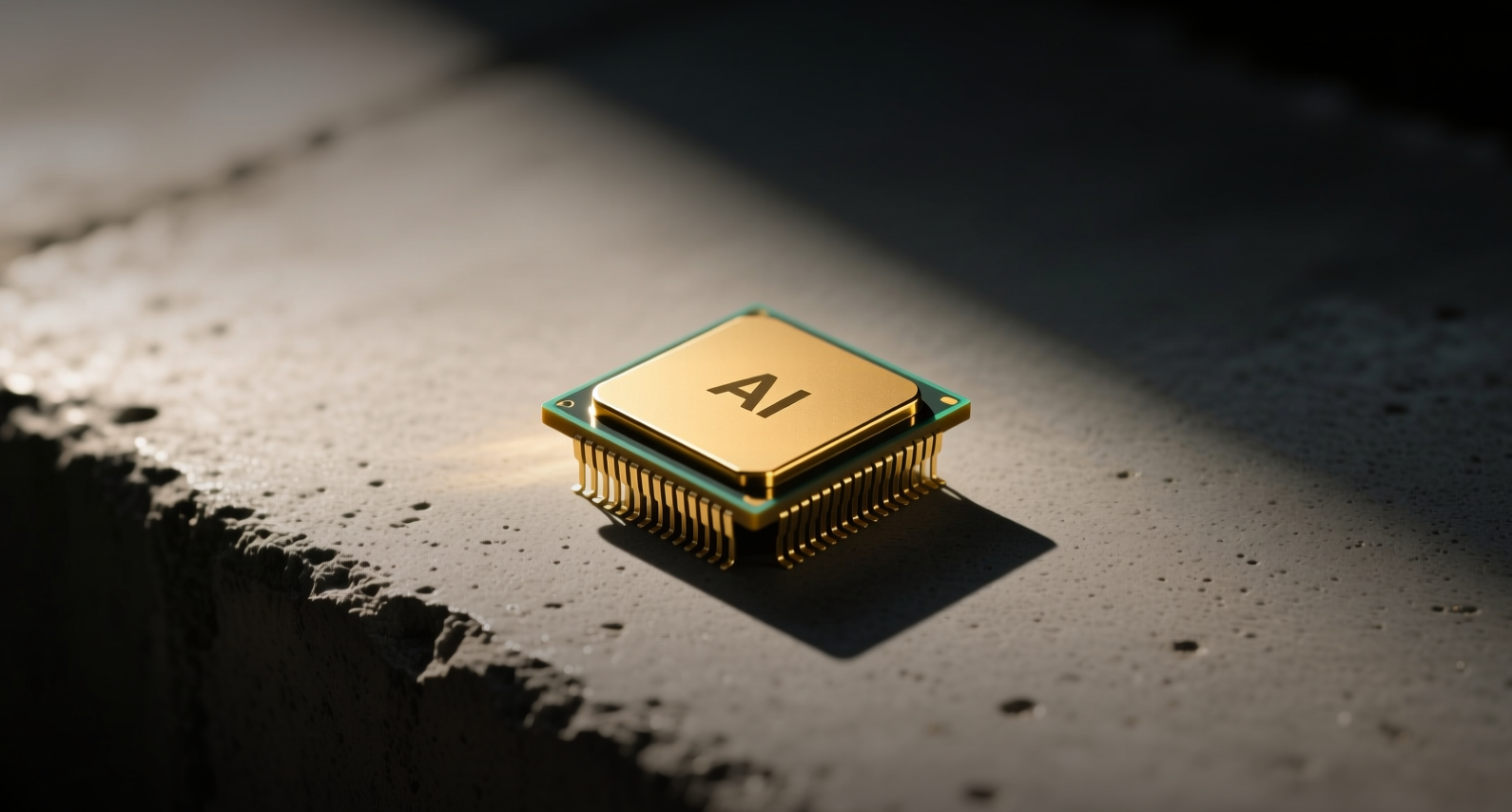
Chinese AI models reach 3 trillion parameters as domestic chip production looms
 Edgen Stock·Jul 21 2026, 03:33
Share to
Share to
Copy link
[1] <Research>CMSI: Rapid Iteration of Domestic Models Accelerates Impressively; Mass Production of Domestic Chips in 2H to Benefit Large Model Efficiency (https://www.aastocks.com/en/stocks/news/aafn- ...)[2] Is China replacing the U.S. as the world’s AI touchpoint thanks to Kimi K3? (https://www.fastcompany.com/91575831/is-china ...)[3] Kimi K3 May Prove to Be a Gift to America's AI Firms (https://www.bloomberg.com/opinion/articles/20 ...)[4] China's latest star AI model is putting 2 tech giants back in the spotlight (https://www.msn.com/en-us/news/technology/chi ...)[5] China’s AI models have Trump’s AI world at war with itself (https://www.technologyreview.com/2026/07/20/1 ...)
Related News
Jul 21 2026, 11:29
Tech hardware gains 8.6% productivity as AI bottleneck shifts to energy
**Morgan Stanley identifies energy and data center capacity, not chip design, as the next binding constraint on AI hardware expansion.** The next bottleneck for AI hardware is shifting from chip design to energy supply and manufacturing capacity, according to Morgan Stanley, as the industry's 8.6% productivity gains drive further infrastructure investment. "AI model efficiency improvements will further incentivize companies to increase AI infrastructure spending, providing sustained support for semiconductor demand," the Morgan Stanley analysts wrote in the report. The survey found tech hardware and semiconductor companies recorded net productivity gains of 8.6% and 8.2%, respectively, over the past 12 months, while facing net job losses of about 5% to 8%. Key constraints cited include infrastructure and energy limitations, data center capacity, legacy system integration, and a shortage of AI-skilled talent. The shift has direct implications for investors. As AI evolves from generative models to agentic AI, demand for CPUs, semiconductor equipment, and memory will intensify, putting pressure on foundry capacity at TSMC and advanced packaging supply chains. JPMorgan's 2026 technology budget of about $200 billion includes roughly $23 billion — or 25% — allocated to AI, a spending trajectory that Morgan Stanley said will compound the strain on physical infrastructure. European semiconductor companies are already adjusting. ASML, Infineon, and Aixtron all announced layoff plans in 2026, though management did not directly attribute the cuts to AI. A clearer case is ams OSRAM, which in February 2026 said it would eliminate more than 2,000 positions over three years, explicitly citing AI automation in its European operations as a reason while shifting some labor to Asia. The report's core thesis is that AI efficiency gains create a positive investment cycle: the more companies improve productivity through AI, the more they spend on AI infrastructure, which in turn drives chip orders. Across all industries surveyed, the average net productivity gain was 9.6%, with banks and software companies among the top adopters. **Supply chain constraints tighten as 2nm ramp begins** TSMC, the dominant foundry for AI chips, is already signaling the strain. The company reported Q2 2026 revenue of $40.2 billion, up 33.7% year over year, and raised its full-year capital spending to a range of $60 billion to $64 billion — a 15% increase from its prior target of $52 billion to $56 billion. About 70% to 80% of that spending is allocated to advanced process nodes including 2nm and 3nm, while 10% to 20% goes to advanced packaging such as CoWoS, which remains a bottleneck for AI chip supply. The 2nm node (which packs more transistors per square millimeter, improving performance per watt) is expected to dilute gross margins by 3 to 4 percentage points during its initial production ramp, according to TSMC. The company also announced a further $100 billion multiyear expansion of its Phoenix, Arizona facility, bringing its total US investment to $265 billion. **Investor implications: who wins, who loses** For investors, the Morgan Stanley report reinforces a bullish long-term outlook for semiconductor and AI infrastructure stocks by framing energy, power, and capacity constraints as structural drivers of sustained capital spending. Companies that provide the physical layer of AI — data center operators, energy infrastructure firms, and semiconductor equipment makers such as ASML and Applied Materials — stand to benefit as the bottleneck shifts from design to production. Conversely, chip designers that rely on easily scalable advantages may face margin pressure as rising energy and manufacturing costs eat into profitability. TSMC shares, which fell about 5% to below $400 after the earnings call as concerns over capital spending intensity weighed on sentiment, trade at roughly 18x forward earnings — a discount to the broader semiconductor index, according to analysts at Morgan Stanley and Barclays, who view the higher spending as a proxy for long-term revenue visibility rather than structural inefficiency. This article is for informational purposes only and does not constitute investment advice.

Jul 21 2026, 11:27
China deploys 60 billion yuan rescue as CSRC vows market stability
**China's securities regulator and state-backed investors launched a coordinated 60 billion yuan rescue to halt a two-week rout that erased 10 trillion yuan in market value.** China's securities regulator convened an emergency investor symposium Monday as state-backed investors deployed 60 billion yuan ($8.9 billion) to halt a two-week selloff that wiped 10 trillion yuan from A-share market capitalization. "Investors are the foundation of the capital market and its most important participants," CSRC Chairman Wu Qing said at the Beijing symposium, pledging to safeguard stable market operations and improve listed company transparency. The CSI300 Index rebounded 1.53% Monday while the Shanghai Composite gained 0.85% to 3,796.28 points, though the tech-focused STAR Composite fell 2.28%. Combined turnover reached 2.70 trillion yuan, up from 2.65 trillion yuan Friday. ETFs across the market recorded net inflows of 22.91 billion yuan in the past week. The coordinated response — spanning the CSRC, two state-owned investment firms, and multiple listed companies announcing buybacks — signals Beijing's determination to prevent a tech stock correction from metastasizing into a broader confidence crisis as the economy navigates a transition toward high-tech manufacturing. **State-backed buying spree** China Reform Holdings Corp Ltd deployed over 50 billion yuan through special re-lending facilities for share buybacks and stake increases, while China Chengtong Holdings Group Ltd purchased nearly 10 billion yuan of shares in central SOEs, technology companies and ETFs. The two firms, created in October 2024, pledged further purchases. Listed companies including CRRC Corp and SDIC Power Holdings announced shareholder stake increases and dividend proposals Monday. The rout, which began in late June, was driven by global tech deleveraging and domestic profit-taking after the STAR 50 Index surged more than 70% from early April to early July, according to Yang Delong, chief economist at First Seafront Fund. The KODEX SK Hynix Single Stock Leverage ETF, a proxy for South Korean AI exposure, has plunged about 70% from its June peak, triggering cross-border contagion. **Economic fundamentals intact** The selloff reflects short-term liquidity shocks rather than a deterioration in China's economic trajectory, analysts said. First-half GDP reached 69.6 trillion yuan, up 4.7% year-on-year — the strongest quarterly increment in five years, according to the National Bureau of Statistics. High-tech manufacturing value-added grew 13.3%, with integrated circuit manufacturing and intelligent vehicle equipment both expanding more than 30%. China's integrated circuit export value surged 96.1% year-on-year in the first half. International investors are taking notice. Morgan Stanley reported rising interest from global investors during recent roadshows, expecting gradual capital reallocation into Chinese stocks. Standard Chartered upgraded Chinese equities to overweight, citing valuation advantages and technology leadership. Goldman Sachs maintains an overweight stance on A-shares, particularly favoring AI and overseas expansion themes, and has suggested clients shift funds from South Korean AI stocks to comparable Chinese names. More than 570 foreign institutions have conducted over 3,900 surveys of A-share companies so far in 2026. Overseas investors held over 4 trillion yuan in circulating A-share market value as of May, according to Wind data. **Regulatory focus on fairness** The symposium, which brought together eight representatives from large institutional investors to individual retail investors, also addressed concerns about quantitative trading, which accounts for roughly 36% of A-share turnover. Participants called for "well-regulated development of quantitative trading and artificial intelligence applications," according to a CSRC statement, alongside stronger countercyclical measures and harsher penalties for securities violations. Wang Qing, chief macroeconomic analyst at Golden Credit Rating International, said GDP growth could rebound to around 4.6% in the third quarter, driven by pro-growth policies and the dissipation of short-term negative factors, with further acceleration in the fourth quarter. The last time the CSRC held a similar symposium during a market downturn was in 2024, preceding a sustained rally in A-shares over the following quarter. This article is for informational purposes only and does not constitute investment advice.

Jul 21 2026, 11:17
Hasbro raises 2026 outlook as Magic tops $500M in quarterly sales
Hasbro reported Q2 revenue of $1.14B, up 16%, and raised its full-year guidance as Magic: The Gathering topped $500M in quarterly sales for the first time. "Magic: The Gathering eclipsed $500 million in quarterly revenue for the first time in its 30-plus year history, led by the record-breaking debut of Marvel Super Heroes," Chris Cocks, Hasbro chief executive officer, said. Wizards and Digital Gaming segment revenue rose 27% to $663.8M, with operating profit of $270M and a 41% margin. Consumer Products revenue increased 5% to $463M despite a $25M revenue hit from a previously disclosed cyber incident. Entertainment revenue fell 20% to $12.8M on deal timing. Adjusted EPS came in at $1.28, compared with $1.30 a year earlier. The guidance raise signals management expects momentum in tabletop and digital gaming to persist. Hasbro now sees full-year revenue growth of 5% to 7% in constant currency, up from a prior range of 3% to 5%, with adjusted EBITDA of $1.45B to $1.50B. Magic: The Gathering generated $545.3M in the quarter, a 32% increase from a year earlier, fueled by the Secrets of Strixhaven and Marvel Super Heroes sets. Digital and licensed gaming revenue rose 17% to $135.5M, including $44M from Monopoly Go! The company recorded a $56M impairment charge tied to a refocusing of its digital games portfolio for 2028 and beyond. Consumer Products posted an adjusted operating loss of $7.5M, reflecting incremental tariff expense, entertainment-related mix shifts, and normal seasonality. The segment benefited from entertainment releases including Star Wars: The Mandalorian and Grogu, as well as momentum in GEM 2 categories. Hasbro returned $133M to shareholders in the quarter through dividends and share repurchases. The board declared a quarterly dividend of $0.70 per share, payable Sept. 2. The company also deployed $55M toward debt reduction during the period. The raised guidance shows that Hasbro's pivot toward gaming and digital is gaining traction. Investors will watch the next quarter's results for continued momentum in Magic: The Gathering and the ramp of new Universes Beyond releases. This article is for informational purposes only and does not constitute investment advice.