Edgen AI operates independently of, and is not controlled by Aspen Digital Financial Limited.
CFTC probes White House aide for $100K in insider bets on Trump speeches
 Edgen Stock·Jul 16 2026, 17:27
Share to
Share to
Copy link

[1] White House Teleprompter Operator Investigated for Alleged Bets on Trump Speeches (https://www.wsj.com/politics/policy/white-hou ...)[2] White House employee under investigation for making bets on Trump speeches, sources say | CNN Politics (https://www.cnn.com/2026/07/16/politics/trump ...)[3] Teleprompter operator made more than $100K betting on Trump's speeches: Sources - AOL (https://www.aol.com/articles/teleprompter-ope ...)[4] White House teleprompter operator made more than $100 ... (https://abcnews.com/US/white-house-teleprompt ...)[5] In Case You Still Think Insider Trading on Prediction Markets Isn't Real, Trump's Teleprompter Guy Just Got Busted for Getting Rich on Betting What He Would Say (https://futurism.com/future-society/trump-tel ...)
Related News
Jul 16 2026, 18:31
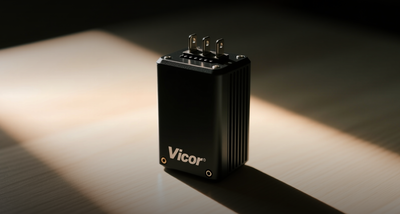
Vicor surges 138% as AI power demand strains capacity
Vicor's modular power components, essential for feeding electricity to AI accelerators, face capacity constraints so severe that the company's backlog surged 70% to $300.6 million in the first quarter. The book-to-bill ratio exceeded 2, meaning orders were more than double the value of products shipped. "Near-term capacity is essentially sold out," management said during the Q1 earnings call, describing a second 3Di production line that won't arrive until late 2026. The company raised its Q2 revenue guidance by $16 million to $142 million, driven by product shipments and royalties from a newly signed licensee. First-quarter revenue reached $112.97 million, up 20.2% from a year earlier, while gross margins expanded 800 basis points to 55.2% as higher volumes and royalty income improved factory utilization. Royalty revenues rose 39.1% to $14.97 million. Vicor shares have surged 137.8% year to date, far outpacing peers Monolithic Power Systems at 49.2% and Texas Instruments at 73.6%. At 14.64 times forward sales, the stock trades at more than double the broader semiconductor sector's 6.85 times, leaving limited room for error as the company races to debottleneck its Fab 1 facility. **Capacity Constraints Define the Near-Term Outlook** Vicor's Advanced Products, which include its Factorized Power Architecture and Vertical Power Delivery technologies, accounted for 61% of net revenues in 2025 and 57.5% in the first quarter of 2026. These systems convert and distribute power at higher densities than conventional solutions, making them critical as AI processors push power demands higher. The company now believes Fab 1 can support an annual revenue run rate of at least $1.5 billion, up from a prior target of roughly $1 billion, through cycle-time reductions, debottlenecking and moving selected process steps to a nearby Vicor-controlled site. A second 3Di line is expected to be installed in the third-to-fourth quarter of 2026, but management expects the company to remain capacity constrained for a substantial period. **Licensing Adds a Second Earnings Lever** Royalty revenues reached about $15 million in the first quarter, and the company's 2026 revenue outlook of nearly $570 million assumes only modest growth from existing agreements. An OEM recently secured an all-inclusive license covering Vicor's power-conversion topologies, control systems and distribution architectures, including Factorized Power Architecture and Vertical Power Delivery. Licensing carries substantially higher margins than product sales, which helped drive gross margin to 55.2% in Q1. However, legal spending tied to intellectual-property enforcement has risen, with operating expenses increasing 4% sequentially to $45.5 million. Management's 2026 outlook assumes no new licensing agreements before a second International Trade Commission case reaches final determination in 2027, leaving possible upside if enforcement actions lead to earlier settlements. Vicor ended the first quarter with $404.25 million in cash, giving it flexibility to fund manufacturing expansion and research. The stock carries a Zacks Rank #2 (Buy), but the $273 price target implies only modest upside from current levels near $260. The operating story remains strong — the question is whether the market has already priced in the capacity expansion before it arrives. This article is for informational purposes only and does not constitute investment advice.

Jul 16 2026, 18:30
Strategy ties Bitcoin buys to STRC par value as shares trade at $87
**Strategy will not resume buying Bitcoin until its STRC preferred stock recovers to the $100 par value, CEO Phong Le said, as the preferred shares trade near $87.** Strategy CEO Phong Le tied the company's next Bitcoin purchase to STRC preferred stock returning to its $100 par value, as the shares traded near $87 on July 15. "We'll continue to build that. And yeah, when Stretch gets back to par, we'll issue more. We'll buy more Bitcoin," Le said in a Bloomberg interview, though he acknowledged he did not know how long the recovery would take. STRC has traded below $100 since mid-May and hit an intraday low of $71.25 on June 26 before recovering to about $89. Strategy raised the annual dividend rate to 12% effective July 1, the eighth increase since the instrument launched, as annual preferred dividend and interest obligations now exceed $1.76 billion against the company's $124.3 million in quarterly software revenue. The pause marks a strategic shift for the world's largest corporate Bitcoin holder, which sold $216 million in BTC last week — its largest disposal since 2020 — to fund dividends and build a $3 billion cash reserve. Strategy holds 843,775 BTC worth roughly $50.6 billion at current prices, carrying about $9 billion in unrealized losses after acquiring coins at an average $75,700 each. Le drew a sharp line on how low Bitcoin would need to fall before the company reassessed its debt structure. Only if the price dropped toward $8,000 to $10,000, he said, would Strategy "have to consider some of the risk associated with our debt." Coin Bureau CEO Nic Puckrin has publicly modeled Strategy's solvency threshold at $20,000, roughly twice Le's figure. Standard Chartered's global head of digital assets research, Geoff Kendrick, described the recent Bitcoin sales as "mostly noise rather than a signal" in a note to clients, maintaining the bank's $100,000 year-end Bitcoin price target. He argued that Strategy's holdings "heavily over-collateralize" the STRC instrument and that the preferred stock should trade back to par if the company articulates its new approach clearly. **The STRC Pressure Loop** The mechanics behind the pivot create a self-reinforcing dynamic. When STRC falls below par, the dividend rate rises automatically, increasing cash burn and forcing either more share issuance — diluting MSTR holders — or additional Bitcoin sales that undermine the "never sell" thesis that supported the company's premium valuation. MSTR stock has declined more than 77% over the past 12 months to close at $94.64, down from a 52-week high of $457.22. Strategy's new Digital Credit Capital Framework, adopted in late June, authorizes up to $1.25 billion in discretionary Bitcoin sales and two $1 billion buyback programs. The company sold 4.82 million common shares to raise $466.7 million in fresh capital during the week ending July 13, focusing on building cash rather than buying Bitcoin. The $3 billion reserve provides roughly 20 months of preferred dividend and interest coverage at current obligation levels. Bitcoin traded near $64,800 on July 16, down 45% from its October record. Bitcoin ETFs recorded their largest quarterly outflow since launch during the second quarter, with outflows persisting into July. Wells Fargo disclosed a 125% increase in its Strategy stake, though other institutional holders have trimmed exposure to both MSTR and Bitcoin products. Strategy's second-quarter earnings report on July 30 will be the next critical data point, with analyst estimates ranging widely from $0.78 to $52 per share, reflecting deep uncertainty about how unrealized Bitcoin losses will affect reported results. *This article is for informational purposes only and does not constitute investment advice.*

Jul 16 2026, 18:29
Moia launches robotaxi pilot in Hamburg with 10 autonomous ID. Buzz vans
Volkswagen's autonomous mobility arm Moia launched a robotaxi pilot in Hamburg on Thursday, deploying up to 10 self-driving ID. Buzz vans in a challenge to Waymo and Tesla as Europe's autonomous vehicle market takes its first commercial steps. "Our first passengers are now experiencing autonomous mobility in Hamburg's urban traffic for the first time," Moia CEO Sascha Meyer said in a statement. "For Moia, this marks an important milestone in the development of our European solution." The ID. Buzz vans operate at Level 4 autonomy using Mobileye's self-driving system, equipped with 13 cameras, nine LiDARs and five radars. They have a range of 234 miles (377 kilometers) and 282 horsepower. The pilot covers about 4 square miles across Hamburg's Winterhude, Barmbek and Wandsbek districts, with plans to expand to roughly 14 square miles. Rides are free during the trial, with several thousand people already on a waiting list, Moia said. The launch positions Volkswagen among a handful of automakers competing in the robotaxi market, alongside Alphabet's Waymo, Hyundai-backed Motional and Tesla. Moia is targeting European regulatory approval for driverless ID. Buzz operations in 2027, while also preparing US deployments with Beep in Orlando and Uber in Los Angeles later this year. The pilot operates as a ride-pooling service rather than a private robotaxi like Waymo's offering in San Francisco and Phoenix. Passengers traveling in the same direction may share a vehicle, with pickups and drop-offs at designated virtual stops. The service will eventually be bookable through Hamburg's hvv switch public transit app, Moia said. Moia has primarily run a human-driven, ride-pooling service in Hamburg using electric shuttles. Over the past several years, the company built an autonomous mobility platform combining vehicles, self-driving software, fleet management and passenger booking technology. The Hamburg deployment integrates Volkswagen's vans with Mobileye's autonomous driving system. The trial is part of the ALIKE project, backed by the German Federal Ministry for Digital and Transport, which runs through mid-2027. Moia said it plans to license its technology platform to public and private fleet operators rather than operate its own robotaxi service at scale. "Any future commercial deployment and its scope will depend on decisions by the responsible public transport authorities, local mobility strategies, and the regulatory framework," a Moia spokesperson said. Moia's US expansion is already taking shape. In April, the company announced a partnership with Beep to build a fleet of up to 5,000 autonomous shuttle vehicles for public transport over the next decade. A separate deal with Uber will bring autonomous ID. Buzz vans to Los Angeles before the end of the year. The Hamburg pilot gives Volkswagen a foothold in a market that Alphabet's Waymo has dominated in the US. Waymo operates more than 700 vehicles across multiple cities and completed over 4 million paid trips in 2025. Tesla has promised a robotaxi network using its vehicles and software but has yet to launch a commercial service. Hyundai-backed Motional operates a pilot in Las Vegas with Uber. Moia's approach differs from its US competitors by targeting shared mobility and public transport integration rather than private ride-hailing. The company's platform-as-a-service model could appeal to European cities seeking to add autonomous capacity without building their own technology stacks. The UNECE recently adopted a regulation for fully autonomous driving systems, establishing internationally harmonized safety requirements for the first time, which could accelerate Moia's regulatory path across Europe. This article is for informational purposes only and does not constitute investment advice.