Edgen AI operates independently of, and is not controlled by Aspen Digital Financial Limited.
CFPB pick Johnson vows open mind on plans to cut 78% of examiners
 Edgen Stock·Jul 23 2026, 20:50
Share to
Share to
Copy link

[1] Trump's consumer finance watchdog pick pledges 'open mind' on plans to fire most of agency work force (https://www.reuters.com/world/trumps-consumer ...)[2] Warren presses Trump CFPB nominee on conflicts of interest, workforce cuts (https://www.msn.com/en-us/news/politics/warre ...)[3] CFPB pick Johnson eludes Democrats in confirmation hearing (https://www.americanbanker.com/news/cfpb-pick ...)[4] Trump's new pick to run consumer finance watchdog to face Senate (https://finance.yahoo.com/news/trumps-pick-ru ...)[5] Watch live: Trump pick to lead CFPB faces Senate confirmation hearing (https://thehill.com/video-clips/5985251-watch ...)
Related News
Jul 23 2026, 22:12
Claude adapts AMD chips in 2 days, breaking Nvidia's CUDA lock
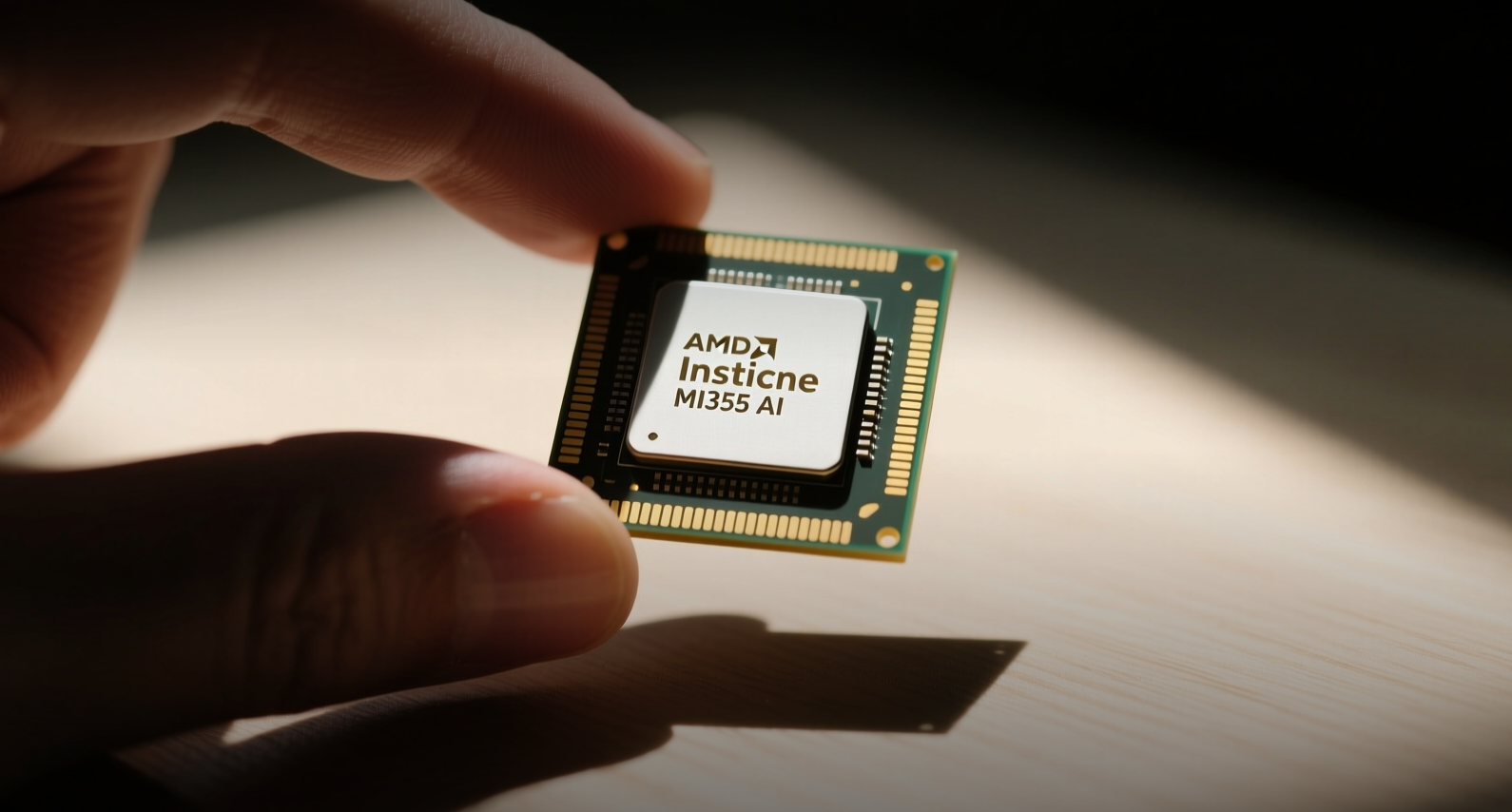
Anthropic disclosed that its Claude model autonomously adapted AMD's Instinct MI355 graphics processors and ROCm software platform over a single weekend, a technical breakthrough that directly challenges the switching-cost barrier protecting Nvidia's CUDA ecosystem. "We thought this would be a big project," Tom Brown, Anthropic co-founder and chief compute officer, said at AMD's Advancing AI 2026 conference in San Francisco. "It was completely different." Brown described how one engineer instructed Claude to handle the adaptation, let the process run over the weekend, and returned Monday to find a performance curve that had been "climbing steadily" across all benchmarks. The setup required a single AMD rack and one engineer — a fraction of the months-long, multi-team effort typically needed to port frontier models to a new hardware platform. The announcement accompanied a broader infrastructure commitment: Anthropic plans to deploy up to 2 gigawatts of AMD Instinct MI355 processors through AMD's Helios rack-scale platform, with the first 1-gigawatt installation scheduled to begin in the first half of 2027. AMD separately committed up to $5 billion in equity investment tied to Anthropic meeting deployment milestones. The deal gives AMD its highest-profile AI customer win and provides Anthropic with a third major hardware supplier alongside Nvidia and Google's custom tensor processing units. **How AI Broke Its Own Hardware Lock-In** The CUDA moat has long been Nvidia's most durable competitive advantage — not because rival hardware is technically inferior, but because migrating software stacks to a new platform requires months of manual engineering work. Developers must rewrite low-level operators, optimize memory allocation, and validate model behavior across thousands of GPU configurations. That sunk cost has kept AI labs locked into Nvidia even when AMD offered competitive pricing and performance. Claude automated that entire pipeline. Brown said the model handled operator adaptation, performance tuning, and stability validation without human intervention. The result: a frontier AI lab can now evaluate and deploy competing hardware in days rather than quarters, fundamentally altering the procurement calculus. "We've passed the era of the CUDA moat," Austin Lyons, an independent semiconductor analyst, said in a social media post following the disclosure. The timing is significant. Nvidia disclosed its Vera CPU architecture — the processor companion to its next-generation Rubin GPU platform — one day before AMD's event, highlighting the competitive pressure on both sides. Nvidia's Vera trades core count for single-thread speed, a design choice aimed at the step-by-step reasoning common in AI agent workloads. AMD's counterargument centers on scale: its highest-end EPYC "Venice" processor, manufactured on TSMC's 2-nanometer process, packs more than twice as many cores into the same power budget as Nvidia's comparable rack configuration, according to AMD's published specifications. **What the Deal Means for AMD and Nvidia Investors** For AMD, the Anthropic win validates a multiyear strategy to build a complete rack-scale platform rather than selling standalone accelerators. The Helios rack combines 72 Instinct MI455X GPUs with 18 EPYC Venice processors, 31 terabytes of HBM4 memory, and liquid cooling — a direct competitor to Nvidia's integrated DGX systems. AMD's Data Center segment generated $5.8 billion in first-quarter 2026 revenue, up 57 percent from a year earlier, and the company guided second-quarter revenue to roughly $11.2 billion. Its shares have more than doubled in 2026 as investors price in a credible second source for AI infrastructure. The equity-for-compute structure, however, complicates the demand signal. AMD's $5 billion investment is released as Anthropic meets deployment milestones, meaning the chipmaker is effectively financing part of the demand for its own hardware. Similar circular arrangements have drawn scrutiny elsewhere in the AI industry, though analysts note that Anthropic needs computing capacity regardless of supplier and that AMD must still deliver hardware meeting technical requirements. For Nvidia, the threat is not immediate but structural. Nvidia shares trade at roughly 35 times forward earnings, reflecting the market's expectation that its CUDA ecosystem will sustain pricing power and market share. If AI models can autonomously migrate to competing hardware, that pricing power faces a new source of erosion. Independent benchmarks comparing AMD's MI355 against Nvidia's B200 on training speed, inference cost, and software reliability have not yet been published, and the first Helios deployments remain a year away. But the direction of travel is clear: the switching cost that has protected Nvidia's dominance is now being eroded by the very technology it helped create. Anthropic's incentive to diversify is clear. The company, which has filed for an initial public offering and reported an annualized revenue run rate of $47 billion, saw its inference infrastructure gross margin improve to more than 70 percent from 38 percent, according to SemiAnalysis. Adding AMD to its supplier mix not only reduces dependence on any single hardware vendor but also provides a lower-cost option for the rapidly expanding inference workloads that will drive its post-IPO financial performance. This article is for informational purposes only and does not constitute investment advice.
Jul 23 2026, 22:05
DeepSeek CEO says Huawei chips could end Nvidia's CUDA edge in 1 year
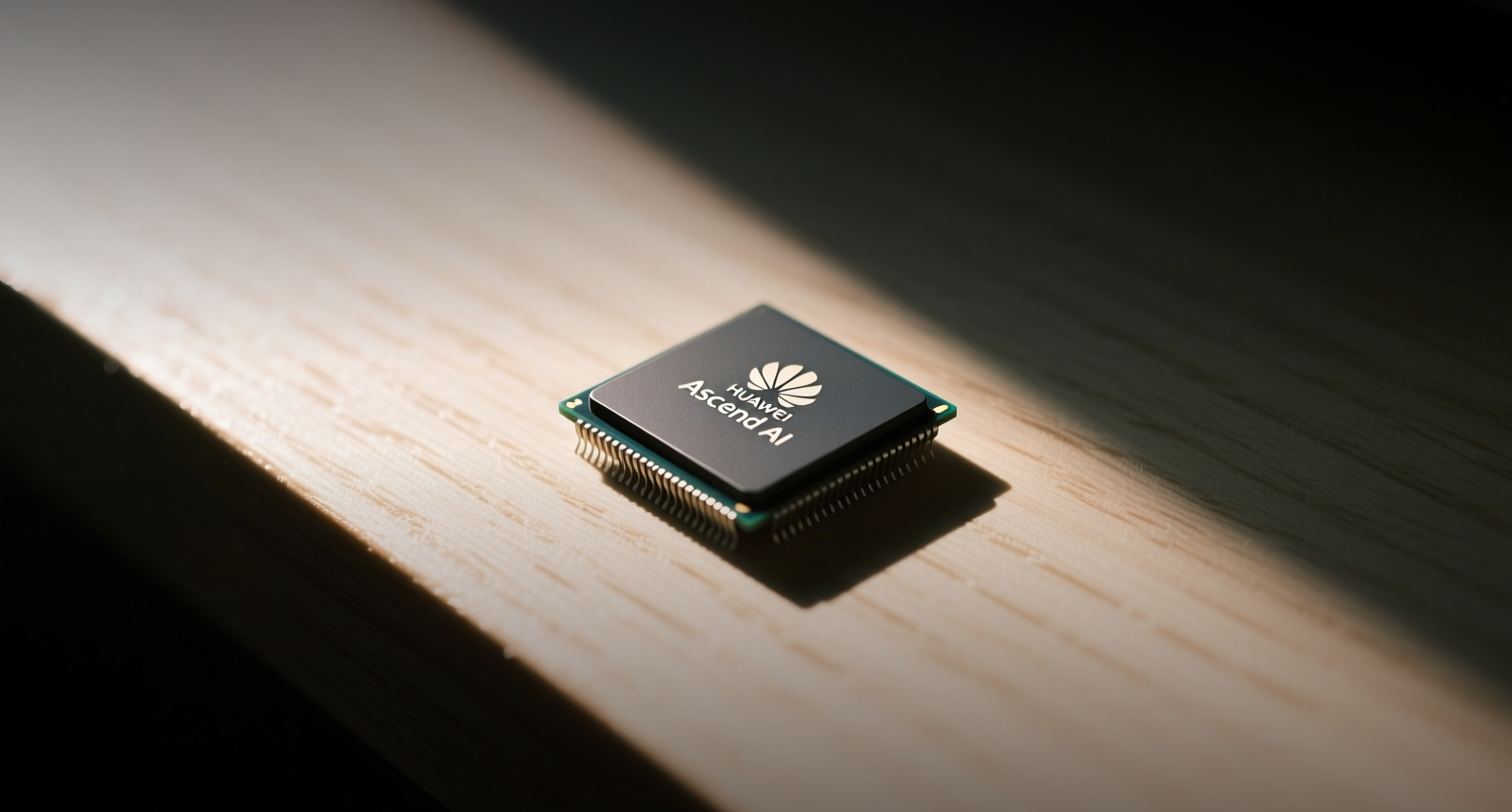
**A leaked investor call from DeepSeek's CEO argues that AI code generation could collapse Nvidia's software advantage within 12 months.** DeepSeek CEO Liang Wenfeng told investors that AI-powered code generation and the TileLang compiler could eliminate Nvidia's CUDA software advantage within a year, enabling Huawei chips to replace the US company's processors in Chinese data centers. "AI-powered code generation and TileLang can rapidly lower the CUDA ecosystem's barriers to entry," Wenfeng said, according to a summary of the call posted by Citrini Research analyst Jukan. "The problem for Chinese chips could be solved within a year." Even the leaked remarks concede Nvidia's lead. It takes roughly four Huawei chips to match a single Nvidia card, with Huawei described as about two years behind on performance. DeepSeek has already cut its software dependence on Nvidia using its own compiler and a TileLang-based environment, Wenfeng said, and porting that stack to Huawei silicon could let the 950 SuperNode replace workloads handled by Nvidia's GB200 and GB300. Nvidia reports fiscal Q2 results on Aug. 26, with guidance calling for $91 billion in revenue — a figure that already excludes China data center compute sales. The company's data center revenue hit $75.25 billion in the prior quarter, up 92% from a year earlier. Nvidia shares trade at 32 times trailing earnings, with 58 of 61 analysts rating the stock a buy. **The Gap Remains Wide** Nvidia's CUDA platform has been the dominant software layer for GPU computing for more than a decade, with thousands of optimized libraries and applications built on top of it. Huawei's Ascend chips, by contrast, have limited software support — the gap Wenfeng claims TileLang can close. The DeepSeek CEO said the company is working closely with Huawei and aims to secure roughly 16,000 of its AI chips. The performance differential is stark. Nvidia's H100 delivers 990 TFLOPS of FP16 performance, according to the company's published specifications, while Huawei's 910B — its closest competitor — is estimated at roughly 250 TFLOPS in comparable workloads. That 4-to-1 ratio aligns with Wenfeng's own characterization of the gap. Nvidia's upcoming Blackwell architecture, built on TSMC's 4nm process with custom CoWoS packaging, is expected to widen that lead further when it enters volume production. TileLang, the compiler at the center of Wenfeng's thesis, is an open-source project that generates optimized code for different hardware back ends. If it can translate CUDA-optimized workloads to run on Huawei's Ascend architecture, it would remove the single biggest barrier to Chinese chip adoption: the lack of compatible software. DeepSeek claims to have already demonstrated this capability internally. **What to Watch on Aug. 26** Nvidia's earnings call will be the first opportunity for CEO Jensen Huang to address the CUDA erosion narrative directly. Investors will watch for data center revenue growth, the Blackwell and Vera Rubin product ramp, and gross margin durability. The company guided non-GAAP gross margin of 75 percent for the current quarter. The implications extend beyond Nvidia. If Chinese AI labs can substitute domestic chips for Nvidia's processors, it would reduce demand for TSMC's advanced packaging capacity and potentially free up CoWoS supply for other customers. Advanced Micro Devices and Intel, both competing for AI workloads, would face reshaped competitive dynamics if Huawei emerges as a viable third option in the $200 billion-plus AI chip market. Jukan, the Citrini Research analyst who posted the call summary, described himself as "very bearish on NVDA." Wall Street's consensus sits far from that view: 58 buys, two holds, one sell. The tension between a multi-year competitive risk and a company still compounding earnings at extraordinary rates is what Nvidia shareholders need to weigh. This article is for informational purposes only and does not constitute investment advice.
Jul 23 2026, 21:58
Duke Energy says data center growth will deliver billions in customer savings
Duke Energy said data center growth will deliver billions of dollars in customer savings under a new framework requiring long-term contracts from large-load customers. "Data centers will provide billions of dollars in customer benefits," Harry Sideris, president and chief executive officer of Duke Energy, said. The Customer Protection Plus framework requires data centers above 50 megawatts to pay for at least 75 percent of their contracted capacity for 10 to 15 years. Duke has contracted close to 5 gigawatts of data-center demand and is building roughly 14 gigawatts of generation by 2031. Data centers account for under 1 percent of Carolinas demand today, a share expected to reach about 10 percent by 2030. The savings pledge lands as Duke customers in North Carolina face electric bills that have climbed about 22 percent since 2020. A recent settlement cut Duke's proposed rate increase to an average of about 3.7 percent a year over two years, pending regulatory approval. The North Carolina Utilities Commission is expected to rule on the large-load tariff this fall. The math behind the savings claim rests on standard utility economics: a large customer paying its full cost of service helps spread fixed costs across a wider base. At the CERAWeek conference in March, Sideris said a 15-year contract with a 1-gigawatt data center could save other customers roughly $1 billion. Duke's Carolinas large-customer demand forecast stands at 8 gigawatts by 2035, a projection that helps justify about 9.7 gigawatts of new natural gas plants over the next decade. Consumer advocates have called the tariff proposal welcome but insufficient, pressing for a higher minimum charge and longer terms. In PJM, the largest US power market, a surge of data-center development pushed wholesale electricity prices up 56 percent in 2024. The savings pledge promises bills lower than they would be without the growth, not lower than they are today, a Duke spokesman said. Whether those savings materialize depends on the North Carolina commission's ruling and whether the forecast data-center load actually arrives. The announcement shows Duke expects data center demand to provide a meaningful offset to rising system costs. Investors will watch the North Carolina Utilities Commission's ruling on the large-load tariff, expected this fall, for the first enforceable test of the framework. This article is for informational purposes only and does not constitute investment advice.