Edgen AI operates independently of, and is not controlled by Aspen Digital Financial Limited.
Camtek drops 9.4% as semiconductor equipment maker faces valuation pressure
 Edgen Stock·Jul 29 2026, 23:29
Share to
Share to
Copy link

[1] Why Camtek (CAMT) Dipped More Than Broader Market Today (https://www.zacks.com/stock/news/2963849/why- ...)[2] Why Camtek (CAMT) dipped more than broader market today (https://www.msn.com/en-us/money/savingandinve ...)[3] Why Camtek (CAMT) Dipped More Than Broader Market Today - Yahoo Finance Singapore (https://sg.finance.yahoo.com/news/why-camtek- ...)
Related News

Jul 30 2026, 00:47
Teladoc misses Q2 revenue target as BetterHelp cash-pay revenue drops 20%
Teladoc reported Q2 revenue of $607M, missing estimates by 1.5%, as BetterHelp cash-pay revenue collapsed 20%. "We are pivoting aggressively toward insurance-covered therapy, but provider capacity constraints are hampering our ability to convert that demand into revenue fast enough," Chief Executive Officer Jason Gorevic said. The company posted an adjusted loss of $0.21 a share, beating the $0.23 loss analysts projected. BetterHelp, Teladoc's largest mental health segment, saw cash-pay revenue decline 20% year-over-year, accelerating from prior quarters. The company slashed its full-year guidance, warning of steeper declines ahead. Shares fell 24% in after-hours trading, erasing roughly $300M in market value. The guidance cut shows that Teladoc's transition from consumer cash-pay to insurance-covered therapy is taking longer than expected, with provider capacity constraints limiting the pace of conversion. | Metric | Actual | Consensus | Beat/Miss | |--------|--------|-----------|-----------| | Revenue | $607M | $616M | -1.5% | | EPS | -$0.21 | -$0.23 | +$0.02 | The telehealth sector faces a broader reckoning as pandemic-era demand normalization continues. Competitors Amwell and Hims & Hers are navigating similar headwinds, though Teladoc's scale in mental health makes it particularly exposed to the cash-pay slowdown. The company's insurance-covered therapy push could unlock a larger addressable market, but the near-term pain from declining consumer revenue is testing investor patience. The guidance reduction implies management expects the BetterHelp decline to deepen before the insurance pivot gains traction. Investors will watch the Q3 earnings call for updates on provider network expansion and the pace of insurance contract conversions. This article is for informational purposes only and does not constitute investment advice.

Jul 30 2026, 00:47
BOJ begins 2-day meeting as FX markets eye forward guidance
The Bank of Japan begins a two-day policy meeting Wednesday with foreign-exchange markets laser-focused on how Governor Kazuo Ueda frames the next steps in the nation's rate normalization cycle, after fresh wage data reinforced the case for further tightening. "The BOJ's forward guidance is the single biggest variable for USD/JPY this week," said James Okafor, central bank analyst at Edgen. "Markets are looking for any signal on the pace of hikes — whether the board sees room for a move as soon as October or prefers to wait until early next year." Japan's Labor Ministry advisory panel on Tuesday recommended raising the nationwide average minimum hourly wage by 4.9% to ¥1,176 ($7.18) for the current fiscal year, according to a Bloomberg report. While the increase is smaller than last year's record 6.3% gain, the ¥55-per-hour rise is the second-largest on record, signaling that income growth across the broader economy remains resilient. The wage backdrop matters because the BOJ has consistently cited sustained pay gains as a prerequisite for further policy normalization. The central bank raised its policy rate to the highest level since 1995 earlier this year, according to the Polaris International Equity Composite report, as it moved to counter persistent inflationary pressures. Overnight index swaps currently price a roughly 40% probability of a 25-basis-point hike at the October meeting, with the remainder of the tightening expected to be spread across 2027. The policy decision, due Thursday afternoon Tokyo time, comes at a critical juncture for the yen. USD/JPY has traded in a wide range this quarter as the interest rate differential between Japan and the US has narrowed but remains substantial. A hawkish hold — where the BOJ keeps rates unchanged but signals readiness to move — could strengthen the yen by 1% to 2% against the dollar, according to StoneX. A more cautious tone, by contrast, risks renewing pressure on the currency and reigniting carry-trade demand. The last time the BOJ used language explicitly flagging near-term normalization was in its January statement, which preceded a 25-bp hike at the following meeting in March. The yen strengthened 3.2% against the dollar in the two weeks after that decision, before giving back gains as US economic data surprised to the upside. Beyond the rate decision, investors will scrutinize the BOJ's quarterly outlook report for updated inflation and growth forecasts. The board's median projection for core consumer price inflation is expected to remain above the 2% target through fiscal 2027, giving the central bank cover to continue withdrawing stimulus even as global trade uncertainties mount. This article is for informational purposes only and does not constitute investment advice.
Jul 30 2026, 00:21
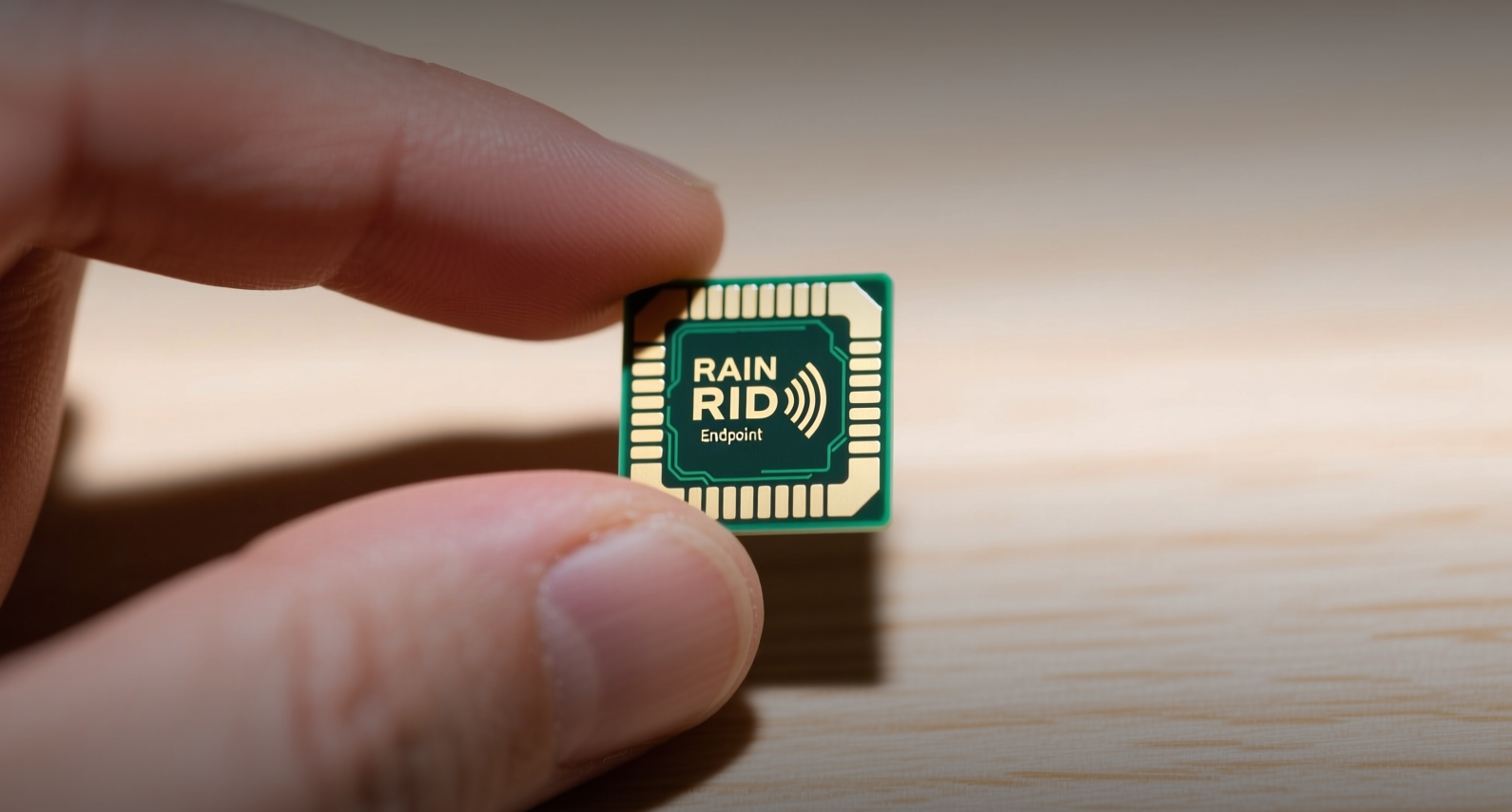
Impinj posts record Q2 revenue of $108.4M as RAIN RFID demand surges
Impinj Inc. reported record second-quarter revenue of $108.4 million, beating consensus estimates by 4.7%, as demand for its RAIN RFID endpoint ICs accelerated across retail, supply chain and food applications. "The results reflect continued market expansion and demand from inlay partners rebuilding IC inventories toward normal levels," Chris Diorio, co-founder and chief executive officer at Impinj, said on the earnings call. Non-GAAP earnings per share reached $0.86, surpassing the $0.81 consensus estimate and up from $0.80 a year earlier. Adjusted EBITDA hit a record $30.7 million, representing a 28.3% margin. Revenue rose 46% sequentially and 11% year over year, driven by endpoint IC sales that climbed 53% from the prior quarter to a record $96.4 million. The company's Q3 outlook signals continued momentum. Impinj forecast revenue of $105.5 million to $108.5 million and non-GAAP EPS of $0.59 to $0.63, citing strong bookings, an accelerating custom ASIC ramp for a major supply-chain customer, and expected inventory rebuilding by inlay partners. Gross margin reached a record 60.9% in Q2, up from 52.4% in Q1, boosted by licensing revenue. **Endpoint IC Demand Drives Record Quarter** Endpoint IC product revenue, excluding licensing, rose 26% sequentially and 16% year over year, exceeding the company's expectations. Diorio said unit volume also set a quarterly record, with demand spanning retail apparel, general merchandise, supply chain and logistics, and food-related applications. For the second consecutive quarter, endpoint IC bookings hit an all-time high. Systems revenue totaled $12 million, up 8% sequentially but down 10% from a year earlier. Reader ICs outperformed expectations on enterprise demand and are expected to be Impinj's fastest-growing product line in the third quarter, the company said. **Custom ASIC Ramp and Food Market Expansion** A custom ASIC program for Impinj's second-largest North American supply-chain and logistics customer is progressing ahead of schedule, with full conversion expected during the third quarter. CFO Cary Baker said the transition gives the company better visibility into channel inventory than when the customer used Impinj's general-purpose M800 product. In the food vertical, three of the five largest U.S. grocers have publicly announced RAIN RFID pilots or deployments across bakery, deli and meat categories. Impinj is supporting four program types: store replenishment for quick-service restaurants, in-store inventory management at supermarkets, loss-identification at point of sale, and automated self-checkout initiatives. Some store replenishment and in-store inventory programs have progressed to chain-wide deployments, though consumption remains modest relative to current industry volumes. The guidance raise signals management expects RAIN RFID adoption to broaden beyond core retail into supply chain logistics and food. Investors will watch the Q3 earnings call for updates on the custom ASIC ramp and food program conversion rates. This article is for informational purposes only and does not constitute investment advice.