Edgen AI operates independently of, and is not controlled by Aspen Digital Financial Limited.
Boehly's Gulf-backed bid for Lukoil assets faces 3 approval gates
 Edgen Stock·Sep 22 2026, 20:30
Share to
Share to
Copy link

[1] US and Gulf billionaires back Boehly's bid for Russian oil company Lukoil's (overseas) assets (https://wallstreetcn.com/livenews/3169136 ...)[2] US government, Gulf billionaires back Boehly bid for Lukoil ... (https://www.reuters.com/business/energy/us-go ...)[3] US government, Gulf billionaires back Boehly bid for Lukoil assets, FT reports (https://www.marketscreener.com/news/us-govern ...)[4] Crypto News (https://www.altcoinbuzz.io/category/crypto-ne ...)[5] Sensex today | Stock Market Highlights: Nifty, Sensex close flat as high crude price concerns offset value buying (https://www.thehindubusinessline.com/markets/ ...)
Related News
Sep 22 2026, 20:33
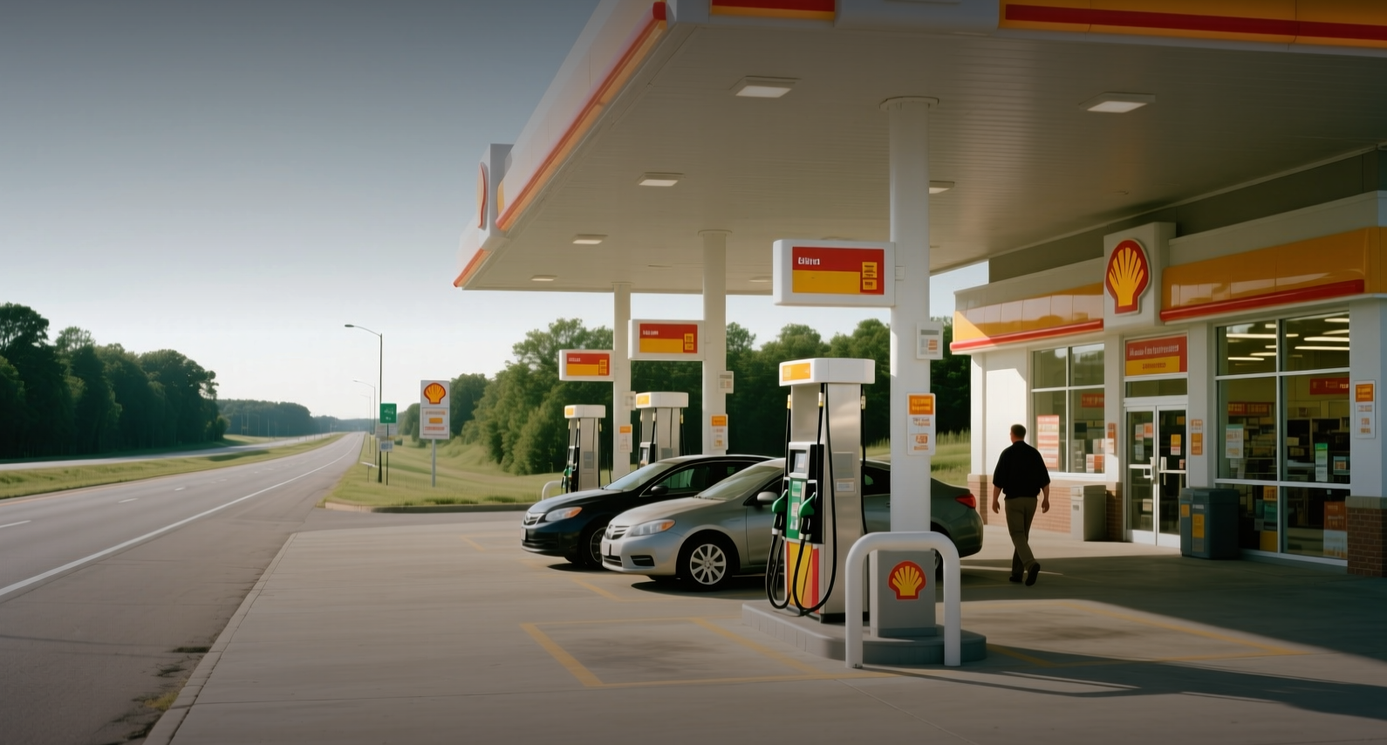
Getty Realty buys 41 Refuel stores for $260.9 million
Getty Realty Corp. has added 41 convenience stores to its net lease portfolio in a $260.9 million transaction with Refuel Operating Company, a deal that installs the fuel retailer as the REIT's third-largest tenant at roughly 7.7% of annualized base rent. "We are excited to partner with Refuel on its first portfolio sale leaseback transaction and to further advance the relationship we have cultivated over the last several years," Christopher J. Constant, Getty's President and Chief Executive Officer, said. "Refuel is one of the leading operators in the convenience store sector, and its premium brand, growing platform, and high-quality real estate align well with Getty's underwriting criteria for convenience store acquisitions." The New York-based net lease REIT, which trades on the NYSE under GTY, simultaneously signed four long-term unitary net leases covering the portfolio. The properties split into 17 stores in South Carolina, 12 in North Carolina, seven in Texas and five in Mississippi, with each state's assets bundled under a single lease carrying a 20-year initial term, multiple renewal options and rent increases every five years. The sites average nearly 5,000 square feet and 2.5 acres, and include proprietary hot food programs or branded quick-service restaurants. Refuel, founded in 2008 and a First Reserve portfolio company since 2019, operates roughly 250 locations under the Refuel and Double Quick brands across South Carolina, North Carolina, Texas, Mississippi and Arkansas. It was already a Getty tenant at six convenience stores, five of which Getty financed through its development funding program as new-to-industry construction. The deal is the largest single piece of a year in which Getty has committed about $455.2 million to convenience and automotive retail assets at a 7.1% initial cash yield, including roughly $35.7 million of investment activity closed after June 30. Getty holds a committed pipeline of more than $125.0 million for development and acquisition at initial cash yields averaging 7.8%, above the blended rate on what it has already bought this year. ## Funding stack leans on forward equity and a new term loan Getty expects to fund the Refuel purchase on a leverage-neutral basis through three channels. It entered new forward sale agreements after June 30 for about 0.8 million shares at roughly $26.4 million in anticipated gross proceeds, bringing total shares subject to outstanding forward sales to about 6.6 million and anticipated gross proceeds to about $216.9 million. Getty plans to apply about $100.0 million of that toward Refuel. A second $100.0 million tranche comes from a new $200.0 million unsecured term loan, for which Getty has commitments from a group of existing lenders. The facility is expected to close in October 2026 and mature in October 2028, with three one-year extension options exercisable at the company's discretion subject to standard conditions. The remaining piece is dispositions: Getty has identified properties expected to generate at least $50.0 million in gross proceeds, after selling 13 properties year to date for $19.1 million at a 5.7% cap rate on stabilized assets. The structure matters because the acquisition yield sits above the cost of the capital raised to fund it. A 7.1% blended initial cash yield on the year's investments, and 7.8% on the pipeline, compares with a quarterly dividend of $0.485 per share — an annualized $1.94 — against a Sept. 22 close of $29.45, a yield of about 6.6%. Getty's 2026 adjusted funds from operations guidance stands at $2.52 to $2.54 per share, in line with the $2.53 FactSet consensus, after second-quarter AFFO of $0.62 matched estimates and rental revenue of $58.6 million edged past the $58.5 million consensus. Concentration is the trade-off. Refuel's 7.7% share of annualized base rent places it behind only Getty's two largest tenants, and the four unitary leases mean a single operator's credit now governs a meaningful slice of rent roll across four states. Getty's portfolio totals 1,269 freestanding properties in 46 states plus Washington, D.C., so the new stores represent about 3.2% of property count while contributing a larger share of rent — a function of the sites' size and format relative to the legacy automotive-service mix. ## Analysts already marked targets higher before the deal Sell-side positioning was constructive into the announcement. Bank of America raised its Getty price target to $38 from $37 on July 27, and RBC lifted its target to $36 from $35 on July 24 while keeping a Sector Perform rating. The consensus of eight analysts sits at Outperform with an average target of $36.43, implying about 23.6% upside from the last close. The stock slipped 0.07% to $29.45 on Sept. 22, is down 6.30% over five sessions and up 7.60% year to date. The read-through extends past Getty. Sale-leasebacks have become the default route for convenience store and fuel operators to monetize real estate without giving up store operations, and Refuel's decision to sell 41 sites while retaining the operating business follows the same logic that has driven similar portfolio transactions across the sector. For net lease REITs competing for the same assets, Getty's willingness to underwrite a 20-year unitary structure at a 7.1% blended yield sets a pricing reference for large-format convenience portfolios with foodservice components. Getty's next test comes with third-quarter results, when investors will see whether the forward equity settles as planned and whether the identified dispositions close at or above the $50.0 million target. The term loan is scheduled to close in October 2026, and the dividend goes ex on Sept. 24 with payment on Oct. 8. This article is for informational purposes only and does not constitute investment advice.

Sep 22 2026, 20:25
Jet fuel follows diesel higher as Hormuz squeeze hits 2 markets
Jet fuel has joined diesel in a sharp climb as the Strait of Hormuz disruption forces refineries to ration distillate output, tightening two markets that compete for the same barrel. The squeeze is now visible in the sky as much as on the road. "Squeezed refineries are struggling to supply a world hungry for both diesel and jet fuel," MarketWatch reported on Sept. 22, describing a refining system that cannot satisfy simultaneous demand from trucking fleets and airlines. The constraint is structural rather than seasonal: a single barrel of crude yields a fixed distillate cut, so every incremental gallon routed to diesel is a gallon denied to jet. The two fuels sit at the top of the same barrel. Refiners running at maximum distillate yield still face a hard ceiling on how much kerosene-type jet fuel and ultra-low-sulfur diesel they can produce together, which is why the price moves have tracked each other rather than diverging. Diesel led the advance; jet fuel followed, and the spread between them has narrowed as buyers of both compete for the same limited output. The pass-through is where the damage compounds. Higher jet fuel lifts airline operating costs directly, since fuel typically represents one of the largest single line items in carrier expense structures, while diesel sets the marginal cost of moving freight by truck and rail. Both feed into headline inflation, and both land on margins before they land on consumers. Ukraine's campaign against Russian refining capacity has added to the pressure. Strikes on refineries have removed processing capacity from a system already short of it, compounding the Hormuz-driven constraint rather than offsetting it, according to reporting by Forbes on Sept. 22. The asymmetry matters for positioning. Refiners with spare distillate capacity and access to non-disrupted crude grades can capture wider crack spreads, while airlines, trucking operators and fuel-intensive industrials absorb the increase as an earnings headwind. Sustained energy-cost inflation also complicates the rate outlook, since central banks reading a higher fuel component in price indices have less room to ease. What happens next depends on how quickly Hormuz flows normalize and whether refinery outages elsewhere are repaired. If the disruption persists beyond days, the distillate squeeze extends into the winter heating season, when diesel demand typically peaks and inventories are drawn down further. If flows resume, the crack spread unwinds fast — refined product markets have historically corrected more violently than crude on supply restoration, because the bottleneck is processing capacity, not the crude itself. This article is for informational purposes only and does not constitute investment advice.

Sep 22 2026, 20:15
Apple builds screenless Whoop rival as Garmin swings 4%
Apple is developing a screenless health and fitness wristband that would put it directly against Whoop, a prototype-stage project that has not been cleared for release and would not reach shelves before 2028 at the earliest. The plan has backing from Executive Chairman Tim Cook and services chief Eddy Cue, according to people familiar with the matter cited by Bloomberg on Sept. 22. Apple has spent several months exploring the category and is now building prototype hardware, the report said, describing the effort as a "technology investigation" — internal language for research that has not been committed to shipping. Prototypes consist of a thin fabric band with a sensor-equipped computing module and no display, a form factor that separates the device from the Apple Watch, which is built around a screen and bundles fitness tracking with apps and notifications. Data would flow to Apple's Health and Fitness apps on an iPhone. Whoop's wristbands run more than two weeks per charge without a display to drain; the Apple Watch typically needs charging close to daily. Apple's watch starts at $249. The disclosure moved rival wearables names before the effect faded. Garmin shares fell as much as 2.5% intraday before reversing to close up 1.6%, while Apple traded around $340 after an early pop gave way. The muted follow-through reflects the distance between a prototype and a product: no release decision has been made, and Apple has not disclosed pricing, sensor specifications, battery life or expected volumes. ## Whoop and Oura are racing to public markets first The competitive backdrop explains why Apple is looking at the category at all. Whoop carries a valuation of roughly $10 billion and is weighing an IPO, while smart-ring maker Oura filed for a listing this month. Both have built user bases in the millions on subscription health tracking, and Google entered the screenless segment with the Fitbit Air, a $99 band whose core features work without a subscription. Garmin has held the endurance and outdoor tracking market for years. Apple's own health franchise is being rebuilt around that simpler model. Jeff Williams, the former chief operating officer who oversaw the watch and health businesses, retired at the end of last year. Stan Ng, who ran marketing for the Apple Watch and health products, and Jay Blahnik, who led fitness strategy, have both left. Cue, who took over health late last year, has pushed the team to study Whoop and its peers and bring a narrower, health-first product philosophy into Apple's lineup. That shift is already visible in shipping products. The latest Apple Watch and a redesigned Health app added more advanced heart-rate tracking, a daily readiness score and an estimate of the user's physiological age from health data — features that mirror Whoop's core offering. Apple published a heart study in September arguing the Apple Watch Series 12 is the most accurate health wearable, a comparison that also highlighted how competitive the Whoop 5 tracker has become. The band sits inside a broader wearables push. Apple's Vision hardware group, which is developing the Vision Pro headset, is also working on the company's first smart glasses and camera-equipped AirPods, both targeted for 2027. A camera-equipped AI pendant that would have collected visual data for a new version of Siri has been postponed. Apple is also planning a larger Apple Watch redesign as early as late 2027, the first substantial overhaul since the Ultra model launched four years ago. ## The 2028 timeline caps the damage to incumbents For investors, the arithmetic matters more than the rumor. Apple's wearables, home and accessories segment generated roughly $40 billion in annual revenue in recent years, and a screenless band priced below the $249 Apple Watch entry point would be aimed at expanding that base rather than replacing it — a cheaper device with a two-week battery is a different sale than a $249 watch. The threat to incumbents is real but distant. Whoop's roughly $10 billion valuation and Oura's IPO filing both rest on subscription revenue that a $99 Google Fitbit Air already pressures; an Apple entry would compress pricing power further, but not before 2028 on the current timeline. Garmin's 2.5% intraday drop and subsequent 1.6% gain is the market's way of pricing a headline with no revenue attached. Apple, trading near $340, has a market capitalization above $3 trillion, which makes a single unlaunched accessory immaterial to the equity until a launch date is confirmed. The next signal to watch is whether Apple moves the project out of technology investigation and into a formal development program with a ship date. Until that happens, the screenless category belongs to Whoop, Oura, Garmin and Google. This article is for informational purposes only and does not constitute investment advice.