Edgen AI operates independently of, and is not controlled by Aspen Digital Financial Limited.
BEFAR GROUP launches HK IPO at HKD 3.05-3.59 with 7 backers
 Edgen Stock·Jun 30 2026, 03:31
Share to
Share to
Copy link


[1] <IPO>BEFAR GROUP (06745.HK) Starts IPO Today; Entry Fee HKD3,626.21; Net Proceeds HKD1.102B; CHINAHONGQIAO Among Cornerstone Investors (https://www.aastocks.com/en/stocks/news/aafn- ...)
Related News
Jul 16 2026, 14:27
Eos Energy posts record $69M revenue and $807M backlog, wins defense contract
**Eos Energy Enterprises delivered a record quarter and a defense contract in the same week, signaling that American-made zinc batteries are moving from niche technology to a national security asset.** Eos Energy Enterprises (EOSE) reported preliminary second-quarter 2026 revenue of $68 million to $69 million, the highest quarterly total in company history and more than triple the prior-year period. First-half 2026 revenue already exceeded all of 2025, the company said. Backlog reached $807 million at June 30, up about 25% from the prior quarter, as new orders outpaced shipments. "This award validates the strategy we've built around American technology innovation, manufacturing and supply chains," Joe Mastrangelo, Eos chief executive officer, said of the Golden Dome contract. "Today, we're proving that America can still manufacture advanced technology at scale and deliver for our nation's most critical missions." The company collected about $78 million from customers during the quarter, exceeding reported revenue. Cash and restricted cash totaled roughly $364 million at quarter-end. Gross margin loss came in between 69% and 73%, reflecting the costs of ramping two commercial production lines across two manufacturing facilities. Battery Line 2 began commercial production in mid-June and has already shown higher yields and faster cycle time than Battery Line 1 in its early ramp. Eos completed site acceptance testing for 50% of its bipolar automation line, with full commissioning expected in July. The Golden Dome contract with the Department of War positions Eos's Z3 zinc-based long-duration energy storage technology as a mission-critical asset for national defense. President Donald Trump highlighted the award during Senator Dave McCormick's Defense and National Security Summit in Carlisle, Pennsylvania. The initial deployment will serve as a prototype at a critical installation, with the program structured to scale as defense needs evolve. Eos's system uses a non-flammable aqueous zinc chemistry with about 91% domestic content and is compliant with Section 842 NDAA and FEOC requirements — a compliance foundation the company spent the past year building. **The Frontier Pipeline and the Path to Scale** The Frontier Power USA partnership provides the clearest window into Eos's commercial trajectory. Frontier's 1.8 GWh of closed and selected projects now accounts for roughly 90% of its 2 GWh capacity reservation with Eos, directly linking the company's manufacturing ramp to a specific utility-scale project pipeline. Successful project conversion and financing — including Eos's own rights offering — sit at the center of both the catalyst path and the funding risk. Eos is targeting a 4 GWh annual run-rate capacity by year-end, with an eventual goal of 8 GWh of annual production capacity in Allegheny County, Pennsylvania. The Thorn Hill facility serves as the cornerstone of this expansion, adding automated manufacturing capacity for the Z3 platform and supporting the company's commitment to create 1,000 jobs across the region. **What This Means for Investors** Eos shares surged nearly 10% on the news before settling to a 4.6% gain, trading at $4.405. The stock still trades well below the $9.62 fair value implied by the company's narrative projections of $1.2 billion revenue and $151.2 million earnings by 2029. More optimistic analysts have modeled $1.8 billion revenue and $468.6 million earnings by that year, though persistent losses and ongoing capital needs remain the primary risk. The Golden Dome contract and record backlog strengthen the bull case, but the company must convert commercial momentum into positive margins before the investment thesis fully shifts from speculation to execution. This article is for informational purposes only and does not constitute investment advice.
Jul 16 2026, 14:12
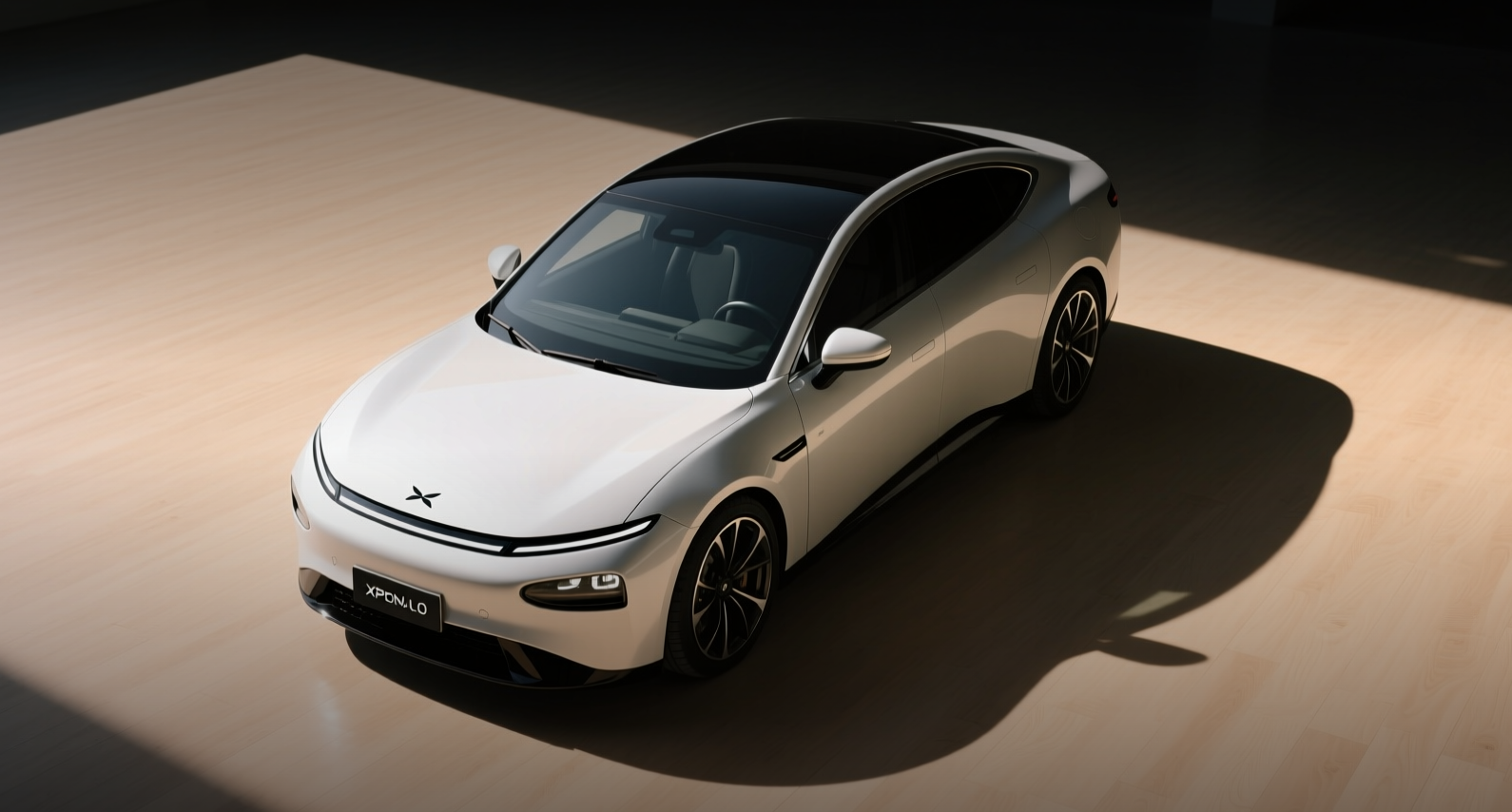
XPeng launches MONA L03 at 123,800 yuan in global EV push
XPeng's MONA L03, priced from 123,800 yuan ($17,100) in China and €35,600 ($40,000) in Europe, brings a 320-mile WLTP range and camera-only autonomous driving to the mass EV segment, directly challenging Tesla's Model Y and Volkswagen's ID.4. "This is the company's mass-market play, priced to sit below its G6 Tesla Model Y competitor and to sell in volume," Rafik Ferrag, head of creative design at XPeng, said at the Munich launch event. The L03 achieves a 0.228 drag coefficient and can charge from 10% to 80% in 20 minutes. Top variants hit 60 mph in 4.5 seconds, while the base model takes 7.5 seconds. The Ultra trim features L2++ hands-off navigation powered by XPeng's trio of Turing 7-nanometer AI chips, though the company confirmed the vehicle lacks the hardware redundancy for future L4 autonomy. The global version launches in 60 countries across Europe, Latin America, the Middle East, and Asia-Pacific. XPeng shares face a pivotal test as the L03 enters a price war with BYD's Seagull and Dolphin models in China while competing against the Volkswagen ID.4 and Tesla Model Y in Europe. The company's decision to bring its latest VLA 2.0 intelligent driving system to global markets — rather than older technology — sets it apart from other Chinese exporters. **Ferrari DNA at a Mass-Market Price** The L03's exterior bears a resemblance to the Ferrari Luce, a similarity explained by XPeng's design chief JuanMa López, who led Ferrari exterior design from 2010 to 2018 and shaped models including the LaFerrari and SF90 Stradale. The interior features heated and cooled massage seats, 256-color ambient lighting, a 15.6-inch 2.5K central screen, and a 27-inch head-up display — equipment typically found in vehicles priced two segments higher. "Twenty years ago, it was impossible for an entry-level car to afford the technology or even the decorative elements that a luxury car has. Today, that's no longer true," Ferrag said. "Our goal as designers is to reach the top level." **Camera-Only Autonomy vs. Lidar Rivals** XPeng joins Tesla in the no-lidar camp for autonomous driving, relying on cameras and compute power rather than the lidar sensors used by BYD, Zeekr, and Nio. Xianming Liu, XPeng's senior director of engineering, said the L03's camera system and Turing chips are sufficient for L2++ capabilities, but the vehicle cannot reach L4 autonomy because it lacks six levels of hardware redundancy required for full self-driving. The VLA 2.0 system, tested on Munich streets ahead of the launch, impressed reviewers with smooth driving behavior in low-light conditions, according to CleanTechnica's first-hand account. European regulations permitting hands-off driving are expected to take effect by the end of 2026, with XPeng planning an over-the-air update to activate the feature in 2027. **Investment Implications** XPeng's L03 launch represents a bet on volume over margin in the world's most competitive EV market. The 123,800 yuan starting price undercuts BYD's Seal, which starts at 179,800 yuan, and positions the L03 directly against the BYD Dolphin and Volkswagen ID.3. In Europe, the €35,600 price tag undercuts the Tesla Model Y by roughly €10,000. The company delivered about 190,000 vehicles in 2025, ranking outside China's top 10 by volume. Success of the L03 — targeting 60 countries — could meaningfully close that gap. XPeng trades at roughly 1.2 times forward sales, a discount to BYD's 1.8 times, reflecting the market's skepticism about its ability to scale profitably. This article is for informational purposes only and does not constitute investment advice.
Jul 16 2026, 14:12
Semiconductor ETF slides 3% as TSMC capex hike fuels rotation
The semiconductor ETF slid nearly 3% at the open, leading a tech selloff after Taiwan Semiconductor Manufacturing Co. raised its 2026 capital expenditure outlook to as much as $64 billion. The VanEck Semiconductor ETF dropped 2.2%, with TSMC shares falling 4.6% after the chipmaker posted a record second quarter but boosted its full-year capex range to $60 billion to $64 billion from $52 billion to $56 billion. Revenue rose 33.7% to $40.2 billion and net profit jumped 77.4% to about $22.4 billion, yet investors focused on the rising cost of the AI buildout. Arm Holdings declined 4%, Intel slid 2.8% and STMicroelectronics fell 4.6% as the spending reset rippled across the supply chain. In Seoul, SK Hynix tumbled 11%. The rotation into defensive names accelerated as the consumer staples ETF rose 1.5%, while the global technology index ETF fell nearly 2%. The S&P 500 slipped 0.4% to 7,545, the Nasdaq Composite dropped 0.8% to 26,057, and the Dow Jones Industrial Average held near flat at 52,731, supported by a 6% surge in UnitedHealth Group after the health insurer topped earnings expectations. Abbott Laboratories also gained 12.5% on its results, while Erie Indemnity rose 7.5% and J.B. Hunt Transport Services added 7.1%. On the downside, Coterra Energy fell 8.6%, Corning dropped 7.6% and Seagate Technology declined 7.5%, reflecting broad-based selling beyond semiconductors. The Russell 2000 edged up 0.3% to 2,990, suggesting small-cap stocks were relatively insulated from the tech-led pressure. June retail sales rose 0.2% month over month, matching consensus estimates but slowing from May's revised 1% gain, showing consumer momentum is easing. The wholesale inflation reading unexpectedly declined, adding a favorable data point for the Federal Reserve's rate path. The Cboe Volatility Index edged higher as traders weighed whether the AI infrastructure buildout is getting ahead of itself. Dell Technologies remained under pressure after a 10% slide in the prior session on similar concerns, while Microsoft is reportedly sharpening its AI sales pitch against OpenAI and Google, training teams to sell Azure as the full-stack enterprise AI platform. The divergence between tech and defensive sectors shows a market grappling with competing narratives: favorable inflation data supports rate-cut expectations, but rising capex commitments from chipmakers raise questions about returns on AI investment. With earnings season accelerating, investors will watch for guidance from other semiconductor and tech names to gauge whether the spending cycle is sustainable. This article is for informational purposes only and does not constitute investment advice.